Wednesday, May 7, 2025

Spyro the Dragon Review

 (Originally published to Glitchwave on 4/3/2025)
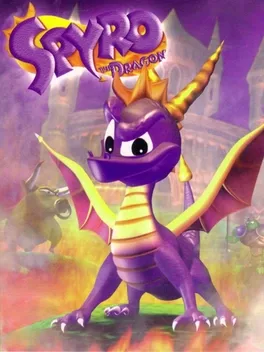


[Image from igdb.com]


Spyro the Dragon

Developer: Insomniac

Publisher: SCEI

Genre(s): 3D Platformer

Platforms: PS1

Release Date: September 10, 1998


In the league of PlayStation exclusive 3D platformers in direct competition with Mario on the N64, Spyro the Dragon was as decorated a soldier as Crash Bandicoot in the bloody battle to dismantle Nintendo’s console market supremacy. Sure, we cannot discount the valiant efforts of the whole roster of PS1 platformer exclusives like Tomba and Ape Escape, but Spyro is the only other representative on the console that matches the renown of the orange marsupial. Not only were both series perceived worthy of receiving the trilogy treatment on their debut systems, but the retrospective, nostalgic ardor from those who fit the young demographic at the time of the PS1’s campaign is equally as fervent. When those kids reached adulthood two decades later and the Crash trilogy was remade for modern gaming standards and sensibilities, the same paint job was given to the Spyro trilogy only a year later due to the vociferous clamoring of fans–who stated that neglecting to revamp Spyro’s three PS1 classics would have diminished the impact of the N. Sane trilogy by proxy. Crash and Spyro have had genuine collaborative tie-in titles in the past, and their respective developers of Insomniac and Naughty Dog, acknowledged the association between their PS1 mascots when they sparked the same tongue-in-cheek rivalry for their following properties: Ratchet & Clank and Jak and Daxter. Needless to say, with all the evidence at hand, Crash and Spyro are like brothers from different mothers. They are like Metallica and Slayer: two separate entities with their respective icon statuses that are consistently grouped by a similar objective during their period of inception. The last parallel I’m going to connect to Crash is that the course of Spyro’s PS1 trilogy shares the same progression arc exhibited per entry as the bandicoot’s. In saying this, one could infer from this statement that Spyro’s self-titled debut is rough, blunt, and rudimentary, and you’d be correct. However, the first Spyro the Dragon game manages to evoke all of those substandard adjectives in a completely different way than that of the first Crash game.

My personal history with Spyro also shares similarities to Crash, as I was introduced to both franchises with their more lukewarm, post-original developer entries in the subsequent console generation on account of having the undeveloped motor skills of a toddler during their PS1 prime. Sorry to soil the fanbase’s illusion that both series are of an unequivocal repute, but I’ve always preferred Crash to Spyro–and it’s not as if I’d put the de facto face of the PS1 on my Mount Rushmore of gaming franchises. The reason why I give Crash a slight edge over his plucky purple compadre is that the Spyro games verge towards a jejune tone and atmosphere. Both series may target a prepubescent demographic, but the kooky, Looney Tunes aura emanating from Crash is more appealing to a general audience than the “once upon a time” storybook construct that comes with a child-friendly game revolving around a dragon. Still, at least Insomniac modestly attempted to balance the sugary sweetness of their work with some self-aware, borderline satirical elements that subvert the classic fairytale tropes, and three years before Shrek would become synonymous with this formula, I might add. This subversion is apparent from the anachronistic microphone seen in the corner of the news interview taking place with some dragon elders. The interviewer asks the scaly beasts about a potentially menacing character named Gnasty Gnorc, but one of them confidently assures the man that Gnasty Gnorc is too “simple and ugly to be a threat to the Dragon Kingdom.” However, the green ogre in question responds to this slander by firing a series of energy blasts from his morning star scepter that immobilize all of the dragon elders in a crystalized casing. However, the hazardous beams either missed the young Spyro due to his smaller physical stature, or Gnasty Gnorc didn’t bother targeting him because he misjudged him by his size. If the latter is the case, Spyro is going to make Gnasty wish he hadn’t settled for a half measure, for now he’s on a quest to free his brethren from their glassy prisons and incinerate Gnasty Gnorc for his transgression against the Dragon Kingdom. Spyro the Dragon’s premise is a Saturday morning cartoon cliche akin to an episode of He-Man, whose exposition is rushed during this introduction. Still, at least there’s a touch of levity, so it doesn’t veer too heavily on the spectrum of a sincere epic or too deeply into the territory of a schmaltzy fairytale that its presentation would imply.

Spyro the Dragon also greatly differentiates itself from Crash Bandicoot in its direction. They’re both undoubtedly 3D platformers, but Spyro was conceived after Super Mario 64 had defined the course of the genre with its collectathon format and was obliged to follow suit. The Dragon Kingdom, facing a crisis of stasis, is divided into five major districts, with Gnasty’s industrial island fortress rounding that number to six as the climactic ending area. Each of these six hubs features around three to four sub-areas that branch off of the central sector, similar to the winding floors of Peach’s Castle in Super Mario 64, except that the transportational medium to these forking paths is gateway arches instead of portal paintings. However, even though the player can clearly detect what the hub area is by its relation to the levels that stem from its perimeter, none of the medians fit my definition of a typical hub. A hub should be a place of respite separated from the action of the levels in its close, yet distinctly defined, borders. Yet, the objective of rescuing the ensnared dragon elders is still a relevant task between arch traveling, with the chaos of enemy activity still functioning as a background noise, or so to speak. The continual action that seeps into the hubs may illustrate how rampant Gnasty’s influence has become with all of the adult dragons out of commission, but I think the cohesion is intended to represent the encompassing level design at play. Including the hubs, Spyro’s areas all display a freeform design that gels beautifully with the collectathon format. A moderately straightaway path will lead Spyro to a podium that will transport him back to the hub he came from, but each area provides plenty of opportunities to divert from this eventual destination and will often reward the player with additional gems or finding dragons frozen in concealed locations. The districts of the Dragon Kingdom even supersede the first PlayStation’s graphical restrictions. The near-sighted graphical fuzz that usually limits the player’s line of sight is washed away, and levels like “Cliff Town” and “Haunted Towers” implore everyone to take advantage of the graphical unclouding by gliding to the location in the distance after looking at them from a prime vantage point in awe. Impressive as the landscapes are from a visual standpoint, their lack of graphical haze could mislead the player into conflating their splendor with their expanse. Even with their intricate, exploration-intensive designs, each level in Spyro the Dragon is likely going to be an ephemeral excursion. The majority of the dragon statues tend to be along the beaten path to the exit, and the alternate routes tend to circle around to the same conclusion anyway. Only on rare occasions will freeing a dragon require a keener exploration effort, such as darting around the tracks of “Tree Tops” or hugging the edge of a cliff in “Dry Canyon.” I’m not suggesting that Spyro the Dragon should’ve implemented the abrupt boot-out system that artificially prolonged each area in Super Mario 64, but I’d gladly trade the defogging of the visual distance in exchange for expanding the total breadth of each area.

Then again, perhaps having the levels load in real time as the player traverses onward and forward would be especially jarring with Spyro’s physicality. Gliding is an innate ability for the little dragon that could, and it’s quite complementary to be able to see the platforms from afar so Spyro can elegantly soar to them from his position. I’d describe Spyro’s sky-skimming as graceful if it weren’t for the fact that the player cannot command Spyro to stop in mid-air, so a miscalculated trajectory can often lead to Spyro falling into the abyss below the clouds. His offensive headbutt maneuver, where he lowers his head and places his horns front and center like a battering ram, can also be quite precarious with its ramming speed and inexhaustible energy. This is why it’s essential to alternate between Spyro’s charge and blowing a blast of fire out of his nostrils, a close-ranged dragon staple with a more stable attack momentum. Still, even though Spyro’s abilities can potentially result in him overreaching past a solid footing, controlling him overall is comfortably smooth as silk. His general physicality isn’t afflicted with the same stifling rigidity akin to Crash in his first outing. However, even with his superior control scheme right out of the gate, Spyro’s mascot appeal is reduced by a few unfortunate characteristics. Downscaling a dragon to a winsome size is a brilliant prospect that would win over anyone, but Spyro’s inherent advantage in the charm department is spoiled whenever he opens his toothy mouth, revealing himself to be a dork who says overbearingly optimistic one-liners. I’d grab a beer with the silent goofball Crash without question, but I’d be afraid that Spyro would fink me out to the authorities for public intoxication.

It’s more likely that Spyro will deplete his stock of lives when the player gets overly eager with his abilities, rather than facing off against the smattering of enemies. The invasive goons in the Dragon Kingdom are abundant in numbers across the magical realm, sometimes even lining up in unison so Spyro can knock them down like bowling pins with his headbutt charge. On the basis of an individual encounter, each enemy is fairly predictable in their attack patterns, with the trick between all of them being whether or not their armor is impenetrable to flames or physical buffeting. If the player doesn’t seem to catch on to this pattern of enemy defenses and they harm him as a result, Spyro’s health system is one of the series’ most idiosyncratic properties, and it’s surprisingly disturbing. While not uttering a single word could make the player question his role as a bona fide character, Spyro is accompanied on his quest by his dragonfly friend/pet Sparx. This glowing bug functions as a refurbished Aku Aku from Crash, a floating augmentation to the protagonist’s health that acts as a shield. Where they differ is that Sparx is a health reserve granted to Spyro automatically instead of an earned perk that can be easily relinquished. Sparx’s base color is a radiant golden, but as Spyro takes damage, his healthy glow will diminish to a sad blue to a sickly green. After that, he’ll realize a pattern and leave Spyro to save his own hide, and Spyro suffering one more hit after Sparx abandons him will result in his death. To either convince Sparx to return or replenish Sparx’s vigor beforehand, Spyro must prey on the small, gentle animals located in packs around the field known as “fodder.” Once Spyro butchers them like the apex predator he is, Sparx will consume the butterfly that pops out of their lifeless bodies to regain his golden sheen. Ghastly ghouls and demonic hellspawn are known to devour souls, but this innocuous-looking insect performs this barbaric act in droves in the name of protecting his buddy. If the player finds this method of regaining health unsettling, it’s unlikely that they’ll have to murder these cute little creatures all that often on account of the game’s general ease. I should also add that enemies are known to drop orbs whose accumulation increases Spyro’s number of lives, so there are more than enough tools offered to keep Spyro afloat in tandem with the unlikelihood of exhausting them.

Spyro the Dragon’s progression difficulty could also be described as leisurely to a fault, but I think the more applicable term is unimpactful. In order for the balloonist to whisk Spyro away on his gallant hot air contraption, Spyro needs to collect a certain amount of the game’s various collectibles to satisfy him. In addition to using Spyro’s magic touch to free the dragon elders, Spyro must also collect the colorful quantity of gems and retrieve dragon eggs from veiled thieves wearing burqas who operate on the field alongside the enemies. Acquiring these collectibles should come naturally through standard traversal, but the player can sign up to do the “flight” stages that involve collecting or extinguishing a series of the same objects or enemies in a sequential order under a time limit. The rhythmic pacing of these optional levels is probably the most demanding the game gets with its typically lenient error margins. Hell, one might become slightly irritated by the swift darting of the thieves while pursuing them, and the irritation might escalate to overzealous anger due to the cheeky bastard’s taunts and chortles. The process of obtaining these secondary collectibles in of itself is not an issue, but how the process overrides finding the dragons on the field in engagement and value. Every collectathon’s main collectible should be the primary focus that furthers the story, and muddling its impact by mixing its importance with all of the others diminishes its impact and relevance.

The facile factors of Spyro the Dragon I’ve discussed before could be excusable from a certain perspective, but the game’s “bosses” are downright embarrassing. I put the term bosses in snarky quotation marks because imposing baddies in gaming that conclude every milestone usually involve direct conflictive contact on the part of the protagonist. For Spyro, every arena is a curved track for the youthful dragon to chase them down like common thieves. To make the encounter even less stimulating, every one of Gnasty Gnorc’s cohorts falls with only a couple of headbutts or singes from Spyro’s fire breath. Surely, the big, stinky cheese in charge of the anti-dragon operation should warrant an epic duel as the game’s climax, right? Wrong. All that Gnasty Gnorc’s narrative significance does for his final “battle” is make the track that Spyro chases him on slightly longer. Two scorching fire blasts are all it takes for the unsightly green ogre to perish, and the anticlimactic scene had me astonished in disbelief. People tend to criticize Crash’s bosses for not being Herculean enough compared to the levels that precede them, but at least they inarguably fit the definition of bosses as opposed to the piddly, inconsequential pursuits that comprise every notable bit of progress in Spyro the Dragon.

It should be no wonder that fans often speak of Spyro in the same excitable breath as Crash Bandicoot in the ranks of PlayStation platformer mascots. While Crash Bandicoot was placed on a higher pedestal in Sony’s minds due to predating Spyro by a few years, Spyro’s whimsical adventure through a graphically alluring fantasy realm with an adorable (as long as he keeps his mouth shut) purple lizard at the helm places it on equal measure with Naughty Dog’s work in terms of a shared accessible, lighthearted charm. Comparisons between the two are also derived from their first entries’ amateurish lack of polish. However, whereas Crash’s rough template beats the player to death with harsh, unflinching demand, Spyro’s conversely relaxes them to the degree of being ineffectual. Because the game is a little too light on difficulty, level length, and substantial boss fights, the entirety of Spyro the Dragon comes in one ear and quickly exits the other. If this was a concentrated effort on Insomniac’s part to cater towards an extremely young audience, I should warn them that dumbing down the content will wear thin on even the most impressionable children. Still, if we use Crash’s evolution through three entries as an example, perhaps broadening Spyro’s formula through its sequels will conjure up something more resonating.

Wednesday, April 30, 2025

Penny's Big Breakaway Review

 (Originally published to Glitchwave on 3/31/2025)


[Image from glitchwave.com]


Penny's Big Breakaway

Developer: Evening Star

Publisher: Private Division

Genre(s): 3D Platformer

Platforms: PC, Switch, Xbox Series X, PS5

Release Date: February 21, 2024


It’s no wonder that Christian Whitehead is a lionized figure among Sonic fans. Hell, the veneration for this Australian man should come as natural when one of your own accomplishes something commendatory, sparking a sense of pride in one’s community. In an era where Sonic had become subject to a torrent of mockery and disdain due to Sega’s mishandling of their precious mascot since the company conceded defeat in the console wars, Christian Whitehead was one Sonic fan whose endearing enthusiasm for the blue blur drove the incentive to fix Sonic himself. His mobile ports of the classic Sonic games from the Sega Genesis/CD are arguably the definitive versions of those celebrated titles, and his remixed compilation of the blue blur’s greatest old school hits in Sonic Mania is considered to be Sonic’s best outing, period. It certainly had me smitten for 2D Sonic in a way unfelt by the traditional titles it paid tribute to. Mr. Whitehead evidently has a more fiery passion and love for Sonic than the typical fan, who seems content drawing incriminating artwork of the hedgehog and his friends and publishing it on the internet. It could even be disputed that the man possesses a more profound understanding of Sonic’s gameplay fundamentals than the company that birthed him, considering how Sonic Mania outclasses any of their home field output. Still, even though Mr. Whitehead has proved himself an invaluable asset in prolonging Sonic’s relevance and esteem, he legally owns little to zero of the Sonic rights–even if Sega has no scruples in profiting off of his reworking of their property. Because Christian Whitehead is not an employee at Sega and the company would probably compress his creative potential if he were on their payroll, he must accede to paving his own path in the gaming industry with his original intellectual concept. Fortunately, spiritual successors of bygone games are all the rage in the current indie sphere. For the first time ever, Christian Whitehead is channeling his game design talents in his new IP, Penny’s Big Breakaway, a game that I’d describe as “if A Hat in Time had a sister who was fond of Sonic as opposed to Mario.”

The title of Mr. Whitehead’s game is a play-on-words whose context is detailed in the opening cutscene. The titular Penny’s “big break” involves an impassioned attempt to woo over the judges during an annual festival taking place in her homeland’s palace. Her talent that she hopes will garner uproarious applause and eminent prestige is a skillful handling of the yo-yo, and fortuitously encountering a sentient toy spool with string attached should ideally be an asset in her goal to win over the audience. However, by “sentience,” I mean that her new plastic friend has the demeanor and intellect of a dog, and Penny should’ve considered training it before the event when it strips Emperor Eddie down to his undergarments by chewing through his regal robes. The embarrassed and emasculated emperor orders poor Penny to an outrageously long jail sentence in his state of indignity, so Penny frantically flees the scene and will be evading capture from Eddie’s penguin army henceforth. In this plot premise that marries American Idol and Alice in Wonderland, one can detect that Penny’s Big Breakaway evokes that whimsically lighthearted atmosphere appropriate for a genre catered towards a general audience like its 3D platformer predecessors. The illustrations that detail the events of the introduction sequence are cinematically constructed like an animated slideshow, an endearing presentational choice that emphasizes the game’s childlike charm.

One could assume from the labored illustrations in the game’s cutscenes that the general aesthetic of Penny’s Big Breakaway displays the same quality level of graphical proficiency. Unfortunately, the graphics that comprise the gameplay portion leave a lot to be desired, and saying this still feels like an understatement. The visuals in Penny’s Big Breakaway are comparable to using food coloring in a sad attempt to invigorate a sloppy bowl of oatmeal. Sure, the mess of rainbow shades will technically look more vivacious than its muted, beige form, but the swirl of colors is still muddled by the grainy and mushy texture of the base matter. The foregrounds and set pieces of Penny’s Big Breakaway are invitingly colorful on the surface, but its intended appeal is tainted by a prevalent blotchiness. It doesn’t help that the slurried paint bomb is bleeding through a canvas catered towards a disturbingly young demographic. From the anatomically simplified guys who look and move like the costumed characters from Yo Gabba Gabba! to the areas that surround them that resemble Duplo constructions, the presentation of Penny’s Big Breakaway off-puttingly evokes something for children who haven’t finished teething yet. Adults can still embrace a work appropriate for general audiences that might include children, but dialing up on the cherubic iconography will make anyone with an age in the double digits wince with discomfort. It’s a shame that the repulsively syrupy tone ruins what is an admirably diverse display of level themes. They follow the standard roulette of platformer level tropes, such as an urban world, fire world, ice world, etc., but at least there is a vibrancy throughout that elevates them from feeling generic. Still, adding to my point regarding how juvenile the presentation is, one of the worlds in this game is themed around bathing, with a prevalent pink tone washing over the sudsy steam that emanates from the area’s tubs and hot springs. I’m surprised there isn’t a level in this game themed around “nap time,” seeing Penny wearing pajamas while jumping on a series of beds with stars and crescent moons glittering overhead. The intermingling of a messy graphical foundation and the toddler tone made me bilious. I know for a fact that isn’t the result of a compromise that 3D indie games are forced to work around, using the delightfully scrappy look of A Hat in Time by comparison.

Fortunately, the gameplay of Penny’s Big Breakaway is quickly paced enough to almost distract oneself from the feverish Nick Jr. cartoon that surrounds them. Penny’s mascot potential that I factor in for all 3D platformer characters is heavily subdued by her odd design and even odder white, poofy hair that makes her look like a member of an extinct American political party from the pioneer days. Her gameplay mechanics will equally make the player scratch their heads in bemusement, but they are conversely an appetizing factor of the game instead of a detractor. Whether it's the fact that her yo-yo has a will of its own or not, Penny can still command her plastic pet with the expert proficiency of a dog trainer with over a dozen golden prize ribbons to claim. Penny’s Big Breakaway uses the wide versatility of the classic toy to utilize it as the game’s primary mode of gameplay, spanning from traversal to offense. In terms of skating around the field, I use the term “skating” as an allusion to another video game series that is surprisingly the most comparable to Penny’s gameplay. Penny implores the player to maintain a consistent momentum, which is rewarded through a combo chain that multiplies one’s score exponentially. This is not a hallmark of Sonic’s gameplay, but that of Tony Hawk’s celebrated series that mixed the aerodynamics of 3D platforming with the conceptual frame of extreme urban sports. When one realizes the connection, it unveils a skill ceiling stacked like a skyscraper. Accelerating one’s score with the aerial swings, twists, and twirls, plus preserving it by rolling on the yo-yo like a skateboard, is a far more engaging and gratifying method of traveling to the level’s end than simply running and jumping. Treating the gameplay with the standard method of platforming mentioned will feel sluggish and limp, especially if one is expecting the more automated acceleration that comes with Sonic. That being said, one comparison I can sincerely make to Sonic is that Penny’s aerial yo-yo lunge resulted in tumbling down a few hazardous pits as a result of mismatching the speed and range of it, like Sonic’s homing attack.

Then there’s the combat equation of Penny’s gameplay that involves using the yo-yo as a weapon, like a rudimentary form of nunchucks. Whacking foes with the buoyant, 360-degree spatial range that comes with analog control would feel dexterous, only if it weren’t for the enemies that Penny faces. Throughout the majority of the levels, except for the one suspended in the aether of the cosmos, dozens of penguins will ambush Penny in an attempt to subdue her and subject her to their ruler’s impudent sense of justice. If the player allows more than six penguins to latch onto her like a rabid class of preschoolers, her capture is classified as a “death” that strikes one unit of health off the bar. To prevent the penguins from carrying her off with their slippery mitts, one might correlate using the yo-yo as a defensive tool to clobber her assailants. Emperor Eddie’s seemingly infinite brigade of penguins is not only flightless, but one can add fecklessness to describe the traits they lack. Clocking these slimy birds with Penny’s toy has no physical impact to it, as if the player is just brushing off dandruff from their scalp. To make matters irritating, the penguins won’t be defeated with one hit, so the player is forced to halt the momentum of traversal in order to squash them sufficiently. Directly confronting the penguins as one would typically do with enemies on the field will soon grow wearisome for these reasons, which is why it’s better just to zoom past them even if they bumrush from behind. When the opposition proves to be more of a brief nuisance than an actual threat, the developers either should’ve raised the stakes of Penny’s capture or omitted any field conflict entirely.

Other than occasionally being incapacitated by a barrage of wet feathers and failing to land on a platform, Penny’s Big Breakaway rarely presents much in the way of challenging obstacles that impede one’s trajectory to the level’s end goal. One’s score is ultimately arbitrary and will not warrant any tangible reward when Penny reaches the pillar that functions like a Mario flagpole. Keeping a combo going isn’t a requisite; it’s simply a fun recommendation from someone who has played the game. Even though progress is rather straightforward, minus a few sections that involve the various yo-yo power-ups or riding across any body of liquid, the game does consistently supply auxiliary objectives that spice up the standard level routing. The reason why the game’s propulsion probably feels more moderate compared to Sonic’s is to not deter the player from exploration, something to put into consideration to find the three copper hexagons found in the less conspicuous corners of the map. If they’re not on the main pathway, the player might also have to take a curious turn or two to find three different NPCs who assign Penny to solve their troubles. The pleas of the robotic citizens can range from finding a series of lost objects, protecting a valuable from penguins, to reaching a subsidiary score through a flashy combo chain–the only instances where performing one is actually suggested. The guy who needed a gift for his wedding anniversary in a split second needs omniscient supervision like a guardian angel, which is something that Penny can not provide. While these secondary tasks do indeed expand the breadth of a level’s immediate parameters and are marginally harder than simply going about one’s regular business, I wish there were some tangible reward for one’s extra efforts. Maybe a new ability or yo-yo skin? I’m not asking for the moon, guys.

Some games that are light on level challenge tend to put all of their difficulty eggs into the boss basket, or vice versa, if you’re Donkey Kong Country or Crash Bandicoot. Penny’s Big Breakaway, however, keeps the difficulty meter setting on breezy for all scenarios. Still, this isn’t to say that Penny’s bosses aren’t substantial from a design or schematic standpoint. Dodging the torpedo fire from salty sea dog, Sheila, while shredding on the water with the yo-yo like a jetski is a thrilling and tense encounter, and pocketing the eyes of “Mr. Q” like billiard balls when the arena is a giant pool table is a clever battle condition. These are, however, the first two genuine boss fights in the game, and each one afterwards fulfills neither the challenge nor the shrewdness. I understand that Emperor Eddie might combat his challengers with his subordinates as someone of his status would, but I would think his eminence would at least save him from Penny practically bullying him at the bathhouse. The duel with “Puppet Penny” resembles a much easier race from Ape Escape, and Judge Rufus’ fight will plummet quickly (literally) once Penny retrieves his gavel to knock him off his pedestal. An amped-up Eddie that Penny fights as the game’s last hurrah just mirrors the one from the bathhouse with a Metroid-esque platforming sequence to cap it off. A streak of milquetoast bosses are one thing, but the fact that the game launched the cavalcade of world finishers so strongly with two exemplary fights makes the inferior ones that follow all the more disappointing. Was someone on the development team who worked on the first two bosses fired during production, or something?

I compared Penny’s Big Breakaway to fellow indie 3D platformer, A Hat in Time, for taking the essence of a solidified franchise in that genre and preserving its bygone gameplay with a plucky female protagonist at the center. Unfortunately, on Penny’s part, the comparisons of its similar overall mission to A Hat In Time do not extend to the older game’s quality and outstanding charisma. Still, I don’t know if it’s fair to compare the two beyond that because emulating Mario’s rival, Sonic, involves playing with a different chemistry set altogether. I would state that perhaps it’s harder to channel Sonic’s blistering energy and accommodate the level design to his speedy nature, but Penny’s Big Breakaway does not falter in that department. Using the yo-yo as a mechanism to maintain a swift and fluid pace captures the exhilaration that makes Sonic so appealing. Penny crumbles with essentially every other aspect, as the player could contract salmonella from how brief the combat and collectibles time was in the developer oven. Lest we forget that it’s all wrapped in a presentational package that could put anyone over eighteen on a watchlist. Even with Penny’s lackluster qualities listed, the game still captures that speedy, enlivening Sonic gameplay so splendidly that it’s worth recommending on that merit alone. Christian Whitehead is a pragmatist, not a visionary.

Thursday, April 24, 2025

Pizza Tower Review

 (Originally published to Glitchwave on 3/26/2025)


[Image from glitchwave.com]


Pizza Tower

Developer: Tour De Pizza

Publisher: Tour De Pizza

Genre(s): 2D Platformer

Platforms: PC, Switch

Release Date: January 26, 2023


Pizza Tower is one example of why I still have faith in gaming in this day and age. Over the past few years, I've heard the depressing sentiment that gaming as a medium is dying and its peak occurred well over a decade ago. Sorry to inform you, but this melancholic string of thoughts and feelings always happens at a certain point in adulthood. At a certain point, everyone pines for the media from one's candy-coated past, likely from their carefree days before they turned eighteen and graduated from high school. However, despite my refuting claim, I can't be so blind as to not understand where this malaise might stem from. The triple-A pillars of the industry have been progressively treating their consumer base with more cynical contempt every year since the first 365-day period of this decade, a monumental year when gaming surpassed the sales of the film industry, thanks to the remote practices of the COVID lockdown. It's egregious how video game companies keep churning out unfinished releases at launch while their fanbase waits with bated breath for them to potentially patch out the blemishes with a naive sense of optimism, especially since these companies have the gall to charge a whopping $60-$70 for their deficient products. Even if the developers had taken the necessary time to polish their products to a point of spotless proficiency, entries in the open-world, the RPG, and other genres that are synonymous with the epic, grandiose standard of the modern gaming landscape only causes nausea now instead of the curious awe they formally evoked thanks to oversaturation. The state of gaming is now comparable to a Cheesecake Factory: a corporate monolith banking off the impressionable mobs buying into expensive mediocrity while looking distinguished from a distant, surface-level perspective. If bloated bombast generated by indifferent greed machines had given you the gaming blues, I’m gleeful to report that the grassroots indie circle side of the industry provides a marvelous alternative to the triple-A titans guaranteed to turn that frown upside down. Somehow, in a sea of megalodons who cause tidal waves from their immense size alone, Pizza Tower is the plucky little clown fish making a humongous splash among them despite the fact that it’s their antithesis in every conceivable way possible.

The most conspicuous element of Pizza Tower that exemplifies its renegade indie credentials is its highly distinctive aesthetic. Where triple-A games are hyper-focused on buffing out every inch of digital discernibility to scramble the player’s perception of reality like a lucid dream, Pizza Tower is unmistakably an interactive fantasy in the vein of a cartoon. Specifically, Pizza Tower’s graphics should drum up comparisons to the animation style of John Kricfalusi, the creator of influential cartoon lynchpin, The Ren and Stimpy Show. Any disparaging comments on the man’s personality are admittedly and unfortunately too transparent to dispute, but no one can deny that his idiosyncratic drawing style arguably became the most emulated form of animation by a myriad of future cartoonists after his series debuted on Nickelodeon in the early 1990s. The dogmatic practice that John K. engendered on his production team to a tyrannical degree was to never draw the same face twice, a stern and painstaking practice to maintain the creative integrity of his work. While I’m assuming that there wasn’t an overseer at Tour De Pizza cracking the proverbial whip, Pizza Tower evidently adopts the same ethos, judging by the game’s buoyant expressiveness. Peppino Spaghetti, Pizza Tower’s playable protagonist, whose name sounds like a rejected Punch Out! boxer, muscles out silly expressions that one’s mother tells them would freeze on their face if they persisted. However, in the case of Pizza Tower espousing John K’s working credo, one continual exaggerated visage would’ve been a death sentence, which is why Peppino contorts his face uniquely enough to the point where any normal person would be hospitalized for fracturing their jaw or busting a vital blood vessel in their eye. No matter Peppino’s intended emotion of glee, rage, or fear, they are all expressed with an utterly manic exaggeration. In fact, any sentient creature in the game with pronounced facial features signifies their emotions emphatically, like Peppino, albeit exhibiting a lesser range due to not having a predominant screen presence. The madcap characters in Pizza Tower are juxtaposed with set pieces and backgrounds that I’d describe as a warped psychedelic experience akin to tripping balls on salvia if it weren’t so heavily associated with a ubiquitous artistic style synonymous with late 20th-century animation. All the while, the foundation of Pizza Tower’s twisted kookiness is rough-hewn, amateurish doodles with their coarse outlines supplying the backbone for endearing pixel graphics. To say the least, Pizza Tower’s presentation is an acquired taste. Several detractors even state that its provocative, crude panache is the deciding factor that deterred them from playing the game entirely. Conversely, Pizza Tower’s presentation is what piqued my interest. It’s not as if I adore the aesthetic based on its visual merits alone, but that they foster the dementedly comedic atmosphere that resonated with me so long ago when I fell in love with Ren & Stimpy. When would a triple-A title ever alienate a percentage of its audience with such a stark artistic deliberation? This question is rhetorical, of course–they’d never dream of it.

To Peppino’s credit, I’d probably be acting like a raving lunatic if my livelihood were threatened with total annihilation by an evil cosmic entity in the shape of a gigantic pizza. To save his pizzeria from being wiped off the map with a comically-sized laser blast like Alderaan, the chef must haul ass up the titular “pizza tower” and give the diabolical pie a piece of his mind. Perhaps this anxiety-inducing conflict would’ve been prevented if Peppino paid off his steep debt payments, but that’s evidently not something the schmuck will ever put into consideration. Peppino’s ascent up the foreboding spire to rescue his business from certain destruction is divided into subsections, four primary hubs housing a handful of levels that also display a cohesive theme per area. The ascension process obviously involves completing the levels per hub, but Pizza Tower is no ordinary side-scroller with a point A to B kind of trajectory. Pizza Tower’s level design draws prominent comparisons to Wario Land, a Mario Land spinoff series of games starring the red plumber’s “evil twin,” or at least the character who shares this dynamic with him. The parallels to Wario Land could also be conjured up from the fact that Pizza’s Tower’s protagonist is also a pudgy Italian man who exudes an aura of being goofy, greasy, semi-sleazy, and other slovenly characteristics. Relating to Wario Land’s gameplay, the player will traverse through a series of corridors in a labyrinthian enclosure, like The Great Cave Offensive, if the chapter from Kirby Super Star wasn’t a smothering chore. Like Wario, Peppino will possibly stumble upon a smattering of collectibles of varying value, swapping jewels with toppings typically found on pizza. On the same token, what constitutes treasures is alternately different pieces of food-oriented items instead of golden trinkets. Peppino will also similarly reach a point in every level where he’ll encounter what looks like a street-weathered version of an Easter Island head, and making physical contact with the hefty slab of marble will trigger a sequence where Peppino must make haste back to the entrance of the level through an alternate path, lest Peppino alerts the slumbering Pizzaface of his presence and starts hunting him down like the similarly shaped and equally malevolent Desert Sun from Super Mario Bros. 3. I suppose I should disclose that the similarities specifically stem from the fourth entry in the Wario Land franchise, the one that forgoes a considerable chunk of the methodical puzzle elements from the previous games in favor of pronouncing pure platforming. How Pizza Tower eludes the accusations of acting as an outright homage to the fourth Wario Land title is that the winding platforming in question is cranked up to a velocity that resembles the high-octane swiftness of Sonic the Hedgehog. Ideally, Peppino is plowing his way through every inch of this tower with an urgency on the verge of potential peril. When he’s darting to whence he came from as the level’s climax, the speed needed to escape Pizzaface’s menacing line of sight is so blistering that it’s a wonder that Peppino’s skin isn’t seared with third-degree burns from the blaze set under his feet. Add the game’s exaggerated exuberance into the equation, and every level of Pizza Tower becomes so intense that it feels like the game is bound to explode.

Pizza Tower’s heightened rate of gameplay acceleration does not connote that the player can casually sprint through each level with little consideration to their surroundings. Another gameplay factor ostensibly taken from Sega’s blue blur is a ranking system that evaluates Peppino’s performance after a level is completed, scaled on the American grading system of assigning letters from the alphabet. Surprisingly, time is not a factor that the game finds imperative in judging the player on their skills, as it would be in any Sonic game. Rather, the developers encourage defeating enemies in a string of combos before the streak window exhausts, as well as conducting a thorough search of the area for scattered pizza ingredients and the aforementioned collectibles. The caged pizza toppings should be conspicuous enough to free them from their captivity, even if the player can’t actually hear their yelps for help seen in speech bubbles. However, acquiring the level’s hidden treasure that boosts the player’s score exponentially is an ordeal, involving finding the tower’s janitor, Gerome, to unlock the door with the treasure behind it while locating the door itself in the process. Extra points can also be accumulated by finding the eyes that teleport Peppino to brief platforming segments, separated from the main trek by their visual abstractions, like the surreal “secret” platforming levels from Super Mario Sunshine. Peppino’s total score can also be deducted if he collides with any hazards on the field, which is why being cautious of one’s surroundings is essential in climbing the stairs to success. One might think that the marks they receive are an arbitrary means to incentivize an extraneous effort from the player with no tangible reward, and fair dinkum. Still, with a game that promotes such a kinetically chaotic energy, what’s the fun in slogging along doing the bare minimum? Only by painstakingly adhering to the grade qualifications can the player truly experience the high-octane thrills of Pizza Tower. However, surpassing the prestigious S rank attempting to obtain the elusive, perfect “P” is absolute insanity, making the player emit the same exasperated banshee shrieks as Peppino in the process.

One must bone up on Peppino’s physical capabilities to ensure they are ahead of the grading curve in Pizza Tower. Given the sheer range of the chef’s dexterity, he was either a gymnast in his younger days, or the duress of his trade potentially being obliterated has sparked one hell of a fight-or-flight response. A testament to Pizza Tower’s accessibility while still nurturing a steep skill ceiling is the fact that the game’s tutorial allows the player to enact all of Peppino’s feats of acrobatics before they begin the climb, and that the player will likely feel obliged to revisit this section because of how his vast array of maneuvers is difficult to cram in one sitting. In short, navigating Peppino around the tower requires practicing a few essential moves to reach an elegant grace. This includes, but is not limited to, rolling to crawl under crevices, timing the point to jump from a wall climb so Peppino doesn’t slam his head in a corner, and coordinating a dive move that corrects the course of falling to keep the rhythm of his movement afloat. His stunts are simple in their execution but are challenging to hone to a standard of fluid expertise, which feels amazing to master after awkwardly stumbling at first. I’m still scratching my head figuring out the purpose of Peppino’s “pose button” that sees him strike a silly stance in a freeze frame like he’s modeling for a magazine’s photoshoot. Playgirl, no doubt.

Still, even if the player trains Peppino as if he’s striving for an Olympic medal, his innate set of skills will not prepare him for the stream of level gimmicks. To fully illustrate the extent of Pizza Tower’s level diversity would require referencing over twenty different levels in great detail, so I’ll have to show restraint with a handful of highlights. Another mustachioed man in the “Bloodsauce Dungeon” is generous enough to feed Peppino his spicy drumsticks, and the scorching heat of the chicken will render Peppino a walking matchstick with the ability to double jump. “GOLF” incorporates a bastardized version of the languorous sport alluded to in its title by having Peppino swing a giant ball of cheese along a track to eventually drop it in a basketball hoop. Your retired grandfather would hate it. Not since the image of a horsefly’s buzzing face in the Spongebob episode “Wormy” that I watched as a kid have I been as startled by abrupt close-ups with grating noises as in the quasi-stealth level “Don’t Make a Sound.” The ticking timer of “War,” where Peppino brandishes a heavy-duty double-barreled shotgun, is a level that will force any player glossing over the scores to experience the anxiety oozing out of Pizza Tower regardless. Levels such as “Gnome Forest” swap Peppino almost entirely for his clean-cut Mario equivalent, Gustavo, who rides around on one of the chunky rat impediments named Brick that changes the mechanics of gameplay completely. Lastly, one has to love a level simply titled, “Oh Shit!” even if globbing Peppino with melted cheese makes his sticking to the walls a tad rigid. Needless to say, one will never play the same level twice throughout Pizza Tower’s run time, which will delight the player because of their incredible diversity as well as frustrate them in tandem with reaching the apex ranks.

While the conditions aren’t as overwhelming as what it takes to perfect a level, the grades are still factored into Pizza Tower’s bosses. I neglected to mention this, but collecting the toppings is paramount to Pizza Tower’s progression, as Peppino is given a sum of money for every mushroom, sausage, and controversial pineapple he rescues. The finances earned are then traded with the tall, dapper extortionist Scott Snitch Stick, who will unveil the entrance to a boss’s domain. Like the levels, albeit in a smaller quantity, the milestone foes faced per block of the tower are distinctive and exude that patented mood of madness. Pepperman will charge into Peppino like he’s playing linebacker for the Denver Broncos, and the crawling cheese glob called “The Vigilante” will don a cowboy hat and duel Peppino with dueling action revolvers. “The Noise” is an on-the-nose parody of Domino’s retired pesky mascot “The Noid” with the same obnoxious, buck-toothed smile, while it could be argued that the gangly, deformed doppelganger of Peppino is a satirical stab at our hero…maybe. Even though every fight is prolonged to a second stage, every attack pattern the bosses dish out is entirely manageable at a first glance, making the process of perfection seem more feasible. I commend every boss for their refined tractability, but I wish the difficulty curve expanded a bit when Peppino finally climbs to the tip top of the tower to finally fight Pizzaface. Between the harbinger’s three phases, plus a boss gauntlet of all the foes before him, socking it to Pizzaface and the beanpole dork piloting the flying circle proved to be a cinch. In a game designed to make the player rife with anxiety, it’s disappointing that zero drops of stress sweat were excreted, as should happen with any final boss. That being said, the timed escape from the crumbling tower that ensues soon after will have the player sweating buckets, a subtle illustration of the game’s real strong suits. Take notes, Metroid.

Mama mia–is Pizza Tower a spicy meat-a-ball! Sorry if I offended any Italians with this cliche line, but this indie darling starring another character ostensibly from Europe’s boot has perked up my gaming taste buds. Pizza Tower’s rampant creativity spruces up bygone gameplay characteristics from 2D platformers of yore and injects them with a presentation and vibrancy that culminates in the gaming pinnacle of apeshit insanity. While the craziness of Pizza Tower might unnerve some gamers, the overall experience is surprisingly accommodating, leaving it up to the player’s volition on how much they wish for Pizza Tower to throttle them like a jagged rollercoaster with no seatbelts. In a gaming landscape where the developers at the forefront of the medium crap out bland and uninspired dreck knowing full well that people will buy it anyway, to know that there are hole-in-the-walls where gamers can still be treated to games that will transport them to the ecstasy of flavor country. Fuck the new fifty hour open-world game from Ubisoft; it’s pizza time, goddammit, and it should be mandatory to play for anyone decrying that video games are deader than disco.

Wednesday, April 16, 2025

Marvel's Spider-Man: Miles Morales Review

 (Originally published to Glitchwave on 3/19/2025)


[Image from glitchwave.com]


Marvel's Spider-Man: Miles Morales

Developer: Insomniac

Publisher: SCE

Genre(s): Open-World, Beat 'em Up

Platforms: PS4, PS5

Release Date: November 12, 2020


“Another character named Miles Morales is also playable in sections that mirror MJ’s, but I’ll discuss him at a later date…”

And with the release of the spinoff from Sony’s acclaimed Spider-Man vehicle, it’s now time to delve into the significance of one of the initial game’s playable supporting characters. His tangential role in Marvel’s Spider-Man barely served any impactful purpose to Peter’s story of young adulthood, even if his chronic bouts of interactivity throughout the game connoted that he was placed higher on the pedestal of prominence than his screen presence would suggest. To understand why this lad ate up a significant portion of the first game’s screen time despite how trivial his position was, one must be aware of the worldly context that exists outside of the realm of any Spider-Man material he’s appeared in.

For the past decade or so, the greater media landscape has been acutely conscious of inclusivity, increasing the representation of racial and LGBT+ minorities and portraying them as positive, upstanding citizens. The whole process is to make amends for over a century of minstrel shows, tokenism, one-note comical stereotypes, or completely omitting minorities altogether. Given that Marvel was the brand that dominated the entertainment zeitgeist during the era when this cultural revolution was occurring, it’s natural that the comic conglomerate would shuffle their properties to accommodate the neglected demographics. It’s admirable to see the once-obscure Black Panther rocket to the echelons of Marvel’s most reputable franchises thanks to this social trend. On the other hand, however, altering the ethnic and sexual propensities of an established character is always a disrespectful and cheap method of appeasement. Considering that Marvel’s webslinger is their golden boy, he’s the least immune to executives adulterating his identity and capitalizing on the modern audience’s keen interest in diversity. However, one clever comic writer devised a loophole that kept the legacy of Spider-Man intact by proposing the idea that the man behind the mask and his superhero persona were interchangeable. Peter Parker is and could never be black, but he doesn’t necessarily have to be the sole bearer of the Spider-Man moniker. Oscorp evidently has a colony of mutated spiders still skittering around their laboratories, so there could potentially be dozens of Spider-Men swinging around NYC. For the sake of inclusion, an Afro-Puerto Rican boy from Brooklyn named Miles Morales was “blessed” with the spider’s bite and transformed into a hero for the deferred masses to latch onto. Insomniac evidently had the idea of propping up Miles into a solo adventure when they detailed his transformation in the background of the first game, and the fact that Into the Spider-Verse became the most acclaimed piece of Spider-Man media since the game’s release was pure serendipity. Still, despite the popularity and prevalence of Miles, Insomniac’s game with him at the helm connotes that he’s ultimately still secondary to Peter.

In many ways, Miles Morales rekindles the familiar Spider-Man dynamic that was lost when Peter became old enough to legally drink alcohol and grow a full beard. A year has passed since the turbulent events of the previous Spider-Man game, and Miles is still the dorky, excitable, and naive high schooler that Peter was when he initially donned his creepy-crawly superhero persona. The game is set during his Christmas break, with snow and festive wreaths as prominent foreground elements to signify the scene, so his game won’t have to become a daily back and forth between school and saving the world like it’s American Persona. Still, there is the classic element of hiding his alter ego from a looming parental guardian who expresses concern about his whereabouts. In this case, Miles lies to poor Rio (his mom) that he’s simply taking a detour to the convenience store to fetch some groceries when he’s actually on the town with Peter, attempting to halt Rhino’s rampage through the mall. Their efforts to subdue the roided-out Ruskie are successful, but Miles is worried about the results of future crime-fighting endeavors because Peter is embarking on a trip to Symkaria with MJ. Up until now, Miles has been under Peter’s guidance, but I suppose the most effective way to teach a baby bird to fly is to push it out of the nest. Peter fully trusts that Miles will fill the role of the friendly neighborhood Spider-Man splendidly, flying solo until his return. It’s not as if Peter was given the privilege of tutelage or assistance when he was coming up, even though this fact is suspicious considering the Avengers Tower is located in the same borough (but I digress).

Peter’s confidence in his protege is proven by his aptitude in emulating his superhero persona. All of Peter’s superhuman abilities transfer to Miles smoothly, with combat offense executed by speedy fisticuffs and defense coordinated by the white flash of spider senses equally as sharp as the OG’s. The game is still a sequel after all, and returning players would’ve felt cheated playing as a Spider-Man with handicapped abilities, even for the sake of the narrative. Still, Miles' skill as Spider-Man somewhat bothers me in the instances where it incidentally surpasses that of Peter’s. At what seems like random occurrences throughout the story, Miles will gain a superhuman ability that is a new advancement in Spider-Man’s history, despite his inexperience compared to Peter. First, a concentrated punch from Miles will literally become electrifying. This augmented attack, plus a bevy of other skills involving this glowing offensive addition, is dubbed the “venom moves,” equating the additional sting these maneuvers inflict on enemies to the paralyzing poison of a spider bite. The chance to commence these super effective attacks on enemies coincides with a meter that fills when Miles executes any regular combat maneuver similar to that of a finishing move, and you better believe that I took every opportunity to smite an enemy with this pulsating perk to Miles’ regular attacks. The ability to harness electricity also obliges Miles to fix any electrical issues found throughout the city’s grid. Soon after, Miles will discover that he can render himself invisible for a brief period, an instance which the game dubs as his “camouflage.” Naturally, the ability to shroud oneself from the onlookings of the naked eye makes Miles more proficient in stealth than Peter, dropping unsuspecting enemies with less discretion needed and easily course correcting any compromises to his silent position when he’s spotted. I understand that the developers needed to implement new combat features to entice returning players like any sequel should, but this might be the first instance where I’m calling ludonarrative dissonance into play without a trace of irony. If the developers are suggesting that Miles is innately a more proficient Spider-Man than Peter with these abilities as evidence to this claim, then I laugh at their pitiful attempts to placate a certain percentage of their audience. Even when I notice that the web slinging is smoother and more responsive than before, I can’t help but be deterred because of what it might imply.

The place where the player can attest to Miles’ suspiciously superior web slinging is on the bustling streets of Manhattan, the same borough where the first game was set. Miles states that they’ve moved to Harlem from Brooklyn to leave behind the traces of his deceased father as a coping mechanism. Really, the reality of the situation is that the developers wanted to make his home base the borough that has already been painstakingly rendered. It’s not as if digitalizing Brooklyn would be an unprecedented feat in gaming–it’s that Insomniac felt that Miles’ game didn’t warrant taking the time to flesh out another area of NYC. Not even the white precipitation of winter can disguise the fact that Miles is zipping around the same replica of Manhattan where Peter once patrolled. All the same, the various activities scattered around the borough will distract the player from letting the numbness of repetition sink in. Peter may have temporarily passed his mantle onto Miles by leaving him on his lonesome, but the training courses that mirror the Taskmaster challenges suggest that he could still afford to touch up on his Spider-Man skills. Miles might perfect the art of stealth, combat, and web slinging, but he’ll never seem to match the acerbic wit of Peter’s patented zingers. Collectibles are again strewn across the borough to occupy the player outside of the main missions. Miles’ time capsules (that, granted, are only from about three years prior) are a rehash of collecting the contents in Peter’s various backpacks, and the postcard scavenger hunt essentially involves the same process with riddles attached. Matching the audio samples of the city’s urban soundscape to recreate a long-lost mixtape that Miles’ dad and estranged uncle composed when they were young is interesting, mainly because it evokes a modest time in hip hop’s early history when this was the process of retrieving the components of the music. Bases of the two feuding gangs need to be neutralized the same as when Peter was taking down the Demon and Fisk strongholds, and domestic crime that’s still perpetrated by the fat mob bosses’ henchmen can be detected more efficiently with the “Friendly Neighborhood Spider-Man App.” The ability to swipe to a menu on the touch pad was devised by Ganke Lee, Miles’ friend and trusted confidant of the knowledge of his sticky alter ego. Apparently, it’s now a requisite for any and all Spider-Men to have a chubby, technically gifted Asian friend who's got their backs, if the MCU films are any indication. While I’m ultimately not seriously disappointed that Manhattan is still the stomping grounds for the alternative Spider-Man, reusing the same portion of the city does stipulate some convenient shortcuts on the part of the developers. Add the fact that much of the side content is an obvious regurgitation of what was available in the first title, and Miles’ game feels much less inspired.

Even though Ganke has been entrusted with keeping Miles’ superhero identity a secret, he barely misses the privilege of being Miles’ BEST friend. No, the person who holds that prestigious distinction is Phin Mason, a girl who shares Miles’ fascination for science, who caught him at a more impressionable time in his life. They’ve drifted apart since their glorious, time-capsule-worthy middle school days due to attending two separate high schools, but imagine how deeply their relationship atrophies when they’re on opposing sides of the ethical coin. Devout, avid fans of the Spider-Man comics might recognize Phin’s name as a reworking of the footnote Spider-Man villain, The Tinkerer. When reports tell of a menace who goes by the same name running the Underground resistance group, it should come as no surprise that Miles’ dear pal is behind the digitally automated mask commanding the operation. Phin’s goals with her ragtag group of revolutionists is to dethrone the CEO of Roxxon, the gladhand douchebag Simon Krieger, and prevent his noxious energy source of Nuform from its public release. Not only is she acting to stop the corrupt corporation’s deeds, dismantling Krieger is also an act of personal revenge, as her brother and only guardian, Rick, died horrifically attempting to halt Krieger’s insidious plans in the past.

The conflict between Phin and Miles stems from the fact that her methods are more extreme than the oath-bound morality of the way the Spider-Men operate. One can see how her willingness to bomb Roxxon’s tower in Harlem and slay Krieger’s armored security goons conflicts with the non-lethal tactics that Miles must abide by. I couldn’t stomach Phin as a character because she’s been propped up as a marvelous person by Miles beforehand, even though it might just be the rose-tinted perception Miles has from nostalgia. Her precociousness is more eye-rollingly implausible than Miles ’, and I thought that I would be yelling at him for idiotically trying to justify her brand of terrorism that was obviously indefensible. Because he put his foot down and chastised her actions, the game still maintains its rational moral center and keeps Miles from looking like a hypocrite. Phin might not live up to all that she’s cracked up to be, but at least her motivations derive sympathy from the player. Not only was highlighting the rationale of a villain’s actions an effective part of character writing in the first Spider-Man game, but a fraction of their effectiveness as antagonists was how their positive relationships with Peter beforehand caused emotional conflict. Many of the villains in Miles Morales’ solo adventure also share the same dynamic, but the grief of having to combat people of whom he shares a profound bond to like his best friend and uncle, who is the thieving Prowler, makes for a more palpable understanding of Miles’ internal struggle than when Peter was faced with a similar situation. Between the two redemption arcs that result from both antagonists clashing with Miles, his uncle finking on Krieger was the more admirable and less overwrought form of sacrifice as opposed to Phin’s resolution to save Harlem from what she caused.

As one can plainly see, I’m a little reluctant to refer to Marvel's Spider-Man: Miles Morales as a genuine sequel to Insomniac’s initial Spider-Man title. Repainting the properties of the previous game is a marginal way to spruce up the familiarity of what was already established. Still, no one would call a paint job an honest refurbishment. Everything from the setting to the tasks within it is the same with Miles on the job, and even the thematic plot points are too similar to those of the first game. In addition to this, they all seem downscaled from the scope and span of the first game, which is why I argue that Insomniac depicts Miles as the less important Spider-Man despite the quality-of-life enhancements he bestows in his Spider-Man abilities. Miles' game is fine, but the lack of stark innovations and the brief length make it seem like glorified DLC, if anything. As the black/Hispanic and LGBT residents of the downtrodden neighborhood of Harlem state, he’s “their” Spider-Man, and maybe I’m just too white and straight to understand his impact. With the morsel of content involving him in the spotlight, can you blame me?

Thursday, April 10, 2025

Pokemon Ruby/Sapphire Review

 (Originally published to Glitchwave on 3/11/2025)


[Image from glitchwave.com]


Pokemon Ruby/Sapphire

Developer: Game Freak

Publisher: Nintendo

Genre(s): JRPG

Platforms: GBA

Release Date: November 21, 2002


The third Pokemon generation ideally should've been the period where my nostalgic fondness for the franchise is rooted. Surprisingly enough, however, the then-current era of the series during the pinnacle of my Pokemon obsession as a child was met with hesitation and indifference. Even though I was introduced to the series in 2003, the courier guiding me through the Pokemon phenomenon was my older cousin, who was old enough to have been acquainted with Pokemon in its classic era. Initial exposure via personal interactions is a more effective method of influence than commercials or hype-driven word of mouth that I was no doubt ignoring with the third generation of Pokemon. Because the first two Pokemon eras were my introductory point to the franchise, I, like the seasoned fan my cousin was, scoffed at Pokemon Ruby/Sapphire. In stating this, my apprehension in giving Ruby/Sapphire the time of day was not due to social pressures. Like the typical child, I was vehemently opposed to change. Ruby/Sapphire was not another extension branching from the original Pokemon era like Gold/Silver was. Rather, it forsook the old guard entirely in favor of new implementations. It didn't help that the anime series also adopted the same ethos of starting anew when Ash finished his Johto quest and began his adventure in Ruby/Sapphire's region with a whole new cast of secondary character accompanying him, which meant that every bit of new Pokemon content was catapulting me out of my comfort zone. After picking Pokemon back up ten years later (which was ten years ago now) as an adult and proactively experiencing all of the Pokemon generations I had glossed over, I've come to find that Pokemon Ruby/Sapphire is a testament to the fact that change, for a lack of a better term, is good.

Even though Ruby/Sapphire features a plethora of elements unrecognizable to returning players, the adventure arc of a small town boy progressively becoming “the best that no one ever was” still drives the Pokemon narrative. The potential Pokemon champion in the making now resides on the island nation of Hoenn, and is newly a resident of the tranquil burg Littleroot Town along with his mom. Conveniently enough for an eager, up-and-coming pokemon trainer, a pokemon professor resides in the same zip code along with his laboratory where three new starter pokemon are being exhibited. Shifting the lineup of starter pokemon was already a unit of change that genwunners had to cope with in Gold/Silver. Still, at least the dynamic of opposing elemental types between the three starters had been preserved with Gold/Silver’s selection, and that pattern persists in Ruby/Sapphire. Representing the grass typing is Treecko, a little green gecko who chews a blade of grass in between his sly smirk of confidence. The adorable orange chickadee Torchic is Treecko's elemental contrast, a chicken with an extraordinarily fiery spice level like Korean barbeque. Torchic’s opposing force of nature is Mudkip, modeled after an obscure amphibian known as an axolotl. They’re certainly real, but they’re usually not colored blue like this precious mud salamander. As adorably winsome as these three are in their youthful states, the developers have amended the mistakes that were made regarding the Johto starters. Through evolution, the Hoenn starters transform from delightful little dumplings into some seriously awe-inspiring powerhouses by their final phase. I don’t claim to out fox any pokemon professor in the field of biological research, but I detect that it's the fully evolved starter pokemon’s dual typings that elevates their fighting prowess. Swampert is equally as adored as its pipsqueak self for perfecting the exquisite water and ground fusion that Wooper and Quagsire conceived. As long as the player minds its severe allergy to grass like a proactive parent, their Swampert will cause them to laugh maniacally at every electric pokemon’s attempt to shock them to no avail as it retaliates by earthquaking their health bars to nothing. I love Swampert as much as the next guy, but Torchic’s final form, Blaziken, is an immaculate, majestic beast with no proper imitators to speak of. Blaziken kicks a metric shit ton of ass, and it's the secondary fighting type property that takes this statement to literal territory. Just Blaziken’s design alone with its glaring color scheme and battle stance that’s as upright and disciplined as a mythical martial arts master compels me to ink it somewhere to immortalize its bodaciousness–either on my body or on a wild party van caravaning around the country. Blaziken is ten times cooler than Charizard, and I’ll take all the flack that I’m bound to receive for this opinion with stride. I hate to bag on the grass starter as plenty of pokefans are prone to do, but Sceptile is admittedly the weak link in this roster due to sticking to its one elemental designation throughout its life cycle. Still, its zooming agility and suave demeanor runs circles around several starter pokemon from any other generation both literally and figuratively. The trio of pokemon parting gifts here are without a doubt superior to the ones offered when beginning one’s journey through Johto, but I will boldly claim that Hoenn’s starters outclass the original three. One simply can’t deny their outstanding appeal in both design and battle properties even if they’re loyally fixated on the classics.

While I was perfectly comfortable with restocking the grass, fire, and water starting selections, Pokemon Ruby/Sapphire made me distraught when it decided to omit the vast majority of the pokemon that appeared in the previous two generations. Only a modest selection of Kanto and Johto’s pokemon aren’t endemic to their original regions. Students of karate will still likely have Machop or Machoke as their buddies in brawn, and Koffing and Grimer are still a pollutant pair of poison pokemon, signifying that Hoenn is experiencing the same consequences to overindustrialzation. The player will still reel up Magikarp and Goldeen while fishing, and the toxic jellyfish Tentacool remains a likely encounter while surfing. When spelunking through any of Hoenn’s caves, guess which eyeless, two-toothed bat will dive from the ceiling to confuse the player’s pokemon at a maddening rate? You guessed it. Pokemon such as Natu/Xatu and Marill/Azumarill can also be found in Hoenn so Johto’s contributions to the Pokedex haven’t been forgotten either. While the returning pokemon slightly curb my sentimentality, the paltry number of familiar faces was not enough to placate my childish sensibilities. Two decades later as an adult who has adopted mature-minded concepts such as restraint and avoiding oversaturation, I can firmly state that the 135 of Hoenn’s native creatures are just as exemplary as Professor’s Birch’s starting selection.

I’ve also conceptualized an understanding that Pokemon should be analyzed and appreciated for more than their superficial design qualities, but the creatures that roam around the nation of Hoenn are simply too visually striking to gloss over their physical allure. The glamorous Gardevoir and the “fairer Gyarados” Milotic are the first two pokemon I’d classify as beautiful, although I have to interject that applying this adjective does not mean that I am sexually attracted to either of them. I hate that the fanbase has made me resort to disclaiming that. For those who are more entranced by the ferocity of the older pokemon I compared Milotic to, Hoenn features a myriad of intimidating pokemon that will make any opponent quake and quiver in fear just by glancing at them, much less fighting them. Shiftry is a long-haired tree nymph with a glaring look of malice, the cactus Cacturne is as if the desert vegetation was possessed by the spirit of a serial killer like Chucky, and I don’t think it’s necessary to give a detailed description to the razor-toothed shark Sharpedo to illustrate how terrifying it is to anyone. Exploud has pitifully mediocre stats, but one probably couldn’t detect that from its red eyes of pure anger and its gaping mouth that spans the diameter of a sinkhole. The first three pokemon that I’ve listed to highlight their fright factor also share a commonality in that they are all secondary dark type pokemon, a new elemental attribute that debuted in the last Pokemon generation just for Gold/Silver to treat the new breed of beast as an afterthought with their selective rarity. In Ruby/Sapphire, any player can obtain a pokemon of this shadowed distinction with the ashened pup Poochyena lurking in the grasses just outside of Littleroot. Other types that were a scarce discovery in previous Pokemon titles are also far more frequent with Game Freak’s new inclusions, such as Swablu and Trapinch evolving into the primary dragon types of Altaria and Vibrava/Flygon. Who would’ve ever thought that they could ever conveniently catch a pokemon that could evolve into this exalted elemental typing just by walking through the tall hedges along the main path? From a battle standpoint, several of Hoenn’s pokemon excel due to many of them having the potential to evolve twice. Aggron and Slaking are practically demi-legendaries from their immensity alone, and I’d discuss the merits of Ludicolo only if I wouldn’t get in trouble detailing its racy ethnic resemblances. Even the new pokemon that are averse to evolving like Absol, Zangoose, and Tropius supersede the lukewarm reputation that their categorization tends to have. The mischievous, diamond-eyed Sableye is even the first pokemon with no weaknesses, a promising pitch for anyone to include it in their posse. As a collective, the ratio of fantastically designed and mechanically imposing pokemon greatly outweighs the few unimpressive duds (Luvdisc, Spinda), more so than the esteemed first generation’s lineup and for the record, any batch of new pokemon since.

Unfortunately, the new slew of marvelous pokemon that reside in Hoenn are somewhat impractical from a certain standpoint. Sure, the influx of dark and dragon pokemon is a splendid gesture of innovation, but it's not as if common trainers are packing a plethora of psychic types or a deluge of other dragons in their pockets. Grass and water types will be found in abundance between sporadic field encounters and in trainer battles, which is why the lack of fire and electric pokemon in Hoenn will frustrate everyone. The sparse fire pokemon selection is confined to a steaming cave called “Fiery Path” where the player can encounter either newcomers Numel and Torkoal or the returning Slugma from Gold/Silver’s second quest through Kanto. Given that all of these hot pokemon are all modeled after a camel, a tortoise, and a goddamn snail, every battle scenario will automatically result in politely letting the opponent strike first like allowing someone to pass by on a road intersection. Add another point to Blaziken’s scorecard as the greatest starter pokemon to ever exist. Wingull and its evolved form Pelipper seem to be Hoenn’s most commonplace pokemon either in the wild or in the hands of miscellaneous trainers, plus the continued prevalence of Gyarados is more evidence that electric pokemon are more viable than their presence would dictate. If the player wishes to refrain from sticking to the classics with Magnemite and Voltorb, then the staticky canine Electrike/Manectric is the only suitable choice to engage with the profusion of water pokemon that a grass type can’t quite combat as effectively. Get the fuck out of here if you think you’re going to conquer any of these sea behemoths using either of the oppositely charged rodent twins, Plusle and Minun. While the overall roster of Game Freak’s 135 new creations are spectacular in their own right, only a few really thrive in this environment–a tragic oversight on Game Freak’s part.

Why are there enough grass and water pokemon across Hoenn to fill an arboretum and an aquarium? Well, it’s a formality based on how the region is designed. Similarly to Kanto and Johto before it, Hoenn is based off of the real Japanese region of Kyushu, the southernmost chain of the Asian nation’s islands. Considering that this area of the country is slightly closer to the equator, its climate can be described as subtropical. The grasses that encompass the region’s fields are thicker and wildly unkempt with more exposure to sunlight, and deep, open waters often comprise the routes between key destinations, docking on sandy beach shores after surfing for miles and miles. Hence, why grass and water type pokemon are so prevalent in Hoenn’s ecosystem. Overlooking the tousled valleys and crashing waves of sea water is a volcano that peppers its immediate surroundings with ash, and there is also a stretch of desert where sandstorms rage so turbulently that it's recommended to only traverse through it with a pair of goggles. In the northern part of the region where the climate is fairly moderate, people live amongst the towering, girthy trees like the Ewoks of Endor in Fortree City. Flowers are an organic and enterprising source of commerce in Hoenn, and berries can be plucked right from their loamy origins every few yards. In my summation, Hoenn’s topography is a marriage between California and Hawaii. In addition, Hoenn’s general atmosphere can also be compared to that of the two western, oceanside American states. The attitude exuded across Hoenn by its denizens is complacently laid back, comparable to that of a “surfer dude” if Dewford Town’s gym leader Brawly is any indication. Hoenn isn’t interested in competing with Kanto accelerating modernity and all of the stresses that come with its newfangled revolutions. Still, unlike with Johto whose tranquility stemmed from a commitment to preserving an unadorned traditionalism, Hoenn’s people exude a hippy-dippy vibe, where “siesta” is in their daily vocabulary and they’re conscious about their carbon footprint, but out of a legitimate concern for the environment and not to gain social capital with their neighbors. Is Oddish a common pokemon in Hoenn because the natives like to smoke them? I’m asking for a friend. Anyways, this sun-baked land of serenity is my choice pokemon region for all of the environmental qualities listed above. That being said, navigating between the urban destinations where the gyms are often located via a watery channel can get irritating due to its lack of defined borders and the constant torrent of invasive water pokemon.

Hoenn is certainly pretty and so are the majority of its native pokemon, but how does this picturesque Pokemon country contribute to evolving the series attributes as a sequel? The enhanced visuals that naturally come with the advanced GBA hardware compared to the GBC are a given, so I won’t wax poetic about the refined pixel art on display despite its attractiveness. In terms of Ruby/Sapphire’s mechanical innovations on what is now a defined, familiar formula, they are mild but admirable. Type-based immunity has always been a factor of Pokemon’s defensive components, using common sense to determine that ground attacks should not touch any airborne pokemon and steel should be impervious to poison due to the pokemon of that distinction not having any biological cells to infect. With “abilities,” a pokemon’s total invulnerability to certain attacks and status afflictions is extended based on their physicality. For example, Weezing’s secondary poison typing guaranteed it be decimated by “dig” or “earthquake” despite the fact that it hovers above all solid footing just like any flying pokemon. Thanks to the abilities feature giving credence to this characteristic with “levitate,” all that the sickly, purple series of tumors has to be cautious of now is weaponized psychosis. Ghost type Shuppet/Banette can’t be put to sleep due to “insomnia,” and Makuhita/Hariyama’s “guts” boosts its attack if it’s encumbered by any status afflictions. Not only will these distinctive attributes cause seasoned pokemon trainers to reconsider the elemental combat that they’ve likely honed to a science, it will also factor into another substantial change that Ruby/Sapphire debuts. If one sees two trainers standing so close to one another as if they’re sides are glued together, conversing with either of them will engage in a “double battle,” whose conditions are that the player must battle with two of their pokemon simultaneously. It’s a wonder how it took the third generation of the series for Game Freak to think of doubling the pokemon action. Nevertheless, a team effort for two different pokemon in one’s party expands the diameters of combat exponentially. Whereas having two active pokemon at once increases the potential for effective offense, it can also make one pokemon a liability depending on the other team’s arsenal of tactics. The player should also refrain from unleashing any sprawling offensive moves as they normally would in fighting scenarios, for the radius of the super move will likely damage their partner pokemon to varying circumstantial degrees. I don’t think my Camerupt ever forgave me for carelessly dousing it with my Crawdaunt’s “surf” once during a double battle. While a tag team duel with a pair of one’s pokemon party seems like an overlooked requisite finally coming to fruition, it’s a shame that I could probably count all of the instances where this kind of duel takes place on all of my fingers.

One addition to Ruby/Sapphire that augments the Pokemon experience is completely separated from the equation of battle entirely. If the player has grown numb from the highs of Pokemon conquest after three entries, Hoenn offers an alternative outlet for them to flaunt their expertise in the shape of pokemon pageantry. In a select few cities, an extravagant-looking building will be the domain where these pokemon contests occur, akin to something of a dog show. The judges will determine a pokemon’s gusto and superstar factor by a number of different qualities, of which the player can determine their inherent strengths in this department through a statistical menu completely separated from their battle properties. Natural beauty is obviously an advantage like with any contest of the sort, but a pokemon can also sway the judges into applauding them by exhibiting other characteristics like toughness and their composure if their appearance can’t make them swoon (a tough conversation to have, for sure). Honestly, I only know the general process of this irregular Pokemon event because the game never incentivized me to channel my inner overzealous housewife. I’m not saying that this surrogate showcase of a pokemon trainer’s aptitude has no right to exist or that I’m minimizing its intuitiveness. Still, the optional status of a very feminine-oriented mechanic in a series with a resolutely male-centric demographic is bound to generate nothing but ambivalence.

If practicing the catwalk with your pokemon doesn’t suit your fancy, Ruby/Sapphire still presents other distractions from the player’s ambitious goal to trounce the executives of the Pokemon League. “Rival” battles are yet again serve as a brief halt in one’s progress, but I use the term in quotes because the opposing trainers no longer carry any heated, contentious connotations. May is the canon name of the female protagonist who will periodically challenge the male protagonist throughout the game after starting their pokemon careers on the same day from their homespun town of Littleroot. Her penchant of pestering Brendan, the canon name for the male protagonist, seems less out of fierce competition for glory and more as an excuse to interact with him while he’s out on the town. Will any girls tell me if this puppy love dynamic is as endearing with the genders reversed? It probably isn't. The timid and reputedly anemic Wally is another character that fits the role of rival on a technicality, attempting to best the protagonist after he aided the capture of his first pokemon. Calling Wally a rival is laughable, and anyone who loses to this stuttering squirt should harbor an embarrassment equivalent to getting KO-ed by Glass Joe. Truly, the overarching rivalry B-plot of Ruby/Sapphire revolves around two feuding syndicates whose goals conflict with one another: Team Magma and Team Aqua. Depending on the version of the game, the player will either intrude on Team Magma’s plans to repave Hoenn with arid earth or Team Aqua from flooding the country to biblical proportions. One’s heart and soul might align with either the landlubbers or the scurvy-ridden sea scallywags but personally, I wish I could approach either of these Team Rocket substitutes from an impartial standpoint instead of being forced to aid one of them–complacently turning an eye to the batshit absurdity of the other’s mission. At least the climax of dealing with their nonsense results in potentially obtaining either Groudon or Kyogre, the legendary pokemon on each version’s box art.

Despite having to subscribe to one group's ecological insanity in order to stop the other, I felt that the Team Magma/Aqua subplot was of greater substance than that of Ruby/Sapphire’s main arc. Sure, the gratification of defeating the challenging elite four is still electrifying, especially since the champion Steven has the arachnid sentinel Metagross in his roster–who hits like a Mack truck and is completely unwavered by all status afflictions. Still, Steven himself is an unsatisfying champion to overthrow in the narrative sense because he bears little to no impact on the player’s growth as a trainer. The opulent mineral-enthusiast is present at many points in the player’s journey, but his helpfulness never suggests his role as a prime Pokemon contender in the ranks of Hoenn’s elite. Are we intended to be shocked when we open the ivory doors to the champion’s corridors and see Steven? The revelation doesn’t exactly hold a candle to seeing your rival seated in the proverbial throne room, the shitstain who has been antagonizing you that you’ve grown to despise. The closest resemblance to an effective Pokemon growth arc in Ruby/Sapphire comes with dealing with your Dad, Norman, who is the gym leader of Petalburg. Returning to one’s closest city to defeat Dad after such a feat was deemed improbable indeed carries the weight of maturation, but the fact that he’s the fifth gym leader instead of the last one, like looping around back to Viridian in Kanto, peaks this arc far too soon. Come to think of it, why couldn’t Norman have been the secret pokemon champion, hiding his prodigious title from his kid and then pulling the rug out from under them once they reached his domain? That would’ve been a dynamic punch to the gut.

I should’ve never let myself be guided into the Pokemon series by a genwunner. The third Pokemon generation that, by all logic, should’ve been my gateway into the series, considering the impressionability of my age at the time. I now realize it would’ve been the perfect generation to start imbibing Nintendo’s most potent drug. I’m now elated that Game Freak chose to discontinue the encounters of many already established pokemon, for the stellar selection of new ones wouldn’t have had room to breathe with them clogging the space. That space in question, the region of Hoenn, is so inviting with its lovely geography that it’s worthy of a vacation destination in an ideal realm of feasibility. If anyone has managed to elude the Pokemon phenomenon and is curious, I can’t think of a better introductory point to the franchise than Ruby/Sapphire. However, for veterans of the franchise, it’s a bit underwhelming in many aspects. The repeated progression without too many substantial ways of mixing it up indicates that the series is now stewing in its own idiosyncrasies, like being left in the tub for too long. Pokemon Ruby/Sapphire is a treasure in a vacuum, but I can see why this is where Pokemania fizzled out.

Monday, March 31, 2025

Kirby's Dream Land 2 Review

 (Originally published to Glitchwave on 3/8/2025)


[Image from glitchwave.com]


Kirby's Dream Land 2

Developer: HAL Laboratory

Publisher: Nintendo

Genre(s): 2D Platformer

Platforms: Gameboy

Release Date: March 21, 1995


It’s puzzling how Kirby’s Dream Land received two sequels after the release of Kirby’s Adventure. Actually, my statement should probably read off as feeling perplexed as to why Nintendo bothered producing another Kirby title on the muted, minimal original Gameboy. The console colors of the NES allowed Kirby and his cosmic wonderland to flourish with pixelated radiance. Kirby’s candy-coated aesthetic is an integral asset to the general appeal of his series, for it sure isn’t its challenge and level design driving the franchise’s continued relevance in Nintendo’s catalog of IPs. When we’ve been introduced to Dream Land through hardware that could feasibly render it in all its vivid glory, what makes them think anyone would want to return to the blank minimalism of its introduction? Are the Dream Land games now running concurrent to Kirby’s Adventure as the inferior handheld counterparts like the “Land” series of Mario titles on the original Gameboy? This indeed appears to be the case. Although it might seem disenfranchising that there are more Kirby games on the original Gameboy than the grand total of one on the NES, the handheld Dream Land titles could still incorporate fresh and interesting features and ideas into the Kirby foundation if Super Mario Land serves as an example. Instead of proving and plodding along the first Dream Land’s obsolescence, Kirby’s Dream Land 2 changes up the Kirby formula to help it stand apart from Kirby’s Adventure, but to questionable degrees of quality.


Still, HAL Laboratory transferred plenty of properties from Kirby’s Adventure into the second Dream Land titles as pronounced quality-of-life changes that could never be reversed. One reason why the first Dream Land felt like a morsel of a game was that there were only five main levels that passed by the player quicker than a shooting star. Adventure elongated the Kirby experience by taking a note from Mario and dividing each thematic world into a handful of sub-levels that all culminate into fighting a boss. Kirby will travel around the cosmos on his warp star in a stage select menu and soar down to that world’s hub where a selection of doors will lead Kirby through the various levels in their sequential order. Naturally, this extends the total runtime of the second Dream Land game more than quadruple the length of its predecessor, so that unsatiated hunger I left with the first Dream Land is sufficiently quenched here in its sequel. Still, while I feel that criticizing each level’s visuals is belaboring the point that the Gameboy’s visuals are compressed as hell, I can still prod at the uninspired names of these worlds. “Grass Land”, “Big Forest”, and “Iceberg”, guys? These names aren’t exactly evocative of a wondrous ethereal realm that exceeds the bounds of our reality, are they? Another Kirby attribute that debuted in Kirby’s Adventure whose absence in the first Dream Land arguably provides the most substantial reason for its antiquity is the ability to copy the physical properties of Dream Land’s denizens. Rest assured, Dream Land 2 has carried over Kirby’s greatest idiosyncrasy, so he’ll be blasting his frost breath, rolling around like a rock, and puffing himself up with spikes like an alert hedgehog (etc.) like always.


From what I’ve stated so far, Dream Land 2 does indeed sound like the handheld version of Kirby’s Adventure that compromises presentational performance for the sake of mobility. However, one unique attribute featured in Dream Land 2 sure to pique the interest of those unsatisfied by the inherent convenience of the Gameboy are Kirby’s animal buddies. Whenever Kirby faces off against a miniboss in a level, a sack dangling from the ceiling will fall upon its defeat and reveal one of three cuddly creatures with their distinctive traversal strengths. Hopping on the backside of Rick the Hamster is like a cuter version of Donkey Kong riding on Rambi from Donkey Kong Country. While Rick excels on the ground, Coo the Owl commands the air while Kine the Fish naturally swims underwater with the grace of…well, a fish. Besides their enhanced traversal capabilities per their respective physicalities, the coolest aspect of the animal buddies is how they repurpose Kirby’s copy abilities whenever he’s partnered with them. For example, the scattered spark that emits with the lightning ability is reconfigured as a beam with far greater of an attack radius while riding on Rick’s backside. Bringing an umbrella while flying around with Coo can allow the fluffy bird of prey to spin violently like a tornado, and the added heat of fire will cause Kine to spew projectile fireballs–as paradoxical as that sounds. If expanding Kirby’s copy abilities from Adventure comes in the shape of collaborating with these adorable creatures, then I welcome the change wholeheartedly.


No one can be so cold as to completely write off the adorable animal buddies as a welcome addition that gives Dream Land 2 an individual appeal compared to Kirby’s Adventure. Still, my time rescuing them from their crude confinements and using them on the field makes me wonder if they really enhance Kirby’s gameplay as intended. One shockingly subtle aspect of Kirby as a character that rarely resonates in the minds of the gaming community is how disturbingly powerful the wad of space gum is behind his inoffensive exterior. Sure, some of the powers Kirby can impersonate are stronger and or have a bigger attack range with the aid of the animal buddies, but the fact that their traversal aid only accounts for one particular terrain makes them feel sluggish and awkward in any other instance, ie. Kine and Coo on land and Rick with most obstacles. The animal buddies handicap Kirby’s movement equally as they enhance it, and Kirby already had an astronomical physical aptitude. Perhaps the animal buddies’ abilities would be better assets to the game if they were mandatory for certain progression points, but that would be incredibly obnoxious and unintuitive.


And suggesting these impediments was really just a segway into discussing the instances where the game does require the presence of a specific animal buddy to unlock a portion of the game’s content. The “rainbow drops” are the one collectible hidden in one obscured corner per world, and obtaining them is crucial in unlocking the game’s true final boss. Yes, this is the Kirby game that begins this kind of end game charade to the full completion route, and it’s arguably the most vexing to accomplish out of all Kirby titles that do this. The method of gaining these would-be colorful droplets are all incredibly circuitous and are likely never to be naturally found by the player without the auxiliary reference of a guide. The path to one particular rainbow drop involves a long swath of time using Kine on land. Must I elaborate further on why this process is a complete hassle? Upon attempting to conquer this arduous quest, I also found myself getting stuck in places with the animal buddies that wouldn’t have been a problem with Kirby on his lonesome. Normally, I’d commend a Kirby game for providing a challenge in its otherwise easygoing atmosphere, but the rainbow drop collecting process turns Dream Land into Nightmare Land (this sounded clever in my head). Just treat the black, ominous phantom expelled from King Dedede’s body upon his defeat as a cliffhanger for the following few Kirby games where the “dark matter” is a relevant plot point. The boss fight that engages afterward if the player successfully collects all of the rainbow drops isn’t all that thrilling anyway.


Alas, the unfortunate dynamic between a console Nintendo title and the handheld entry from the same series holds true with Kirby’s Adventure and the second Kirby’s Dream Land title. However, I can definitively say that Dream Land 2’s inferiority to Kirby’s Adventure isn’t simply due to its heavily restricted visuals. Once you play Dream Land 2 and see all of the properties that it borrowed from Kirby’s Adventure like its world progression and bosses and waters them down ever-so-slightly to the point where it's either noticeably worse or underwhelmingly identical. The animal buddies feature that Dream Land 2 implements to provide evidence of its own merits is fun initially, but is soon revealed to be bogged down by so many clashing moments in the level design even if the player isn’t compelled to go the distance with the rainbow drops. All the same, at least Kirby’s Dream Land 2 updates the Kirby formula to the content and length of a suitable Kirby experience far past the appetizer that was its Gameboy predecessor. Still, compared to Kirby’s Adventure that directly precedes it, know that buying Kirby on-the-go will short change the player nevertheless.

Crash Bandicoot 4: It's About Time Review

 (Originally published to Glitchwave on 2/6/2026) [Image from glitchwave.com ] Crash Bandicoot 4: It's About Time Developer: Toys for Bo...