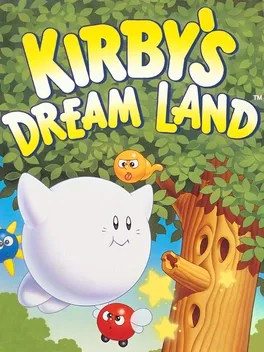
Showing posts with label Kirby. Show all posts

Thursday, November 20, 2025

Kirby and the Forgotten World Review

 (Originally published to Glitchwave on 8/6/2025)


[Image from glitchwave.com]


Kirby and the Forgotten Land

Developer: HAL Laboratory

Publisher: Nintendo

Genre(s): 3D Platformer

Platforms: Switch

Release Date: March 25, 2022


Kirby and the Forgotten Land may have been released on the Nintendo Switch in 2022 when I was the age of 26. However, I’ve been waiting for this game since 2004 when I was but a wee lad of eight years. I’m sure the majority of you haven’t the faintest idea what I’m about to delve into, but a proper 3D Kirby game that escaped beyond the bounds of the two-dimensional confines that Kirby 64 abided by, despite its polygonal presentation, was slated to be released on the Gamecube. Lamentably, as history tells it, this title never saw the light of day, and we were instead treated to the streamlined racing experience that was Kirby Air Ride. The free range of that game’s City Trial mode was not substantial enough of a proper debut for Kirby in the third dimension, but countless Kirby titles were released afterwards without even humoring the notion of rendering Kirby with a wider spatial plane. That is, until two decades later, when HAL Laboratories finally decided to take an honest crack at crafting a 3D Kirby game with Kirby and the Forgotten Land. Given what we know of Kirby’s innate ability to float endlessly like he’s bogarting all of the world’s helium, we can’t be surprised that his developing team had their reservations regarding propelling him to the third dimension for so long. Therefore, Kirby and the Forgotten Land had to prove that increasing the titular pink blob’s range of movement could be feasible without inadvertently making the experience totally effortless. Not only does Forgotten Land make us wonder why the prospect of a bona fide 3D Kirby game gave Nintendo cold feet, but it truly does exemplify every single positive quality that one could associate with the franchise.

For some reason, I expected Kirby and the Forgotten Land to be the pink puffball’s answer to Super Mario Odyssey. This assumption could’ve been because they are both Switch releases from two platforming series with legacy statuses in the echelons of Nintendo, or because Mario’s most recent (still, as of writing this) 3D escapade brought the non-linear collectathon format that Super Mario 64 pioneered to its pinnacle point and expected every other game in the genre to follow suit. While The Forgotten Land barely resembles Mario’s romantic voyage across the continents in his quaint, steam-powered flying vessel, a similarity that Forgotten Land shares to a radically dissimilar game from a whole other realm of the medium is so striking that I’ve become accustomed to nicknaming this game “Kirby: Automata” without any irony involved. I cannot definitively confirm whether or not the popular science fiction hack-and-slash sequel from PlatinumGames was a conceptual inspiration on this Kirby outing, nor can I fully comprehend such a wide sphere of influence on the whole. Still, when I glance at the aesthetic that encompasses the game’s general setting, the comparisons are clear as a sunny day in Honolulu.

The “forgotten land” that the lofty title is alluding to certainly isn’t Kirby’s candy-coated homeworld of Planet Popstar. An interdimensional vortex pulls Kirby into its seismic grasp, and don’t tell me that the world seen on the other side doesn’t evoke memories of Nier: Automata’s fractured urban landscape. Sure, the herbage enveloping the "forgotten land” is far more invitingly lush than the stranded Earth seen in Nier: Automata, but I know for a fact that tall buildings don’t grow vines along its sides for decoration. The “Natural Plains” area that introduces this strange new land to Kirby extends the defeated tone of urban decay to a crumbling highway called “Rock Rollin’ Road” to an abandoned shopping mall, which has become the epitome of a societal graveyard in recent years. Subsequent worlds may have a distinctive elemental theme as par for the platformer course, but they all integrate the same corroded urban setpieces into the foreground. The billowing snow of “Winter Horns” isn’t thick enough to cover the emptiness of the vaguely London-esque urban architecture, “Wondaria Remains” is an abandoned amusement park if that wasn’t indicated by its title, and the intended joy of a beach world is dampened by the offshore industrial plants that comprise the foregrounds of “Everbay Coast.” The hellfire of “Redgar Forbidden Lands” is especially depressing because the destroyed city in the midst of it harkens back to Crisis City from Sonic 06, yet doesn’t instill the suffering implications of that forsaken level like the Christian underworld connotes. Even the more inviting setting of the arid “Originull Wasteland” retains the overarching theme with its ancient ruins and dingy mine shafts. Yes, the realistic and dismal levels in Forgotten Land do indeed conflict with Kirby’s cherubic character and the whimsical innocence of his normal stomping (or floating, I should say) grounds. Still, the cohesiveness of these settings leads me to believe that this stark contrast was the initiative of the developers. As a result, Kirby truly is a stranger in a strange land, and we’re equally as curious as he assumedly is.

A source of familiarity in this uncharted wasteland sparks up regarding the game’s consistent objective. Kirby may not have ever adopted the Super Mario 64 definition of a collectathon like several other 3D platformers, but acquiring a selection of special items has always been a component of the series’ gameplay. In this case, it’s the hundreds of Waddle Dees that have been captured by a gang of furry creatures called “The Beast Pack,” who cannot be seen as intimidatingly hostile when they are this adorably floofy. Wait a minute: I seem to recall Kirby slaughtering any Waddle Dee that came across his path in several different iterations of his days on Pop Star, and now he’s their Oskar Schindler? Does traveling to another world via a portal give the perpetrator the same legal sanction as hopping the border to Mexico? Anyway, regardless of Kirby’s felonious past with the Popstar commoners, he’s the only one fit to be their savior in this dire predicament. Rescuing the Waddle Dees from their cages is essentially the same process as procuring the crystal shards in Kirby 64, or the cubes from Planet Robobot. There are three to five of them located off the beaten path of the trek to the finish line, which all involve a modicum of exploration and attentiveness to one's surroundings. Still, if the player proves to be less than vigilant, simply reaching the end of a level will reward them with a trio of the chubby-cheeked guys for their troubles. Because the collection process mirrors two instances of it in a couple of traditionally 2D Kirby titles, we can assume that Kirby’s newfound parameters still stick to the straightaway course from A to B. While this may seem like a waste of potential, the extent of exploration the game fosters greatly distracts from the technically confined linearity at play. Not only can Waddle Dees be achieved via entertaining the branching paths, but the game features many other collectathon conditions all around. Waddles Dees can be rewarded when Kirby dismantles crudely-drawn wanted posters of himself, eating a chain of edibles from a shared food group, busting up snowmen, etc. Because anything in a level could conceivably be attached to the main collectible, it motivates the player to scrounge about the level’s entirety more meticulously than ever before, which in turn will ideally result in a richer platforming experience.

One may ask what the point of the explorative process would be if the game feels charitable enough to give away a few Waddle Dees, almost like a participation trophy. The immediate answer is that a substantial amount of them is needed to demolish the barrier surrounding a level’s final boss. Alternatively, the mass of Waddle Dees takes refuge in the game’s hub, which is located at the southern tip of the world map. This podunk town has already been colonized by Waddle Dees upon Kirby’s initial arrival, a productive turn-around for a negative situation if anything. Still, one factor of persuading the player to go the distance to free them from captivity is that their community will grow exponentially as they erect various establishments with every numerical milestone. The Waddle Dees will set up shops, a movie theater, cafes/restaurants, a park, etc., in their impromptu home away from home. The latter two notable places mentioned also feature minigames where Kirby serves up grub and fishes, respectively, classically deviating from the platforming gameplay just as the earlier series entries were known to do. The Waddle Dees have even constructed a little cottage for Kirby here so the little guy can rest his weary bones (does Kirby even have bones?). I appreciate their gratitude, but considering the work that Kirby’s doing to save their species, I don’t think tacking on new features to Kirby’s domicile with every increment is an impudent ask from them. Perhaps a jacuzzi or a man cave with a pool table and flat-screen HDTV? Still, I’m satisfied with how Waddle Dee Town expands outside of Kirby’s crib, and seeing the tangibility of my efforts incentivizes me to continue a more thorough tread through the levels.

Mainly, I habitually revisit the Waddle Dee hub because it houses a mechanic/tailor who specializes in Kirby’s hats, which obviously correspond with his special abilities. After playing a smorgasbord of Kirby’s outings at this point, I’ve learned that the amount of elemental abilities Kirby copies from consuming various enemies should be kept to a fair minimum for the sake of brevity, lest a few duds are left on the table like in Kirby’s Dream Land 3. Fortunately, the range of offensive augmentations presented here is a modest twelve, with the digging “drill” and projectile “ranger” making their debuts. While the selection here is all killer with no filler to be found, Forgotten Land also recognizes that the copy abilities make a more significant impact when they are innovated on, with the combining of two in Kirby 64 and absorbing them into the schematics of the mech in Planet Robobot as prime examples. Forgotten Land’s contribution to tweaking Kirby’s greatest idiosyncrasy is evolving the offensive traits of the copy abilities like Pokemon. Once Kirby finds the scroll with the design scheme of the upgrade (another reason to search each level like a cunning detective, I might add) and can fund this addition with enough of the game’s currencies, the enhanced ability that the Waddle Dee gets to work on will replace its inferior version from that point onward. The firepower of the “ranger” ability increases from a pop gun to a deadly laser blaster, “needle’s” upgrade references the clutter of miscellaneous sharp objects from Kirby 64, “bomb” will gain heat-seaking homing properties to explode directly in every enemy’s face, and defeating Meta Knight in an optional colosseum battle will have him forfeit his mysterious mask and trusty Galaxia as the final addition to the sword ability. It’s the only feasible way to incorporate Kirby’s rival in this game while he’s travelling abroad. Improving the classic gag ability of “sleep” by giving Kirby a full-sized mobile bed to rest in seems like a joke in and of itself, but giving Kirby a power nap comes with the added perks of boosted attack, speed, or defense for a short period. I may question what warrants these abilities to be enhanced when the game is consistently easy as a pedantic nitpick, but the curiosity that arises with how each ability will be modified and the spectacle of their amplifications always drew me back to spending my hard-earned money at the hub.

Speaking of well-earned finances, Forgotten Land features a secondary currency to the star coins in the “rare stones.” These coarse, radiant star formations can only be obtained by completing the “treasure roads,” that pop up on the map after finishing the mainline levels. Each of these obstacle courses often involves the singular use of a particular copy ability, so substantial familiarity with a specific one’s properties is key to surviving to the end. In addition, every single challenge is timed, so Kirby cannot briskly float to the goal as he would for levels outside the course. Come to think of it, the segmented platforming mixed with the strain of the time limit was a rare instance of agitation I had experienced while playing a Kirby game. Not only was the promise of obtaining the third ingredient to upgrading the copy abilities straying me away from progression, but these sublevels scratched a certain difficulty itch that Kirby games often are too short to reach, or so to speak. When Kirby games offer an added layer of challenge outside the standard track, I’ll gladly dash towards it.

“Treasure Roads” and the major levels on the whole also tend to incorporate another new way to utilize Kirby’s extraordinary orifice, and it's the gameplay portion of Forgotten Land that actually affirms my initial connection to Super Mario Odyssey. In Mario’s soaring adventure on the Switch, the major hook that captured our attention was the prospect that Mario could transform into anything with the swing of his supernatural cap, provided the target was a sentient being with functioning brain capacity. While Mario covers the diverse range of organic creatures to control, Kirby, conversely, dominates the realm of inanimate objects. In certain instances on the field, Kirby will wrap his gaping mouth around a piece of substantially-sized detritus, which will warp his appearance to fit the shape of the object, as if it were covered in a big, pink tarp with eyes. Kirby’s manipulation of the object will also result in using its mechanical utility for what is essentially the same function as a copy ability. Swallowing an O-shaped letter fallen from a formally neon sign will create a giant fan that can emit violent wind gusts used to blow away groups of enemies or steer the voyage of a small wooden boat along the water. Kirby can perform an earth-shattering dive move by plunging himself downward using an oversized traffic cone, and unscrewing the tops of capsules and water towers is a cinch after he picks the bolts with his teeth. Should it be any surprise that Kirby can inflate himself by gulping down gallons of water like SpongeBob and spurt out the mass of accumulated liquid with the drowning force of a firehose? Possessing a car and any arc-shaped object is reserved for segments all to themselves. Kirby will reanimate a sedan’s engine with a complete tank of gasoline to boot and turbo drive himself over an elongated course fit for such a vehicle, while the arc involves Kirby gliding through the air with the grace of an albatross in ring challenges, despite the hefty metallic weight of the objects. Even though Kirby may look foolish and or demented walking around with these pieces of construction lodged in his gullet, borrowing their physical properties and exploiting them for traversal is a perfect way to extend the utility of Kirby’s innate abilities without bloating the array of elements he can copy. Actually, I’m amazed that this feature didn’t cross the minds of the developers until now, but maybe it was going to make its debut in a previous title, and Kirby kept ingesting the large constructs out of habit.

However, by series tradition, only the copy abilities can aid Kirby during the boss encounters. Series staple bosses like Bonkers and Mr. Frosty interrupt Kirby’s progression on the field and drop their respective elements upon their defeat, but the more pressing fights in the game are the area-ending ones against the executive members of The Beast Pack. They’re still a group of animals like the common enemies, although they are not as cuddly on account of their burlier sizes and more ferocious demeanors. I’ll tell you one thing: the departure of 2D into the more advanced polygonal plane makes the bosses of a Kirby game far more formidable from a purely surface-level perspective. I can almost feel Kirby shiver while under the shadow of the colossal gorilla Gorimondo, and I never noticed how mesomorphic King Dedede was until he thrusted his whole body towards me like an oncoming bus. I’ve seen Whispy donning the cybernetic steel of a futuristic killer before, but seeing him as a giant palm tree with a soul patch is truly the stuff of nightmares. One might scoff at these bosses' attempts to intimidate them and state that the copy abilities will carry them through the scuffle, but these assumptions might lead to their demise. A few of these bosses can be particularly swift and overwhelming with their attacks, namely Clawroline with her cat-like reflexes and Sillydillo rolling towards the player like a giant boulder falling from an avalanche. Because the Beast Pack can be surprisingly brutal for a coalition of Kirby bosses, the game even implements a dodge roll maneuver so Kirby can evade some of the swifter barrages. And here I thought that Kirby was the antithesis of Dark Souls and they’d never see eye to eye. Really, what the integration of the quick evasive move indicates is that the developers have made a conscious effort for these bouts to hold the climactic weight that their situations in the story might suggest. All in all, The Beast Pack had me on edge more than any of the particularly confrontational foes residing in Dream Land.

Because of the overall increased tenacity of Forgotten Land’s boss cavalcade, I almost fretted at what the game’s final boss would have in store for me. Then again, I was confident that the game’s true final duel would be locked unless the player was persistent enough to satisfy the completionist route because that was the stipulation that withheld O2 in Kirby 64 and Dark Matter in the Dream Land games. Forgotten Land does indeed feature content that requires extra involvement from the player, and that’s the second fight against Beast Pack leader Leongar and the NG+ section leading up to it that increases the difficulty of familiar territory and bosses with an ethereal touch like the “Hidden Dreams” DLC of Hollow Knight. However, I’d argue that the standard, incomplete path provides a substantial enough conclusion to Forgotten Land’s narrative as is. After slapping some sense into King Dedede for the umpteenth time, Kirby uncovers the impetus for abducting all of the Waddle Dees in the “Lab Discovera.” They’ve been conducting slave work to power what is perceived to be the “ultimate life form,” which is a malformed pink alien instead of a black hedgehog (sorry, not sorry, Shadow). Once Kirby defeats Leongar, who is trying to protect the alleged almighty being, it breaks its glassy confinement and absorbs every lifeform to create a blob of matter as abominable as Akira. It reminds us that the Kirby series holds traces of uncharacteristic cosmic horror that seem to only bubble up in the climax sections. One particular character that the Lovecraftian beast devours is Kirby’s Elfilin buddy, who I haven’t bothered to mention until now because it's nothing but a tutorial fairy that soon becomes a MacGuffin. When this innocuous furry bat fuses with this volatile creature, it results in the form of an archangel with immense power, whose attempts to collide Popstar with this planet are thwarted when Kirby wraps himself in a mach truck and launches himself into it like a revolver bullet. Who would give a speck of a shit about the completionist bonus when THIS is what happens with their halved-assery? Seeing a Kirby game conclude as bombastically as an average episode of anime is a sight to behold and all, but it should never outshine the outcome of the true ending.

Like clockwork, here’s the concluding paragraph where I gripe about how this Kirby game barely made me sweat like all of the big boy games I’m accustomed to. That is, it would be the crux of my critique if Forgotten Land met my expectations of the average Kirby fare. Truthfully, placing Kirby in 3D and limiting his flight capacity doesn’t inherently make for something that causes me to grit my teeth down to the pulp, but I’ve started to focus more on the series' other attributes that make it a delight rather than an underwhelming slog. Specifically, how Forgotten Land innovates on seemingly every aspect of Kirby’s setting and gameplay that is completely distinctive from every one of its predecessors. That, and I greatly appreciate that the game offers an auxiliary challenge in the “treasure roads” and a select few boss battles to quench the thirst of a seasoned gamer such as I. Changing the perspective to a polygonal plane withstanding, Kirby and the Forgotten Land is resolutely Kirby like any of the 2D games before it, with enough revolutions in its gameplay to make it exemplary even if it was rendered in 2D. It makes me wonder why Nintendo was hesitant for Kirby to make the official leap into 3D for so long, but I suppose it's better late than never.

Monday, June 30, 2025

Kirby's Dream Land 3 Review

 (Originally published to Glitchwave on 4/29/2025)


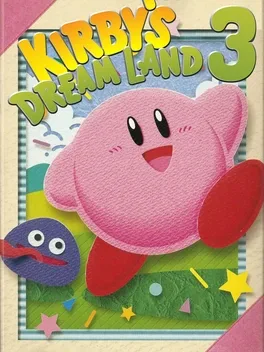
[Image from igdb.com]


Kirby's Dream Land 3

Developer: HAL Laboratories

Publisher: Nintendo

Genre(s): 2D Platformer

Platforms: SNES

Release Date: November 27, 1997


Kirby’s Dream Land 3 sticks out like a sore thumb. For one, it’s the third entry in a Kirby subseries that up until now has been released exclusively on the original Game Boy. Propelling the initial line of Kirby games from a handheld to the console running concurrently with it should seem like an ideal upgrade. However, Nintendo failed to realize that the third Dream Land entry is now in the same league as the Kirby heavy hitters, since it’s not restricted by the Game Boy’s primitive hardware. One would likely place higher expectations on Dream Land 3, considering its advantages, but the game is not at all comparable to the epic scale of Kirby’s Adventure or the sheer variety of Kirby Super Star. All Dream Land 3 does is make me reach a point of clarity, that maybe the rudimentary nature of the Game Boy was not what inherently plagued all of the games sharing the same title.

Well, I suppose it’s lovely seeing Kirby with his fluorescent pink hue again. HAL Laboratories decided not to maintain the Game Boy’s minimalism as a defining trait of the subseries, wisely choosing to depict Dream Land with the same colorful detail as they would with any other SNES game. Still, restoring Dream Land to its state of effervescence with a 16-bit machine is too simple. The restoration process in question evidently involved tracing in the black and white bits of the Dream Land series with crayon, intended to emulate the childlike, whimsical visual style of Yoshi’s Island. Given that the Kirby series is catered to the same, particularly young demographic as Yoshi’s protagonist debut, the cherubic tint of colorful paraffin wax works wonders in pronouncing Dream Land’s wondrous atmosphere. HAL Laboratories probably saw the distinctive visual flair of Yoshi’s Island and were kicking themselves that Kirby couldn’t have patented it for himself. Fortunately, the Nintendo higher-ups allowed them to borrow this pastel aesthetic, and it’s the best-looking Kirby game thus far.

Sadly, the visual style is THE only redeeming quality of Dream Land 3. I can’t explain this, but somehow, Dream Land 3 manages to underperform even in comparison to its Game Boy predecessors. To start my laundry list of grievances, Kirby has never felt more lethargic. The pink blob has never been as spry as, say, Sonic, but his rate of movement here is sluggish as all hell. When Kirby runs, I half expect him to utter exasperated noises that signal his shortness of breath, like Eric Cartman running the gym class pacer test. One might suggest that the solution to Kirby dragging ass on his feet is to simply take advantage of his limitless floating ability. However, they’d fail to realize that flying too often will mitigate entire levels. More so than any other Kirby title before it, the levels in Dream Land 3 are ridiculously linear. Lifting Kirby to the ceiling and maintaining that elevated position with his innate physical floatiness practically guarantees a smooth, uninterrupted trajectory to the goal door. I’m not recommending that this is the ideal tactic, but what’s realistically stopping the player from doing this? Hell, I found myself floating to victory with ease several times, and I’d probably stick to my laurels of experiencing the level the proper way if there were more obstacles in my way that inhibited me, or if Kirby wasn’t such a sloth on his feet.

Admittedly, the game does give the player incentive not to coast through each level absentmindedly by puffing him up to the skies. How does providing over fifty copy abilities sound? Actually, the abundance of copy abilities to potentially use in Dream Land 3 is only true on a technicality. All of the abilities, minus the absurdly lame broom ability where Kirby sweeps enemies to death, are pretty standard ones we’ve seen before. Burning, ice, spark, stone, cutter, needle, and the indispensable parasol all make their return to diversify Kirby’s combat. The expansion of these typical copy abilities lies in another returning element that is distinctive to the Dream Land subseries: animal buddies. Rick, Kine, and Coo enlist once again to “aid” Kirby whenever the opportunity knocks, along with the newcomers of the chubby cat Nago, pink jellyfish ChuChu, and the green bird Pitch, who is far less stockier than Coo. Gooey is a returning helper whom I was always hesitant to classify as an animal buddy. Not only does the bouncing, googly-eyed mound of putty not resemble any creature of the animal kingdom, but it also trails behind Kirby like a partner in Super Star rather than carrying Kirby in some capacity. In addition, all he does is mimic Kirby’s ability to copy the physical properties of enemies. When Kirby has a power equipped with an animal buddy attached, the copy ability translates to their physical forms, which is how the modest number of copy abilities is amplified at least four times the number of enemies that supply them.

The variety on display here should stimulate a sense of curiosity, but the majority of the animal buddies emulating the powers is disappointingly lame. Watch all of Dream Land’s Waddle Dees tremble in fear when the broom turns Coo into a feather duster that Kirby bats around. Get real. Every power that Pitch reinterprets is a pain to aim, and Kine protruding a plunger or a lightbulb out of his face hole has the attack range of an X-ACTO knife. ChuChu is the only animal buddy who produces copy abilities of any interest, soaring on the broom with the grace of a witch and puffing out spikes with the needle ability that spreads over five different angles. Besides those perks to ChuChu, she still has a habit of inhibiting Kirby’s flight. It illustrates something I harped on with the previous Dream Land game, in that the animal buddies often feel like handicaps to Kirby rather than enhancements as intended. Extending the range of copy ability used with the animal buddies maintains a sense of curiosity, but I’d rather keep abilities like the wheel and microphone if it means that Kirby will retain his inherent physicality no matter what he copies.

The other form of imploring the player not to rely too heavily on Kirby’s inexhaustible flying is the various missions each level subtly provides. The Dream Land 3 equivalent of the second game’s rainbow drop collectible is the “heart star,” rewarded by completing a task outside of the main mission of traveling to the end of a level. Where Dream Land 2 featured one of these subsidiary objectives per world, its follow-up decides to implement an opportunity to earn a heart star for every single level in the game. Some of the extra-curricular tasks each level provides are genuinely engaging, mostly because they involve Nintendo easter eggs like assembling the pieces of ROB, the NES peripheral, and freezing Metroids for Samus. Still, the constant supplementary effort to consider adds a layer of tedium to each level, even if their presence does provide enough activity so the player doesn’t fly away with impunity. Many of these tasks are locked behind a specific copy ability that the player couldn’t have possibly anticipated. This fosters replayability, but I’d rather watch grass grow than travel through most of these levels again. Don’t get me started on the demanding memorization puzzles that lock a few of these heart stars. The added layer of involvement results in feeling like busy work.

Despite the grating nature of collecting the heart stars, there is actually some validity in persevering to experience the game’s ending. There’s something rotten in Dream Land, and it's that damned dark matter again attempting to consume Kirby’s continent. If Whispy’s shocking transformation from bumbling oak to hideous, savage monster isn’t an indication that something is seriously wrong, then I don’t know what could be a cause for concern. To uncover the source of the corruption, the player must gather all of the heart stars and defeat the classic red herring of King Dedede, whose fight this time is quite disturbing, with his possessed body flailing about in the air. The power of the complete set of heart stars reveals the embodiment of Dark Matter as a floating black eye, and Kirby must dispatch the ocular evil with the fully-powered Star Rod in a space-shooter section like in the previous game’s final battle. When this phase is over, this fight gets shockingly gruesome. The Dark Matter eye will expand to a bulbous, white orb and shoot spurts of blood at Kirby as its projectiles. After this gastly display, Dark Matter’s bulging red pupil will dislodge itself from the outer eyeball as the third phase of this fight, before Dream Land is its tranquil self once more. Not only is the three-phase endurance test fairly challenging for a Kirby game, but the boss itself is downright horrific. To think that they reinvigorated Dream Land’s color just to depict this uncharacteristic nightmare!

Nintendo did not give one iota of a fuck about Kirby’s Dream Land 3. Besides placing it on a console that everyone’s moms likely sold at a yard sale in the first year that the N64 was front and center, the third and final Kirby title that directly stemmed from his Game Boy debut barely bothered to add much of anything to the formula. Its laziness also extends to neglecting to address the issues presented in the previous game, namely, with the integration of the animal buddies and the tedium of the extra tasks that unlock the true ending. What surprises me is that, despite the engine it's running on being capable of producing more steam, against all logic, Dream Land 3 fails to catch up to its predecessors, which were already mediocre at best. Masking all of its issues with an attractive aesthetic will only convince Kirby’s most impressionable demographic (children) of its quality, but I see right through it. Maybe the devout Kirby fans will still enjoy this colorful charade, provided that it doesn’t put them to sleep first.

Monday, March 31, 2025

Kirby's Dream Land 2 Review

 (Originally published to Glitchwave on 3/8/2025)


[Image from glitchwave.com]


Kirby's Dream Land 2

Developer: HAL Laboratory

Publisher: Nintendo

Genre(s): 2D Platformer

Platforms: Gameboy

Release Date: March 21, 1995


It’s puzzling how Kirby’s Dream Land received two sequels after the release of Kirby’s Adventure. Actually, my statement should probably read off as feeling perplexed as to why Nintendo bothered producing another Kirby title on the muted, minimal original Gameboy. The console colors of the NES allowed Kirby and his cosmic wonderland to flourish with pixelated radiance. Kirby’s candy-coated aesthetic is an integral asset to the general appeal of his series, for it sure isn’t its challenge and level design driving the franchise’s continued relevance in Nintendo’s catalog of IPs. When we’ve been introduced to Dream Land through hardware that could feasibly render it in all its vivid glory, what makes them think anyone would want to return to the blank minimalism of its introduction? Are the Dream Land games now running concurrent to Kirby’s Adventure as the inferior handheld counterparts like the “Land” series of Mario titles on the original Gameboy? This indeed appears to be the case. Although it might seem disenfranchising that there are more Kirby games on the original Gameboy than the grand total of one on the NES, the handheld Dream Land titles could still incorporate fresh and interesting features and ideas into the Kirby foundation if Super Mario Land serves as an example. Instead of proving and plodding along the first Dream Land’s obsolescence, Kirby’s Dream Land 2 changes up the Kirby formula to help it stand apart from Kirby’s Adventure, but to questionable degrees of quality.


Still, HAL Laboratory transferred plenty of properties from Kirby’s Adventure into the second Dream Land titles as pronounced quality-of-life changes that could never be reversed. One reason why the first Dream Land felt like a morsel of a game was that there were only five main levels that passed by the player quicker than a shooting star. Adventure elongated the Kirby experience by taking a note from Mario and dividing each thematic world into a handful of sub-levels that all culminate into fighting a boss. Kirby will travel around the cosmos on his warp star in a stage select menu and soar down to that world’s hub where a selection of doors will lead Kirby through the various levels in their sequential order. Naturally, this extends the total runtime of the second Dream Land game more than quadruple the length of its predecessor, so that unsatiated hunger I left with the first Dream Land is sufficiently quenched here in its sequel. Still, while I feel that criticizing each level’s visuals is belaboring the point that the Gameboy’s visuals are compressed as hell, I can still prod at the uninspired names of these worlds. “Grass Land”, “Big Forest”, and “Iceberg”, guys? These names aren’t exactly evocative of a wondrous ethereal realm that exceeds the bounds of our reality, are they? Another Kirby attribute that debuted in Kirby’s Adventure whose absence in the first Dream Land arguably provides the most substantial reason for its antiquity is the ability to copy the physical properties of Dream Land’s denizens. Rest assured, Dream Land 2 has carried over Kirby’s greatest idiosyncrasy, so he’ll be blasting his frost breath, rolling around like a rock, and puffing himself up with spikes like an alert hedgehog (etc.) like always.


From what I’ve stated so far, Dream Land 2 does indeed sound like the handheld version of Kirby’s Adventure that compromises presentational performance for the sake of mobility. However, one unique attribute featured in Dream Land 2 sure to pique the interest of those unsatisfied by the inherent convenience of the Gameboy are Kirby’s animal buddies. Whenever Kirby faces off against a miniboss in a level, a sack dangling from the ceiling will fall upon its defeat and reveal one of three cuddly creatures with their distinctive traversal strengths. Hopping on the backside of Rick the Hamster is like a cuter version of Donkey Kong riding on Rambi from Donkey Kong Country. While Rick excels on the ground, Coo the Owl commands the air while Kine the Fish naturally swims underwater with the grace of…well, a fish. Besides their enhanced traversal capabilities per their respective physicalities, the coolest aspect of the animal buddies is how they repurpose Kirby’s copy abilities whenever he’s partnered with them. For example, the scattered spark that emits with the lightning ability is reconfigured as a beam with far greater of an attack radius while riding on Rick’s backside. Bringing an umbrella while flying around with Coo can allow the fluffy bird of prey to spin violently like a tornado, and the added heat of fire will cause Kine to spew projectile fireballs–as paradoxical as that sounds. If expanding Kirby’s copy abilities from Adventure comes in the shape of collaborating with these adorable creatures, then I welcome the change wholeheartedly.


No one can be so cold as to completely write off the adorable animal buddies as a welcome addition that gives Dream Land 2 an individual appeal compared to Kirby’s Adventure. Still, my time rescuing them from their crude confinements and using them on the field makes me wonder if they really enhance Kirby’s gameplay as intended. One shockingly subtle aspect of Kirby as a character that rarely resonates in the minds of the gaming community is how disturbingly powerful the wad of space gum is behind his inoffensive exterior. Sure, some of the powers Kirby can impersonate are stronger and or have a bigger attack range with the aid of the animal buddies, but the fact that their traversal aid only accounts for one particular terrain makes them feel sluggish and awkward in any other instance, ie. Kine and Coo on land and Rick with most obstacles. The animal buddies handicap Kirby’s movement equally as they enhance it, and Kirby already had an astronomical physical aptitude. Perhaps the animal buddies’ abilities would be better assets to the game if they were mandatory for certain progression points, but that would be incredibly obnoxious and unintuitive.


And suggesting these impediments was really just a segway into discussing the instances where the game does require the presence of a specific animal buddy to unlock a portion of the game’s content. The “rainbow drops” are the one collectible hidden in one obscured corner per world, and obtaining them is crucial in unlocking the game’s true final boss. Yes, this is the Kirby game that begins this kind of end game charade to the full completion route, and it’s arguably the most vexing to accomplish out of all Kirby titles that do this. The method of gaining these would-be colorful droplets are all incredibly circuitous and are likely never to be naturally found by the player without the auxiliary reference of a guide. The path to one particular rainbow drop involves a long swath of time using Kine on land. Must I elaborate further on why this process is a complete hassle? Upon attempting to conquer this arduous quest, I also found myself getting stuck in places with the animal buddies that wouldn’t have been a problem with Kirby on his lonesome. Normally, I’d commend a Kirby game for providing a challenge in its otherwise easygoing atmosphere, but the rainbow drop collecting process turns Dream Land into Nightmare Land (this sounded clever in my head). Just treat the black, ominous phantom expelled from King Dedede’s body upon his defeat as a cliffhanger for the following few Kirby games where the “dark matter” is a relevant plot point. The boss fight that engages afterward if the player successfully collects all of the rainbow drops isn’t all that thrilling anyway.


Alas, the unfortunate dynamic between a console Nintendo title and the handheld entry from the same series holds true with Kirby’s Adventure and the second Kirby’s Dream Land title. However, I can definitively say that Dream Land 2’s inferiority to Kirby’s Adventure isn’t simply due to its heavily restricted visuals. Once you play Dream Land 2 and see all of the properties that it borrowed from Kirby’s Adventure like its world progression and bosses and waters them down ever-so-slightly to the point where it's either noticeably worse or underwhelmingly identical. The animal buddies feature that Dream Land 2 implements to provide evidence of its own merits is fun initially, but is soon revealed to be bogged down by so many clashing moments in the level design even if the player isn’t compelled to go the distance with the rainbow drops. All the same, at least Kirby’s Dream Land 2 updates the Kirby formula to the content and length of a suitable Kirby experience far past the appetizer that was its Gameboy predecessor. Still, compared to Kirby’s Adventure that directly precedes it, know that buying Kirby on-the-go will short change the player nevertheless.

Saturday, March 15, 2025

Kirby's Dream Land Review

 (Originally published to Glitchwave on 2/9/2025)


[Image from igdb.com]


Kirby's Dream Land

Developer: Hal Laboratories

Publisher: Nintendo

Genre(s): 2D Platformer

Platforms: Gameboy

Release Date: April 27, 1992


In 1984, Nintendo was slapped with a damning lawsuit from Universal Pictures, who claimed that the character of Donkey Kong was a direct infringement of their classic skyscraper-climbing, T-Rex-walloping movie monster King Kong. Nintendo argued that there was room for more than one gargantuan gorilla in the world of fiction, and the hired lawyer defending the Japanese company’s right to depict oversized apes in their interactive media was Mr. John Kirby. Because John Kirby’s argumentative acumen won the lawsuit for Nintendo, they decided to show their gratitude by immortalizing this man as one of their now-trademark characters: the adorable space blob Kirby. It’s hard to say whether or not Nintendo already created Kirby and were circling around the board room struggling to find a fitting name for their brand new bundle of fun or if it was spurred by obligation to compensate their legal representatives in ways other than finances. Still, it’s hard to imagine Nintendo’s floating mesh of goop without his strangely Irish denomination three decades onward. It’s also hard to tell if Mr. Kirby was at all flattered by how Nintendo decided to tribute him. Judging by how old the man was at the time, he was most likely completely ambivalent to video games and never gave it much thought. Personally, if I were in this man’s shoes as an avid gamer, I wouldn’t be jumping for joy. Sure, I’d find it amusing that there was a video game character sharing my namesake and would shamelessly use it as my permanent conversational icebreaker. Still, I’ve always had my grievances with Kirby and associating a piece of my identity with a series that consistently irks me isn’t exactly life-affirming. This would be especially true for Kirby’s Dream Land, the little guy’s gaming debut on the original Game Boy. If Nintendo had presented this title to me as a kind gesture, I’d revert the work I had done and sue them myself.

It’s also hard to imagine a colorless, muted Kirby without his glowing pink sheen, considering he’s the video game character synonymous with that bright and effervescent shade. Alas, anyone introduced to the stumpy orb here wouldn’t be aware of his striking bubblegum hue because the two bits holding the original Gameboy’s visuals together could not render color in their graphics if its life depended on it. Hence, why Kirby and his magical space dimension of Dream Land is depicted in stark black and white. With decades of hindsight, seeing Dream Land with the Gameboy’s monochromatic visual lens is quite depressing because Kirby’s otherworldly stomping grounds is such a vivid splendor with all of its striking colors. However, I believe there is some merit to seeing Dream Land at its most modest. The moniker of this place that exists somewhere over the rainbow in the unfathomable reaches of the cosmos connotes that it's so fantastical that it can only be perceptible in the ethereal realm of sleep. It’s a little known fact, but folks back in the early to mid 20th century used to dream in greyscale due to the overexposure of black and white visuals depicted in film and television. With this in mind, the argument that Dream Land looks particularly hazy and dreamlike is a sound stance. It may not be as captivating as a Jean Cocteau film, but Dream Land’s graphical compromise still fits the intended tone that Kirby’s setting usually evokes.

Kirby’s typical gameplay of floating all over the horizontally-confined space from point A to B is not one of the recognizable series’ attributes compromised by Nintendo’s most primitive piece of hardware. However, in Kirby’s earliest iteration, one might be surprised at how many of the known intricacies of the standard progression process aren’t available. For one, Kirby’s distinctive ability to suck all that surrounds him into his mouth like a black hole and copy the physical properties of the creatures swallowed up in his orifice has been halved. Kirby can still inhale all in his vicinity like a Mach five tornado, but he cannot even swallow the creature, much less brandish its identity upon consuming it. The player will have to settle for spitting the contents in his mouth and pelting other creatures with them to kill two birds with one stone. The combo potential is somewhat nice, but I’d rather mix and match the elemental properties and lay waste to Dream Land’s denizens with a consistent streak of energy. I don’t think I’m alone in expressing this wish. To keep the gameplay from growing stale from the incessant expectorating, at least the game offers power-ups such as the spicy curry and mint leaves that both involve Kirby transforming his spit into a projectile weapon without the need to suck up ammunition. You’ll excuse me if I’m not exactly enthralled by the extremely limited range of gameplay variations on display.

However, one aspect we’ve all come to associate with Kirby that he still possesses in his earliest incarnation is the impressive ability to fly inexhaustibly through the air like a balloon. This physical characteristic of Kirby’s is the primary reason why his titles tend to be a cake walk, or I suppose a “cake float” in this context. Because Kirby's flight of fancy is still as boundless as ever, it makes his debut title just as breezy as expected. Dream Land consists of five levels with a boss as each level’s climax, and it is doubtful that the player will find themselves in a snag at any point. One exception could be the boss rush at the end which involves fighting each of the game’s four bosses in succession without any respite in between. The endurance test would’ve been far more tense if the individual bosses like the girthy oak tree Whispy and the cyclops storm cloud Kracko served a decent challenge and if there weren’t any checkpoints placed in between each fight. Surviving the roulette of repeated Dream Land bosses culminates in facing off against classic mainstay Kirby archrival King Dedede in a wrestling ring, and this lengthy and fairly complex final boss actually stands as an adequate way to end the game. It’s just rather off putting that the finale is cheapened by the simple and brief stroll leading up to it.

Perhaps my statement that ended my opening paragraph was a bit too dramatic. I would be floored if Nintendo tributed me with a character that shared my namesake, and I’m sure the lawyer was honored by their consideration even if he had never touched a game controller in his life. Still, if Nintendo had me play the game they created with my contribution in mind at its prerelease, I’d be concerned that the game wasn’t finished yet. I’ve come to realize that an aspect of the Gameboy was not only decreasing the number of pixels and colors from Nintendo’s console equivalent–the length was also compromised. Despite its hour-long length, Super Mario Land, for example, at least deviated from the setpieces of the standard Mario fare, which in turn made it refreshing. With Kirby’s Dream Land as the gumball’s debut and all of the inadequacies of the Gameboy at play, the game feels like a treatment for the series instead of a triumphant premiere. When a full meal of Kirby often fails to satisfy me, imagine how my stomach still proverbially rumbles after playing the rudimentary sampler with less caloric value.

Wednesday, September 20, 2023

Kirby: Planet Robobot Review

 (Originally published to Glitchwave on 9/15/2023)


[Image from glitchwave.com]


Kirby: Planet Robobot

Developer: Hal Laboratory

Publisher: Nintendo

Genre(s): 2D Platformer

Platforms: 3DS

Release Date: April 28, 2016


Kirby has managed to grab my attention once again. This time, it's the 3DS title Kirby: Planet Robobot, which has been rumored to be the best Kirby title of the bunch. This news intrigues me because no Kirby title before has ever taken the stand as the championing king of the series despite its 25-year tenure at the point of Robobot’s release in 2016. The mainline Kirby games have always been consistently well received, but none of those games have an “Ocarina of Time” status: the unanimous darling in both critical and audience acclaim whose ground-breaking impact changes the course for every subsequent entry for the foreseeable future. Suddenly, one game has the moxie to step up to the plate and hoist itself into the ranks as the alpha Kirby title, making its predecessors bow down to its sheer awesomeness. You can tell that Kirby: Planet Robobot means business from the game’s cover. Normally, Nintendo feels inclined to alter Kirby’s visage on the cover to a more cheerful, elated face for the Western release if he looks menacing or determined on the original Japanese cover. Because Nintendo made no effort to make Kirby look more accessible, this means that Kirby: Planet Robobot takes no prisoners. Also, Kirby piloting an intergalactic Gurren Lagann mecha, which is what the title alludes to, already makes for a persuasive pitch. Alright, Robobot, I like the cut of your jib and I will accept your duel to challenge my preconceived notions based on all other Kirby titles before you. However, because of your high regard, you’re going to have to convince me that the mech isn’t a gimmick and that Kirby can be a substantial gaming experience.

To signify its preeminence, Planet Robobot immediately catapults the player into a high-stakes premise unseen in any previous Kirby title. Kirby’s home planet of Pop Star is enjoying its time of peace until it is abruptly interrupted by a colossal UFO that sinks its claws into the Pop Star’s crust like a cougar does to its prey. King Dedede and the rest of Pop Star’s military forces are naturally not going to take this hostile invasion lying down, so they man their battalions with the fiercest firepower possible. Unfortunately, the deadliest extent of Pop Star’s opposition is a few cannons and an army of Waddle Dee’s frantically scrambling around for something more formidable and failing, making Pop Star easier to invade than a small island nation in the Pacific. Meta Knight thinks the artillery of the winged aircraft Halberd modeled in his masked visage will be enough to conquer the alien forces, but is quickly dispatched as his ship careens downward in a blaze of smoke. Meanwhile, as all hope seems lost, the chaos of the invasion disturbs Kirby from his slumber, calling him to action as the obvious true defender of Pop Star’s sovereignty. One image in Planet Robobot that is particularly striking is seeing the size of the Halberd in the sliver of screen space with the alien mothership that almost eclipses the screen. Remember in Kirby Superstar when the Halberd was a formidable presence? The juxtaposition in this shot subtly suggests that the Kirby series has evolved and the game has raised the bar for the challenges that Kirby will face in this adventure.

But does Planet Robobot finally amplify the facile difficulty level associated with the Kirby series? That was the widespread sentiment echoed around the block for everyone who was floored by this game. Considering the breezy difficulty is my main vocal criticism for every previous Kirby, the notion of Planet Robobot providing a heftier challenge was a factor in instilling my sense of interest in it. After playing Planet Robobot with this pretense in mind, I have to ask this question to everyone who stated this: did we play the same game? Does Kirby not float extemporaneously with a boundless flight like a freed balloon, allowing him to elude most obstacles that stand before him? Is the game not littered with a more-than-charitable amount of extra lives and health items that make the Red Cross seem covetous by comparison? No, I didn’t expect the game to implement limited continues and a one-hit health system like what was initially expected of Kirby’s Adventure on the NES. Still, the fact that Planet Robobot seemingly makes no attempt to provide a steeper challenge leaves me utterly confused at what everyone was beaming over.


Because Planet Robobot is still a traditional Kirby experience, discussing Kirby’s gameplay mechanics feels redundant. He still soars from left to right on a 2D axis and treats his stomach like an inexhaustible, ironclad vacuum when he devours everything as a solution to overcoming every obstacle in his way. Planet Robobot flaunts the graphical capabilities of the 2.5D perspective like the last two mainline Kirby titles did by cinematically changing the camera angles for certain situations like ascending the staircase ramp up to one of the mothership’s industrial inner workings. The game even implements a number of visual gimmicks regarding the 3D peripheral of the 3DS system. The impact of getting run over by a Waddle Doo’s compact car or when a tube materializes on screen before it starts to roll makes Kirby literally break the fourth wall. If I were able to physically see the full extent of the 3D effects, I’m sure they’d be marvelous and not simply recycled defeated animations from Super Smash Bros.

Talking about Kirby’s innate controls isn’t what people want to hear regarding Planet Robobot, for they persist from every previous Kirby game with no deviation. Let’s be honest, the exciting aspect that reeled most people into purchasing Planet Robobot was the hulking mech seen on the front cover and alluded to in the title. Kirby did not figure that dusting off this deadly mechanical marvel from whatever garage he hypothetically owns would be especially advantageous for such a monumental threat like the alien invaders, for he does not possess the insight. The mech is actually a tool used by the alien foot soldiers that antagonizes Kirby sometime in the first world. Once defeated, Kirby discovers that the mech somehow has physical properties that allow Kirby to command it like one of the enemy's powers, shifting from an industrial gray to a bright pink to signify Kirby’s newfound ownership of it. After the initial undertaking, the mech can be ready to use once Kirby finds it again on the field. The mech literally packs a mean punch and while it is tethered to gravity unlike the pink, cosmic being that pilots it, its double jump feature along with a temporary glide proves to be enough for traversal. When trying to wallop an enemy with a sucker punch that Kirby could potentially use their powers when he sucks them up, something extraordinary occurs. The mech will instead scan the enemy in close proximity and copy their specific power, mechanizing the ability for the mech’s own usage. Essentially, the mech powers are high-octane versions of what Kirby can perform on his own. Scanning Sir Kibble and Blade Knight for their respective cutlery tools sprouts massive steel appendages that are able to cut through industrial-strength chain links. Copying fire allows the mech to belch molten lava like a military-grade flamethrower, and the ice ability can freeze Bonkers the gorilla into a solid block of ice and slide him across the level like a curling iron. The wheel completely transforms the mech into a bitchin’ vehicle that blazes through Pop Star’s inhabitants with ramming speed, and the jet completely shifts the gameplay mechanics into a scrolling shooter where the craft is armed with lasers and comically sized missiles. The thunderous mic move is actually practical in the mech as Kirby can weaponize tinnitus with a pair of concert speakers on wheels instead of one sonic boom blast. As you can probably guess, the mech is more than a worthy addition to augmenting the standard Kirby formula. Mowing down enemies with the mech gives the player a gratifying thrill that makes them make the same dastardly face as Kirby does on the game’s front cover. Surprisingly, the ostentatious presence of the mech does not render an already easy game totally effortless. Not since Kirby 64 have the developers found an engaging way to diversify Kirby’s copy abilities, and seeing how the mech would transform according to the power-up was always a sight to behold. The player has the option to pimp out their mech with symmetrical arm tattoos in the form of various sticker collectibles. I recommend dueling Hydra and Dragoon stickers from Kirby Air Ride, for they look totally badass.

Sadly, there are powers in Planet Robobot that Kirby leaves all for himself to use when he leaves the mech in an idle position on the field. Since Kirby has accumulated new powers to use over the two decades since Kirby’s Adventure introduced the ability, some of the copied classics have been subject to the cutting floor for the sake of brevity. Most of the powers in the expected roulette are present, but the player will not be seeing Kirby sprout needles from his body like a porcupine, nor will we see him flutter with the wing ability. The few new Kirby abilities found in Planet Robobot are cheekily referential, and I guess twenty years is the mark when Kirby is allowed to be meta, as well as a reminder that Sakurai is allowed to dip his hands into any other Nintendo franchise whenever he pleases as the creative director of Super Smash Bros. Doctor Kirby mirrors one of the plumber’s more famous occupational ventures, overdosing enemies with an irresponsible prescription to gigantic pills of all colors. Beating them with a clipboard is a new touch that Dr. Mario never did in Smash. Doctor Kirby’s most unorthodox move is materializing a lab desk to mix and mash potions and elixirs with a myriad of different elemental properties. I wouldn’t make the connection between another Nintendo character and Kirby’s new ESP move, but the backward baseball hat is a dead giveaway. The only new power that does not remind me of any Nintendo character is the poison move unless the developers are suggesting that one of the Smash Bros. characters IS poison from a metaphorical stance, which is quite mean (it’s Pichu). The only new move I would welcome into the canon is the ESP move as Poison was too similar to fire and Doctor Kirby featured way too much utility to be practical.

Besides the previous two Kirby games on the 3DS that share the same engine, the Kirby game that Planet Robobot reminds me the most of is Kirby 64. This comparison is due to the code cubes, the main collectible from Planet Robobot that have the same utility as the crystal shards from Kirby’s first outing with 3D graphics. Like the shards from Kirby 64, there are three code cubes in each level placed in the beginning, middle, and end sections of each level. Don’t worry; as the player, you will not need to grab a pencil and paper to write down the code from every cube acquired. However, the player will still have to keep their wits about them, for the code cubes are not seen in plain sight. The repeated process from Kirby 64 might make some veteran gamers groan, for gathering the crystal shards elongated the game to a tedious degree. It wasn’t difficult by standard definitions, rather, having to seek out two separate enemies for their powers and carry their combinations was an exercise in grueling endurance. Regarding the code cubes, their role in Planet Robobot gave me a moment of clarity. The newfound substance in Planet Robobot does not stem from the game’s physical difficulty: it’s the puzzle aspect of retrieving these cubes. All the resources needed to solve the subsidiary puzzles off the beaten path are available to Kirby in close proximity as opposed to putting him on a fetch quest outside of the level. When the player figures out what is required, unlocking a code cube should be a cinch, but the player will still have to exert a fair amount of logical intuition in order to lead themselves to victory. The codec cubes finally offer a consistent and reasonable challenge in a Kirby game.

In Kirby 64, at least collecting the crystal shards was an optional endeavor. Collecting the vast majority of the code cubes, however, is a necessary venture in unlocking the boss door that follows every world’s fifth level. Behind the electronic shield, the bosses of Planet Robobot are once again an eclectic mix of foes. One pattern I noticed from all of these bosses is that they are remixes of bosses found in previous Kirby games. Terminator Whispy, for example, still technically presides as the Kirby game’s first formal boss. Still, his new cybernetic enhancements give the poor, dopey tree a freshly intimidating presence as he attempts to bulldoze Kirby in his introduction sequence. Remember the Zeppelin Kabula from the very first Kirby game on the Gameboy? The weaponized hot gas ship returns with a sinister, sharp-toothed sneer. Galacta Knight is the gallant Meta Knight with nuts and bolts kinetically facilitating his swift sword swipes, and the sludgy King Dedede clones are fairly self-explanatory. The Holo Defense API does not explicitly state that it’s a rehashed version of the Pix battle from Kirby 64, but anyone who has played the game will recognize it instantly. The same goes for the final fight against Planet Robobot’s true final boss, the Star Dream source of the alien invader’s operation. To face the colossal intergalactic machine in the immeasurable battlefield of the cosmos that should remind everyone of O2, Kirby’s mech morphs with a certain battleship that has been fully restored, and the absolutely wild combination made me audibly gasp. As much as I appreciate the roster on display here, I wish Planet Robobot offered more bosses that involve the mech. Unscrewing the towering Gigavolt’s parts and the few scrolling shooter sections are fine, but I was eagerly anticipating some Rock ‘Em Sock ‘Em Robots action.

While Planet Robobot’s bosses didn’t quite meet my high-octane mech battle wish fulfillment, I’m still pleased that some of them tap into some unprecedented narrative substance. Like the atomic age horror films that popularized the concept of an alien invasion, there are veiled allegories beneath the conceptual surface here. Kirby has subtly conveyed themes of ecological preservation before, alluding to the Shiver Star area from Kirby 64 that depicted a once prosperous planet reduced to a desolate tundra due to hazardous anti-environmental practices. The invading alien forces that have discourteously made themselves at home on Pop Star’s surface are called the “Haltmann Works Company,” parasitically draining Pop Star’s resources before moving on to another poor planet to rinse and repeat the process. It’s no coincidence that this evil imperialistic terror sounds like the name of a business and that their leader is a debonair humanoid creature dressed in a suit. Planet Robobot conveys that intergalactic bureaucrats are as scary as races of grizzly warrior aliens wearing necklaces made of human skulls because these kinds of bureaucrats exist in real life and they’re destroying the planet for a profit as we speak. In Haltmann’s case, his company's operation runs under the ethos that mechanical life is superior to organic life. He tries to render all that comes from the Earth and the womb obsolete with robotic innovation. As we can see from Whispy and Meta Knight’s mechanical doppelganger, the cold, malformed depictions of these classic Kirby characters are hardly an improvement. In fact, their twisted uncanniness is actually rather disturbing, as Haltmann’s pink-haired assistant Susie’s gleeful is when she introduces them. Planet Robobot’s narrative tone is surprisingly dark, which one could argue is counterintuitive to the lightheartedness of a Kirby game. Still, I think the regularly blithe nature we’ve come to associate with the Kirby franchise makes us more invested in preserving it when someone comes along to ruin its sanctity. Planet Robobot features more domestic levels featuring Waddle Doos driving cars and swimming in lakes in the background to remind us of how blissful Pop Star is supposed to be, and the presence of the robotic overtaking is present in each of the worlds. Whether it be the grassy “Patched Plains,” the watery “Overload Ocean,” the arid desert “Gigabyte Grounds,” etc., an industrial level inside Haltmann’s operation will always be featured to convey the severity of the situation at hand. Suddenly, I care about the state of Kirby’s world, a concern I thought would never cross my mind.

I thought for sure that I’d be warning the public that Kirby: Planet Robobot was just another entry in a persisting formulaic line of Nintendo’s simplest formula for platformer design and that my vocal cries and fervor would be undermined by the fact that this time, Kirby is in a mech. For the first time in a series that had been around for two decades at this point, I am chugging the Kirby Kool-Aid and will not be mewling on about how easy Planet Robobot is like every other Kirby game. The mech is a blast to use on the field for whichever of Kirby’s powers it is emulating, but the mech represents more than an additional gameplay perk. The mech’s functionality has an unexpected depth beyond its thunderous physicality. The mech’s mechanical attributes allow for an engaging range of manipulating the level’s foreground, making me wish that there was a Kirby game that was a staunch puzzle platformer. In addition, the mech also represents not only an evolution to Kirby’s gameplay after so many years, but it’s a symbol of a harrowing future that Hal Laboratories express negatively on through their work. Sure, Kirby: Planet Robobot is still a tried and true Kirby experience with the same level of ease. However, the player will not be able to use its ease to breeze through it. Unlike the previous titles, Kirby: Planet Robobot’s secret ingredient is a heaping load of mechanical and narrative depth that lets the experience resonate with the player longer despite the simple gameplay. Let’s hope this persists for every Kirby game afterward.

Friday, July 21, 2023

Kirby & the Amazing Mirror Review

 (Originally published to Glitchwave on 7/21/2023)


[Image from ign.com]


Kirby & the Amazing Mirror

Developer: Flagship, Hal Laboratory, Dimps

Publisher: Nintendo

Genre(s): Metroidvania

Platforms: GBA

Release Date: April  15, 2004


Kirby games hardly ever pique my interest but suddenly, add the Metroidvania tag to one entry and I’m all ears. The Metroidvania genre inherently intrigues me because I adore its design philosophy with the loose parameters that fracture the foundation of linearity. Kirby and the Amazing Mirror is the pink puffball’s first and only foray in the intricate 2D platformer subgenre, an experiment on the GBA handheld that would ideally expand the parameters of the typical Kirby level design and let its layers blossom. One question still remains: does Kirby’s world actually warrant a Metroidvania treatment? His primary ventures in 2D platforming would suggest so, considering the Metroidvania is a more fleshed-out offshoot of the genre. What I’m wondering is if sculpting any standard 2D platformer franchise in the Metroidvania form would inherently make for a more engaging and substantial experience. For example, would Bubsy no longer prove to be disparagingly derivative only if his games featured more locked doors and power-ups? Would that be enough for Bubsy to get into my good graces? The same hypothetical question could pertain to Kirby, albeit much less drastically than in the situation for the defamed bobcat. Kirby’s tried and true 2D platformer design simply never captured my attention like his fellow 2D platformer mates at Nintendo because the lack of restrictions to Kirby’s innate physicality made his games a bit too breezy for my liking. By forcing Kirby to accumulate to his full potential as par for the Metroidvania course, will it result in an experience that finally resonates strongly with me? After playing through Kirby and the Amazing Mirror, this question somehow remains unanswered.

The mirror that the title alludes to is actually as mystically grandiose as it sounds. The angel-winged glass frame is currently being corrupted by an ambiguously evil presence, which puts the general welfare of Dreamland at great risk of succumbing to a dark demise. Kirby and his friends follow what looks to be Meta Knight into the mirror to cease the formidable force possessing the sacred artifact. Notice how this Meta Knight’s complexion looks more depleted than usual? It’s indicative of the game’s prominent theme of a mirror presenting a shadowy reflection of thyself. However, the prevalence of this theme does not mean the world inside the mirror is a spooky bizarro Dreamland. The GBA’s pixels render something just as colorful and charming as the 16-bit aesthetic last seen in Super Star, even if they display a better refinement to the point where the overall aesthetic no longer reminds me of Laffy Taffy and chocolate cake. The mirror world is a diverse environment consisting of nine unique districts, and their distinctiveness is reliant on competent graphical prowess for discernibility. The theming presented here recalls how every sequential level in linear games like Kirby’s Adventure and Kirby 64 comprises a loose motif, only now sprawled out to the wider parameters of a labyrinthian playground. Some districts of the mirror world include the dry canyon of “Mustard Mountain” with flaming hot lava belching from the earth, the frozen grounds of a sparkling ice estate called “Peppermint Palace,” and the Halloweeny haunted house of “Moonlight Mansion,” etc. The stringy, purple foliage of “Cabbage Cavern” is especially eye-catching. Whether or not the world seems like super-gluing nine individual Kirby worlds together and calling it cohesion is a bothersome nitpick of the overall design, at least the wide level variety will at least ensure that the foregrounds will never become stale.

The main objective of Kirby and the Amazing Mirror is to collect the misplaced nine pieces of the mighty reflector, restoring its power and central symmetry across the realm. Each of the nine pieces is scattered across nine areas on the map, all branching from the radius of the first area if not close to its base with the mirror frame. Do you know what else is neat and convenient? These areas can be visited at any point in the game regardless of how far the player has progressed. The player’s progression on their mission to collect all nine mirror shards is as loose as an incontinent bulldog, scrambling around the map willy-nilly as if the boundaries that comprise the core of the Metroidvania design philosophy cease to exist. This lack of definition is the core issue of Kirby and the Amazing Mirror, as I’d be hard-pressed to call a game with this extent of liberal progression barriers a Metroidvania game. The root of the game’s difficulty stems from navigating around these boundless parameters to reach that area’s boss and collect the mirror shard. Finding the correct path to the penultimate foe can be tricky, for the game merely offers a substandard rendering of the area’s outline until Kirby uncovers its map sealed in a large treasure chest. The beta version is at least practical as one can still make out the general layout through the microscopic yellow clusters. Still, it’s far more efficient to use the full map as a reference to see where the door portals lead and the intended trajectory to the goal. Otherwise, the player will likely stumble upon the handful of dead-end areas on the map. Kirby will be trapped into using a warp star to ascend above the clouds, teleporting him back to the main room with the mirror at the end of the flight. Marking these points of no return as “goals” on the map just beams with irony considering they lock you out of the previous room and force the player to trek all the way back to square one and lose their footing to the real objective. The player can collect extra goodies that stream down from the sky as compensation, but the player will never truly need them because the game upholds that typical brisk Kirby difficulty curve. For a game that tries to make the Metroidvania genre as flimsy as humanly possible, unknowingly encountering one of these rooms feels like the game unfairly punishes the player for exploring at their own free will.

If the player finds the map and uses it to direct themselves to the actual goal, they’ll be greeted by a boss holding a mirror shard. Their encounters are the true means of finalizing an area, as retreating to the central room after beating them makes sense unlike meeting one of the “goal areas.” Like the domains that they occupy, the strength of the bosses is not on their individual merits, but as an eclectic coalition. Some Kirby mainstays like the thunderous, one-eyed Kracko, and Whispy has adopted a rocky skin coating with a walrus mustache chiseled in, dubbing himself the regal King Golem. Apparently, Nintendo noticed that Kirby fans were growing tired of fighting the tree for the first boss in every game and swapped him out with this titan, but who are they trying to fool? Really, the bosses that will tickle the player with their familiarity is the opposable duo of Master Hand and Crazy Hand. I was certainly titillated by this lark being a lifelong Smash Bros. fan who has fought them countless number of times as Kirby beforehand, and intrigued at the reminder that both Kirby and Smash Bros. are both the brainchildren of Mr. Masahiro Sakurai. Playing a glorified game of whac-a-mole with Moley is unpredictable, and bumping the Mega Titan into the electric current includes some neat physics. The real challenge revolving around the bosses is simply finding the way to them, which somehow makes their encounters marginally more gratifying than they would be in a typical 2D platformer.

Other notable bosses the player might recognize like Bonkers the Gorilla and the pudgy, overall-wearing snowman Mr. Frosty have been relegated to the position of minibosses. These subsidiary foes that Kirby still fights in an empty arena have their own special use, for sucking them up upon defeat will naturally grant Kirby their distinctive powers. Kirby’s extraordinary ability to absorb the genetic properties of Dreamland’s denizens is exactly why the Metroidvania translation should be ideal. One of the hallmarks of the Metroidvania genre is gaining new abilities to unlock more of the map, and progressively adding the swiss-army knife roulette of physical properties Kirby can emulate to his arsenal offers the opportunity to craft something really engaging. The full potential of this is ultimately sullied by the game’s total abandonment of boundaries, but the developers still attempted to incorporate some Metroidvania-esque properties throughout the levels. At times, lines of concrete blocks are broken to unveil passageways, a grounded pole must be stomped, and cutting the thin strings that support a few specific platforms. The developers have even reimagined the classic bonus task of igniting the fuse to a cannon and racing to climb inside its interior before it blows to launch Kirby to uncharted territory. These few instances of using Kirby’s powers for further excavation are unfortunately the full extent of the game’s Metroidvania properties, and their utilization is only needed a piddly number of times. However, for those brief instances, the game makes sure to inconvenience the player as much as possible. Like the traditional Kirby games of yore, the floating ball of bubble gum can only hold one power-up ability at a time, and this power is removed any time he receives damage. The power-ups required to break through the hurdles are very specific, making the player trudge through the map to find the enemy who possesses it. All the while, the player must also be cautious, lest an enemy bumps off the power up and lose it on impact. The tedium I endured through this cumbersome process did not evoke the confident feeling one gets from accumulating power in a Metroidvania game.

Helpful aid in Kirby and the Amazing Mirror comes in other aspects, I suppose. When Kirby whips out a pink flip phone (the fashionable model at the time), this Chatty Cathy calls up the rainbow coalition of other Kirbys to stand on switches, fight valiantly alongside him, and take turns frenching him to restore his health. What you might consider gay, the Kirbys would consider the behavior to make them better friends. The mirror must be attached to a radio tower because Kirby’s flip phone gets more efficient cell service than my modern iPhone 12. The only drawback of receiving around-the-clock assistance is that the phone’s battery power is a scant three bars of usage. Fortunately, batteries are a plentiful item on the field. While I certainly appreciate the efforts of Kirby’s friends, I’m not certain that they are needed because Kirby games never really require extra assistance on account of how easy they tend to be, this one included. I tended to use the phone’s other function on the opposite trigger which acts as a cab service to take Kirby to the center of the mirror world because the game features more dead ends than hedge maze.

For how simple Kirby and the Amazing Mirror is from a design standpoint, there is still plenty to uncover. Treasure chests that don’t feature the area’s maps can be found on practically every block of the map, which could include extra skins and music tracks to name a few. I wish the game incorporated the explored percentage of the map into some sort of true ending like in the previous Kirby games since the map is fairly accessible for exploration due to the lack of impediments. As it is, restoring the mirror with all nine pieces results in Kirby facing the shadow version of Meta Knight, which should’ve been the final boss of the game for the less inclined players. Then, Kirby faces off against the true culprit of corruption, an intimidating arcane being called Dark Mind. The fight against the menacing deity comes in four phases, but Kirby can slash at him with the immense power of Meta Knight’s sword and make quick work of him as his core progressively starts to manifest with every phase. That, and the other Kirbys can still bushwhack him with just one phone call. For those who yearn to lick the game’s plate clean, or so to speak, Dark Mind should’ve been locked behind a completionist bonus like O2 in Kirby 64, making for a better incentive to explore the mirror world to its full extent. Blasting the last phase of Dark Mind’s center as the credits roll mid-flight might indicate a slapdash effort on the developers' part, implying that even the final fight was never intended to be all that substantial anyways.

Kirby’s journey through the looking glass could’ve been outstanding. Kirby’s inherent role as a 2D platformer protagonist already made him a prime candidate for a Metroidvania entry, and his copy ability could’ve worked wonderfully for the smattering of Metroidvania upgrades to unveil more of the area. All this wasted potential on display is tragic. What Kirby and the Amazing Mirror is at the end of the day is a tumefied rendition of The Great Cave Offensive, only less offensive because the design isn’t as staggeringly claustrophobic (pun actually intended). I hate having to tell Sakurai how to do his job, but this isn’t what a Metroidvania game is, either by its foundation or progression. The Great Cave Offensive was my least favorite chapter in Kirby Super Star, so the inclusion of a map and varied area themes could only do so much in Sakurai’s attempts to sway my negative opinion of it with a full game. Does he think it’s his crowning achievement? If so, Sakurai needs to lay off the sauce.

Thursday, June 15, 2023

Kirby 64: The Crystal Shards Review

 (Originally published to Glitchwave on 6/10/2023)


[Image from glitchwave.com]


Kirby 64: The Crystal Shards

Developer: Hal Laboratories

Publisher: Nintendo

Genre(s): 2D Platformer

Platforms: N64

Release Date: March 24, 2000


It was inevitable that Kirby would arrive on the N64 soon enough. Not all of Nintendo’s franchises were privileged enough to make the radical transition to the next realm of polygons during the N64 era when the concept of doing so was revolutionary. Still, one could be confident that Kirby would grace the console with his glowing, pink presence eventually. For the past two console generations, Kirby had to make his mark at the end of a system’s lifespan, often well over its prime as if he’s a hospice nurse ready to aid the system into shedding its mortal coil comfortably. Really, Kirby’s impact on the two previous generations is a nice, relaxing rest after a long, arduous period of pain and punishment dealt out by the games from the (S)NES eras. While Kirby was a vital proponent during the pixelated periods as a soothing bath to soak those wounds, it’s debatable whether or not his services were still needed in the 3D era. Crafting video games on a whole new axis forced developers to reconsider difficulty since players were no longer restricted to the spatially flat terrain of 2D. Sure, the N64 showcased some titles that ignited a fit of rage in players with the fresh face of 3D, but Nintendo themselves were hardly the ones dishing out the torment. One could make an argument about the slippery jank in Super Mario 64, or F-Zero X’s perilous speeds that sent players careening over the tracks too many times to count. All the same, miscalculating a jump or one’s high velocity in either Nintendo property on the N64 isn’t the same as having to start from square one after getting a game over or minuscule health pools where a single hit means biting the dust. Kirby 64: The Crystal Shards turned out to be more like a calming break for the developers than the players.


I’m not implying that Kirby 64 wasn’t given the same amount of effort and care as the previous Kirby games. What would make me come to the conclusion that this Kirby game gave the developers less hell than the other Nintendo titles on the system? Well, the answer is simple: Kirby 64 is not a 3D game. After a whole generation of insisting that the 2D perspective was obsolete and pixels were indicative of poor graphical quality, Nintendo ceased their bullheadedness with Kirby of all series. Graphics during this era that attempted to render less realistic environments aged more gracefully. Considering that the pink puffball and the intergalactic fantasy land he inhabits are about as realistic as a schoolboy’s classroom daydreams, one would think Kirby would flourish in a 3D environment on the N64. Surprisingly, Kirby 64 makes an unyielding compromise between the two-dimensional plains with a “2.5D” perspective, which involves a game with 3D graphics that controls the 2D axis with some automated isometric angles in the presentation to further express that balance. Kirby 64 marks the first time a platformer used this graphical compromise on the N64, but those who opted for the first PlayStation console will recognize this as Klonoa’s signature style. Nevertheless, the odd crossover of perspectives most likely proved to be a relief for Nintendo because they weren’t forced to pull up the proverbial rug and start anew in 3D as they did for both Mario and Zelda. Kirby 64 is essentially a 2D Kirby game with 3D graphics, and the extra polygons on display here make the game a visual delight. Kirby’s world already popped with candy-colored effervescence when it was being generated with pixels, and now the land of pure imagination still looks marvelous even with the growing pains of 3D graphics. Kirby 64 is by far one of the most visually striking games on the N64, and the 2.5D perspective allows the player to see the ethereal realm from all sorts of new angles. Realism is the antithesis of Kirby, so all of the unsanded edges that came with early 3D attempting something discernable to real life can be excused. Also, it’s impressive how smooth the animation is during every cutscene.

One aspect of Kirby 64 I’m not sure I can absolve is the controls. For the damndest reason, the directional controls of Kirby 64 are operated exclusively on the N64 controller’s D-Pad. I understand Nintendo’s thought process behind this decision, for Kirby doesn’t need the same range of analog verticality when he’s confined to the X-axis. Still, I wish the player was allowed to use the analog stick if they so choose, even if the N64’s analog stick is placed in the most inconvenient, uncomfortable spot on the controller like a mechanical hemorrhoid. By this point in the first 3D generation, Sony had introduced the Dualshock controller with two analog sticks, so Nintendo can’t use the excuse they didn’t know that analog controls could’ve navigated Kirby through Dreamland regardless of whether or not the game required more from the pink orb than moving left and right. The N64’s D-Pad simply wasn’t initially designed with character movement in mind, and Kirby 64 proves it. The player really has to mash the D-pad in either direction in order to get Kirby to move, with Kirby being unable to sprint unless the player squishes the D-Pad with the might of stomping grapes. On top of the calculated decision to relegate the general controls to a more rigid place on the controller, transferring to the third dimension has made Kirby feel more lethargic than when he was soaring through a pixelated landscape. The little guy huffs and puffs slower, and the developers decided to nerf his awesome ability to boundlessly keep himself afloat. After a certain point, Kirby will break out in a sweat and descend from his flight like a deflated balloon. Perhaps he’d have more stamina if he cut back on his habit of consuming every piece of solid matter in the universe, and the years of abusing his stomach have finally caught up to him.

In this case, it’s a relief that a stiffer, aging Kirby has a tightly-knit group of friends to aid him on his quest to save Dreamland from plunging into darkness once again. In this context, that darkness is the enigmatic Dark Matter creatures that return from the previous two Dreamland games. Their ominous presence plagues a ringed, heart-shaped planet, and one of the fairy inhabitants named Ribbon escapes the one-eyed clouds of black space dust on a flying gemstone. Ribbon crash lands on Kirby’s home planet of Pop Star and beseeches him to collect the shattered remnants of the eponymous crystal stars. Along the way, Kirby forms a posse of buddies including a Waddle Dee with zero discernible features from the rest of his ilk, a human painter named Adeline, and the royal ruler of Dreamland himself: King Dedede. Finally, the robed penguin king of space’s astral plane realized that it’s more beneficial to collaborate with Kirby in the cause to save his kingdom rather than antagonize him as usual. Friendship has been an applicable theme in Kirby for quite a while to enhance the franchise's lightheartedness, but Kirby 64 approaches the dynamic differently than in any Dreamland game or Kirby Super Star. Kirby’s gang will assist him periodically depending on the given situation in a level. For instance, the Waddle Dee doesn’t seem as bland and featureless when he hooks Kirby up with a smattering of vehicles like an inflatable raft, minecart, and snowmobile. Adeline materializes health items by drawing them on a canvas with her magical paintbrush, and Kirby will piggyback onto King Dedede so the player can whack at durable obstacles with his massive trademark hammer for the duration of the end of one screen to the other. Kirby’s friends' assistance feels less prevalent on the field than the animal buddies or the enemy partners from Super Star, yet their comparatively minimal presence still makes for a fun changeup in gameplay.

Progression in Kirby 64 sees Kirby traveling right from Pop Star to five other planets situated along the same galactic orbit. Each planet’s theme throughout its four or so levels along with its boss fits the world like a glove. For example, the levels on Aqua Star all involve water in some capacity, either sloshing through it on the shores of a beach or swimming through the perilous underwater depths of the ocean planet. Neo Star showcases some primal terrains of a humid jungle, culminating in Kirby finding himself at the core of an active volcano. Shiver Star has the most interesting theme in that it appears to be a frigid form of Earth, reimagined as the snowy grounds of an industrial toy factory. Is this an ecological statement from the developers suggesting that our practices could steer the Earth into state of uninhabitable, polar condemnation? It’s rather bleak for a Kirby game, even if the planet’s territory is reminiscent of the North Pole and its Christmas cheer. Still, Shiver Star and every planet to its left along the way showcases that Kirby 64 surprisingly might have the most concise level of organization in the series thus far. To think that the game managed to pull this off without using the gimmicky episodic frames seen in Super Star.

Really, the standout attribute seen in Kirby 64 is the powers Kirby sucks up, and this is more relevant to this game than any previous title. The total number of absorbable powers is reduced from Kirby Super Star, but the game compensates with something extraordinary. With a feature that is endemic to Kirby 64 for some reason or other, the puffball can now combine the attributes of more than one special ability at a time. Kirby can build upon a preexisting power by sucking up another enemy with the same elemental property, making a stronger evolution of that particular move. The real joy of Kirby’s newfound potential comes with removing his current power and chucking it at another enemy, and sucking up the eight-sided star to combine the two. Some stellar mixes include the gunpowder of the bomb move with igniting the fire move to make fireworks that scatter in a colorful glory as Kirby hops around. Bomb and Cutter crafts a limitless supply of explosive shurikens that stick to enemies on contact. Spark and Needle form a lightning conductor that makes enemies extra crispy, and combining the cutter move with either fire or spark lets Kirby brandish a Goliath fire sword or a double-sided lightsaber. Is that not the sickest shit you’ve ever heard? The one that amuses me the most is fire and spark because Kirby sets himself ablaze with the friction of a moist towel and runs around frantically in pain. The sheer creativity of Hal Laboratories thrived here as there are over 30 unique combinations for Kirby to use, and my curiosity in combining powers just to see what they amounted to was always invigorating.

To my dismay, the vast majority of the combinations suck (no pun intended). Aiming the fire arrow is far too imprecise, and the impact of the stone-bomb dynamite will take a hefty chunk off Kirby’s health. The walking suicide bomber snowman is not as cool as it sounds because Kirby can’t control when it explodes. Kirby skating with an ice-cutter is cute and all, but it hardly counts as an attack. The same goes for the laughably contrastive fire and ice, which simply melts an ice cube. If this is the best they could come up with, why bother? At the same time, moves like the fireworks and the form of a refrigerator break the game to a point where Kirby is nearly invincible. I suppose I can’t be surprised that in a series where the protagonist can fly around without impunity, the new feature would be just as unbalanced. Still, it's disappointing to see how many combinations are either impractical, redundant or simply lame. What’s worse is that the game incorporates the shittier combinations with retrieving the crystal stars. There are three per level and some of them require a specific combination to unlock. A problem arises when the enemies needed for that combination aren’t present in that level, so the player will have to look for the enemies that possess these traits and carry the crappy combination for the whole level without dying. This fetch quest was not enjoyable at all.

So is it worth collecting all of Kirby 64’s main platformer MacGuffin even if the process wears on the player? Sort of. Neglecting these shards results in an unresolved ending where the true source of the black scourge is hidden away inside the Fairy Queen and reveals himself as a mighty entity called 0 Squared. The true ending commences with one brief level in a hazy realm of antimatter, followed by a Star Fox-esque space shooter fight that actually looks three-dimensional. I went through the trouble to face the game’s secret final boss because it lives in mild infamy, but I’ve come to find that its notoriety stems from the fact that his eye eventually starts bleeding instead of his difficulty. The elemental cube boss preceding this inflicted more pain on me. Hell, the shark, the molten mound of magma, and even Wispy proved to be more formidable bosses than this angelic abomination. The final payoff is that Kirby and his friends are rewarded crystal shard medals in a ceremony that mirrors the final scene of Star Wars. All I can do is shrug from feeling underwhelmed.

Kirby’s 3D debut was not as grand as his fellow Nintendo mascots. Then again, Kirby’s role in Nintendo’s catalog of characters is to wind down after we become too engrossed with the company’s monumental releases. Hal Laboratories sure did treat themselves in this iteration of Kirby, for they figured that Kirby was content with sticking to his traditional 2D area of movement instead of reinventing the wheel in a whole new dimension. At its core, Kirby 64: The Crystal Shards is a tried and true Kirby game as the ones on the more primitive systems, and maybe that’s refreshing on a console where the gameplay identities of so many Nintendo series were totally refurbished to fit the new polygonal plane. Because of this, comparing Kirby 64 with past Kirby titles is more than justified, and I’m afraid that it doesn’t rank up with either Kirby’s Adventure or Super Star. The stilted controls and wasted potential of the ingenious new power system bog Kirby 64: The Crystal Shards down a bit, unfortunately.

Pokemon Black/White Review

 (Originally published to Glitchwave on 12/18/2025) [Image from glitchwave.com ] Pokémon Black/White Developer: Game Freak Publisher: Ninten...