Showing posts with label Spongebob Squarepants. Show all posts

Friday, March 28, 2025

Spongebob Squarepants: The Cosmic Shake Review

 (Originally published to Glitchwave on 2/28/2025)


[Image from glitchwave.com]


SpongeBob SquarePants: The Cosmic Shake

Developer: Purple Lamp

Publisher: THQ

Genre(s): 3D Platformer

Platforms: PC, PS4, Xbox One, PS5, Xbox Series X

Release Date: January 31, 2023


With their initial task of reworking, or should I say, “rehydrating,” the cult classic licensed game Spongebob Squarepants: Battle for Bikini Bottom to fit the modern standards of gaming concluded, Purple Lamp Studios were still under contract as the core developer for all of Spongebob’s future interactive adventures. Whether or not one found Rehydrated to be the splendid makeover job that made Battle for Bikini Bottom bloom anew or thought it paled in comparison to the original despite its glossy new graphics was superfluous. The fact of the matter was that Purple Lamp was given the keys to the Spongebob gaming mansion once owned by Heavy Iron, and the gaming community had to trust that they wouldn’t burn it to the ground. Really, the problem with Rehydrated was that Purple Lamp felt obligated to fix what wasn’t broken for the sake of putting in a hard day’s work. When the developers tinker with air-tight aspects of something that already exists just for the sake of change alone, the contentment of those used to the smooth familiarities is bound to be upset. I can’t comment that this is the encompassing reason why Rehydrated garnered mixed reception from critics and fans alike, but that’s my own personal gripe with Purple Lamp’s remake of my most cherished video game from childhood. Purple Lamp simply needed to pave their own path with the Spongebob IP instead of attempting to spruce up one with its own cemented legacy. I was confident with Purple Lamp’s competency displayed with Rehydrated that they’d thrive in the creation process of a completely new product. Spongebob Squarepants: The Cosmic Shake is Rehydrated’s spiritual successor entirely of Purple Lamp’s own creation, and it’s probably the most delightful Spongebob video game adaptation since the original Battle for Bikini Bottom.

Truthfully, the nagging issue I initially had upon playing The Cosmic Shake had nothing to do with Purple Lamp’s involvement as its developer. One vital component of Battle for Bikini Bottom’s greatness, besides its impeccable gameplay, is that it was released in the glory days of Spongebob’s golden period when Stephen Hillenburg was still at the creative helm of the cartoon sensation. The timeless humor that propelled Spongebob to the stratosphere of the animated television Gods shone as brightly in Battle for Bikini Bottom as it did with the episodes that ran concurrently. Given that the quality of Spongebob took a noticeable nosedive immediately after Hillenburg resigned from his post, imagine how immensely The Cosmic Shake will suffer by being a Spongebob product decades after the source material declined. To my delight, The Cosmic Shake isn’t afflicted with the deepening Flanderization the show keeps digging itself into as it continues to air. Firstly, the plot premise of The Cosmic Shake takes a similar approach to Battle for Bikini Bottom, letting the main antagonist of the story take advantage of Spongebob’s childlike naivety. Only this time, he’s not blameless for the chaos that ensues. Spongebob is given a special bottle of bubble soap from a mysterious vendor operating out of Glove World. When Spongebob brings it around town (literally) and blows several spectacular bubbles without any concern, he learns the hard way how special this particular bottle of glossy liquid is when it shreds the space-time continuum. With Bikini Bottom in a state of disarray like it was pounded by Hurricane Katrina, Spongebob must rely on the cosmic insight of the mermaid who gave him the magic, volatile bubble soap to restore his hometown that has been profoundly affected by the calamity. The plot premise is refreshing because modern Spongebob has a penchant for inconveniencing his fellow Bikini Bottomites without being aware of his toxic influence, much less taking responsibility for it. As Spongebob ventures out on his mission to amend his mistakes, it’s also relieving that he barely exhibits all of the irritating, watered-down characteristics of his personality that have cropped up due to the show overstaying far past its prime. He’s that kind hearted, gregarious invertebrate that I and everyone else around my age fell head over heels with instead of the infuriating cretin he’s become who alternates between intensely singing and crying like a theater kid in desperate need of a prescription to Ritalin. All of the notable secondary characters are also suppressing their dumbed-down traits the show has unfortunately seeped into their personas as well. The Cosmic Shake may not provide any moments that generate a hearty laugh from me, but it satisfies the metric of a quality modern Spongebob product in that it isn’t insufferable.

Except for Revenge of the Flying Dutchman, every Spongebob video game I’ve played involves one or more of Spongebob’s friends performing a significant portion of the legwork as playable characters. The Cosmic Shake waives this recurring trend and puts Spongebob on his lonesome. Patrick still has a prominent presence as a character, but he’s been relegated to a diminutive sidekick. Like Daxter, all he does is hover over Spongebob’s shoulder for the entire duration of the game, providing commentary and banter for entertainment value. Because Spongebob has been tasked to undergo this intrepid quest without any aid on the field, he’s gained quite the platformer move pool to work off of. From Sandy, Spongebob has inherited her swinging and gliding abilities, with the former executed with Spongebob latching his enormous tongue to hanging fish hooks (ouch!) and the latter move involves using a pizza box about the classic first-season episode “Pizza Delivery.” I hate to be one of those guys, but it’s the pizza inside the box with parachute properties, not the box itself. Boy, I hope someone got fired for that blunder. Similar to the hooks, Spongebob can karate kick a series of balloons reminiscent of Sonic’s homing attack. Spongebob’s base method of offense is his tried and true bubble wand from BfBB, with the karate kick and a ground pound covering the space of the air and the ground in between. Both the bubble-oriented maneuvers were conjured up by Purple lamp, with a surfboard that glides to distances unreachable with the inexplicably magical pizza box and blowing a bubble that ensnares enemies in a state of vulnerability. Covering plenty of bases with this eclectic set of moves should put the player in a state of confidence. Every new move is easy to learn and just as practical to master, with plenty of utilization on the field afterward once they are unlocked. If one still can’t use all of these skills to blaze towards victory, the player can take advantage of Spongebob’s cartwheel move for defensive purposes. Dodge rolling? In a Spongebob game? We truly live in strange times.

Bikini Bottom’s properties lost in the bubble cataclysm also extend to Spongebob’s friends, also known as the notable supporting cast from the show. The vicious vortexes opened by the arcane bubble soap have sucked each of Spongebob’s friends into alternate dimensions of Bikini Bottom’s notable districts, and Spongebob must traverse through these bizarro realms of familiar territory to blow his compadres back home like Dorothy from Oz. The omniverse trope has been exceedingly popular across all forms of fiction over the past decade, and I’ve always cynically surmised that the infinite possibilities that come with this concept provide a cop out for writers to never have to consider the logic or rationality behind any of their ideas. I’ll accept Spongebob using this exhausted device since it’s used for lighthearted variety instead of abstract convolution.

The rustic wilderness of Jellyfish Fields fits nicely as the frontier for a wild west setting, with Spongebob riding around on seahorses between barrels of hay and oncoming trains. The urban ritziness of Downtown Bikini Bottom is apparently comparable to Hollywood, considering a portion of the city is being sectioned off to film a karate kung fu film starring Spongebob and Sandy. The beachy Goo Lagoon fits perfectly for a pirate-themed romp, but the Halloweeny theme driving Rock Bottom’s revisit presents a misunderstanding of why the submerged city was effectively spooky in BfBB. The setting is supposed to be the cold and unnerving kind of spooky, not an underwater version of Jack Skellington’s residence. After skipping a few vital BfBB settings in their consecutive streak before returning to the Kelp Forest as it is was before the dawn of civilization, Cosmic Shake starts paving over ground uncharted in BfBB by teleporting Spongebob to a medieval settlement in the Sulfur Fields and returning to the amusement park of Glove World as a fully traversable environment. One can tell that each level’s theme functions as a distinct, kooky adventure premise, and that each area’s coat of refurbishment branches off of the original setting’s atmosphere sensibly. This logical correlation also extends to which of Spongebob’s associates is providing the progression path, with Mr. Krabs as a high-profile bank robber in Jellyfish Fields and his bratty whale daughter Pearl as a literal princess in part of the medieval caste in the Sulfur Fields. I’m sick to death of various pieces of modern media using the multidimensional trope so liberally as if its perceived unlimited potential will never exhaust and become a cliche, with The Cosmic Shake as yet another example in a long lineup of them. Still, I can’t deny that it fosters a varied gamut of level premises that ensure the player is never bored by repetition.

However, one significant aspect of each of The Cosmic Shake’s areas that does, unfortunately, instill a moderate feeling of boredom in me is their design. Progressing through every single district of Bikini Bottom and its neighboring city below it is as linear as following the yellow brick road. Admittedly, many of BfBB’s levels are formatted with a straightforward climb or trek, but some of the later levels, like the Mermalair and the Kelp Forest, weren’t afraid to throw a monkey wrench into the course of linearity with some more methodical sections. No matter their placement in the game, each level of The Cosmic Shake barely shakes up (no pun intended) the format in the slightest. Most of the time, the disruptions on the field are enemy gauntlet barricades where Spongebob is forced to eliminate all of the jelly creatures, either created by the tampering of the sacred bubble soap product or they’ve traveled to Bikini Bottom from some horrid cosmic realm via a resonance cascade-like portal. Like the robots from BfBB, these grotesque purple monsters emerge with various physical and offensive properties. Some of them even transmit the tactics of Plankton’s mechanical creations with a jelly that shoots tartar sauce from a squirt gun and a duplicator who shares a strong resemblance to Mr. Krabs’ abominable “appetizer” from “Squilliam Returns.” With their assorted abilities all targeting Spongebob at once, the army of these extraterrestrial curiosities will efficiently keep the player alert when their battles arise. Still, waiting for the opportunity to hit some bulkier enemies like the strapping brute who wields a bathtub and the tall sandworms tends to make some fighting scenarios a little grating. When the game actually provides progression impediments that are implemented with the level design, like searching for cactus juice or locating pirate ships to reel a sock to the top of their mast like a flag, the game soils the scavenger hunt by highlighting their locations with targets seen from any angle. What’s the fun in that? Even if games are developed with a younger demographic in mind, providing a reference pronounced so obviously whenever something needs to be located severely undermines the player’s intelligence.

Some of The Cosmic Shake’s bosses are also unfortunately beset by oddly facile gameplay scenarios. Retrieving Mr. Krabs from his joyous stint of funneling in stolen money as an outlaw involves a chase sequence on seahorseback, but one cannot tell that bringing Mr. Krabs to justice is part of this goal because Spongebob’s manager is barely present during this sequence. Seeing Prawn again after I figured he would be endemic to BfBB was a delightful surprise, and his pelting of Spongebob with explosive pies throughout Goo Lagoon’s beaches is both a wonderful reference and a thrilling threat to constantly keep a vigilant eye out for. Still, the process of seizing his ship so the Flying Dutchman can reclaim control over all pirate activity in Goo Lagoon is achieved so suddenly that I’m still confused as to exactly what I did to shoot the pretentious shrimp out of the sky. Having an old hag with witch powers use her spells to spill a birthday cake out of Spongebob’s hands isn’t a unique challenge: it’s an annoyance. However, the other half of The Cosmic Shake’s climactic battles among the duds actually involve intimate combat and intricate battle mechanics with a Spongebob series regular. The swift, crafty Sandy and the blubbering cave whale version of Pearl will make the player utilize the dodge rolling maneuver in both of their fights, quickly darting around the ricocheting of a heaving hamster wheel with spikes and tidal waves of tears, respectively. “Fighting” a gigantically mutated Gary, possessed like Regan from The Exorcist if the pea soup projectiles are any indication, is another unorthodox duel where the target of Spongebob’s offense is rather the three candy machines whose bountiful supply of sugar has apparently transformed Gary into this monstrosity. Unlike the cake deliveries in the castle, dodging Gary’s gaze as Spongebob climbs the sprawling staircase of Rock Bottom’s museum is quite tense. Shooting Glove World’s disturbing mascot with the contents sucked up in a reef blower is also one of the more rousing brawls. None of these fights against slightly adulterated forms of Spongebob’s friends are comparable to gaming’s brow-sweating brawls like The Nameless King or anything, but I commend the last few mentioned because there is at least a discernible amount of effort in their encounters as opposed to the ones I critiqued. The game’s final boss, where Kassandra uses a particularly irate Squidward as a vessel to crush Spongebob, technically fits the more exemplary half of boss fights, but the general encompassing ease of them all, regardless of the mechanics, makes this concluding duel rather anticlimactic. It’s probably an apologetic gesture for how Purple Lamp misappropriated Robot Squidward in Rehydrated, but now the studio has to redeem itself again for an unmemorable final boss fight.

If the player wants gameplay from The Cosmic Shake that requires a more concerted approach, they can still receive that by seeking out the optional collectibles. Scattered around every bizarro realm of Bikini Bottom are several gold doubloons, a currency used to purchase the treasure trove of fan service the game provides: the costumes. Sure, Madame Kassandra gives Spongebob a fitting new costume for the environment he’s about to visit per her attuned feminine judgment for fashion. Still, collecting the coins unlocks a whole wardrobe of recognizable outfits from the cartoon series that are sure to titillate any Spongebob fan. My bias veers me towards the ones from the first three seasons, but I did spend plenty of my playthrough walking about in hippie Spongebob’s sandals and Rockstar Spongebob’s ridiculous platform boots with the same amount of amusement. Interactively wearing a reference is certainly a perk, but collecting the coins themselves is its own reward. They are located in places that are genuinely difficult to spot on the immediate path, and the fact that no radar easily susses out their locations to the player like every main objective fosters an organic, meticulous searching process. A sizable number of coins are also unobtainable until Spongebob acquires a specific move, so collecting them also increases the game’s replay value tenfold. With the promise of diversifying Spongebob’s outfit and a substantial challenge, I highly recommend that every player go the distance and invest in a Scrooge McDuck-sized coin purse.

I still decree that Spongebob Squarepants: The Cosmic Shake is undoubtedly the dorky, excitable sea sponge’s second finest outing in an interactive medium. It doesn’t sound like exalting praise, but considering how many times Nickelodeon’s hottest property has been misused in gaming, I can assure you that I’m giving kudos to Purple Lamp. In saying this, The Cosmic Shake’s placement as a silver-award winner among Spongebob’s interactive titles still ranks far below the golden God that is Battle for Bikini Bottom, and I’m referring to the original, of course. Purple Lamp’s questionable mechanics that were present in their Rehydrated remake are still driving our yellow protagonist. While they don’t bother me as much as they previously did when they were adulterating my beloved BfBB, their streamlined feel still makes moving around as Spongebob feel less impactful. Really, it’s more appropriate for The Cosmic Shake because the entire game exudes a sense of ironing out BfBB to a point of steaming out much of its tender juices. The level design is far too linear for my liking, and this narrow progression naturally invites the game to sanction many uninspired aspects of gameplay that verge too heavily into effortless territory. Is this the standard for modern games with a school-aged demographic in mind? Still, The Cosmic Shake radiates the same old school Spongebob charm that its gilded predecessor did, and that’s all a Spongebob fan can possibly ask for after years of annoying all of the kids who grew up with his earlier episodes. A worthwhile licensed game is still elevated by evoking the aura of its source material, and The Cosmic Shake is adequate enough on that merit alone.

Wednesday, November 29, 2023

The Spongebob Squarepants Movie (Game) Review

 (Originally published to Glitchwave on 11/25/2023)


[Image from igdb.com]


The Spongebob Squarepants Movie (Game)

Developer:  Heavy Iron Studios

Publisher: THQ

Genre(s): 3D Platformer

Platforms: GCN, PS2, Xbox

Release Date: October 27, 2004


The Spongebob Squarepants film released in 2004, to most fans of the Nickelodeon animated series, was the first vital benchmark for the beloved cartoon sponge. For me and most likely a fair chunk of other children who grew up during the dorky, yellow phylum Porifera’s prime in the early 2000s, his motion picture debut was the sponge’s Swan Song. Even when I was the innocent age of nine, I noticed that Spongebob’s return to the airwaves in 2005 after the movie wasn’t quite the same as it once was. The animation had creased its sharpness to look more puerile, the dialogue timing between the characters was rushed, and the plot premises of the episodes became utterly ridiculous. I seem to recall tapping out on Spongebob upon seeing an episode in the fourth season where he ugly cries and wails like an infant over fracturing his spatula, and the writers treated the melodramatic scenario without a trace of irony. Now Spongebob knows how Joan of Arc felt. Anyways, according to the online cartoon community, Spongebob has become appallingly bad since then and shows zero signs of returning to the timeless quality of its early days. Steven Hillenberg departed from the process of maintaining his cartoon creation after the movie and some corporate shills were hired on to maintain Spongebob indefinitely so Nickelodeon’s hottest property wouldn’t sink the television corporation like the Titanic once Hillenberg resigned. With three full seasons of the show beforehand with Hillenberg at the helm, The Spongebob Movie served as a marvelously compact way of sending off to the only era of the show whose existence I acknowledge. The tie-in video game released for all major platforms of the time is not as significant as its source material, but I recall it being an adequate accompaniment to the film. After brushing off the dust of nostalgia, I now realize that assessment holds only a kernel of truth.

For those of you who weren’t children in the early 2000s and somehow skipped over this event, the summary of The Spongebob Movie is as follows: Mr. Krabs is about to be executed by a shamefully bald King Neptune for swiping his regal crown from its resting place, except that the situation is a set up by Plankton in the first of many objectives in his “Plan Z” scheme to take over Bikini Bottom. To clear Mr. Krabs of the outlandish charges, Spongebob and Patrick must travel far to the enigmatic and dangerous Shell City where Plankton has sold the king’s crown off. Besides the alarming stakes of series staple character Mr. Krabs wrongfully being sent to the proverbial guillotine, Spongebob and Patrick’s (but mostly Spongebob’s) journey is heightened by the underlying theme of maturity and masculinity, proving himself worthy of the status of a man after losing the promotion to manager position of the next door Krusty Krab restaurant to the older Squidward. It’s a story of exceeding one’s potential and impressing those who underestimate you, with overt themes of masculinity and maturity that Spongebob and, to a lesser extent, Patrick are striving to exude. Or, the film is a lesson that one can earn admiration and respect from their peers and garner special attention from the ladies if they pick up the electric guitar, regardless of how weak and scrawny they are like Spongebob is.

Video games aren’t restricted by the run time of a film, so a number of select scenes from The Spongebob Movie are stretched out as video game levels. Such notable segments include the Goofy Goober bar where Patrick and Spongebob get drunk on ice cream to down Spongebob’s sorrows, the rough and tough biker bar where Spongebob and Patrick must retrieve the key to the Patty Wagon, and any swathe of driving implied by the film has been rendered as a chance to use the sandwich automobile. The abominable, monster-infested trench between the fractured road to Shell City is now fully traversable, sans the “Now That We’re Men” musical number to accompany it. While the levels do a fine job of somewhat fleshing out every conceivable scene in the movie, whether it was necessary or not, the cutscenes that glue them together to retell the movie are atrociously half-assed. Instead of playing clips from the film, that Jacques Costeau narrator provides exposition through mere screencaps from the film. For specific shots that are not found in the footage, the developers photoshopped basic Spongebob clipart that anyone can Google to dig up. I can’t help but laugh at how abysmal the presentation looks.

Immediately as the player starts controlling Spongebob through his grandeur-filled dream sequence that introduces the movie, anyone who played Battle for Bikini Bottom will notice that The Spongebob Movie plays exactly like the Spongebob game that precedes it. Yes, both games were made by the same development team, but the comparisons are downright uncanny. Spongebob and Patrick control the same, they have the same talking and collectible animations, and the hand still jumps in to keep them from dying whenever they fall off a cliff. All the developers did to mask the lack of discernibility was change the visuals a bit. Spongebob’s bubble Viking helmet has been shifted into a boxing glove, while the bubble rod base attack is now his red foam karate gloves. Spongebob can also launch a bowling ball and launch a guided missile with an ill guitar lick. You’re not fooling me, Heavy Iron Studio. I can tell that these are the same moves from your previous output with a new coat of paint! The mechanics of Patrick’s moves were at least tweaked considerably. The stupid, but lovable starfish flails his arm instead of humping as his base attack, he slams the ground with his @$$ (sorry, the game censors the name of this move with a dolphin noise) and he can cartwheel endlessly. Patrick can now also attach his tongue to a floating series of ice blocks due to Sandy no longer being featured as a playable character because her role in the movie is practically non-existent. The new mechanic revolving around these combat moves is the ability to upgrade them in a pausable menu. Once Spongebob and Patrick gather enough of the dumbbell/weight currency of differing colors, they can purchase a new upgrade to either these moves or towards another unit of health. All this mechanic did was foster forced grinding for currency because many of the upgrades, while optional, are incredibly useful to progression. Collecting currency for these upgrades becomes rather tedious, especially since the game screws the player over by diminishing the dumbbells by a value of one when revisiting levels.

Speaking of revisiting levels, the player will have to rewind to previous scenes from the movie game in order to collect more “goofy goober tokens,” the golden spatula equivalents of this game. Similarly to Battle for Bikini Bottom, the player will earn one of the main collectibles by traveling to the end of a level along a linear path. Still, the route to the primary goal in Battle for Bikini Bottom wasn’t entirely obvious, unlike the trajectory of every level in the movie game where the walls surrounding the path to victory are so enclosed that it’s more comparable to Crash Bandicoot than Banjo-Kazooie, minus that series emphasis on precision. Any deviation from this path is the additional tasks that vary in objectives. Two common ones are the rickety sponge ball and quasi-psychedelic block platforming challenges which are fairly engaging. The tighter control of the sponge ball is the closest the game comes to an honest-to-god quality-of-life enhancement. Spongebob also fights waves of enemies in a horde mode, and these are rather dull. Other challenges are locked behind a certain move like the throwing challenges for Patrick and the guitar wave challenges for Spongebob. Any level involving the Patty Wagon or slide has to be revisited from the get-go after the first challenge, and the extra activities boil down to time and ring challenges. Are all of these tacked-on extracurricular feats necessary? Unfortunately, yes, as Mindy, King Neptune’s daughter, will restrict Spongebob and Patrick from entering future levels if they fail to meet a goofy goober token requisite, which becomes fairly hefty as the game progresses. She stalled her father from executing Mr. Krabs at the last moments of the duo’s time constraint in the film but here, she’s impeding us almost as if she wants the crustaceous cheapskate’s head buttered up on a platter. Besides the extra content offering nothing of real substance, the developers should’ve stuck with a strictly linear level design rather than attempting to copy Battle for Bikini Bottom’s open format. The levels exist to prolong the exposition of the film, and revisiting past events to gather collectibles totally ruins the immersion.

Even without the challenges off to the side, The Spongebob Movie game is consistently harder than Battle For Bikini Bottom. I should be commending this game for besting the developer’s former glory in the one regard that it lacked, but the higher difficulty stems from artificial means. For one, the slide level, while never matching the mighty curves of the Kelp Vines, are egregiously long (as well as physically improbable considering that they often involve sliding upward. That’s not a slide!) endurance tests. The six or seven enemy types, who all somewhat resemble the robots from Battle for Bikini Bottom, of course, will attack Spongebob and Patrick with a barrage of enemy fire from all angles. The later levels of Battle for Bikini Bottom also compile every accumulated robot enemy, but their forces in this game are so overwhelming at times that it's almost unfair. This bombardment doesn’t become an issue until the level in which Spongebob and Patrick return to Bikini Bottom to find that it’s been transformed into a dystopian hellhole at the hands of Plankton. I lucidly recall having great trouble with this level as a kid and now as an adult, I can state with utter certainty that this level spikes up the difficulty harder than Ms. Puff at a surprise party. The same can be said for the final boss of the game, which is a brainwashed King Neptune wearing one of Plankton’s bucket helmets. Sure, it’s the final boss, but every boss up until this point (the cat lady monster creature and two encounters with Dennis) were repetitive cakewalks that did not prepare me for this in the slightest. The penultimate fight against the king of the sea is just as frantic as the previous level’s enemy squadrons, so I thank the developers for at least providing checkpoints for this duel.

I have a theory as to why The Spongebob Movie game emits sensations of being rushed as well as feeling all too familiar to Battle for Bikini Bottom. Some network executives at Nickelodeon saw the masterful work that Heavy Iron Studios put into Battle for Bikini Bottom and desperately wanted them to develop the game for the upcoming movie. The problem stemmed from the strained development time of a mere year to coincide with the timely release of the film, and that the developers couldn’t be passionate about a source material that hadn’t even been released yet during the process unlike the cartoon series that had been airing for years before Battle for Bikini Bottom was a thought. A mix of stress and lack of artistic motivation caused Heavy Iron Studios to cut corners, which explains why they simply laid out the foundation they already erected. The Battle for Bikini Bottom mold that The Spongebob Movie game was sculpted from is also the reason why this game got a pass from me back in the day because it inherently benefits from copying the previous game’s formula, and I love that game to pieces. Nowadays, the apparent laziness offends me, so The Spongebob Movie game is skating by on its inheritance no longer.

Sunday, September 4, 2022

Spongebob Squarepants: Battle for Bikini Bottom - Rehydrated Review

 (Originally published to Glitchwave on 7/7/2020)


[Image from glitchwave.com]


Spongebob Squarepants: Battle for Bikini Bottom - Rehydrated

Developer: Purple Lamp Studios

Publisher: THQ Nordic

Genre(s): 3D Platformer

Platforms: PC, PS4, Xbox One, Switch

Release Date: June 23, 2020


I am still in a state of bewilderment that a remake of this game exists. Once the initial surprise that a remake of this game was going to be a reality wore off, I was a little worried about the final result. Early demos of Jellyfish Fields looked a lot like Froopyland from Rick and Morty and the dialogue conversations between characters weren't animated yet. I assumed that this was only a beta version and once they improved on everything, my assumption was affirmed. Jellyfish Fields was looking extraordinary and the dialogue animations were fully updated and far more expressive. Personally, even though I think it's a change that makes sense, I prefer the limited expressions of the characters in the original. It made every course of dialogue seem more deadpan. It's not a criticism as much as it is a personal preference. As the updates went on, the remake looked a little more...drowned. It looked as if you submerged a painting into a tank of water. Once the game came out, my suspicions about the new look were relieved. The game is absolutely gorgeous. Every level looks more vibrant, every level is a lot lighter, and the general aesthetic of the game looks borderline cel-shaded. Jellyfish Fields finally has noticeable grass, Rock Bottom is covered in neon lighting, and the Kelp Forest? The infuriatingly dark level that most people skipped? They gave it a complete makeover with natural forest light decorating every path. Every so often, I'd stop and take a deep breath to fully appreciate the spectacle of the improved graphics. If only the developers of the remake left everything else alone.

On top of a total graphical re-haul, the remake changes a few other things. The gameplay is not as smooth as it was in the original and I know exactly why that is. Over the past 2 or so years, Battle for Bikini Bottom has had a resurgence of popularity in the Twitch speed-run community. Players exploit the ease of the movement to beat the game in under an hour and the developers made sure that they wouldn't be able to do that in the remake. Now, those same speed runners exploit a glitch in the remake that warps them to the final boss, so good job Purple Lamp, you really showed them. As a result, the characters feel like they need to accelerate a bit to start moving and the frame rate gets compromised at times, but it's not really a big deal. What is a big deal is that combat against the robots doesn’t have that nice crunch to it in either the sound or the physics. The gameplay has become as dry as the interior of Sandy’s Treedome. Purple Lamp have also made the game much easier. The slide mechanic feels so stilted after they change it to control much easier (and I don't like the speed effect they added either). It's a shame because Sand Mountain was my favorite area in the original, but now the downward movement of the slides just doesn't feel as natural anymore. Speaking of slides, I was greatly disappointed at the fact that they completely changed the Kelp Slides. Sure, it was the hardest thing in the original, but it was satisfying pulling off the giant leap to beat Mermaid Man's time. There are even checkpoints in the final level. For a game that was already easy enough, it really didn't need these changes. Perhaps that's a rigid view of things considering I've played this game more than I've had real human contact, but c'mon, it's a fucking Spongebob game. On the other side of the coin, I was also disappointed that they didn't add the lost sections that were supposed to be in the original. I was excited to fight Robot Squidward and play through Patrick's dessert dream, but it didn't happen. Apparently, they added it in the subpar multiplayer which I have no intention of playing.

I'm enthralled that after so many years that my favorite game when I was 8 years old still has some relevance in this day and age. I'm even more enthralled that the relevance has warranted a remake after all these years. Even though it looks gorgeous, I'm sad to say that the original is still the better game. The differences the remake makes are small, but they are enough to bother me as none of them besides the graphics positively affect the game in any way. It's an adequate effort on Purple Lamp's part, and I wish I could say more than that. A remake inherently fails when it does not surpass its original in anything besides aesthetic qualities.

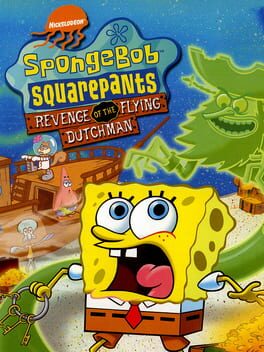
Spongebob Squarepants: Revenge of the Flying Dutchman Review

 (Originally published to Glitchwave on 4/15/2020)


[Image from igdb.com]

Spongebob Squarepants: Revenge of the Flying Dutchman

Developer: BigSky Interactive

Publisher: THQ

Genre(s): 3D Platformer

Platforms: GCN, PS2

Release Date: November 21, 2002


Thank god I played Battle for Bikini Bottom before I played this game, or else Spongebob/licensed games would've disillusioned me. As a kid, I played anything that came my way because I didn't have any money to buy my games, and I was impressionable and wide-eyed as any other kid. Spongebob was the prime cartoon character of my generation, and the yellow sponge getting his own console video game was exciting back in the early 2000s. As big as Spongebob was back then, you'd think they'd put some effort into his first major video game outing. Man, I would've been disappointed if I bought this game the year it came out.

The game begins with Spongebob waking up from a bad dream. He then plays fetch with Gary as Gary picks up a treasure chest instead of the stick that Spongebob threw. There are already two significant issues present here in this cutscene. For one, Spongebob's facial animation clips out of his head when he plays fetch with Gary. Even for 2002 PS2 graphics, it looks hilariously lazy. Another problem is the pacing of the story in this game. Have you ever gotten tired while writing a paper that you try to get to the end of your points while the flow and ebb of your essay are compromised because you want to get it done? That's what the story of this game feels like, and I'm convinced the writers in this game didn't give a shit. The story just kind of...happens. How does Gary find the Flying Dutchman's treasure chest right outside? Why is The Flying Dutchman angry that Spongebob released him and will ruin his life by taking all of his friends away? Who knows, and who cares because the writers didn't. Spongebob spends the game rescuing his friends, finding puzzles pieces doing different objectives in different levels to find Flying Dutchman-related items to get access to his ship eventually. I'm okay with item-collecting in games like Banjo Kazooie, but I'm convinced the developers of this game went with this type of platformer to pad out the game because they didn't give a shit.

Speaking of not giving a shit, there are only four music tracks throughout the game; each way coincides with Spongebob's costumes you unlock throughout the game. Each of these tracks fit the world of Spongebob just fine, but they get tiring REALLY fast. The levels in this game are "familiar" places from the TV show, and I use the word familiar loosely. Downtown Bikini Bottom is a dark, dingy alleyway filled with tough greaser fish. Remember Downtown Bikini Bottom being like this in the show? Because I don't. Sandy's Treedome is fine, albeit a bit too large, probably to appropriately fit the scale of the rest of the levels, but the problem is that Spongebob doesn't even have his water helmet on, and he doesn't get dehydrated. Come on, guys, it's from the first episode of the fucking show!

Goo Lagoon looks like a desert and has the least thrilling boat chase in gaming history. At least that part is funny. Jellyfish Fields is the reason why I quit this game. The level looks better than all familiar areas from the show, but its level design is worse. . The point when I gave up was the Jellyfish challenge because this objective signifies that this game is so lazy to the point where it's broken. You have to catch 100 jellyfish to get the reef blower, and you naturally assume that this objective is within the confines of the level, but there are only about 75-80 jellyfish in Jellyfish Fields. The game doesn't tell you that the total considers jellyfish you can catch in the areas outside of Jellyfish Fields, but how the fuck are you supposed to figure that out as a kid? It also doesn't help that the only way to progress in this game is to 100% every level, so I said fuck it and gave up.

So yeah, I never finished this game when I was a kid, but neither did the developers in my defense. I imagine them putting the least amount of effort possible into the game, hoping that it would sell like hotcakes because Spongebob was such a hot item. Battle for Bikini Bottom was a licensed game made with a love for platformers and the Spongebob source it was built on, but this game falls under the standard category of "kids are dumb, so they'll buy anything." breed of licensed game.


Spongebob Squarepants: Battle for Bikini Bottom Review

(Originally published to Glitchwave on 1/28/18)


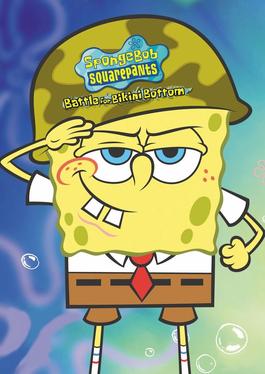
[Image from glitchwave.com]


Spongebob Squarepants: Battle for Bikini Bottom

Developer: Heavy Iron Studios

Publisher: THQ

Genre(s): 3D Platformer

Release Date: October 31, 2003

Platforms: GCN, PS2, Xbox 


*This is not my original review of this game. Back in early 2018, I reviewed Battle for Bikini Bottom as my first published review for shits and giggles, except that I didn't actually review the game. I only talked about what a stupid fucking manchild I was for still liking this licensed kids' game into adulthood. I've always hated my first review not only for the shallow, self-effacing content, but because it was a total disservice to one of my favorite games. I hope this revised review will help quell that nagging feeling I've had for three years now and give Battle for Bikini Bottom its rightful praise. I love this game, and I always have, even when it was totally uncool to do so.

Back in 2003, the 3D platformer was still a prevalent genre in gaming, but it was running its course at this time and was running out of fresh ideas. I was seven years of age at the time and was not aware of the genre’s stagnation, so I was liable to buy into anything. Because I was of the impressionable young demographic who was not tired of jumping on platforms as kooky characters, I was ripe for the industry to take advantage of. In this case, it was Spongebob Squarepants: Battle for Bikini Bottom, another licensed game with the yellow sponge who was taking the world by storm. Would I have ever been interested in this game if it didn't have Spongebob's face all over it? Most likely, no. Like any other kid, I went hook, line, and sinker for any recognizable face on any video game. I played plenty of awful licensed games when I was a kid and Spongebob was even involved with some of those. In the case of Battle for Bikini Bottom, I am so glad that I was a kid in the early 2000s so I could play this game. If I wasn't I would have probably stuck my nose up at this game like the frothing snob I am. Anytime past my single-digit age, I feel as if I would've known better than to buy into this licensed dreck because I was aware of the deserved stigma behind licensed games. I became aware that licensed games were typically rushed to a set deadline regardless of the final project being done. I caught onto the fact that the developers usually didn't care to grasp the source material. This is not the case for Battle for Bikini Bottom at all. They suckered me in, but I was anything but duped. In fact, this game is the optimal Spongebob experience in video game format. It oozes the charm and humor of the show from all of its pores.

The story is pretty simple: Plankton makes an army of robots to take over Bikini Bottom but accidentally sets the switch to "don't obey" which is a classic, silly cartoon conundrum. The same night, Spongebob and Patrick make a wish to have real robots to play with. When he awakens, Spongebob jumps out of bed with that unbridled Spongebob enthusiasm to interact with his cybernetic machinations. However, he is shocked and appalled when he finds that his house has been ransacked and vandalized with graffiti, and sheepishly asks Gary if he made this mess. Spongebob must be a heavy sleeper to have stayed in an unconscious state during the raucous, which explains why he needs a house-shaking fog horn as an alarm clock. Once the robots start running amok, Spongebob feels responsible for all of the chaos, with the anxiety of the Bikini Bottom News Crew covering the pandemic and promising severe consequences for whoever unleashed the robot scourge. Plankton, who stands outside Spongebob’s pineapple abode knowing full well that Spongebob is gullible, gaslights him into thinking that his careless wishing caused this overnight pandemonium, so Spongebob adventures across Bikini Bottom busting up every bucket of bolts in the way. This game's premise wouldn't have been as fun if Spongebob wasn't so dense.

Even though nostalgia still blinds my objective perception like a manipulative spouse, I cannot deny that Battle for Bikini Bottom wears its 3D platformer influences on its sleeves as conspicuously as Squidward wearing no pants. The game apes the non-linear collectathon format that Banjo-Kazooie popularized so much that I’m surprised that Spongebob doesn’t carry around a backpack with Gary in it. While one could still criticize Battle for Bikini Bottom for being heavily derivative, I think some clemency could be considered for the fact that it's a licensed game. The novelty of baking off a preexisting property outside of an original video game IP comes with its recognizability to its brand, so one should never expect a licensed game to be revolutionary. Besides, what 3D platformer of the early 2000s isn’t at least somewhat guilty of ripping off Banjo-Kazooie in some fashion? The main collectible that allows Spongebob to unlock every area of his hometown is golden spatulas, valuable pieces of fry cookery seen once or twice in the show’s first season. There are eight golden spatulas per area, including the hub, and four acquired through the boss battles. Some are earned through overarching tasks like retrieving jellyfish sting ointment for a freshly burned Squidward and rescuing Mrs. Puff’s students from the neverending abyss of the Kelp Forest. Other spatulas are off the beaten path of the more linear sections that divide the levels as opposed to Banjo’s sprawling open playgrounds. Visiting a new section of the town requires Spongebob to collect a specific number of golden spatulas, and they’re all a reasonable number as par for the collectathon course. Golden Spatulas can also be purchased from Mr. Krabs with the rainbow bit shiny object currency, and Spongebob can also trade ten of Patrick's socks back to him for one as the game’s secondary collectible. Why Patrick has a staggeringly large collection of socks when he doesn’t even have feet and what he uses them for, I don’t even want to know.

Along the way in stopping the robot menace, Battle for Bikini Bottom thought it would be imperative to let the player control Spongebob, Patrick, AND Sandy. As one would expect from the character lineup of a sponge, starfish, and a squirrel in a pressurized space suit, each of them has their own movesets and unique abilities. Spongebob, being the titular character and all, gets the most playtime out of the three characters. He is the only character that gains new attack moves as the game progresses making him the most versatile in terms of a moveset. His base bubble wand is not only a swift melee attack, but it's an all-in-one tool used for all of his other moves. Spongebob can strike from below with a bubble Viking helmet bash, or crush enemies with bubble gorilla feet from above. The unlockable bubble moves include bowling a bubble into enemies and launching a guided cruise missile with a five-second limit. No, he does not have to yell “Bring it around town!” to execute all of these bubble stunts. Patrick is the least versatile in every aspect of gameplay. Besides what is either a belly flop or a semi-dry hump (they’re underwater after all) attack, he can body slam to stun some larger robots with a shockwave radius. Patrick’s special schtick is picking up the "throw fruit" watermelon to either attack robots from a distance or press buttons from afar. There are also white "freezy fruit" Patrick throws into the goo to freeze, allowing him to walk on it for a short period of time mostly to retrieve one of the game's many collectibles. Patrick's throwing technique is eventually rendered obsolete as soon as Spongebob acquires the cruise bubble, so most of the utility the game gets out of Patrick are puzzle sections (which is ironic because Patrick is supposed to be the dumb character in the show). They could have made Patrick a strength-heavy character by having his attacks do more damage, but that would probably make the game a little more uneven. I would argue that they did this with Sandy anyway. Sandy is and has always been my favorite character to play as because she has the most range in terms of attack and movement. She has a karate chop, a mid-air kick, a lasso, and a gliding move, and can attach herself to mid-air Texas insignias to swing off in high places to cross even tighter gaps. More often than not, I used Sandy in levels where she was available over Spongebob because her gliding move made it so much easier to traverse every level where she was available. Strongest critter in Bikini Bottom, indeed. Not even bonafide, original 3D platformer games have juggled a string of multiple playable characters this fluidly, and the fact that playing as all three adds a wish fulfillment bonus for every fan of the show is an excellent bonus.

Bikini Bottom has expanded its districts throughout the show’s tenure even in the prime early years, and Battle for Bikini Bottom showcases thirteen of them. The “base” of Bikini Bottom serves as the game’s hub world and along its straight, narrow road, it features notable sub-areas like Spongebob's house, Sandy's treedome, and the Krusty Krab. The Bikini Bottom hub world feels cozy and familiar, but every landmark is squeezed too close together along the road, which I suppose might be due to the limitations of the game. While these spots are certainly the most distinguished ones found in the show, the game treats them all as minor steps to visit as a referential lark. What Battle for Bikini Bottom excels at is extrapolating on Bikini Bottom’s familiar settings that are visited periodically, are background setpieces, or are the focal point of one episode.

There are nine different main levels accessed from toll booths in the hub world and are organized by easy, medium, and hard difficulty curves. Every single level in this game is completely unique to one another in terms of level design and objectives. The green, grassy valley of Jellyfish Fields is a perfect first level because of the climb you undergo to get Squidward that soothing ointment remedy. While the first level in the game is naturally easy, the way it progresses to the peak of King Jellyfish’s shower domain feels epically grand nevertheless. Downtown Bikini Bottom follows up the same type of level progression where climbing up on the rooftops with Sandy leads into a robot horde battle inside of a lighthouse. Goo Lagoon has an infectious, fun energy with plenty of beach time along with a carnival pier in the same district. Rock Bottom exudes that surreal, noirish darkness that made its sole appearance in the show so memorable. The Batcave Mermalair of the geriatric underwater superhero duo of Mermaid Man and Barnacle Boy is surprisingly heavily based on solving puzzles. Sand Mountain is a level that revels in the slide mechanic with three perilously thrilling slopes to sand down Spongebob’s tongue with friction, and Spongebob's Dream is an unpredictable mish-mash of different objectives based on whose dream Spongebob is infiltrating. The only level in the game that is worth criticizing is Kelp Forest. I’m glad the stone tiki section and the winding kelp slides add a much-needed spike in difficulty, but performing these tasks in what seems like total darkness is not a necessary handicap. I could turn the brightness up on my television, but I refuse to do so on principle. It makes the hauntingly ectoplasm-drenched Flying Dutchman’s Graveyard look as vibrant as Goo Lagoon by comparison. What happens when areas around Spongebob’s neighborhood and the Krusty Krab are fleshed out in the video game format is that their brief occurrences on the show make their transitory sightings more interesting. When watching the early seasons of Spongebob, I will wonder where that giant jellyfish rock statue is, or the record-breaking sand castle in Goo Lagoon. Rock Bottom’s abstract art museum is genuinely something I want the show to delve into, even though I know it's a pipe dream.

Facing the legions of robot army goons in these assorted Bikini Bottom locations never becomes inconvenient or annoying, even though they are a contagion that needs to be wiped out to regain peace and harmony. Fighting any of these robots is never really challenging as each of them falls apart with one or two hits. Their substance as an enemy distinction lies in their diversity. The robots seemed to have formulated a chain of command based on height and mass in their mere hours of existence. Pint-sized robots such as the taser-carrying Fodders and the halitosis-having Chomp-Bots will go down with little opposition, but they are usually packed in numbers. Mid-sized Ham-Mers that smash people with a bad pun attached to their arm and the Tar-Tar robots that squirt the horrifying condiment (from a sea creature’s perspective) from a hose will usually also accompany the smaller grunts. The aerial Chuck throws missiles with the grace and accuracy of Tom Brady, and failing to tippy-toe around the Sleepytime Robots will result in an alarming penalty. Eventually, once the larger robots like Slick in the oil bubble shield and the spinning triplet Tubelets are introduced in the late game, the wide range of robots all banding together with their unique attributes can actually get quite hectic. Reclaiming the Krusty Krab from them takes a bit of strategy to succeed. The impression we’re supposed to get from Plankton’s rogue creations is that they are a mischievous bunch, but I swear that Chuck and Slick straight-up murder people in their introduction cutscenes. What surprises me more is that the robots don’t cause a disconnect with Spongebob’s underwater world. On top of everything else, knocking these tin cans around feels magnificent thanks to the sharp sound and impact. Chaining combos in combat and setting off Thunder Tiki traps to blow them sky-high is so satisfying.

After collecting a number of golden spatulas by a number divisible by five, Spongebob opens the shell gate and teleports to an arena where he fights a harrowingly uncanny robot creation of one of the three playable characters scaled to match the size of a small building. First, Spongebob and Patrick rumble around with a Robot Sandy in a Poseidome wrestling ring at the request of the sea king depicted on the show. I adore the adrenaline and motion of this fight as oftentimes, I'd just dodge its karate chops at me until it hit me just for my own sick amusement. Robot Patrick used to make me feel uneasy when I was a kid. I'm not sure if it's due to the creepy level music or the foggy, toxic dinginess of the Industrial Park. It’s likely due to Robot Patrick's design. He looks less like a robot and more like if Patrick was a back-alley rapist. He’s got a menacing grin of cruelty that makes your skin crawl. Karate-geared Robot Spongebob and the final level in its mechanical brain are no-nonsense as it heavily requires every move you've learned throughout the game and doesn't give you any checkpoints or health. It's a pretty intense finale for the game. Outside the curiosity of seeing the main characters depicted as towering mechanical machines made for destruction, the multi-phased boss fights they serve as are perfect for splitting up the game’s progression. There are also three minibosses found at the end of a few levels, including King Jellyfish taking a shower and the treacherous pirate ghost Flying Dutchman after swindling a deal with our heroes. Mermaid Man villain Prawn, an original creation of the developers, is as dynamic as Man Ray or the Dirty Bubble as a snooty, Eurotrash plankton who weaponizes sound from a phonograph head.

Other fantastic aspects of this game are in the form of little intricacies through the game. Spongebob's shoes squeak every time he moves just like in the show. The announcer fish from the show commentates on every boss fight, Patrick peers into the Treedome just like in the first episode of the show, and the bus stop gag from Rock Bottom even makes an appearance. Bubble Buddy, Spongebob’s makeshift imaginary friend who pissed off everyone in town, is one of the core NPC characters in the game that assigns Spongebob various tasks to collect more Golden Spatulas. Still, the strength of the game’s connection to the show runs deeper than mere references. If the show’s writers weren’t involved in the game’s development, I’d be incredulously surprised. The game’s writing is practically as sharp and charming as it was during the show’s early seasons when the game was being developed. Spongebob and Plankton banter with their contrasting dynamic, and seeing Sandy and Patrick talk to the maniacal shrimp is something amusing unseen in the show. Surly Squidward makes comments to Spongebob as caustically as usual, and it’s hilarious seeing him dream of torturing Mr. Krabs with his dream symphony while his boss returns the favor by sticking him at work in his own astral fantasy. Unfortunately, one glaring flaw that sullies the strong connection to the source material is that Clancy Brown doesn’t voice Mr. Krabs, but an imposter who can’t help but sound like an offkey impersonation (who also voices Mermaid Man as poorly).

Either the developers engorged themselves in the source material by prying their eyes open like Alex Delarge, or THQ hired some of the biggest Spongebob fans to develop this game. Either way, this game avoids all the pitfalls that beset the licensed game, and it all seems so simple. The game shares many similarities to Banjo Kazooie and other platformers that came before it, but a licensed game doesn't have to be original to be entertaining. It begs the question: how hard is it to understand the source material before you adapt it to another medium? I've played plenty of games like Battle for Bikini Bottom, but none of those games remind me why Spongebob was my favorite cartoon like this one does. Spongebob was never this cerebral, ground-breaking TV show, but it succeeded because it was timelessly written and was extremely charming. It's wonderful that the charm of Spongebob translated so well into this game. All the while, it doesn’t just absorb and expunge the source material: it returns the favor by using the video game format to expand on the source material, something that most licensed games are too lazy to do. The mission of the developers was to make the game recognizable to its source material, but it really doesn’t matter in the grand scheme of things because the game is so exceptional. I’d even go out on a limb and say it ranks up there with one of the best 3D platformers of all time because all of the platformer aspects it liberally borrows are executed solidly. I feel no shame loving this game even as an adult.

Pokemon Black/White Review

 (Originally published to Glitchwave on 12/18/2025) [Image from glitchwave.com ] Pokémon Black/White Developer: Game Freak Publisher: Ninten...