Showing posts with label Crash Bandicoot. Show all posts

Friday, January 24, 2025

Crash Twinsanity Review

 (Originally published to Glitchwave on 12/14/2024)
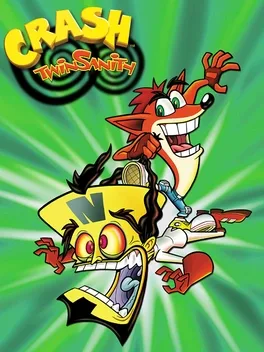


[Image from igdb.com]


Crash Twinsanity

Developer: Traveller's Tales

Publisher: Vivendi

Genre(s): 3D Platformer

Platforms: PS2, Xbox, GCN

Release Date: August 30, 2004


Ladies and gentlemen: I give you my favorite Crash Bandicoot game. No, there isn't a single hint of jest or deceit in my voice as I'm being absolutely sincere. Some franchise fans might burn me at the stake for championing a post-Naughty Dog Crash Bandicoot game as the one to rule over them all, but I stand tall on my blasphemous opinion with full conviction. Every game that comprised the original Crash trilogy on the first Playstation console is a solid example of a 3D platformer that embodied the essence of the genre in its infancy, even if the first game adopted some seriously stern and punishing elements that were soon removed in the sequels. Still, even with its tight, straightforward platforming goodness, the PS1 Crash Bandicoot trilogy left me a tad dissatisfied. The sum of Crash’s parts was more than the titular character’s acrobatic acuity, and the zany cartoon elements of the characters, story, and setpieces were always being subdued to amplify the platforming gameplay. Sure, I’ve argued that gameplay should be prioritized over every other aspect when it comes to a video game. Still, the world is already overflowing with platformer mascots whose gameplay already channeled Crash’s in the flat, pixelated plane and became much more engaging when they transitioned into the third dimension. One silver lining of a developer selling the rights of their beloved IP is that the new people in power have fresh perspectives on how to approach it, and Traveller’s Tale learned from the dull uncanniness of Wrath of Cortex that the Crash franchise needed some nip and tuck. What resulted with Crash Twinsanity is a bullseye on what I had yearned for with this series. However, even though this game technically scratches that itch, Crash Twinsanity is only my favorite Crash Bandicoot game judging on its conceptual and presentational attributes because the whole product is admittedly a hot mess.

While the mission of Crash Twinsanity is one of deviation, the game still recognizes that it’s a subsequent entry to a franchise by continuing precisely where the previous game ended. Cortex and Uka Uka are seen floating in a body of water in a block of ice that puts them in a state of paralyzed preservation, which was the outcome of achieving full completion to Wrath of Cortex. Cortex miraculously manages to drift to the humid tropical land of Crash’s residency on Wumpa Island which dissolves his frozen cell. His first idea in enacting his revenge mission is to assault the unsuspecting Coco skipping nonchalantly on her property. Cortex renders her as stiff as a taxidermied squirrel and borrows her clothing to use as a disguise, duping Crash to follow him thinking it’s his sister. Whether or not Cortex actually decided to shift his blaster to the skull setting, either outcome will likely generate ire from the ESRB either way. As one would’ve expected, Cortex sheds his ruse when he successfully leads Crash into an obvious trap with the cavalcade of Crash baddies and another mech that Cortex is gauging its functionality on with its ability to squash Crash. One might think beginning the game with Crash’s mortal nemesis as the tutorial boss sharply peaks the game narratively, but Cortex isn’t truly an antagonist in Crash Twinsanity much less the main one. Soon after, two intergalactic bird creatures appear from a space wormhole and inform Crash and Cortex that their objective is to annihilate the Wumpa Islands and pluck Cortex’s brain from his ear holes. Honestly, if they’re really capable of eradicating the island that Cortex has failed to destroy countless times, all the usefulness that Cortex’s grey matter could serve is as the protein in a pot of stew. Of course, the direness of this threat creates a common enemy between the unlikely pairing of Crash and Cortex, so they must band together to ensure that Crash’s homeland lives to witness a new tomorrow and that Cortex isn’t condemned to be a drooling imbecile (more than he already is, anyway)--hence the “twin” part of the title. The primary antagonists of Twinsanity may present themselves at what seems like random happenstance, but the narrative needed something outrageous to make the archrivals of the series put their differences aside and collaborate.

Then there’s the “insanity” part of the title’s punny portmanteau, which is the aspect of Twinsanity that jolts my jaded heart with sheer delight. Overall, I’d prescribe the Crash Bandicoot series with adjectives such as kooky and lighthearted, with the influence of iconic Warner Bros. cartoons from a bygone era being pumped into its veins. I’d prescribe the same adjectives to the varied Looney Tunes shorts, but their mirth extends beyond simple lightheartedness. The slapstick hijinks of Bugs Bunny and Company have never ceased to make me guffaw like a babbling idiot since childhood, and Twinsanity is the first game in the series to elicit the same uproarious response. Despite the creepy implications that Cortex has stripped Coco naked, his impromptu deceptive crossdressing is a classic standard from the Looney Tunes trope catalog that always deserves a chuckle–especially considering how unconvincing it is. Cortex commenting that he’s ruined the lives of so many that he can’t be bothered to remember everyone he’s wronged is a comically villainous line, and performing Avada Kedavra with his laser pistol on a humble farmer for withholding a crystal in exchange for a chore is such a dark, leftfield curveball for a franchise with a young and impressionable demographic. Barging through a burlesque house (that looks like a hen coop, mind you) with Cortex lasciviously asking “Are those real?” followed by “Mother?!” is equally as hilarious as it is inappropriate. Is this the game that prompted the birth of the E10 rating? Come to think of it, every moment I’ve listed in conveying Twinsanity’s hilarity involves Cortex in some capacity. As much as I adore Clancy Brown, his insidious depiction of the mad doctor is a tad ill-fitting for a game that relishes in silliness. Lex Lang chews the scenery in his debut as Cortex and as a result, he places Cortex among the ranks of Paper Bowser in the glorious echelons of bad guy buffoons.

The twin connotation also extends past Cortex collaborating with Crash in the narrative sense. The two are just as tightly connected as a pair of twins conjoined at the hip, or at least they are during the sections that involve using both characters simultaneously. Actually, the dynamic is less of two equal contenders combining their strengths and more like Crash using Cortex as an all-purpose tool–negating all of his scientific prowess and humiliating him to the nth degree. Hey, if Cortex wasn’t so stubborn and released his grip from the crystal that Crash was holding, maybe the orange marsupial wouldn’t be forced to use him to increase the range of his trademark spin move and swing his skull downward like a hammer. Perhaps his grip isn’t too tight, for Crash can manually fling Cortex from his grasp whenever to either pull a switch or pulverize a distant enemy with his zapper. Other forms of the Crash and Cortex collaboration include sections where Crash has to clear a path of hazards for Cortex who is otherwise occupied with either being chased or the debilitation of a swarm of bees stinging the everloving shit out of his face. In a section taking place in a sewer, Cortex will squeeze himself into a barrel and allow Crash to roll him through the looping pipe system in order to progress. By taking a long gander at Cortex’s ass (yes, that is seriously what happens), a lightbulb strikes above Crash’s head to use Cortex as a snowboard to quickly and comfortably (for him) to travel the steep and perilous slope to his next destination. In some moments, they quarrel so hard in close quarters that they will form a spherical concentration that will roll at the player’s command like the ball sections from Wrath of Cortex. While the last collaborative mechanic mentioned is the only one that’s been proven to work from a previous game, all of the ways for our boys to play together that the developers conjured up are still splendid–and Cortex suffering from a constant slew of indignities is only a fraction of the joy they elicit. The parallel bridge sections require acute reaction time to keep Cortex out of harm’s way, and the electric, madcap energy of the snowboarding sections makes them one of the most enjoyable downhill acceleration segments I’ve played in recent history.

Unfortunately, the half-baked aspects of Twinsanity’s gameplay tend to become apparent whenever either character is flying solo. Crash’s moveset hasn’t been augmented, but his general movement in his jumping and darting around obstacles has a slight hint of hesitation as if he’s lost his confidence. This caused many missteps while platforming, and they naturally led to chipping away at the life counter. In the few instances where Cortex is on his lonesome, his gameplay involves ranged shooting combat with his zapper. When the CPU Cortex uses it, he’s a sharpshooter. However, with the targeting system in place for the player, the glowing crosshairs need an unclear level of distance for accuracy. It’s a good thing then that the player is catapulted into a solo section with Cortex only a handful of times, but those few instances of running and shooting are rather uninspired. Surprisingly, the secret third playable character outside of the odd couple duo is the one with the most agreeable gameplay. Twinsanity introduces Nina Cortex into the colorful cast of Crash Bandicoot characters, a younger female relative of Cortex whose specific kinship to the evil scientist is vague. She’s playable during a single section, but the lengthy period when she zips through the rooftops of the academy she attends never inconvenienced me with any glaring issues like the other characters. Maybe the developers had to sacrifice her voice to ensure that her gameplay was solid.

For the most part, the player will have to get accustomed to Crash’s comparative lack of grace because he’s front and center throughout most of the game’s levels. Twinsanity features four distinct worlds that more or less fit the kookiness of Crash Bandicoot. The standard series setting of Wumpa Island starts the scene with Crash navigating around the tribesmen led by Papu Papu who are out for Crash’s blood for some inexplicable reason. The Iceberg Lab houses Cortex’s colossal scientific facility at the central base of the sturdy frozen formation, with penguins flying on jetpacks circling its perimeter. The Academy of Evil is the series' first crack at a Halloween-themed level, and the bizarro version of Wumpa Island called “Twinsanity Island” retains the Burton-esque aesthetic qualities of the previous world. More important than how these levels look is how Crash progresses through them. Twinsanity marks the first time in Crash Bandicoot history that a game flirts with non-linear level design, which is a monumental shift for a series synonymous with stringent level linearity. Well, this is technically true to some extent. The player is given a modest spatial range to roam around but once they find themselves on the trajectory towards one of the three levels per world, the path becomes rigidly straightforward as per usual. The free space the game facilitates mostly points towards the gathering of the multicolored gems, rewarded through discovery or a platforming puzzle section rather than breaking boxes. I recommend leaving these gems alone, and not only because collecting them this time around only rewards the player with meager extras in the menu. Straying from furthering the story can consequently punish the player with its shoddy checkpoint system. Some checkpoints are greater than other than Twinsanity, and the ones that engage the autosave sequence will catch Crash even when he exhausts all of his lives. What the game doesn’t inform the player is that each of these autosave boxes directly coincides with a specific level. For example, I finished Iceberg Lab and was curious to see what was beyond the trajectory because of a trail of wumpa fruit. Unbeknownst to me, I had rediscovered the autosave box for “Ice Climb” and was forced to retread this level and every other one leading up to it. The unfair penalty I had experienced aggravated me enough to completely write off the pinch of nonlinearity the game offers.

Inadvertently rewinding the game is merely symptomatic of the fact that Twinsanity is rife with glitches. Crash will often fall through invisible holes in platforms while jumping, and hitboxes are highly questionable. Getting too close to Coco once Cortex paralyzes her again in a cutscene not only killed Crash, but the game reverted to two autosave boxes as a result! I could only laugh at the absurdity of what had just occurred, even though the prospect of completing the previous levels AGAIN still had steam jetting out of both of my ears. It’s a shame that Twinsanity in particular is buggier than the Louisiana Bayou because the game’s difficulty curve is rather reasonable. Nothing in Twinsanity matches the strict precision of “The High Road” or “Piston it Away,” but perhaps the altered design of Twinsanity calls for different challenges. The levels in Twinsanity tend to be longer than those in the PS1 entries, so endurance is usually an element of the challenge rather than rigorous bouts of platforming. This aspect of Twinsanity’s gameplay is showcased to its fullest with the climax of “Ant Agony,” a luminescent laboratory gauntlet that stretches onward for what seems like ages. The elongated levels are probably the reason why Aku Aku’s boxes are more prevalently scattered, but it doesn’t explain why the invincibility period upon stacking three of them doesn’t account for nitro crates and TNT like before. Is Aku Aku’s magic waning with every entry? Regardless, all Crash needs is the hit insurance Aku Aku still provides and he’ll survive the long treks with moderate platformer obstacles. However, despite Twinsanity’s general lack of singular challenges, I swear that the homicidal walrus chef is the fastest pursuer of Crash thus far in the series.

As depicted in the early cutscene where Cortex leads Crash to his trap, the colorful cast of Crash’s secondary villains (and a pissed-off Polar with a baseball bat) are all here alongside Cortex to attempt another shot at thwarting the bandicoot. Once Cortex and Crash make their unorthodox bond, the other baddies still harass Crash to procure a treasure rumored to exist from the two intergalactic parrots. Only a handful of notable Crash bosses step into the ring with the bandicoot, but the few that confront him provide what are arguably their best encounters. Outsmarting N. Gin is more interesting than clogging another one of his mechs with wumpa fruit, and Dingodile’s multifaceted duel with his flamethrower is such an exhilarating fight that raises the bar for Crash Bandicoot boss fights. I do wish that N. Brio was more involved in his tag team with Entropy other than flopping around the ice crag while inflated to stall while the time manipulator recharges his shield, however. Fresh faces to the series also provide substantial fights like the sentient ancient Tiki monster and Madame Amberly, the headmaster at the academy and Cortex’s former pedagog. “Crybaby Cortex” may catch on as a mainstay series nickname. As for the twin parrots in the main antagonist role, they crawl into a titanic mech to squash Cortex and Crash when they deny the mad doctor’s apology for transporting them to the outer reaches of the cosmos when he was but a scientific wizkid. While the scope of the fight is appropriately formidable for a finale, the way it progresses is anticlimactic. The Nina and Cortex portions of this three-way shared fight are fine, but Crash snapping off the last few units off the mech’s health bar with his own mechanical marvel is too hurried and simple for the scope of the scene. Still, the ultimate fate of the parrots in the end cinematic is one last moment to make the ESRB uncomfortable for good measure.

The game that Crash Twinsanity reminds me the most of is Conker’s Bad Fur Day. No, Crash has not developed an acid tongue or a taste for alcohol; rather, it’s the tone and direction of the game that draws this comparison. Rare used the source material of a cuddly red squirrel not only to pervert him for laughs but to make a statement on the stagnation of child-friendly 3D platformers with a piss-take to send it off with a high salute. Due to the well-documented rushing of the developer's time and budget, I know they had unfulfilled ambitions for Twinsanity that connote an attempted earnest effort. Still, regardless of what their intentions were, Twinsanity still exudes a facetious and irreverent attitude if the constant jabs at the series if the fourth-wall-breaking fashion and total warping of the series attributes were any indication. Twinsanity practically serves as a “post-Crash” game that is aware of the IP’s limbo status and parodies its lingering existence. All of the patchy, glitchy blips only make a greater argument for taking the piss out of the series instead of invigorating it. Traveller’s Tales knew that Crash Bandicoot died when Naughty Dog buried it in their backyards. If the industry insists on digging him up for profit, they might as well make a Weekend at Burnies scenario out of it. Still, whether or not the game is as tongue-in-cheek as I credit it, an unruly, bonkers Crash game was the perfect direction that finally let the silly spirit of series flourish. Lord, why was Wrath of Cortex the Crash Bandicoot game I grew up with and not this one.

Sunday, June 30, 2024

Crash Bandicoot: Warped Review

 (Originally published to Glitchwave on 6/16/2024)


[Image from glitchwave.com]


Crash Bandicoot: Warped

Developer: Naughty Dog

Publisher: SCEI

Genre(s): 3D Platformer

Platforms: PS1

Release Date: November 4, 1998


I think I’ve pinpointed the reason why Crash Bandicoot 2: Cortex Strikes Back didn’t resonate strongly with me despite its admirable quality. For some reason or other, I expect the Crash Bandicoot franchise to be the funny fat friend among the platformer console representatives, the guy who relishes in silliness and self-inserts himself as the butt of every joke. Quickly-paced, fluid platforming with an emphasis on swift accuracy is fine and dandy, and Crash’s reminiscent gameplay to the design tenets of the 2D era was refreshing once Mario and the rest of his imitators started collecting objects in a non-linear, 3D spatial plane. Still, Crash’s linearity causes the final product to be kind of bare bones in comparison, which leaves a lot to be desired. Keep the kooky characters and story subdued to maintain that sense of general simplicity, and then the Crash Bandicoot franchise becomes an instance of unfulfilled potential. Given that Crash is already a goofy platformer mascot in both his design and general demeanor and that Looney Tunes influence is conspicuously dripping from all of the franchise’s presentational pores, it’s apparent to me that Crash Bandicoot yearns to frolic naked in the rain while belting out a tune to signify its devil-may-care wackiness. Yet, something or someone is suppressing Crash to a moderate level of silliness, and that’s not enough to please me. Normally, I’d lambaste a third entry’s trend of blowing the formula the second game strived to refine from the first game’s template out of proportion with gimmicks. In this case, however, letting the developers run buck wild with the franchise’s formula for Crash Bandicoot: Warped might be beneficial to allowing Crash Bandicoot’s coy freak flag to fly freely.

Judging from Warped’s premise, we’re already verging closer to the realm of ridiculousness. Another seamless segway between subsequent Crash Bandicoot entries sees our recurring main antagonist, Dr. Neo Cortex, yet again immediately plunging into a stroke of incidental fortune. Somehow, the crumbling collision of Cortex’s fallen space station has miraculously landed on the concealed burial site of Uka-Uka, Aku-Aku’s evil twin who sealed his bizarro kin away from civilization to keep him from wreaking havoc. Now that his entombment has been breached, he collaborates with Cortex on yet another escapade to gather all of the world’s crystals. One giant obstacle in achieving this goal is that Crash already has all of the crystals in his possession from the last title in the series, but this minor stipulation means nothing to the malevolent Uka Uka. Using a connection to an evil genius who dwarfs Cortex in intellect named Dr. N. Tropy, Cortex and his new detached, sinister partner in crime use a time machine to collect the crystals in their earliest incarnations. Feeling that there has been a disturbance in the force, Aku Aku frantically gathers Crash and Coco and leads them to the “Time Twisting Machine” to chase down his brother and Cortex and double their crystal collection. Not only is the plot wonderfully daft, but it holds the highest stakes for a Crash Bandicoot plot premise so far.

If the contextual hints of the plot were too subtle, the “warped” subtitle of Crash 3’s official title refers to a timewarp. The levels of the third Crash Bandicoot game are a cavalcade of areas that exploit the vast range of possibilities that come with a time travel theme. Essentially, how I’d describe it is Crash acting as a feral Carmen Sandiego, traveling throughout the space-time continuum and placing himself in the foreground of a plethora of notable time periods and the general geographical areas of where they are historically associated. However, Cortex’s goons with the goggles are already mucking up the historical timeline with their presence, so Crash running about doesn’t stick out like a sore, orange thumb quite as jarringly. Much of the silliness the game exudes comes from seeing the franchise’s familiar properties mixed with the supposedly tampered times across history. The dungeons and dragons fantasy tropes associated with medieval times are intermingled with Cortex’s henchmen larping as knights, ogres, and frog princes, and the overall presentation is reminiscent of something farcical like Shrek. Crash will scour the Middle East to run along the sandy rooftops of the earliest human civilizations and go spelunking through the dimly lit catacombs of their pharaoh’s voluminous resting places. All the while, the geeky lab guys will be donning burkas while attempting to pelt Crash with Molotov cocktails. The prehistoric areas situated around the perimeter of a volcano are littered with the gargantuan lizards endemic to this antediluvian age, but Cortex’s men still roam around in the waters waiting to pull him into the drink. Besides the amusing adulteration of these periods with Crash Bandicoot elements, the array of level themes on display is both the most varied and eye-popping we’ve seen across the trilogy. Still, the levels overall still suffer from the same erratic theme inconsistencies as they did in the previous game. Plenty of medieval levels are featured outside the designated area where the warp pad’s backdrop is a series of wooden contraptions to signify that particular period, and the same goes for the theme for every subsequent wrap area afterward. For some reason, all of the levels involving a futuristic metropolis are allocated to the final one with the appropriate backdrop. I realize this is a pedantic nitpick, but why do they bother offering a theme for the five levels when they keep refusing to uphold it?

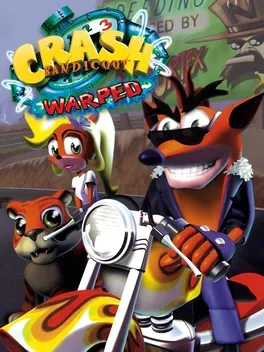
I suppose Crash 3’s case of not committing to the theme of a warp room is to make room for the assorted levels that do not involve the tried and true platform hopping that defines Crash Bandicoot’s core gameplay. Crash 3’s instances of sprucing up the series formula as a third entry is almost entitled to provide consistent deviations from the gameplay that the developers apparently thought we’ve grown tired of playing. Both previous Crash games had their token riding levels on a warthog and little Polar through humid jungles and between arctic mountains respectively, and Crash 3 also includes two instances of this type of rushing level on an animal not equipped with brakes. The developers felt like relegating Coco entirely to the background to chide her brother for being stupid from time to time was unfitting for a prominent secondary character, so they’ve tasked her with performing these kinds of levels to relieve Crash of the workload. On the back of her new little tiger friend, Pura, Coco storms across the perimeter of the Great Wall of China as it's being built, and the epic scale of the setting mixed with the multi-tracked design immediately makes it my favorite iteration of these kinds of levels. Coco also covers the two levels where she rides a jet ski around a rippling obstacle course filled to the brim with bombs to dodge. As for the titular character, Crash covers plenty of the non-platforming fare that Crash 3 provides in spades. A few instances involve motorcycle races on cracked highway roads somewhere in the arid American West, with Crash wearing a leather jacket and sunglasses like he’s Dennis Hopper's character from Easy Rider. He’s not as cool-looking in this attire as he thinks. Crash also ascends to the sky to engage in bouts of dogfighting, with the bogey pilots shooting Crash as a distraction from the objective of blasting the bigger planes out of the sky. The new scuba levels played entirely on a 2D axis incorporate a torpedo launcher that quickens Crash’s speed like a vehicle, but it’s entirely ancillary to Crash darting around vicious sea creatures and the electrical pipes in these watery trenches. I don’t find any of these breaks from the regular Crash Bandicoot programming to be tedious, nor are they mechanically flawed in any sort. Still, I’d rather the developers had conjured up another strand of platforming levels that fits the time travel theme more concretely. A Victorian-era theme where Crash bats off Cortex’s goons wearing bowler hats in misty London back alleys, perhaps?

I’ll give the non-platforming-oriented levels in Crash 3 some leeway because they are nothing but occasional distractions that are removed enough to exist on their own merits. However, another annoying facet of a third entry’s flowery features are ones that inflate the core gameplay that results in them ironically deflating it. Unfortunately, Crash 3 has infected the franchise’s core gameplay with this sort of practice. One might say that Crash is a simple character, and I’m not referring to his unimpressive cognitive ability. His uncomplicated arrangement of physical dexterity is perfectly apt for his platforming prowess, so every moment-to-moment maneuver needs to be calculated accurately. The second game decided to supplement Crash’s movement with a slide move, crawling, and body slam because his range of movement was perhaps too stringent, but it didn’t compromise the level of platforming skill needed by the player to be successful and keep the game engaging. Crash 3 augments Crash’s move pool with power-ups that all accentuate his range of physicality extensively. Now, Crash can perform a double jump, spin for much longer, and add more oomph to his body slam to the point where it can bust open those grated crates. The moves added in Crash 2 were enough to hone Crash’s physicality to a degree of agreeability, but all of these extra capabilities almost course correct almost every mistake the player could possibly make. I piled on an exorbitant amount of lives in Crash 3 without ever exhausting them, and this is a game in the same series where I felt it necessary to save my game level by level in fear of probable failure. Did I mention that one of these upgrades is a wumpa fruit launcher that Crash can carefully aim at any enemy from a distance? I can’t think of a more egregious pacebreaker in a fast-acting platformer that ensures the player never has to deal with any danger in the slightest.

The developer’s assertion for these upgrades is that they are given as incremental rewards for every milestone the player completes, which is clearing each level per area of the warp room hub. Oh, and defeating a boss that caps off the series of five levels so the player can progress onward to the next selection. Unlike the dichotomy usually seen between the difficulty of the levels and the ease of the bosses, I guess there is a complimentary synergy now that both are of relative ease. However, I’ve always given Crash’s bosses clemency because of the personality each boss exudes with plenty of creative distinctiveness between them, and the ones here are no exception. However, I’m a bit saddened that the returning Tiny Tiger is the only one who revels in the time travel plot device, becoming a Roman gladiator who challenges Crash to a duel in a crowded, roaring arena. Cortex’s rocket-plated N. Brio replacement., N. Gin, takes his second fight out of the confines of a space station out to the wrathful and boundless reaches of space, where Coco takes the stand to blast off the weaponized ligaments of N. Gin’s mech in what is my favorite boss fight of the trilogy. I also have to give commendations to the newcomer Dingodile, whose unpredictability in using his flamethrower genuinely threw me off a handful of times. The anti-father time of N. Trophy is an underutilized boss, for I believe the facilitator of the plot’s main conflict should be given higher precedence than the third boss of five. I suppose Uka Uka is still the most menacing of the bunch, but how does one go about fighting a mask? The developers have decided to end the short reign of terror from the penultimate foe by integrating a partnered duel with both Cortex and his new negative influence. While Crash dodges Cortex’s laser fire, Aku Aku is duking it out with his evil twin in the foreground, and the ferocity of their fighting at least makes for an overwhelming obstacle to contend with for a satisfying final battle.

Of course, the Crash series has always provided extracurricular content to accelerate the difficulty if the base requirements aren’t meeting the desired level of challenge. Breaking every crate to collect the gems still remains a lofty completionist goal, but another stipulation is introduced in Crash 3 that locks the game’s true ending where Cortex and Uka Uka are sucked back into timeless oblivion with the time-twisted machine and are humiliatingly infantilized. The last upgrade Crash receives upon defeating Cortex and Uka Uka is a peculiar pair of tennis shoes whose winged soles allow Crash to sprint on the field with the unmitigated velocity of Jesse Owens. Like the Olympic runner, Crash mustn't stagger if he covets the gold, which can be achieved through the new time relics. Upon revisiting a level, a conspicuous yellow clock will be floating near the entrance, and colliding with it will begin a time trial where Crash must light a fire under his ass and run like the wind to the level’s end. He must also complete the level without dying, so there’s another factor that magnifies the challenge. Depending on how long the player takes to reach the goal will coincide with the color of the relic they receive, which ranges from platinum for an outstanding achievement to an unsatisfactory blue that doesn’t even represent any position of real-life athletic accolades. To better ensure one’s triumphant success, normal crates will be transformed into yellow boxes with single-digit numbers on them that signify how long the tricking clock will be frozen for when the player smashes them. Out of every aspect Crash 3 implements, the time trials are a stroke of brilliance that should invigorate the player even if they aren’t concerned with the completionist bonus with which they are affiliated.

Crash Bandicoot: Warped exemplifies all of the irritating aspects that usually come with a third entry to a series to the extent that it should serve as the textbook definition of the common trend. It’s far more extravagant with its plot and level designs like a third entry tends to be, but I welcomed this inevitability with open arms because my idea of Crash is a comical romp that should be outrageous. However, I’m still completely turned off when it commits to another habit of third entries, which is turning the once-demanding gameplay we’ve come to anticipate into a process of holding the player’s hand with all of the quality-of-life features. Sure, the gems and the newly introduced time relics will put hair on any player’s chest, but I feel as if the challenge of the base game and that of the completionist route are so unbalanced that the game does little to prepare the player for the additional content. All the while, I’m sorry to say that slightly amusing me with Crash gallivanting through history doesn’t qualify as a laugh riot I had hoped for. I’m sorry for being such a fussy bitch, Crash Bandicoot. Still, even though the game didn't quite tickle that synapse in my brain, Crash Bandicoot: Warped's enhanced wackiness does make it the most fun title in the Crash Bandicoot PS1 trilogy.

Tuesday, May 21, 2024

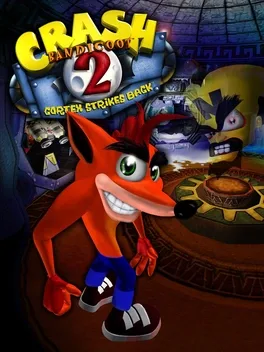
Crash Bandicoot 2: Cortex Strikes Back Review

 (Originally published to Glitchwave on 5/8/2024)


[Image from igdb.com]


Crash Bandicoot 2: Cortex Strikes Back

Developer: Naughty Dog

Publisher: SCE

Genre(s): 3D Platformer

Platforms: PS1

Release Date: November 6, 1997


One Crash Bandicoot game would never have sufficed. Mario (and Sonic to a lesser extent) built their regal video game empires by stacking entry upon entry on the base of their first title to accentuate the ubiquity of their brands to the heights of superstardom. If Sony were going to stack their de facto platformer mascot Crash Bandicoot to reach the towers where its competitors sit pretty and content among the heavens, they were going to have to produce more Crash Bandicoot content on their console. Also, Crash’s debut didn’t resonate a substantial enough ring to echo his presence in the ears of his rivals. It was a fine first leap into the realm of the third dimension, even as a rudimentary example of the platformer genre’s rough transition. However, the brutal rigidity and error margins coupled with the discernable level of derivativeness certainly did not match the timeless accessibility that solidified Mario as the king of gaming. Still, a second entry is really all a series needs to elevate itself and make that desired impact. After all, the second bomb dropped on Nagasaki was the one that ended the war. Okay, maybe that part of my analogy is a little insensitive, especially since it pertains to an American developer attempting to conquer at least two Japanese console magnates. Still, one cannot deny that Japan realized America meant business after unleashing that following blast of nuclear destruction, forfeiting the ongoing battle as a result of their moxie. If Crash Bandicoot as a series was aligning with a trilogy arc, then Crash Bandicoot 2: Cortex Strikes Back should ideally be the entry that fixes the first game and stamps Crash as a serious contender for platforming royalty.

I’ve heard of direct sequels, but this is ridiculous. The events of Crash 2 start quite literally seconds after Crash’s triumphant victory over Cortex at the end of the first game. Simultaneously as Tawna is preemptively giving Crash a smooching sampler of what she has in store for him later that night after rescuing her, if you know what I mean, we see another perspective during this scene when Cortex is tumbling down from his flying, pink zeppelin in defeat. After screaming his uvula off, Cortex miraculously survives the fall after he lands on a soft patch of land underneath the ground in a cavern. To add to this fortunate circumstance, Cortex also experiences a stroke of dumb luck when he sees a glowing pink crystal hovering around his landing zone. Context to Cortex’s joy is not given to the player, but everyone assumes that spotting this oblique, luminescent rock has inspired him to cook up another dastardly plan. During an errand mission to retrieve his sister Coco’s laptop battery charger, Crash is suddenly transported to a circular room with minor lighting issues. At the room’s center is a hologram of Cortex informing Crash that Dr. Nitrus Brio is the true figure of ultimate scum and villainy in this series and that he plans to create something deadly with the power of the crystals if Crash does not proactively snatch the twenty-five remaining crystals left on Earth. In reality, it’s Cortex that is building a colossal space weapon and needs Crash’s assistance to obtain all of them and fully power his magnificent (in the pejorative sense) new machine. Because Crash’s brain is just as misplaced as his shirt, he complies with Cortex’s demands without question.

Admittedly, the only players who wouldn’t understand the context behind Cortex’s enthralled reaction to seeing a pink crystal are those who experienced this game initially back on its 1997 release date. With decades of hindsight behind us, any current fan of Crash Bandicoot will recognize the franchise’s main collectible in a heartbeat. They might be a valuable source of immense power for the series’ antagonists but in the grand scheme of things, their status as a collectible serves to organize the Crash Bandicoot level structure. You know how Mario exits a level in Super Mario 64 upon obtaining a star, namely the one attached to the vague objective selected in the level’s menu? Well, the crystals similarly signify that a level is nearing its end and is about to be successfully completed. One major difference in Crash 2 is that the linear level design validates Crash’s ejection from said level, for there is little ground left unexplored unlike in the sprawling playgrounds found in Super Mario 64. A warp room exhibits five levels per floor, and Crash accesses the elevator at the center to enter the next series of five levels after the interruption of a boss. The straightaway journey with little to no spatial fracturing that comprised all of the levels in the first game has been scrapped for something that compliments the direct nature of Crash Bandicoot’s levels. Everything is neatly symmetrical and cromulent, unlike the first game which disrupted the progress with a milestone whenever it pleased. Also, earning a crystal per level will sustain a sense of satisfaction by simply surviving to the finish line as opposed to browbeating the player for glossing over the extra mile of breaking every box. Oh, and to everyone’s delight, the player can save their progress any time in each warp room. Hallelujah!

Uninitiated players from 1997 will also be the only ones to scratch their heads at the sight of the female bandicoot nagging Crash at the end of the opening cutscene. Future fans of the Crash series will immediately determine from her overalls and blonde ponytail that this is Coco Bandicoot, Crash’s (younger?) sister who makes her series debut here. You may be wondering if Tawna’s absence in this recreational scene with all the good guys is because she’s been abducted once again, but Crash’s trophy girlfriend has actually been cut indefinitely from the series roster. Pamela Anderson was arguably the most significant sex symbol of the decade in which the PS1 Crash games were released. Since everyone, myself included, has dubbed Tawna as an anthropomorphic doppelganger of the busty, Baywatch babe, a few overseas Sony marketers were distraught that the most popular source of masturbatory fantasies was rendered with fur in a video game whose primary demographic is children. Of course, none of the pure, prepubescent brains playing this game would flare up seeing Tawna at all, so this is really a case of adults projecting their shameful arousal while glancing at their child’s digital pastime. In an effort to retcon this bosomy blunder, Naughty Dog has replaced her conceptual role with an innocent, yet precocious, younger female character with a strictly familial, platonic relationship with Crash who keeps her dumb brother from leading himself astray as the oft-token female character of the series. And I thought the odd Star Wars comparisons ended with Cortex holographically signaling to Crash that he is his only hope. The other non-villain character introduced in Crash 2 that pops up every so often in future releases is the adorable baby ice bear Polar, who Crash rides in a select few ice levels similar to the one warthog level in the first game. He also pays off splendidly in the frosty warp room with ten extra lives when Crash gives him a concussion by repeatedly jumping on his noggin. Leave him alone, Crash! He’s just a boy!

Besides the slew of introductions, an exemplary sequel should strive to rework the preexisting elements of the previous title closer to a standard of accessibility. One may not notice the differences in Crash 2’s gameplay at first glance, but the subtleties will be a total relief once they dawn on them. Navigating Crash’s orange ass through the wild terrain of the Wumpa Islands was rather taxing at times. Surviving anything precision platforming oriented in the first game was determined on what felt like a wing and a prayer thanks to both the stilted controls and the disparities coexisting between running on a 2D horizontal axis in a 3D development plane. Soon enough, the player will detect that Crash has undergone whatever the developer equivalent of physical therapy is because his general movement is as nimble as a newborn rabbit. In fact, Crash feels so spry and lively that he can now perform unprecedented feats of agility. Crash can crawl slowly under tight crevices, bodyslam those sturdier boxes, and skid his feet by sliding like Mega Man. The last maneuver mentioned will be combined frequently with his jump move to soar over gaps like he’s training for the decathlon. Rarely are any of these spirited acrobatics discouraged by the potential risk of Crash accidentally plummeting to his death unless it's truly obvious that a mistake has been made. Quasi-2D sections are implemented into the 3D space minimally as opposed to serving as the basis for a large sum of levels, and the developers have blocked off the awkward pits where slipping could be fatal.

One would think with Cortex teleporting Crash around the world to recover the valuable fuel to his deathly space station that the player will be treated to a geographical odyssey. Alas, all twenty-five of the main levels in Crash 2 seem to be shackled to a selection of specific level themes that persist throughout the game. The five warp rooms will often transport Crash to the untamed jungles, ancient Aztec temples, and chase levels where Crash runs towards the camera from a rolling earth formation as seen in the first game, and these returning level tropes are joined by a bevy of new ones that are sure to overstay their welcome. Crash will go spelunking through sewer systems with branching paths and hazardous electrical wires mixing with the water runoff to shocking effect. Besides the icy levels where Polar gallops like a horse, other levels featuring the Antarctic tundra foreground are free to traverse with Crash by his lonesome. Some levels feature some neat gimmicks such as Crash burrowing underground to evade swarms of bees that make him swell like a balloon animal upon being stung, and the guidance of a particularly radiant species of fireflies illuminating the pathway in total darkness. Still, one can’t help but notice that the foregrounds of these levels essentially boil down to reusing the jungle level motifs. The layout of a given warp room doesn’t signify any semblance of thematic cohesion either. The arctic warp room deviates from offering levels that fit its frosty promises, and it isn’t the only quintet of levels that catapult Crash into areas where he freezes his balls off. It isn’t until the game’s end that there is a noticeable space and factory theme exclusive to the rooftop warp room. Still, two of them involve flying a jetpack through a ventilated space tunnel, and these levels make me want to lynch the man who popularized inverted control schemes.

Even though the level variety on display in Crash 2 isn’t exactly a smorgasbord of creativity, at least the player won’t be tied down to the majority of them for too long. I’ve mentioned previously that saving one’s game in Crash 2 is now free and convenient, akin to using the bathroom in your own home where Crash 1 is like scrambling to find one in public before your bladder explodes. Other instances of quality-of-life improvements are littered aplenty. Crash no longer has to earn access to the bonus rooms by collecting three character tokens. The opportunity to amass wumpa fruits and extra lives in bulk is either beneath saloon doors or a downward plunge, whose locations are symbolized by a question mark. The Nitro Crates that radiate a noxiously green glow accompany the TNT crates as level hazards, and these volatile little boxes should be avoided at all costs. Still, none of them seem to be placed in narrow passages, nor are they strewn about plentifully turning a level into a minefield. Each level is paced accordingly as well. None of the levels are lengthy tests of endurance like “Sunset Vista” that made players beg for sweet release. I suppose the conclusion to arrive at is that Crash 2 is so accommodating that it verges on total ease, especially for returning players. Considering that I am someone of that distinction, I find Crash 2’s lenient difficulty curve to be absolutely pleasant. However, the game does eventually offer a sizable challenge with the two factory levels in the last warp room.

Crash Bandicoot’s bosses can also be brushed off in less than a minute, but returning players already knew that. The colorfully cartoony foes that await Crash to collect the string of crystals to beat him to a pulp are the sole consistency in difficulty this game shares with its predecessor. The contrasting Komodo Brothers pathetically fail to subdue Crash with their scimitar chucking, and the match between the ironically-named Tiny the Tiger is a cakewalk (or saucer walk in this case) because it's a duel of wits instead of physical might. Ripper Roo returns still cackling like a goddamn hyena, only with the newly wild, unkempt long hair and mustache combo like he plays bass in Hawkwind. Again, while I criticize these bosses for not meeting the standard of difficulty with the levels that precede them, I still have to commend them for their diversity and creativity. I adore Cortex’s new right-hand henchman N. Gin by default because I never tire of hearing characters whose voices are impersonations of Hungarian classic Hollywood actor Peter Lorre. His multi-phased mech battle is by far the most engaging and intimidating fight the game offers, but the scope of it is unfortunately diminished by the fact that all it takes for the mech to malfunction is to clog its engines with wumpa fruit. Still, that solution isn’t as stupid as the final fight of Crash 2, which involves nothing but chasing down Cortex through an asteroid belt using the jetpack. Either the player will swat at Cortex three times in a matter of seconds, or the chance to catch the evil little bugger is completely out of reach. This anticlimactic section would only work if it was the second phase of a hypothetical Cortex fight beforehand.

Fortunately, the player has the option to turn Crash 2 into a painful test of one’s patience if they please. Because Cortex is dragging his name through the dirt, N. Brio intercepts the holographic message receptor to warn Crash that Cortex has been manipulating him to be his useful idiot lackey in finishing the construction of what is essentially the Death Star. Coco attempts to convey this vital information to our empty-headed hero sooner to prove her usefulness as a clever aide supporting her brother’s cognitive blind spots, but the reception has been consistently staticky at best. To atone for all the damage he’s inadvertently done, N. Brio suggests that Crash instead gather the gems instead. However, the right path without any guilt and deceit is significantly harder than playing the fool for Cortex. Sure, the player will no longer have to perform pitch-perfect platforming while destroying every crate per level, but this task still isn’t a matter of doing some detective work on the field. A few of the gems in the later portion of the game are found through completing “death routes,” where floating platforms marked with skulls will transport Crash to a 2D platforming section designed similarly to a bonus level. Anyone curious enough to take these alternate routes with the prize of a gem at their finish line will be treated with what are certainly the steepest platforming sections in the entire game. That is if the player stops their completionist commission there. For those who really wish to use N. Brio’s super cannon to blast Cortex’s gaudy space station out of orbit, they’ll have to execute incredibly circuitous backtracking in the death routes with little margin of error to obtain all collectibles possible. Once again, this process becomes the most taxing with the two factory levels in the final warp room. Crash and his friends better just adapt to always seeing Cortex’s gaudy creation lying dormant in the sky like an eclipsing satellite.

I guess this is as good a time as any to reveal to you all my Crash Bandicoot bias. There is more than enough empirical evidence to claim that Crash 2 is leagues above its predecessor in every conceivable way possible. Almost every aspect of the first game is refined to a silky smoothness, including Crash’s mobile dexterity, progression structure, and overall accessibility achieved through its quality-of-life improvements. Both the unexpected ease of Crash 2’s general difficulty and the continued effortless fights with the series’ bosses are, however, not my personal detractors of the series. There is just something about Crash’s simplicity compared to other platformers that keep it away from being lauded in the same respects as the platformer monarchs Crash sought as competition. Call it unpretentiousness in its best-case scenario, but I’ve always been relatively disengaged with its unsophisticated nature. Is it fair to demerit Crash 2 for what it isn’t when it has improved the series remarkably? Crash 2: Cortex Strikes Back is objectively an exemplary 3D platformer, but something still isn't clicking for me.

Thursday, April 11, 2024

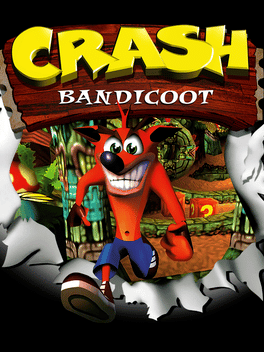
Crash Bandicoot Review

 (Originally published to Glitchwave on 4/7/2024)


[Image from igdb.com]


Crash Bandicoot

Developer: Naughty Dog

Publisher: SCE

Genre(s): 3D Platformer

Platforms: PS1

Release Date: September 9, 1996


One of the reasons why Sony trounced the once indomitable Nintendo in the console wars from their first attempt is because the PlayStation did not alienate any prospective demographics. As dedicated to their seal of quality standard as Nintendo was and still is, they admittedly get slapped with the stigma of a kiddy company akin to Disney. Because the third dimension allowed video games to depict graphic violence beyond what pixels were ever capable of, Sony capitalized on this market for mature video games when Nintendo was forced to stick to their family-friendly brand. Between the outstanding success of new IPs aimed at adults like Resident Evil and Metal Gear Solid, however, Sony still had to drum up a few franchises that appealed to a younger audience because that vital demographic would’ve easily stuck with their Nintendo standby that offered that kind of accessible content in spades. Sony released a plethora of new age-appropriate IPs to cover their marketing blindspot, but it’s difficult to say if any of these charming, cartoonish characters ever served as their definitive mascot like Mario for Nintendo. Sony learned from Sega’s example not to bet all of their money on sending their finest soldier into battle with Nintendo, for Sonic stumbled and bled out contending with far more than just Mario in Nintendo’s battalion. Even though Sony wisely treated their library as a collective, the closest character that could technically constitute a mascot for the system was Crash Bandicoot: the first of the PlayStation’s properties that was cut from the same platformer cloth that Mario laid out. The Crash Bandicoot trilogy on Sony’s first home console is fondly remembered by the younger demographic of gamers at the time, so Sony must have succeeded in converting at least a sizable fraction of Nintendo’s child consumer base to their console. Still, similarly to Sonic, Crash Bandicoot alone couldn’t have sucked Nintendo dry and stolen the video game console industry for themselves because the first Crash Bandicoot exemplified the roughest qualities of the early 3D era.

Since Crash Bandicoot was devised as a direct competitor with Mario and Sonic, let us examine his mascot material as thoroughly as a judge at a dog show. Upon lifting up and inspecting Crash Bandicoot’s proverbial undercarriage, I find that he’s as exemplary of a mascot breed as his older, iconic adversaries. For those of you who are neither zoologists or are native to Australia, a bandicoot is not a fictional animal like an Ewok or a mogwai. A bandicoot is a real strand of marsupial located down under the equator, even if this particular one was created in a laboratory by a mad scientist. Hence, why Crash has an unnaturally orange skin complexion like a clementine. Bandicoots are also not known to stand upright wearing jeans or sneakers either, but any additional human trinkets applied to Crash’s anthropomorphism aid his mascot stature. Actually, if there is one credit to Crash’s effectiveness as a mascot, it’s that he seems far more human than the representatives for Nintendo and Sega. Obviously, Mario is technically the only human in this equation, but I mean human in the sense of player-character relatability. If Mario is the charming, cherubically whimsical tramp of Chaplin, Sonic the daring thrill-seeker of Keaton, Crash is the blue-collar, exceptionally unexceptional everyman of Harold Lloyd, the uniformly third-place contender among the three comedy legends of the silent film era. Essentially, Crash better embodies the awkward and infallible personhood of a human being. If the fact that Crash doesn’t wear a shirt in his would-be-snappy combination of clothes is any indication, he isn’t afraid of conducting himself in an undignified manner. Once an enemy slights Crash on the field, he dramatically commits to the role by spinning around and uttering his trademark, high-pitched “whoa!” like the fun uncle after being “shot” by their nieces and nephews with a toy gun. Whenever Crash is flattened, eaten, burned, or electrocuted, the humiliation of the death animations is far more lively and detailed than what the exalted Mario and Sonic would allow. Crash blowing himself to bits upon hitting a TNT barrel and seeing nothing but his shoes and eyeballs rain down from the wreckage always tickles me. The whacky, silly tone emanating from Crash Bandicoot’s protagonist and overall presentation will also remind players that Crash Bandicoot, unlike Mario and Sonic, is distinctly American. Santa Monica-based developer Naughty Dog most likely grew up with Warner Bros. iconic Looney Tunes properties and implemented their cartoonish hijinks into their creation to give it a Western flavor of childish lightheartedness. Also, Crash’s spin move where he flails his body like a cyclone is too similar to the idiosyncratic swirling vortex of another Australian animal of the Looney Tunes canon to be a coincidence.

Beyond the tonal influences and the strive to compete with the big boys representing other companies, Crash Bandicoot practically functions as a 3D adaptation of Donkey Kong Country. No, really, the similarities between Crash Bandicoot and Rare’s rendering of another one of Nintendo’s finest platformer series is so uncanny that I’m convinced that Sony sent an undercover spy to the Rare offices to gather information on the development of Donkey Kong 64’s beta testing. For starters, Crash gains extra lives by gathering a hundred of his favorite kinds of fruit, the fictional apple and tangerine hybrid “wumpa fruit” in this instance instead of bananas. Crash’s movement in the overworld map is strictly limited to the narrow trajectory paved for him after completing a level, and the entirety of Crash’s journey takes place across three separate islands. As Crash diverts further from the shores of N. Sanity Beach and the wild, unkempt jungles that surrounded it and the other areas situated on the starting island, the settings will progressively become more tailored towards resembling human civilization. Ancient ruins in the jungle catacombs are one thing, but the areas of the third island encompass the quasi-gothic architecture of Cortex’s laboratory castle at the same pace as when the first DKC gradually became industrialized. Crash even has a disturbingly buxom bandicoot girlfriend that could substitute for Pamela Anderson in a furry version of Baywatch. Unlike her DKC counterpart Candy Kong, she’s the typical damsel in distress instead of a supportive checkpoint aid. Crash Bandicoot is evidently more man than animal compared to Nintendo’s burly, tie-wearing ape, and would probably trade all the wumpa fruit in the world for another knock at Tawna’s boots.

If all of the contextual evidence here doesn’t blast Donkey Kong Country in your face like stepping on a rake, then you obviously have never even glanced at the series from a distance much less played it. Rare probably had to scrap the production of Donkey Kong 64 upon seeing Crash Bandicoot and were forced to reshape it as the collectathon 3D platformer that we all know and harbor mixed feelings towards. Besides Crash existing as another animal outside of the primate family, the game offers plenty of admirably distinctive attributes that keep Nintendo from imposing on the rightful grounds of suing Sony’s asses off. Health in Donkey Kong Country was displayed abstractly using either Donkey Kong or Diddy Kong as a meat shield depending on who was stationed in front, losing the line leader Kong as a penalty for taking damage until the player came across a barrel with the grazed Kong freshly intact. Crash doesn’t tag team with a buddy that shares an equal precedence in terms of gameplay, but a series secondary character still shows up to block the barrage of blows from enemies. When Crash cracks open a crate with the image of a mystical, yet strangely friendly-looking mask on it, the crude illustration comes to life and bursts out of its confinement to levitate above Crash’s shoulder. Aku-Aku, the trust-worthy witch doctor mask, will not only save Crash’s bacon if he mistakenly brushes up too close to an enemy without executing the proper offensive maneuvers but breaking open other crates with Aku-Aku still hovering overhead will stack the number of defensive capabilities. By the third chain of Aku-Aku collecting, Crash will wear Aku-Aku on his face and storm the level with a hyperdrive state of invulnerability for around twenty seconds. Aku-Aku’s implementation is admittedly a variation on a health system that DKC already established, but the gratification of earning the invincibility streak as a reward for skillfully dodging obstacles is something that DKC never provided. Ultimately, other instances of Crash Bandicoot’s innovation on its influences lie in its design in the third dimension. With this polygonal advancement, branching paths seen in “N. Sanity Beach” and “Cortex Power” are visibly defined and are more lucidly chosen by the player as opposed to Sonic’s wonky rollercoaster levels. There’s a reason why Crash sprinting away from a boulder in an homage to Raiders of the Lost Ark in “Boulder Dash” is the most indelible image associated with the series, for the perspective of the action running towards the screen as Crash anticipates where to jump and evade at the first reflex, is truly a milestone for the 3D platformer genre.

Another familiar reminder of DKC conjured up in Crash Bandicoot is the brutally swift and consistent difficulty curve. Throughout the game, the player will be wishing for the loud whistle blow of a referee to call in their favor for the same fatal, recurring errors that befall anyone who has played a DKC game. However, all the mismatched mistakes suffered in DKC occur even more frequently in Crash Bandicoot because of the injection of the third dimension into the gameplay. I’d be dead if I decided to make a drinking game revolving around how many times one of Crash’s jumps reverted him off to the side of a platform because of that extra spatial dimension. Euclidean range is not your friend in Crash Bandicoot, but the player is forced to work around it and press their luck because the levels seen from Crash’s side view are more commonplace than proper 3D levels where the camera is pointed at his backside. It doesn’t help matters that Crash seems to execute his jumps stiffly because of the controls, feeling as if his bones are brittle on top of lacking a sense of confidence in his platforming abilities. Which level in the game draws out the most fury and contempt from players? Is it the lack of friction in the rainy tower ascent of the aptly named “Slippery Climb?” Perhaps the endurance test of Sunset Vista, or the array of scorchingly hot pipes in “Heavy Machinery?” For my money, it’s the rickety, broken bridge of “The High Road” that tested my patience the most with the exacting precision found in the game. But really, the worst aspect of continual death in Crash Bandicoot is that the game’s method of accommodating it is equally persnickety. The only way to save the game and plant a firm checkpoint on one’s progress is to complete a minigame unlocked by collecting three tokens with a character’s face on them found in each level. The issue with this stipulation is that it isn't guaranteed that the player will succeed in getting to the end of these sections, especially since a narrow bar of steel boxes suspended in the air is the only ground Crash has to walk upon. If the player fails to meet this standard, exhausting every life will drop them all the way back to the beginning of the game. Making the player earn what should be a requisite feature through a challenge outside of the primary objective isn’t any less cruel than simply not offering any continues in the first place.

Again, the DKC connections grow starker regarding Crash Bandicoot’s boss battles. If there is any aspect to the first DKC game that is brazenly half-assed, it’s a collective of tepid and uninspired boss battles that should’ve served as mighty climaxes to their slew of levels preceding them. Conquering Crash Bandicoot’s baddies proves to be just as effortless, but I’d be hard-pressed to label them as uninspired. Occasionally situated between the platforming levels on the map are the boss encounters to alternate the pace of gameplay. Like all of Bugs Bunny’s opponents in his disproportionate battle of wits, Crash’s enemies are an eclectic batch of animals with distinguished personalities. There’s the portly tribesman Papu Papu, the vain, steroid-freak Koala Kong, Tommy Gun-toting, Al Capone wannabe Pinstripe Potoroo, and the straight jacket-detained Ripper Roo who is as insane in the membrane as B-Real after twenty hits from the bong. Of course, the personality of all these foes stems solely from their designs, as they never utter a word and will take maybe a minute to overcome. The scientific duo of Dr. Cortex and his assistant N. Brio does not pose much of a threat either, not even when N. Brio drinks a chemical concoction that turns him into The Hulk as a last-ditch effort to crush Crash. The bosses in Crash Bandicoot are at least memorable and varied unlike those from the first DKC game, but that bar is sunk to the fucking sea level.

In the extensive laundry list of comparisons to DKC, Crash Bandicoot also features a few secrets hidden under its sleeves that will unlock the full extent of its content. However, the way in which Crash Bandicoot conducts the methods of uncovering all of its extraneous rewards is entirely its own. I’m sure the player will come across a screen after completing a level that sees Crash being reprimanded for missing a number of boxes, pummeling him with the literal weight of his failures to the point of total humiliation. A supplementary completionist task that Crash Bandicoot presents is breaking every single crate in every level, rewarding Crash with a white gem instead of punishing him with a throttling. Diligently searching every hidden corner of a level is a trying escapade in of itself. Furthermore, a disheartening caveat to some of these completionist tasks is that Crash must destroy every crate and trek to the end of the level without dying. Not depleting at least five lives between the checkpoints in the later levels is hard enough. If the player manages to master Crash Bandicoot to its acme point, the player can engage with the vestibule before fighting Cortex called “The Great Hall.” Here, the fruits (or gems) of Crash’s meticulous labor will serve as platforms that will lead him to the true ending where Crash accomplishes his mission of saving Tawna as well as defeating Cortex, and Tawna shows her gratitude by grabbing up her half-pint boyfriend and planting a passionate smooch on his cheek. Unfortunately, the true ending does not reveal an additional phase to Cortex’s pitiful fight. Considering the herculean efforts needed to unlock something so miniscule, I’d rather save myself the trouble by telling Crash to forget about her and promise him that there are more fish in the sea.

Essentially, Crash Bandicoot is exactly what everyone’s preconceived expectations were for the platformer genre going forward into the third dimension. Crash Bandicoot technically doesn’t predate Super Mario 64 in terms of its international release, but Crash Bandicoot was obviously in development before Nintendo made the golden template for the 3D platformer generation. A loyal and literal translation of the 2D platformer seen in Crash Bandicoot still proves to be exhilarating, with moments of pure platforming brilliance intermingled in that will win over any Nintendo fanboy. However, what Nintendo foresaw for Super Mario 64 that Naughty Dog didn’t was the glaringly rudimentary buffs and scratches involved with the shift of a 2D genre, especially as early as the first year of the Playstation’s lifespan. This is why scrapping the linearity of a traditional 2D Mario game in favor of the open-level design newly granted to the plumber via 3D advancements proved to be far more accommodating for the dimension. Crash Bandicoot, an already grueling and difficult game, is pushed to the limits of sadistic injustice with how many deaths are due to the developer’s inexperience and naivete instead of the player’s genuine platforming skill. Still, one can’t help but be charmed by this goofy Frankenstein creation story filled to the brim with energy and character. With all its faults, Crash Bandicoot is still one of the more interesting of Mario’s (and Donkey Kong in this case) many disciples.

Saturday, December 24, 2022

Crash Team Racing Review

 (Originally published to Glitchwave on 12/18/2022)


[Image from glitchwave.com]


Crash Team Racing

Developer: Naughty Dog

Publisher: Sony Interactive Entertainment

Genre(s): Kart Racer

Platforms: PS1

Release Date: September 30, 1999


Everyone is always trying to beat Mario at his own game. Nintendo’s golden Italian meatball influenced countless of other plucky fictional characters to run and jump on platforms and enemies restricted to a horizontal axis plane. When Nintendo decided it was time to broaden Mario’s horizons by expanding his spatial movement to the third dimension, this revolutionary venture proved to be just as impactful for the plumber. It inspired several old and new IPs to take the same plunge with varying success rates. As much as other platformer series cite Mario as an influence, those who admire Nintendo’s mustachioed mascot also want to surpass him. Somehow, Mario has always managed never to let any of the exorbitant number of franchises that ape his formula lay even a finger on his crown as the king of gaming, much less of the platformer genre. Even if one platformer franchise manages to slip through the cracks and assassinate Mario Julius Caesar style, Mario is a renaissance man with valuable assets in other genres. His racing derivative Mario Kart is arguably the most successful among Mario's several lucrative vocations. Mario’s racing series even dominates the market of the kart genre, a more accessible, outrageous subgenre of the racing game. No other kart racer comes even close to Mario Kart regarding success, evolutionary progress, and the number of titles. However, there was one point in the PS1 era where Naughty Dog’s Crash Bandicoot gave Mario Kart a run for its money.

Already, Crash Bandicoot seems like the perfect franchise for a kart racer. If there is anything that remained consistent with the orange marsupial in his trilogy of 3D platformers on the PS1, it never ceased in its wacky, cartoonish tone. Karts racers, by nature, are goofier and more imaginative than their quasi-realistic racing counterparts, fitting for the plethora of video game characters with less-than-realistic physical attributes in the fantastical realms they reside in. While the case for a Crash Bandicoot kart racer is solid as stone, it’s difficult not to compare the game to Mario Kart and make soaring assumptions about Sony trying to piggyback off of Nintendo and try to extract some kart racing revenue while the money river was still flowing. Crash Bandicoot has always tactfully worn its influences from Sonic, Donkey Kong Country, and Mario on its sleeves, but releasing a kart racer is bound to draw direct comparisons to Mario Kart due to the franchise’s borderline monopoly on the subgenre. However, there is quite a bevy of advantages to unabashedly ripping pages straight from Mario Kart’s handbook. Nintendo can only innovate so much for Mario Kart because a key factor of the franchise's success is accessibility. Because the Crash Bandicoot series has been less inclined to hold the player’s hand, perhaps a Crash kart racer could expand on the aspects of the kart racing subgenre that Mario can’t.

Mario Kart has always been presented very matter-of-factly. Many gamers, myself included, always assumed that the Mario characters partake in kart racing as healthy competition to blow off steam or they’re all the combatants in a Mushroom Kingdom tradition as celebrated and long-standing as the Olympic games. The player is forced to make their own assumptions because the game gives absolutely zero context to what has possessed these characters to blow burning tire smoke in each other’s faces. In Crash Team Racing, that missing context is granted with a reasonably high concept premise. Alien invader and kart enthusiast Nitrous Oxide has arrived on Crash’s planet to flaunt his self-imposed racing credentials. He claims there isn’t a soul alive across the entire solar system that can beat him in a race, and if the select racer from the planet loses to him, he’s going to make like Joni Mitchell and pave the planet into a paradise in the form of a parking lot where he will be its tyrannical leader. The plot sounds silly enough for a Crash game until the player reads into the subtext. An airborne menace named after a noxious gas that plans to industrialize Crash’s world to a comically bleak degree is an on-the-nose ecological message. Providing a premise to a kart racer made for an adequate evolutionary step, but Naughty Dog decided to exceed their expectations with a surprising hint of depth.

Each Mario Kart title offers a grand-Prix mode with four cups of four separate races, with each subsequent cup providing harder tracks to traverse. Racing on each track individually can be done via the versus menu, mainly against one or more human players. Extra modes like the battle mode can also be played to scratch the itch of combat-oriented driving gameplay. Exiting every gameplay mode either upon finishing or quitting the game ultimately circles the player back to the main menu, the calculated hub of the game. Crash Team Racing expands on Mario Kart’s streamlined approach to menu navigation by borrowing from fellow kart racer Diddy Kong Racing, adding a hub world in the single-player campaign fully traversable by driving. Admittedly, the fact that Diddy Kong Racing did it first does diminish the impact of Crash Team Racing including this, but the fact that Mario Kart has never even attempted something like this in the decades it has been the dominant kart racing series slightly elevates any game that includes a traversable hub over it. Driving around the field without the strain of competing against other racers feels liberating, and it can also serve as a practice ground for sharp turns.

In an open environment, the races are coordinated differently than selecting a cup in Mario Kart. Crash Team Racing’s hub is divided into four separate areas, each with four tracks located in every corner. Instead of selecting the area, the game starts the player with the four tracks of N. Sanity Beach, which provides the supposed easiest four tracks in the game. As restricted as this might seem at a first glance, having the player climb up the difficulty ladder instead of picking and choosing a track feels better suited to a game with a story. The player races through each track individually as opposed to racing through the four tracks sequentially in a grand Prix. While only racing on one track at a time might negate the difficulty of accumulating enough points to earn a gold trophy, the game offers more after simply winning the race. Another reason why the kart racer subgenre and Crash Bandicoot are natural soulmates is because, for the last two mainline titles, the player had to race through Crash’s levels on foot with the time relic challenges. The developers, of course, easily transcribed the relic challenges over to Crash Team Racing as the player earns a specifically colored relic based on the amount of time they took to finish driving through three laps on a course, breaking open the multiple time blocks to momentarily freeze the ticking clock for a better score in the process. The other challenge offered is the “CTR” challenge, where the player races against the other characters again, only with the stipulation of collecting the letters C, T, and R scattered around the course. This challenge is kind of lame and pointless as the time relic trials already added a satisfactory enough extra challenge. All the same, completing all of these tasks for a single course feels fulfilling and lets the player become readily acquainted with each course.

As for the tracks themselves, each of them is stripped right from the various levels of the PS1 Crash trilogy. Not literally, of course. The developers don’t expect the players to suspend their disbelief that a race track is located a couple of blocks away from levels like Cold Hard Crash and Slippery Climb, faintly seen from the player’s peripheral visions. Crash Team Racing simply recognizes the series' various level motifs, such as jungles, sewers, laboratories, and icy levels seen across the trilogy, and renders them into racing courses. Not only do the varied themes create a wide array of tracks that feel appropriately Crash Bandicoot, but the track design is equally diverse. Tracks are brimming with the frills of boosters, half pipes, ramps, moving obstacles, and tons of other thrilling attributes synonymous with the kart racer subgenre. Most courses have unique gimmicks that make them discernable, like the submerging ramps in Mystery Caves, the thick mud of Tiny Arena, the ravenous plants that snatch up and chew anything in their vicinity in Papu’s Pyramid, etc. Courses in kart racers should feel as distinctive as the elemental levels from platformer games, and Crash Team Racing nails the selection.

As par for the course, item boxes are strewn across every track situated in a symmetrically-paired line of four or five, separated by only a few meters. Kart racers wouldn’t be the same without a slew of weapons and other advantages to even the playing field, something that would be highly unethical in any realistic racing game. Of course, flinging the various tools that randomly appear after hitting any item box is another liberal helping from Mario Kart. The task at hand here to avoid even more accusations of creative appropriation is masking them with notable Crash Bandicoot properties. Even with the effort to disguise the items from Mario Kart here, it doesn’t take a genius to discern that chemical beakers are bananas, the tracking missiles and bombs are green and red shells, and the Aku Aku/Uka Uka masks act the same as the invincible star power with musical quips accompanying them. Crossing a TNT crate requires more proactive measures to prevent being inconvenienced by an explosion than a fake item box from Mario Kart, but it essentially functions the same. Crash Team Racing innovates on the items through the wumpa fruit crates located alongside the item boxes on the track. Collecting ten of Crash’s go-to snacks and holding that amount without getting hit evolves a weapon and gives it advanced properties. TNT crates become Nitro Crates that explode on impact, red beakers add a rain cloud affliction, etc. Upgraded versions of the items are excellent rewards for maintaining a certain rhythm while on the course.

Actually, the items, whether or not they are evolved, don’t really factor too much while racing. Holding onto a few in a pinch can be useful in a pinch, but the player can’t use them as a crutch to carry them to victory like in Mario Kart. Because the player competes on each track one at a time instead of in a grand Prix, any of the CPUs can potentially win, so bombarding the CPU in first place with an onslaught of items will only aid another CPU dragging behind. The key to success in Crash Team Racing is pure, ferocious speed. Blazing past the competition is a matter of mastering the drift move. Holding down either the L1 or R1 button and pressing the alternate trigger three times in succession will give the player a short boost. Given how much space the player has to drift at a crooked angle matched with how accurate their timing is, the player can rev themselves to the speeds of a cocaine-addled NASCAR driver. Executing this isn’t too tricky, as the drift controls are as tight as a Chinese finger trap. It’s a matter of combining triple boosts to really burn some rubber. The layered secrets planted in inconspicuous routes around the layered courses can accommodate the player’s skill with shortcuts that are hard to reach for any novice player. With impeccable skill, the player can zoom through these courses and seem like a speck of stardust in the eyes of the competing players.

The ease at which the player can become the elusive speed demon in Crash Team Racing also depends on which character they choose. Only one character per campaign can conquer Nitrous Oxide, and they are all displayed working on their karts in a garage like a group of steamy pin-up girls ready to be picked. Crash Bandicoot’s roster may not be as recognizable as Mario Kart’s, but at least every character will register somewhat for anyone who has played each game in the PS1 trilogy. Crash is a requisite for the game. Coco fulfills the role of the token female character like Peach, numerous boss villains like Cortex, N. Gin, and Tiny Tiger, to furry creatures like Pura and Polar. Unlike Mario Kart, selecting your character based on cuteness or your arbitrary affinity for them from the mainline games would be unwise. Each racer has three separate stats: speed, acceleration, and turn. Some characters like Crash are balanced for beginners, while characters like Dingodile are speed savants that turn more rigidly and require more skill to hone effectively. Differentiating characters based on stats is far more complex and interesting than picking a character for superficial reasons, like in Mario Kart. The player may have to be reminded what the character’s relevance is to the series, but they’ll become more familiar with them through their individual driving prowess, which also extends the game’s replay value.

With only one character, Crash Team Racing’s replay value is still prolonged through the numerous unlockables. Another note from Diddy Kong Racing that Crash Team Racing peered over was the inclusion of boss races. Once the player earns every trophy per race in an area, a familiar foe will challenge the player to a race. I'm not sure how the developers decided which Crash bosses would be apex challenges and regular racers, but beating them will unlock the next area with a “boss key.” Their advanced mano a mano race only includes a track the player has already won on, plus the constant flinging of bombs and other items behind them. Once the player accelerates past them, their cackling and trash-talking will only be heard faintly until the player beats them. These boss races themselves are not what makes their inclusion exciting, however. If the player wins a grand Prix with all the races in their area, that boss is available as a racer. Unfortunately, this is not the case for Nitrous Oxide because, apparently, the PS1 engine couldn’t handle his presence on every track. Maybe if the player was manning his kart, he wouldn’t have to gain a cheating head start like a cheeky fucker. Three additional characters on top of the bosses can also be unlocked in other ways, totaling to seven unlockable characters. It gives the player more incentive to keep playing than Mario Kart did.

They’ve always said that a great work of art doesn’t have to be original to be exemplary. Kart racers always carry an apt comparison to Mario Kart, but Nintendo doesn’t own the intellectual rights to any racing game with the premise of a dozen kooky characters pelting each other with shit on the topsy-turvy pavement. The Crash Bandicoot series was destined for kart racing greatness. While it’s obvious that the developers might have scanned over several properties from multiple kart racers, it is anything but a derivative imitation. Crash Team Racing is the racing game’s answer to kart racers, which is why it excels over every kart racer before. It’s as accessible as any other game from the subgenre. Still, the skill ceiling is elevated to the top floor of a skyscraper, allowing the player to perform feats that surpass anything in Mario Kart. The game also benevolently rewards the player for honing their skill with a bounty of unlockables and rewards, something Mario Kart 64 doesn’t. Even though I’m comparing Crash Team Racing to Mario Kart 64, its now-antiquated influence, none of the subsequent Mario Kart games have matched Crash Team Racing’s unique aspects. That is impressive.

Monday, September 5, 2022

Crash Bandicoot: The Wrath of Cortex Review

 (Originally published to Glitchwave on 11/5/2020)


[Image from igdb.com]


Crash Bandicoot: The Wrath of Cortex

Developer: Traveller's Tales

Publisher: Universal Interactive

Genre(s): 3D Platformer

Platforms: PS2, Xbox, Gamecube

Release Date: October 29, 2001


This is a very controversial entry into the Crash Bandicoot franchise. This game's existence was to give hope to the fans as Naughty Dog lost the legal rights to make more Crash games after Naughty Dog's initial run on the PS1. It was a chance for a new developer to continue with the franchise and breathe new light into it. In retrospect, however, it was when the proverbial train switched tracks and went down a spiral of ruin that seemed like a point of no return for Crash. Since the N-Sane trilogy revitalized Crash Bandicoot a few years ago, Toys For Bob seems to have claimed Crash as their own by acting like their N-Sane trilogy is wiping Crash's history clean. This seems apparent by titling their new Crash game "Crash 4: It's About Time" signifying not only that this is supposed to be the fourth Crash game, but that "it's about time" that we got a proper entry instead of the drek that we all remember after Crash 3 as if they are trying to erase history as they do every so often with the Halloween movies. Anyone older than twelve will remember the long, dark history of disappointing Crash Bandicoot games that followed the PS1 games starting with The Wrath of Cortex. This was my first Crash Bandicoot game. Not only that, but I kind of still like it *ducks and covers to avoid the onslaught of tomatoes, beer bottles, and rocks being thrown at me.* No, it's not my favorite entry in the franchise and I much preferred the first three games when I played them in the N-Sane trilogy. I feel as if WoC has garnered a bad reputation that I feel is undeserved. Like in the case of the Sonic Adventure games, it signaled the end of the golden age for the franchise and left Crash Bandicoot in disarray. It showed that the backbone that Crash Bandicoot once had proved to be flimsy under the direction of another developer.

So besides its reputation, what about the game itself? I said before that I still like this game overall, but I can see why fans of the PS1 entries were less than satisfied. Since playing the first three games, I now have some references to work off of, comparing the strengths of the first three games with the shortcomings of WoC. Overall, TravelersTale's direction was to make something loyal to the basic components of the franchise, but Crash Bandicoot: Wrath of Cortex is a lesson in that trying to replicate something without taking any risks can prove to falter just as much as failing by trying something radically new.

Just to clarify, I played the Gamecube version of this game, so I didn't have to suffer through the horrendous loading times that everyone who had this game on the PS2 did. If that alone was a deal-breaker for this game, I completely understand. Regularly waiting for up to two whole minutes for the game to load a level sounds excruciating and there should be no excuse for it. Regardless, the game still has plenty to scrutinize. The game begins very similarly to the previous Crash games as Neo Cortex yet again devises a diabolical plan to get rid of Crash. This time, he has elemental beings on his side that manipulate the weather and throw off the balance of the world. Cortex also has some new Bandicoot muscle that goes by Crunch who I would refer to as "bizarro Crash" if Crash didn't already have a bizarro version of himself. Their overall plan is to use their collective power to destroy Crash Bandicoot and Crash has to overcome the odds with Coco and Aku Aku aiding him like always.

No one can be too certain what the fourth Crash game would've been like if Naughty Dog didn't lose the rights to the franchise. The number of gimmicks in Crash 3 sort of signified that Naughty Dog was running out of ideas to make Crash seem fresh because they were trying hard to mix up the standard platforming gameplay with a lot of different vehicle-based levels. In Crash 3, the vehicle levels were dispersed sparingly, so they never wore out their welcome. In Wrath of Cortex, this is not the same case because every other level in this game seems like a vehicle level. The level gimmicks range from rolling around in a ball, dogfighting in a biplane, racing levels in jeeps, and underwater levels. Some of these are fine, but they get grating as the game progresses, especially the underwater levels. Traveler's Tales didn't get the memo that absolutely no one liked the underwater levels in Crash 3, so they decided to implement them into their game and make it one of the longest levels in the game. If it isn't one of the longest levels, it sure as hell feels like it. It's made even worse by the fact that it's a real pain in the ass to control because you will accidentally keep focusing the submarine towards the screen? Why the fuck would you ever need to face the screen in a 2D level? I guess the level is so bad that even Crash is trying to escape it through the TV. The other vehicle levels vary from being adequate to be just as infuriating. The first ball level is fine because they give you plenty of room to maneuver around, but it gets frustrating as they start to implement more challenges because the ball isn't the easiest thing to control. The dogfighting levels have terrible sound mixing, the mech suit is stiff and clunky, and any level where Crash has to use a jeep feels like using the soap vehicle from Kirby Air Ride. It's almost as they never tested these levels.

As for the other more traditional levels in the game, they remind everyone why Crash was such a tour de force in the late 1990's. None of the levels in Wrath of Cortex surpass the quality of the levels from the original trilogy, but at least they are heavily reminiscent of franchise's gameplay strengths. Some exceptional instances of these include the medieval levels, the snow levels, and the volcano level. Like in Crash 3, Crash obtains a new power every time he defeats a boss. All of the powers from Crash 3 are back with the new addition of a sneaking power that helps you walk over Nitro Crates. I would say not to bother with this power because the alternative could be to either spin glide over them or to shoot them with the wumpa fruit cannon, but the game forces you to tippy-toe across these Nitro Crates at a glacial pace at many points in the game. The developers are not allowed to be as proud of themselves over this as they seem to be. I didn't like all of these power-ups in Crash 3 because they made the game much easier, and this is the same case for WoC. I guess having these power-ups seemed like the natural evolution in freshening the series, but I much prefer the tighter limits of Crash 2. God forbid the developers gave these power-ups to Coco who desperately needs them. Yes, Coco is now a playable character in a couple of non-vehicle levels in this game, but I wish they hadn't bothered. She's essentially Crash minus everything including the jump range, the spin attack, and all of the aforementioned power-ups. I can't tell you how many times I died on that oriental level because I had to get used to Coco not being able to jump as high and her pathetic trip move that is laughably slow. Thank god they made Coco more or less a Crash skin in the N-Sane trilogy.

The villains in this game also seem a bit underwhelming. It's a shame because as imposing as a force Uka Uka seems like a sentient mask with ambiguous evil energy exuding from him, I can't say the same about the elemental masks. They all have recognizable voice talent backing them (R Lee. Ermey and Mark Hamill for example) but it's a shame they didn't have much to work with. They taunt you at the beginning of the levels in their designated six levels like the villains in Crash 3, but unlike those villains, their bosses serve to assist Crunch who seems like the real imposing villain of the game. There is a weird imbalance of who the main villain is supposed to be because every boss in the game is essentially Crunch being aided by a different elemental mask. The bosses themselves are fine, except for the wind boss because you shoot at a giant purple Crunch in a biplane. Perhaps this is due to struggling with this boss as a child, but I still do not like the biplane all the same.

Once you fight Cortex, the game isn't quite over. You are encouraged to 100% complete the game by getting all of the gems to unlock the true ending of the game. This game even puts more incentive to do this than in the other games by giving you a true ending to unlock, but it didn't entice me anyways. As much of a daunting challenge, it was to 100% the first three Crash games, it was always satisfying once I broke every box in the level to get the gem. The same cannot be said for Wrath of Cortex because, for some reason, there was always one lone box I missed in several levels in this game. It's less of a matter of me not paying close attention to where the boxes are and more indicative of Traveler's Tales not being secure in their ability to craft levels with clever design. Instead, the challenge they impose seems artificial by having the player break the pace of the game to do a fetch quest for the hidden box which is incredibly tedious. I never had this problem in the first three games, so I know it's due to some new developer fuckery.

I feel bad concluding this review with the assessment that Wrath of Cortex as a whole is just an attempt at a Crash Bandicoot game. The merits that it does have are certainly noticeable, but all of them greatly pale in comparison to what the first three games had to offer. The aspects of this game that make it different from the first three are felt as unwelcome by me and everyone else that played the first three Crash games because they break the pacing of the game and they just feel awkward and clumsy. I still wonder if I'm saying this now after playing the first three Crash games and if I wouldn't have had as many gripes with this game had it remained the only mainline Crash game I ever played, but this game doesn't hold its own as an invigorating experience all the same. It was once supplementary material for those 20 years ago that played the first three games, but now that the franchise has been revamped, it's probably better to leave this entry in the dark.

Cave Story Review

 (Originally published to Glitchwave on 1/21/2026) [Image from glitchwave.com ] Cave Story Developer: Studio Pixel (Daisuke Amaya) Publisher...