Showing posts with label Short Review. Show all posts

Wednesday, May 20, 2026

NiGHTS into Dreams... Review

 (Originally published to Glitchwave on 12/4/2025)
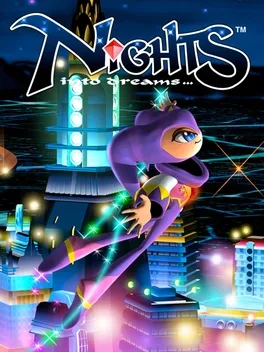


[Image from igdb.com]


NiGHTS into Dreams...

Developer: Sonic Team/Sega

Publisher: Sega

Genre(s): Action

Platforms: Saturn

Release Date: July 5, 1996


Raise your hand if you recognize the smirking purple figure on the cover of this title from that alternate pinball game in Sonic Adventure’s Casinopolis level. It’s certainly where my vague familiarity with this character stems from, and I’ll bet that plenty of other gamers would cite the same source as well. Whenever I replayed Sonic Adventure or was craving this individual level, I always opted for the pinball portion that featured this flamboyant jester instead of the more traditional Sonic slot machine. Not only did the various card hand combinations net more rings, but the mystical liveliness of this section was always mesmerizing. Considering the sheer length of the ring-gathering process to finish Casinopolis, the time spent here in this splendorous pinball scene was enough to put me in a trance. Exiting the level to either dump the rings or failing after too many asynchronous bumper swings never failed to elicit a “what the hell was that?!” from me, even after my one-hundredth time experiencing it. Still, my reaction was not one of offense, but similar to the come down from ending a hazy, euphoric dream. Years later, I discovered that this substitute pinball section was not inspired by the developers mixing a concoction of ecstasy and acid. It was an easter egg that referenced Nights into Dreams, a Sonic Team-developed Sega game released on the Sega Saturn. Oh, so that’s why we’re all familiar with this character from somewhere outside of his source material. We can all surmise that a reason why Sega’s debut 3D system was so short-lived is that their blue blur mascot took a circumstantial sabbatical (Sonic R doesn’t count), which is like Santa Claus neglecting his annual holiday duties on Christmas Eve. In light of Sega fumbling Sonic Jam to the point of premature extinction, perhaps Nights into Dreams retrospectively serves as the Saturn’s substitute Sonic title.

Interestingly enough, on a technicality, Nights, the eponymous, gender binary-defying purple jester, is not the game’s protagonist purely from a narrative standpoint. While they’re still technically the primary gameplay vehicle here, the story revolves around two middle-school-aged children named Elliot and Claris, who are not siblings as the surface-level impressions might indicate. Nights is merely a vessel for the boy and girl to enter his native domain of dreams, where the collective of immaterial, subconscious mental fabrications resides. Nights is a trickster with the kid-friendly whimsy and fun of the Cat in the Hat and the pariah status of Beelzebub amongst their fellow “Nightmaren.” However, Night’s rebellion against their kind is portrayed as a sign of courage and righteousness, for they’d rather not be an accomplice to the insidious plan to steal all the dream energy and somehow conquer reality as a result of achieving their goal. The mascot potential of Nights could arguably be undermined by their secondary support status, unlike Sonic, who demands the spotlight like the unapologetic diva he is. Still, the mystique of Nights proves to be far more beguiling because the player’s point of view is from the perspective of two ordinary adolescents existing in humdrum reality. Because we’re never fully stepping into Night's purple poulaines, the impersonal perception preserves the curiosity this character inherently exudes in spades.

Expositing every tidbit of information on the game’s plot premise still won’t demystify the gameplay conditions surrounding each of Night’s levels. Each dream scenario of either children’s campaign is orchestrated around a consistent gameplay loop. In saying that, deciphering said gameplay loop is a process bound to make the player’s brain short-circuit with intense confusion. The game’s first mistake in exhibiting the player’s objective clearly is setting the scene by having them control either Elliot or Claris. Being bushwacked by naughty flying creatures immediately in an automated introductory sequence also establishes a misleading impression that the player is struggling to acclimate themselves to the already-hazy gameplay conditions. It just sets a terrible and inappropriate precedent for the remaining duration of the level. Once either Elliot or Claris enters the mystical gazebo and tags Nights in, they are tasked to retrieve the four multicolored “Ideya Crystals” that were brusquely snatched from the hands of the human children. How does Nights go about reclaiming the four bits of stolen property? Well, that’s when things get tricky. Without any preemptive elucidation, Nights will start flying on a relatively restricted horizontal axis and soar through a series of rings while collecting a smattering of tokens before they travel full circle around again to his outdoor shelter from whence they started. Because the context is clouded in layers of ambiguity thicker than the condensation mist surrounding a large lake, I feel like it’s my due diligence to unveil the intended objective of each level as a favor to all who are about to delve into Nights into Dreams… While every collectible is worth colliding into on a lap around the level, most of them will have to be benched due to the greater precedence of the blue orbs. Twenty may seem like a steep ransom to reach in satisfying the clutches of the “Ideya Captures” claws, but they’ll respawn in the same places once the player makes a 360-degree turn back to the blue gazebo. Once the player returns to the origin point with their twinkling items recovered, they’ll repeat the process another three times, with the level layout shifting with each lap. You’re welcome. I can’t say that I’ve experienced a gameplay formula even remotely close to the one that Nights (literally) revolves around, much less in any previous title produced by Sega. If I had to drum up one comparison for the sake of argument, Night’s levels do foster a similarly swift energy as Sonic’s. Momentum can be quickened at the player’s volition to the point where it can be unmanageable like Sonic at his speediest, which evokes that thrilling rollercoaster aura that I thought the blue blur had trademarked for himself. Shave off the grounded terms and conditions of platforming that Sonic must abide by, and Night’s constant airborne velocity is arguably the next step in evolving this specific brand of Sega gameplay.

However, what does ring Sonic in my ears louder than the SEGA start-up jingle is the snazzy panache that oozes from the game’s presentational pores. They say in the intangible dreamscape that anything is possible, so Sega takes full advantage of the untethered nature of what occurs during REM sleep to unleash their patented bombastic flair to an unprecedented maximalism. Each level, no matter its thematic setting, is brimming with ethereal pizzazz. They’re all relatively organic and firmly recognizable in terms of what topographical environment they’re intended to resemble, but their abstractions lie in the askew properties of the foregrounds. As someone who has been known to dream on a regular basis, I can say from my extensive experience that this unconscious realm often places me in areas that I am particularly familiar with in reality and can’t discern any abnormalities until I awaken and regain my lucidity. What aids the Sonic comparisons is that each level in Nights seems like an unearthly, sublime version of the standard roulette of level themes present on a journey through Mobius. Spring Valley is as divine a grassy, mountainous field as one can get to introduce Nights without calling it “Green Hill Zone,” while “Mystic Forest” amplifies the presence of verdant greenery with some breakable lime mortar blocks from ancient ruins placed as asymmetrically as the tall rocks of Stonehenge. The beachy “Splash Garden” proves Night's superiority underwater compared to the non-swimmer Sonic, while “Frozen Bell” and “Stick Canyon” provide auxiliary vehicles like a snowmobile and gondola to diversify the gameplay in these level themes of polar climates that Sonic is constantly using. It’s a shame they didn’t have enough disc space to incorporate a casino level, for Nights potentially outshining Sonic in his glitziest level theming could constitute as a personal attack. The one level in Nights that sort of verges into more urban, industrialized territory is “Soft Museum,” a standout for possibly referencing an equally surreal novel from William S. Burroughs titled “The Soft Machine.” Sorry Sonic, but the purple jester’s interpretations of your common thematic foregrounds are just too dazzling while they’re operating without the restrictions of reality.

I also apologize that my review is reverting back to a quasi-walkthrough, but it compels me to expound on one prevalent aspect of the levels of Nights that screams Sonic surprisingly before the blue blur ever imagined making it one of his defining idiosyncrasies. In tandem with the score that increases with every sequence of chaining rings in addition to collecting blue orbs and those golden, fin-shaped thingies, the player will be given a letter grade that coincides with the player’s ability to gather the aforementioned whatchamacallits in a timely fashion. The player will likely notice that they aren’t earning acceptable marks by the standards of any education system once they return to the gazebo after rescuing the crystals from their captivity, which is another aspect of the gameplay loop lost in the fog of vagueness. To rack up enough points to pass any kind of class in school, the player must take Nights through the level as many times as the timer will allow after engaging the post-crystal-securing, bonus portion, which will multiply the amount of points received upon reobtaining all of the various collectibles. Essentially, if you’re not playing Nights in a fretful frenzy while a timer ticks down to single digits, you’re not doing it right. Once this obscured gameplay condition came into clarity, it seemed like all I could eke out with my best effort was an adequate “C.” Damn the strict Japanese grading curve! If you think your finishing letter rank is only arbitrary, I must inform you that your GPA must exceed a 2.0 average because the game will deem you unfit to play the “Twin Seeds” final level, where either Elliot or Claris adopts Nights’ aerial mobility to collect orbs over the skyline of their home city and continue to lock its access. As harsh as the conditions to receive an acceptable mark may be, I probably would’ve neglected playing Nights properly if not for the concurrent condition as something to consider.

Amongst all of the unorthodox gameplay elements, would you believe me that each level in Nights climaxes with a distinct boss battle? The Nightmaren appear to be an eclectic army of ghouls led by the enigmatic dark wizard Wizeman, and their design diversity definitely also translates to the unique specifications surrounding how to best them in battle. Because traditional combat in a game like Nights would be rather inappropriate, defeating them requires solving their specific weakness like a puzzle, with the addition of the drill dash maneuver to sprinkle some semblance of offense in these encounters. I’d list their unique weaknesses with the same amount of detail as how to excel in the levels that precede them, but the only way I’d be that charitable is if I were financially compensated. Still, I have to veer into spoiler territory to highlight the egregious aspects that unfortunately beleaguer these bosses. For instance, simply because you’ve discovered how to harm the boss doesn’t mean that you’ll be triumphantly teabagging them in seconds flat. I fully realize that destroying the mice springs is the key to trapping the demonic cat, Clawz, but why then do they tend to compose themselves back to their original states upon drill dashing them like punching a reflex bag? Just because I know that I must direct the rotund Puffy further into the stage doesn’t mean that the awkward, finicky controls will immediately facilitate this desired outcome. Even though each boss (except for the big baddie of Wizeman) isn’t as simplistic as advertised and exposes the slippery nature of the game’s controls, the player will be forced to conquer them as proficiently as any of the levels. Like a final test at the end of a school semester, the time it takes to defeat a boss will factor considerably into the player’s final grade for a level. Failing to vanquish the foe promptly might result in one’s grade dropping by a whole letter. Bollocks. Also, despite how masterfully the player might have run through a level, failing to figure out how to hit a boss's sensitive spot will result in having to repeat the entire level. Mega bollocks. Considering that the game’s levels and bosses exist on entirely different dimensions of gameplay and competency, I’d expressly keep the two separated in the evaluation process like church and state.

Don’t do drugs, kids, or you’ll end up headlining a console doomed to be decimated by Nintendo and the newcomer kid of Sony. While I’m sure the surreal Nights…into Dreams was not initially designed as supplementary material for Sonic, the onus of supporting Sega’s hardware was circumstantially placed on this odd gem, and it couldn’t handle the pressure on its own. Admittedly, one can experience somewhat of the exciting, momentum-based gameplay mostly associated with Sonic here, but in the most perplexing way possible, to the point where any Sonic fan would probably lose their appetite. Night's presentation effectively evokes the marriage of whimsical fantasy and acid-laced psychedelia like Mario, but is bogged down by seemingly emulating the reduced motor skills that come with imbibing the hallucinogen. Nights is just too fucking weird on all fronts not to be condemned to its cult classic status. I appreciate it for its glamor and unparalleled originality, but I’m a weirdo who gravitates towards stuff like this. When a game comes hard to recommend to the average gamer, it shouldn’t be leading the charge into the console wars.

Tuesday, April 21, 2026

Nicktoons Unite! Review

 (Originally published to Glitchwave on 11/13/2025)


[Image from glitchwave.com]


Nicktoons Unite!

Developer: Blue Tongue

Publisher: THQ

Genre(s): Action-Adventure

Platforms: GCN, PS2

Release Date: October 27, 2005


Kids are not the sharpest tools in the shed that we call society. I could ramble on about how this generation’s youngins are amused by what I consider to be dumb, trendy shite like TikTok, cryptocoin, and those fugly Labubu things, which look like Monchhichis if you fed them after midnight, like the old coot I’ve become. However, I’d be a stone thrower in a glass house in that scenario. I can’t criticize anything the youths of today do because I made the same mistakes getting sucked into chintzy crap. Namely, cartoon crossover video games like Nicktoons Unite! They could’ve placed these four familiar animated characters as the members of a jury deciding the verdict of someone attempting to rescind a traffic ticket, and I’d have jumped at the opportunity to experience it. In fact, this statement is emblematic of the cynical situation at large regarding the existence of Nicktoons Unite! Because kids like me lacked the discerning taste and media literacy that comes with age, the industry at large could capitalize on our naivety and churn out a product without any effort or thought put into it. Naturally, this is exactly what happened with Nicktoons Unite! Still, the reason why I’ve chosen to resurrect this forgettable piece of licensed shovelware from my childhood and dedicate a review to it two decades later is that the game was so atrocious that the crossover novelty it was intending to skate by on faltered completely.

First and foremost, let’s not be obtuse here, gentlemen. By the mid-2000s, when Nicktoons Unite! was released, the label of a “Nicktoon” no longer existed. The phrase once had relevance during the channel’s early 1990s inception, when every original series was of relatively equal standing and collectively worked together to showcase the strengths of an animated-exclusive network when the idea of such a thing was still a stroke of ingenuity. Once that decade came to a close, the network’s “silver age” was marked by Stephen Hillenburg’s yellow sponge breaking through the mold of channel cohesion to situate himself on the Mt. Rushmore of cartoon characters alongside Mickey, Bugs, and Homer Simpson. The game should’ve been titled “SpongeBob and Friends Unite!” to highlight the honest dynamic between these characters, with the most recognizable IP receiving top billing. Yet, the game’s narrative seems to shy away from the prevalent SpongeBob supremacy by placing Jimmy Neutron as the leader of this crossover coalition. Mainly, this is due to the fact that the precocious wunderkind’s prime nemesis, Professor Calamitous, is the commander of the villain collective. The unified group of antagonists consists of each Nicktoon character’s respective antagonists and is using their collective maliciousness in an effort to terrorize the greater Nickelodeon universe. Naturally, the rampant, ambiguous wrongdoings of these cartoon villains behoove our heroes to use their equally matched combined forces of good to halt their schemes.

The inherent appeal of crossover content is fulfilling the curious fantasy of seeing multiple characters from completely separate fictional universes interact despite how polar their normal existences are from one another (two characters here both being Butch Hartman creations, notwithstanding). From a gameplay standpoint, the distinctiveness of each Nickelodeon character establishes a diverse dynamic between the foursome. Danny Phantom (who is shockingly making his debut in an interactive medium here) should be propped up as the Frank Sinatra of this rat pack, leading the charge with his potent punches and kicks that are enhanced by his superhero capabilities. Nicktoons Unite seems to subscribe to the same connection that the Jimmy Timmy Power Hour series was based upon, in that the universal forces of science and magic that both gifted pre-teens boys wield the power of, respectively, place them on different sides of the same coin despite their clashing paper flat and polygonal animation aesthetics. What this means from a gameplay standpoint is that Jimmy and Timmy both specialize in projectile offenses, with the former blasting lasers from a mechanism he crafted in his lab and the latter character wishing Cosmo to fashion himself as a green rifle that spews stars. Isn’t there a passage in “Da Rules” that restricts Timmy from not corresponding with gun-owning regulations, or is this a special scenario that allows him some flexibility? Lastly, and objectively not least, what does the absorbent, yellow, and porous one contribute to this group? Well, Mr. Nickelodeon seems to be situated as the comic relief, using his idiosyncratic, almost aloof effervescence as a source of levity in the midst of all of the other characters' dryly expositing mission plans. Puts things into perspective, eh? To his credit, where SpongeBob’s foam karate gloves will prove the most ineffective at penetrating the enemy’s defenses, at least he can contribute the absorbency of his spongy physicality to hydrate some of the more organic platforms and then use their buoyant properties to bounce upward like a trampoline. Then again, the three other characters also contribute their other assets outside of combat for situational snags involving platforming. Danny can possess NPC characters and enemies with his ghostly transparency, Timmy can utilize some Snowmeiser magic to freeze enemies and platforms, Jimmy can hover over sizable gaps with his jetpack, etc. Actually, SpongeBob is definitely the MVP on the field because he can summon DoodleBob to distract enemies, and I believe this is the first time any video game involving SpongeBob has ever incorporated his crude, malevolent graphite creation in any capacity. Whether or not we’d like to argue if SpongeBob is or is really required to pull his own weight here, his distinctive gameplay characteristics, along with his compatriots, do compel the player to refrain from sticking to Stephen Hillenburg’s brainchild for the game’s duration, and exhibit a mark of admirable character research from the developers.

Alas, the diversity between all of these disparate characters is ultimately muddled by the inexcusably pitiful gameplay mechanics. Have you ever attempted to hoist a fish out of a river with your bare hands, or borrow the keys to your local hospital’s morgue and try to engage in a firm handshake with one of the corpses like you’re meeting your girlfriend’s father? Don’t answer any of those questions, for they’re rhetorical situations meant to highlight the lifeless, impactless feeling that plagues Nicktoons Unite! No matter if you’re denting the syndicate’s robotic legions with Danny or SpongeBob’s melee attacks or blasting bits off of them with Jimmy and Timmy, the player will quickly come to the realization that every action they commit holds zero physical gravity. Hitting an enemy feels like pounding a hole into a piece of paper or a rice cake, a fragile object where any physical impact with said object will feel like an imbalance of energy, no matter the level of force. Upon being smited, enemies will simply evaporate into flinty little sparks, dissipating in a flash like flushing loose hairs down a sink. They might leave behind a coin, the most cliché video game currency imaginable, which the player can use towards increasing individual character attributes, such as strengthening their offense and gadgets. Still, however many points the player allots to these traits will not change the combat’s underwhelming sensation of laying waste to saltine crackers.

Truthfully, the lame combat of Nicktoons Unite is symptomatic of the game’s appalling presentational qualities. Usually, I wouldn’t be too critical about a game’s superficial features, but the shoddiness displayed throughout Nicktoons Unite is as rampant as a growing cancer cell. For starters, another vital video game attribute that is still commonly undiscussed by me is the nondescript muzak that introduces us to the game in the main menu. Sorry, but are our heroes on an epic journey to conquer evil or shop for snappy business casual attire at Macy's? When the level music isn’t equally as lethargically stock as the one in the introduction, many levels seem content to have the faint sounds of rustling winds, bobbing bubbles, and other ambient noises accompany level progression, if not complete silence. Because Nicktoons Unite inexplicably keeps the volume at a library level, the pitter-patter of the piddly combat just becomes more pronounced. How hard is it to compose some generic triumphant score just to appropriately set the scene? The lack of audible oomph also unfortunately translates to the game’s sound effects, or lack thereof. When Patrick is sucked into a jellyfish harvester, all we hear is a soft bubbling like a kid is blowing on a straw into their soda instead of the harsh industrial vacuum suction blare of this mechanical monster. C'mon, guys, the show reuses the same anguished scream from Patrick constantly! You’re telling me you couldn’t have borrowed it?! Voice acting is also inconsistent, as the game opts to substitute spoken dialogue with nothing but text boxes whenever the characters speak to other recognizable faces from their series that aren’t taking part in the quest. So, you’re telling me that Scarlett Johansson, A-list film star and generation-defining sex symbol, reprised her role for the SpongeBob movie video game, but the people whose day job is to provide voices to these secondary characters took a sick day? Tim fucking Curry, Dr. Frank-N-Furter himself, even returns to offer his devilish English poshness to Professor Calamitous. What gives? In the graphical department, character models clip through walls; some awkward scenes conflict with their situational context, and there is a cutscene where the hit detection is so hilariously mismatched that seeing it put me in a fit of hysterics. I would chalk it all up to laziness, but the lack of voice acting support throughout the experience leads me to believe that funneling insufficient funds into the project is yet another part of the problem.

Naturally, the presentational mess seeps into each of the game’s areas. Every playable character’s respective realms are granted at least some semblance of representation and at a relatively equal division. Still, the discernibility of these characters’ backyards is questionable at best. I’m the least familiar with the Amity Park metropolitan area where Danny Phantom resides because I haven’t seen even a glimpse of its source material since I could still sing soprano in the school choir. Still, while the only notable setting from the show I can recall is his school, and maybe that would’ve been a tad too restrictive, I doubt that the entirety of Amity Park is this generically bland as far as city settings are concerned. Not to mention, experiencing levels of smog that Los Angeles wouldn’t wish on its worst enemy. It’s been decades since I’ve seen anything related to Butch Hartman’s rendition of Spider-Man, so I can’t comment on the game’s fidelity failures using it as an example. However, (classic) SpongeBob has retained its place in my nostalgia canon as well as a couple of other video game adaptations involving the little square dude, so I can definitely place it as evidence on trial, accusing this game of squandering the settings of the source materials. Bikini Bottom is looking quite dismal with the same amount of odd smog present that was polluting Danny’s domain, and Jellyfish Fields has never featured this many rocky chasms. Really, I think the recognizable sections of Bikini Bottom are a formality race to the Jellyfish Factory that concludes it, for the developers seem to have a penchant for enclosures. The pink clouds that support the fairy godparent society are the most vibrant setting in the game, but the vast majority of the Fairly Oddparents portion is dedicated to the dim inner sanctum of a temple in the revolting image of Mr. Crocker. Was this temple of vanity ever featured in the show? I’ll bet the farm that it wasn't. Once the game circles back around to Jimmy’s lab, the city of Retroville is completely shafted because “Goddard has been infected with a giant robotic flea and removing it requires shrinking everyone down and combating it from the interior.” Is this process an interactive reference to the Fantastic Voyage episode from the show, or did the developers cleverly devise a way to craft another insulated setting where connections to the source material could be inapplicable? It certainly seems to be the pattern set here, and the various drab, formulaic enclosed settings are completely counterintuitive to the core component of recognizability that sells a licensed title.

Besides the giant flea that irritates me, probably on par with how much it irritates Goddard, the developer couldn’t shirk placing the familiar foes from each represented franchise as the game’s bosses because they’re too integral to the crossover equation. Vampiric ghost lord Vlad Plasmius, the one-eyed failed fast food franchise owner Plankton, kooky fairy conspiracist Denzel Crocker, and the shrimpy, stuttering Professor Calamitous are all of the representative character foils to the respective playable heroes. Encountering them also serves as the climactic conclusion to the realms in which they inhabit, and having them block the path to the following portal feels like every level is going into overtime. Yes, this statement does carry negative connotations. I appreciate the fact that each rival’s status as a formidable villain is recognized through the scale of the fight, and I also enjoy that the coinciding good guy is the key to draining the defenses. However, discovering the enemy’s Achilles heel is not the aspect of these fights that will test the player’s patience; it’s the absolute slog of waiting for the opportunity to exploit their weaknesses. The boss battle elongation is multiplied by four with the game’s final boss, which includes every single major baddy strapped to an orbital device along with Calamitous. Not only does crafting the final boss as a quartet sort of minimize Calamitous as a villainous presence, but being forced to prioritize one of them at a time per phase makes the final boss a totally tedious excursion. I’d comment that fighting four of them at once is intended to give the final bout an artificial air of intimidation, but that theory is thrown out of the window when SpongeBob disconnects their doomsday device as easily as one’s cat zooming through the house and unplugging the TV. Oops?

Banality, thy name is Nicktoons Unite! Truthfully, I’ve never seen a game hone half-assery into an art form quite like this title, and that’s a low bar sinking deeper into the stink of licensed shit. It somewhat understands the assignment of establishing an appropriate rapport between each character of a polarly different cartoon world and highlighting their differences. Yet, every single conceivable mechanical and presentational attribute supporting this ragtag team is painfully, laughably undercooked as fresh roadkill. But I swear, this is an opinion I’ve been expressing since the mid-2000s when I was ripe and ready to experience a crossover of this caliber (in concept, not execution). Nicktoons Unite! was so terribly cheap and dysfunctional that it might have ignited my cynical flame that continues burning to this day, which is the cost of slacker video game developers nonchalantly mishandling people’s childhoods.

Firewatch Review

 (Originally published to Glitchwave on 11/6/2025)


[Image from igdb.com]


Firewatch

Developer: Campo Santo

Publisher: Campo Santo

Genre(s): Graphic Adventure

Platforms: PC, PS4, Xbox One, Switch

Release Date: February 9, 2016


Something peculiar caught my eye when I purchased Firewatch on my PS4. I knew beforehand that this indie title developed by Campo Santo was of the “walking simulator” variety of video game, but one kernel of context I was not privy to is the apparent “maturity” that exists within its thematic constitution. Our ESRB overlords have slapped this bad boy with an “M” rating to filter out any children who might be upset and warped by the supposedly graphic content. Upon seeing this, I asked myself, given what I knew about the genre tag: what could the game possibly feature to warrant the most severe content label issued by the North American arbiters of deeming what is appropriate for gamers of differing age demographics? Upon inspecting how the ESRB defines Firewatch’s risque content, I certainly see their point of disclaiming the prominence of drugs and alcohol, profanity, and even nudity, the most explicit content descriptor that is quite rare in gaming due to its taboo status. “Suggestive themes” is simply vague and redundant, considering every other suggestive content facet has been detailed. Still, what puzzles me is how Firewatch incorporates all of these problematic portions when its gameplay is inherently subdued as par for the graphic adventure course. Then, I soon realized that I wasn’t thinking clearly and that video games can get tagged as being suitable solely for mature audiences for reasons other than the constant, explicit violence and horror tones that typically mark a video game as “mature.” Come to think of it, the maturity of “R” rated films that don’t feature people being annihilated by ammunition or gorily chopped into bits by a masked murderer tends to carry themselves with an air of refined dignity and sophistication, with solemn subject matter at the helm being executed through the dramaticism of the relevant characters. Perhaps by minimizing the gameplay attributes that are usually present in the usual fare that defines a “mature” video game, Firewatch can tell a profound, pressing tale that elevates the narrative potential of the medium.

And just like that, Firewatch decides to establish some context behind its protagonist’s position in life by detailing the very adult story of the relationship with his floundering wife. The recount of Henry, the protagonist, and his wife Julia, is an age-old story of the complications that arise when a couple’s romance spans past the twitterpated butterflies of its budding period. The classic kids versus career conflict becomes a relevant dilemma for Julia as she ages out of her twenties, but all of those life-affirming prospects are forever out of the equation when she’s prematurely afflicted with a cognitive degenerative disease. With Julia flying back to Australia to live under the care of her parents, Henry absconds from his interrupted life in Boulder, Colorado, to its fellow rectangular neighbor to the North, Wyoming, to take a job as a fire watcher in the Shoshone wilderness. While detailing the events that shaped Henry’s present-day position, the player chooses Henry’s dialogue options and actions towards his wife over the course of their relationship. The player’s dialogue choices do not affect the outcome of his current situation, but injecting interactivity into what could’ve been dry exposition or an automated cutscene is quite an effective way of immersing the player into the main character that they’ll be piloting for the remaining duration of the experience. By immediately catapulting the player into the midst of a man’s sorrow and attempting to validate Wyoming as a setting for a video game, Firewatch’s aspirations to legitimize itself as a contender for gaming ingenuity are readily apparent. Oh, and I discovered that the game’s sole source of nudity is an illustrated portrait of Henry in the buff that Julia drew, which he stores as a keepsake. I’m telling you this as a preemptive warning not to select the option to have this occur, unless you’re interested in seeing a glimpse of a pencilled penis on your screen in its full glory.

Choosing the words that Henry articulates, then continues to be a prevalent component to Firewatch, but I’d like to focus on discussing the all-encompassing form of gameplay for now. I understand that the majority of gamers are not of the outdoorsy orientation, so I’ll briefly detail the objectives of Henry’s new occupation. A fire watcher’s primary job is to vigilantly monitor their surrounding area for any trace of billowing smoke leading to a flame that could potentially devastate the forest. Upon detecting any arsonist activity, accidental or not, the fire watcher must report their findings to the proper emergency services so it won’t spread into an inferno, calculating its relative distance from their location via the radial alidade device to hone in on its approximate location. Because their lookout tower provides the only reliable visual leverage in efficiently spotting the smoke, the firewatchers are intended to be confined to the lookout tower and fashion it into a modest living quarters, only leaving the premises to relieve themselves at the designated outhouse nearby. However, spending the entirety of the game biding Henry’s time looking at Reader’s Digest and the same pornographic magazine would be a mind-numbing waste of the player’s time. Therefore, Firewatch sort of bends the regulations for our protagonist, extending his duties to a de facto park ranger who hikes around the area looking for any environmental misdeeds that campers may be committing. Even though he only exercises his marginal authority on a couple of unruly, drunken teenage girls after they shoot off some fireworks, Henry spends most of his time hiking around the unadulterated arboreal expanse of the Shoshone wilderness anyway. All of the time Henry spends gallivanting away from his post allows the player to bask in the great outdoors, or at least Firewatch’s polygonal rendering of it. The previous sentence might imply that video game graphics butcher the organic beauty of the outdoors, but the artistic liberties that are facilitated by digital media allow Firewatch to flourish in the visual department. The developers seemingly realized that their work would never match the picturesque postcard backdrops of a wild frontier, which is why they’ve draped a layer of cel shading over their depiction of one. Because the graphics aren’t intended to evoke realism, some of the various visual elements of this type of setting are strikingly more pronounced. Namely, the tangerine glow of the sunset that commonly serves as Firewatch’s time of day. I’d describe it as radiant and transcendental, only if it wasn’t so often obscured by holding up Henry’s map to navigate him through the defined pathways, while using a compass on the other hand as further directional aid as well. Maybe that issue lies more with a lack of confidence in my directional skills, rather than the game actively compromising on one of its strongest elements.

Permission for Henry to learn Shoshone’s layout of hills, valleys, brushes, lakes, canyons, and caves is always granted by his direct superior, Delilah. Unlike Henry, who has taken up firewatching recently, this middle-aged woman has years of experience at a lookout post waiting for an outbreak of flames in the Wyoming wilderness. Similar to Henry, she came across the firewatching position as an outlet of distraction, leaving a life where she had sullied the relationships involving her sister and her long-time lover, Javier. Her knowledge of the Shoshone’s geographical framework makes her a valuable asset in guiding Henry through the tough terrain, radioing her regarding every curiosity he might find on his trajectory. Henry also communicates with Delilah every minute on the field, not only for fastidious checking, but because she is his sole source of human interaction he has in the solitude of both the job conditions and the uninhabited land in which he resides, and vice versa. This mutual thirst for companionship naturally raises the dynamic between Henry and Deliah from a professional relationship to the candidness of genuine friends. Henry’s retorts towards Delilah’s sardonic teasing over their walkies-talkies are where the array of responses comes into play again, and Delilah’s stepping away from the microphone momentarily, depending on whether or not Henry’s responses annoyed or aggravated her, conveys some consequences to consider when selecting a dialogue option. Eventually, after weeks of daily communication, Delilah begins to fancy Henry on a sexual level, flirting with him one night while watching a fire burn over the dark horizon of night. At that point, I realized that I was fully immersed in the role of Henry, for this interaction put a blush on my face and an anxious lump in my throat as if a real woman that I had been communicating with for an extended period started to hint at her horny feelings towards me (in my dreams). The closeness of the characters in states of severe social detachment within the graphic adventure genre reminded me of Simon interacting with Catherine in Soma, except that the circumstances surrounding their interactions aren’t incredibly bleak, so they could potentially blossom into something tangible. The dialogue may be so quippy that it smacks of modern millennial writing unfitting for the game’s set period of the early 1990s, but the banter between them exhibits an adequately believable chemistry.

Instead of taking the obvious route of exploring the conflict of forbidden love between our two central characters, Firewatch kicks the adrenaline of the narrative into high gear when Henry discovers that Delilah’s lewd suggestions were logged on a clipboard by someone. Suddenly, the tranquil atmosphere shifts to paranoid tension, leading Henry to seek this mysterious stalker and give him what for. After several bouts of sleuthing, Henry discovers that the shadowy figure seeing his every step is Ned Goodwin, a former firewatch guard with whom Delilah was once acquainted. Actually, Delilah was better acquainted with Ned’s geeky son Brian, whom he used to bring along to have the harshness of the woods toughen him up. Well, his wish came with the price of his untimely death when Brian is crushed by heavy rocks while rappelling in a cave, an accident that Ned has taken such extreme precautions to veil from his superiors that it’s turned him into an elusive entity existing in the forest like Bigfoot. When Henry finally discovers Ned’s dirty little secret in person, this revelation does not culminate in anything resembling a climax or conclusion for Firewatch’s narrative. Delilah grieves and blames herself for not squealing on Ned before Brian died, and Ned passionately gives Henry an explanation for what happened and to understand his plight. Afterwards, Henry’s firewatching season has come to its 79-day expiration date, and he is escorted away by helicopter without formally confronting Ned or meeting Delilah in person. Like an exceeding majority of Firewatch players, I met the scene in which the game decided to then roll the credits with a befuddled “that’s it?” Both of the game’s two active throughlines seem to peter out before they reach a satisfying conclusion, leaving us with balls as blue as the ocean water in the Maldives. Perhaps I’m not appreciating some sort of genius Chekovian ending approach at play, letting the player ruminate on its ambiguity, which will sprout their own insightful interpretations. Then again, from what I’ve read from the Russian writer, his stories usually don’t elevate the conflict to levels of tension this heightened, and Firewatch raising the stakes just to fizzle away into nothing is just cruel and unusual.

Geez, is Firewatch really an example of how gaming is evolving as a storytelling medium? Plenty of my favorite narratives already come from gaming, and these particular titles didn’t sacrifice the meat of gameplay in order for their stories to flourish. At times, Firewatch reminded me of the strengths that propelled fellow graphic adventure peer Soma as one of the all-time outstanding video game narratives, with solid character interactions and an isolated atmosphere carrying the foundation of the sparse gameplay. However, whereas all of Soma’s right hook story beats KO’d the player with a vicious uppercut of a conclusion, Firewatch failed to stick any sort of landing, seemingly due to the misguided choices of the developers. When your game’s substance relies on its narrative being solid as a military tank, wrapping it up this sloppily is like a flimsy burrito: everything in it falls apart as a result. The ambiance of hiking through a forest isn’t enough to hold my interest, as stunning as it may be. I can’t convey this in writing, but the period I’m using in this Firewatch review is a shrugging gesture.

Thursday, November 13, 2025

Ristar Review

 (Originally published to Glitchwave on 7/27/2025)


[Image from glitchwave.com]


Ristar

Developer: Sega/Sonic Team

Publisher: Sega

Genre(s): 2D Platformer

Platforms: Genesis/Mega Drive

Release Date: February 16, 1995


Poor, poor Ristar never stood a chance. Given Sega’s history of undermining their other properties that aren’t that goddamned blue hedgehog, I’d equate the Sega Genesis to a group foster home, where Sonic is the only child that is blood related to the establishment’s proprietors. This means that Sonic gets more food at dinner time, receives his own private bedroom, and heaven forbid if someone blames him for clogging the toilet or breaking the precious vase that was placed on the table. Naturally, spoiling one child while neglecting all of the others results in the untouchables withering away while the sole exception grows up to be an immature egomaniac. Really, Sega should’ve taken a few notes from Nintendo and established some checks and balances between their properties, for Sonic has been nothing but an embarrassment for decades now. And how could things have possibly turned out any differently with how Sega put the blue blur on an unrivaled pedestal? Only the real OGs remember the other exclusives on the Sega Genesis, and Ristar is one of the more notable names that were eclipsed under a spikey-haired shadow. Ristar is certainly a standout experience on Sega’s second console, but is it exemplary enough to argue that it should’ve stolen attention away from Sega’s precious blue blur?

I’m going to go out on a limb here and guess that Sega had Kirby in mind when designing Ristar. Mostly, it’s the shared stumpy, vaguely orbital physicality between the two that drives this conclusion, as Ristar could also be formed by a simple drawing tutorial with fewer than five steps. Actually, Ristar resembles exactly what Kirby would probably look like if Sega had conjured up Nintendo’s pink extraterrestrial blob. Ristar is a black sphere at his base, but his most striking feature is the golden star with all of his facial features, which is attached to his body sort of inorganically, like a mask. Unlike Kirby, Ristar’s anatomical appendages, like his arms and legs, are far more pronounced. He’s got tennis shoes on one set and cartoon gloves on the other like Sonic, possibly for agile mobility and to make rude gestures or “hip” gang signs, respectively. In a vacuum, Ristar has plenty of charm and appeal to compete in the ranks of platformer mascots congesting the greater gaming landscape of the 1990s. However, the uncanny fusion between two characters that have already been cemented into the gaming canon sort of sullies his overall distinctiveness. Still, the pixelated polish that came with debuting at the end of the Genesis’ console tenure makes Ristar especially winsome with his clear facial expressions.

While vaguely resembling the lovechild of two gaming icons, Ristar’s mechanics aren’t at all reminiscent of either of his lookalikes. For being a curious cosmic creature, Ristar is quite grounded. His gameplay conceit isn’t centered around precariously blazing through levels, nor is it floating endlessly from door to door to his destination. Ristar’s claim to fame (if he had been given his flowers properly in the first place) is his elastic arms, which he uses for a myriad of different situations he might come across. In terms of traversal, Ristar swings from vertical beams like Tarzan swings on vines in the jungle, while also grabbing onto support ledges protruding off the sides of walls from underneath them. Ristar’s climbing aptitude also extends to scaling walls that do not have these ladder step contraptions attached, but executing this move feels like breaking the intended matrix of the game, like Samus’ wall jump in Super Metroid. Oftentimes, a horizontal pole suspended in midair can be swung on in a circular motion, and releasing Ristar from this will catapult him in an erratic trajectory with an invincibility frame attached, like the charge move from fellow squandered Genesis title, Rocket Knight Adventures. Ristar’s grabbing capabilities also factor into the game’s combat, as he’ll wrap an enemy into his ropey arms and send them ricocheting in all directions with an effective kick (I think it’s a kick?). Am I the only one who thinks Ristar’s method of defending himself looks a tad suggestive? Maybe Gropey McGee here didn’t rocket off to gaming stardom because he got too handsy with someone he shouldn’t have and consequently got his career cut prematurely. Anyway, embracing the enemy from a distance to then launch them all around the arena like firing a gun in a rubber room is quite unorthodox. Thankfully, Ristar is slower-paced, so taking the time to aim his arms at an enemy doesn’t conflict with the pace of their opposition. Because the pauses Ristar takes during combat don’t inadvertently harm him, all of his design quirks are quite complementary to the overall gameplay.

Ristar is also an interplanetary traveler like Nintendo’s walking wad of space gum, but the tone veers more towards traditional science fiction instead of wandering around a galaxy composed of planets far too steeped in the realm of fantasy to be feasible. Ristar’s non-food-oriented universe is in crisis due to a nasty imperial warlord named Kaiser Greedy (a bit on the nose, eh?), who is using his supernatural ability of hypnosis to brainwash each planet’s leaders and take control of their sovereign lands. Ristar’s heroic itinerary takes him to six distinct planets that more or less represent the standard level tropes seen across countless platformers before and after it. Planet Flora eases us into the game with an inoffensive grassland level, as a Mario title usually does. Planet Undertow is a self-explanatory water level just by its name alone, and then that second level is followed by Planet Scorch. You’ll never be able to guess which contrasting element to the previous planet that this one prominently exhibits. While my highlighting of the various level themes may suggest that they are rife with cliches, it’s the minor mechanics inside of them that give each level some character. For example, Ristar must time his swimming to the artificial current created by the turbines in Planet Undertow if he doesn’t want to get violently blown into a series of spiny urchins. Planet Scorch features buckets and pulleys that Ristar can reel up to avoid touching the flames on the ground below him, and he must time his jumps accordingly when he skids on the ice ramps of Planet Freon. The most unusual level stipulation is definitely in the music-themed Planet Sonata, where Ristar must carry around what looks like a metronome to satisfy a series of birds that block progression. I’d label it as an escort mission, but I don’t think the classic gaming objective applies to inanimate objects. Still, it’s the thought of changing the course from point A to B with these various eccentricities that spice up the blandness that had become the 2D platformer formula at this point. In saying that, I could’ve done without the memory test that halted me in Planet Scorch.

Given that every Sega Genesis game tended to be as unforgiving as a scorned ex-wife during a divorce hearing, how badly did Ristar beat me into submission like its compatriots? Overall, I found the game to be comparatively merciful, but only in the sense that the judge didn’t send me to the electric chair immediately upon hearing my guilty verdict. In this context, Ristar subscribes to the typical Genesis notion that passwords are a more suitable way to log progress than manual saves and that the player should be sent back to square one if they prove themselves to be unskilled. However, Ristar does at least give the player the chance to continue from the start of the level if they exhaust their lives, and offers enough accommodations to prevent such an unfortunate occurrence from happening immediately. Ristar will often find stars in chests that fill his health meter, and even the upgraded one that fills the maximum of four isn’t as rare as a four-leaf clover. Extra life pick-ups aren’t especially scant, and enemy activity never becomes overwhelming. It has some antiquated ideals that make it a product of its time, but Ristar’s strive for accessibility, done without breaking some sort of Sega code of punishment ethics, is enough to get into my good graces.

I’m especially thankful that Ristar was relatively charitable with its healing trinkets because the bosses were the ones walloping me the hardest. Essentially, the trick to defeating each of Ristar’s executives is to find a window to grab it and hit him where his biscuits are baked. However, because each boss is built differently physically, they might not easily offer that moment of vulnerability. The armadillo of Planet Scorch protects itself with its solid exterior while digging up dirt to hit Ristar with, the hammerhead shark of Planet Undertow is quite sprightly in the water, and trying to cram the spicy dish into the mouth of the boss in Planet Freon was as frustrating as trying to force-feed a fussy toddler. Still, despite how each boss was uniquely vexing in their own ways, none of them compares to the nightmare encounter with Greedy at the game’s climax. Learning a pattern while he’s bombarding Ristar with those blue bots is viable. However, the conditions of his second phase, such as being pelted from above when Ristar has to grip onto an object to avoid being sucked into his black hole attack or dodging his lightning strike, seem to be purely dependent on luck. The developers should’ve changed this intergalactic asshole’s name to “Wrathful” with the barrage of pain he inflicts onto the player in the game’s final moments.

After the galaxy had been saved, I couldn't really make heads or tails of Ristar. It’s an odd duck on the Sega Genesis, a game that I can’t decide if its reworking of the traditional platformer tropes is refreshing or if they’re too offbeat to resonate with me. They work well enough to craft a competent product that’s certainly engaging, but I can’t say I’m surprised that Ristar-mania never caught on or that it didn’t receive a 3D sequel on the subsequent Sega systems. Going back to the foster home analogy, Ristar was evidently the quirky kid who carried around a portable vinyl player that played Neutral Milk Hotel, or something. I admire its zany spirit, but is it enough to distract everyone from Sonic’s roaring blast processing? I suppose not.

Friday, October 17, 2025

Rabi-Ribi Review

 (Originally published to Glitchwave on 7/13/2025)


[Image from glitchwave.com]


Rabi-Ribi

Developer: GemaYue

Publisher: Sekai Project

Genre(s): Metroidvania, Bullet Hell

Platforms: PC, PS4, PS Vita, Switch

Released Date: January 28, 2016


Don’t tell any of my homies that I’ve been playing Rabi-Ribi. In fact, don’t relay this information to any ladies/prospective dates, potential career outlets, or the local authorities. You might think that obscuring the knowledge of playing a video game from the general public is being rather dramatic, but even taking one quick glimpse at the aesthetic that the games confidently bestow, can you blame me for my “irrational” anxieties? Common wisdom has taught me not to judge a book by its cover, but even the decayed, leathery, ghoulishly evil cover of the Necronomicon is more deceiving than what Rabi-Ribi has in store. Is this game serious with its bodaciously twee anime art style and the cutesy, “UwU” girls at the forefront of it? I know loud and proud bronies that confidently wear t-shirts displaying their affection for the petite cartoon ponies, and even they would fear the potential ridicule they’d receive for associating themselves with the general subsection of Japanese animation that Rabi-Ribi evokes. It’s almost as if GemaYue, the sole developer of Rabi-Ribi, crafted this game privately to relish in some fetish he evidently harbors just to have hackers leak his creation via an underground circuit of the internet, much to his embarrassment. Given that the game’s art style makes me recoil in revulsion, why in the hell did I lower my ten-foot pole that was comfortably keeping a safe distance between me and this game? Well, the kicker is that Rabi-Ribi’s primary genre tag is my forte of Nintendo’s claustrophobic space series marrying Konami’s gothic IP starring the world’s most famous vampire. I simply had to find out if Rabi-Ribi had something of either narrative or mechanical substance beneath its shameful surface, and it’s a case of curiosity killing the cat with cringe.

You’ll forgive me if it sounds like I’m rolling my eyes or groaning when detailing the plot premise of Rabi-Ribi. Erina, our protagonist, wakes up from some sort of stupor in a cardboard box to shock when she sees that she’s been transformed from a rabbit into a human being. She retains some of her features, such as the long, floppy ears, but now she resembles the type of bosomy bunny that roams around Hugh Hefner’s Hollywood mansion (because of course she does). To uncover the mystery of her transformation, Erina makes haste towards her home village of Rabi Rabi Town on Rabi Rabi Island, the residence of many other girls of her oversexualized ilk. Accompanying her on her adventure is a pink-haired pixie named Ribbon, whose outfit reminds me of the girls that used to prowl around my college town’s bar scene, signifying with their clothing that they craved male attention without ever needing to utter that desire. After Erina finds Rumi, the mayor of Rabi Rabi Town, she tasks Erina with finding the rest of the town’s coalition to power a portal that transports the user to another dimension.

If the fact that Erina refers to Rumi as “master” is any indication, all of Rabi-Ribi’s attributes that are difficult to stomach continue deeper than just its aesthetic on the surface. Characters, especially Ribbon, annoyingly refer to themselves in the third person, and the dialogue in general smacks of stereotypically trite feminine verbiage indicative of a male writer who has a narrow and ignorant understanding of how women talk. To make matters worse, Rabi-Ribi is easily one of the more dialogue-intensive Metroidvania games I’ve ever played. Not only do conversations between NPCs prattle on for pages and pages, but gameplay is consistently interrupted with sudden screen-freezing textboxes taking place mostly between Erina and Ribbon. GemaYue evidently didn’t get the memo that Metroidvania games borrow elements from Symphony of the Night, not the derided Simon’s Quest. I don’t think the influx of textboxes was a necessary evil in expositing Rabi-Ribi’s “lofty” narrative, but because it’s the only way they can flaunt the anime figures seen on the cover in an otherwise limited, pixelated graphical plane. Representing a character with their avatar while they speak is a charming presentational detail in a game like Persona, but in a game where the anime style runs too thick to the point where every character has perpetual “fuck me eyes,” every instance of text popping up on screen is quite discomforting. Thank Christ that the rudimentary pixel art on the field greatly diminishes the kawaii illustrations exhibited during text conversations.

Perhaps I should stop harping on Rabi-Ribi’s presentational aspects and delve into the meat of the Metroidvania gameplay. Overall, Rabi-Ribi treats the genre’s patented interconnectivity matched with its utility-gated progression points competently enough. Throughout Erina’s journey of literal self-discovery, she’ll encounter the typical Metroidvania enhancements that allow her to traverse more thoroughly through the terrain, such as aerial maneuvers like double jumping and wall jumping, a powdered lubricant that allows her to slide through tight crevices, and a bomb that blows away rocky obstructions in the shape of a rabbit’s orange vegetable of choice. Utilizing all of these upgrades with a diligent habit of exploration will often reward the player splendidly with items that augment Erina’s other attributes, such as maximum health and damage output. The world map, with an abundance of these aidful trinkets in its deeper recesses, is as colorful and diverse as the rooms of a dollhouse, and the rationale of each district’s placement amongst one another is surprisingly concise considering how it liberally revels in variety. Still, one point of critique on Rabi-Ribi’s world is how the map itself as a point of reference is rather unclear. Its symmetrical, angular schematic is evocative of the one that guided the player through the depths of Zebes in Super Metroid. Still, the underlying difference is that the entire map of any area could potentially be fully illuminated regardless of whether or not it was previously discovered once Samus found a map station. Because Rabi-Ribi’s map exclusively jots down places that the player has already visited and every inch of the area is depicted as a square or rectangle with hazy barriers, players will likely remain oblivious to the uncharted corners without extraneous guesswork involved.

No matter, for Metroidvania progression and exploration seem to be nothing but formalities in Rabi-Ribi. The gameplay aspects that Rabi-Ribi seems to emphasize over all else are combat and light RPG mechanics. Exhibit A: Rabi-Ribi’s “standard difficulty” mostly eschews the exploration/backtracking aspect of the experience, while the “alternate” setting places these aspects at the forefront, like a traditional title in the genre. All other pieces of evidence to the claim that Rabi-Ribi yearns to divert from its genre trappings will be clear whenever the player is forced to fight enemies on the field. Not only are the majority of spaces more congested with enemy activity than the average Metroidvania fare, but every hostile’s offense is so scattered and erratic that it genuinely designates Rabi-Rabi as a “bullet hell” game. Avoiding enemy adversity can be incredibly overwhelming at times, but Erina’s line of defense fortunately covers all bases. It turns out that Ribbon isn’t just a yappy companion always in proximity to Erina’s ear, but a useful tool in inflicting five different shades of projectile damage to enemies, equally as merciless as the firepower they bombard Erina with. When Erina is in intimate range with any enemy, her trusty hammer is certainly effective enough in batting them with blunt force. I’m sure the significance of Erina’s melee weapon of choice stems from its ubiquity among other tarty feminine characters across a wide array of fictional Japanese media (Amy Rose instantly comes to mind), but Erina supersedes this strange feminine stereotype with the grace and adroitness she exhibits when wielding it. Combining both ranges of offense will increase the game’s combat meter, and the rate of achievement is signified by a letter grade that comes with increased battle benefits as the attack chain continues. Add to the fact that most items uncovered during exploration and the wares of Miriam’s shop in Rabi Rabi Town either extend Erina’s offensive and defensive attributes or are healing items intended to stave off her demise, and Rabi-Ribi’s prioritization of combat over traversal as its general modus operandi is perfectly transparent. I’ll excuse the unorthodox Metroidvania design ethos here because it’s executed adequately, but it’s still inexcusable how indiscernible the more humanoid enemies are from the innocuous NPCs.

The full extent of Rabi-Ribi’s combat is on full display with the game’s extensive slew of bosses. Every other girl that resides in Rabi-Ribi’s world that Erina enlists in Rumi’s escapades has a chip on their shoulder when Erina encounters them for some inexplicable reason, which then escalates to a full-out brawl. As unassuming and innocent as these young ladies seem, each of them is a testament to the bullet hell component of Rabi-Ribi’s gameplay. During each boss encounter, every single girl that Erina unintentionally provokes unleashes a harmful fireworks exhibition that is equally as vibrant and profuse as the next. I swear that every display they spew never repeats itself, matching the distinctive nature of snowflakes. Of course, the unpredictability of each boss's stylish showcase makes evading them all the more challenging. It’s here with Rabi-Ribi’s formidable foes where this adorable puppy gnashes its sharp canines, and the player is liable to meet their untimely demise. Healing items are naturally vital in mitigating Erina’s death, but the player will stand a better chance at besting these bunny haters by honing a technique to increase the combat meter. Otherwise, hitting a boss with Erina’s hammer will feel as if it were swapped for one of the inflatable ones they give out as prizes in carnival games. Rabi-Ribi’s bosses are certainly engaging in their unexpectedly steep conditions, but I’d argue that it still isn’t a mark of intuitive gameplay. Bullet hell games are traditionally made for the arcade in mind, which is designed to eventually vanquish the player through increased attrition. When that gameplay aspect translates to a game that is intended to be finished, being faced with a spray of energy that is practically unavoidable does not bode well with the general reasonableness expected from modern games in this format. I’d suggest stocking up on health items to alleviate every inevitable scratch and burn, but the game thought ahead of this and only allows the player to have two of each healing desert in their inventory.

While the bosses were all-around admirable, they still didn’t offset the rest of Rabi-Ribi’s elements that were violating my senses at every waking moment. Before my threshold of tolerating Rabi-Ribi’s off-putting essence reached its breaking point and caused me to vomit, something happened in the game’s narrative that momentarily quelled the nausea. When Erina enters the stele situated at the center of Rabi Rabi’s town square, she is transported to a world unlike the quaint, female-dominated one she’s familiar with. In this modern city setting, Erina and Ribbon are ambushed and sexually harassed by male characters who all take photos of the scantily-clad girl with their smartphones while making crass, lascivious comments. While batting these creeps away with Erina’s hammer in self-defense, I came to a moment of clarity. Considering the gender, unflattering design, and behaviors of this enemy faction, the game finally showed some self-awareness of its implied demographic. Not only that, but the game seemed to be reaching into the realm of metafiction, commenting on the asocial depravity of the worst kinds of fans these types of works attract. Unfortunately, this scene was not extrapolated on, and the game’s plot instead verged towards the lore of a bunny genocide and a figure named Noah who serves as the game’s gruelingly lengthy final boss. I’m greatly disappointed that the game almost conveyed something of substance just to plunge downward back to the catacombs of nonsense. The remainder of Rabi-Ribi’s story should’ve played out as a character vs author/artist conflict, confronting the man in the “real” dimension who penned this pandering filth and satirizing the fan culture that surrounds it. This scenario might be stretching too many fictional insertions on my part to be plausible, but what Rabi-Ribi’s story actually amounts to is nothing but overly convoluted poppycock.

It turns out that Rabi-Ribi is more than just the first Metroidvania game that one can masturbate to, or at least the first one that ostensibly obliges the player to do so. While there isn’t much mechanical depth in its interpretation of a Metroidvania game’s world design, its unusual integration of bullet hell gameplay certainly makes it unique and genuinely enthralling, albeit not entirely approachable. Frustratingly enough, even with its laudable features, I still can’t digest the disgusting implications of its quasi-pornographic art style despite trying my best to overlook them. When the game introduced me to its characters and throttled me through its messy, overwrought plot, all it did was affirm my prejudices against it. Rabi-Ribi may not deserve the ugly title of “Custer’s Revenge for the subsequent century,” but it is still undeserving of being noted as an exemplary title in the Metroidvania canon.

Thursday, August 21, 2025

Mario Superstar Baseball Review

 (Originally published to Glitchwave on 6/10/2025)


[Image from glitchwave.com]


Mario Superstar Baseball

Developer: Namco, Now Production

Publisher: Nintendo

Genre(s): Sports

Platforms: GCN

Release Date: July 21, 2005


I’m not what you’d call a “sports guy.” Use this statement to make generalizations about my manhood, my sexuality, my physical health, and my constitution as an American citizen, if you please. No matter how scathing your judgments may be, the fact is that society’s most storied and accessible pastime has never stimulated me whatsoever. However, the “sports switch” in my brain that should’ve been activated at birth turned upwards ever-so-slightly as a kid when Mario Superstar Baseball was released on the GameCube, because the only way a frothing ubergeek like me was ever going to invest any interest in anything involving “correct male recreation” was to place a video game icon front and center. Mario persuaded me to engage with baseball, of all things, one sport with such a mild following during my formative years that I didn’t receive any mockery for my apathy towards it. I vaguely remember seeing the Orioles get clobbered by the Yankees when I was a kid (an outcome that was supposed to sadden me) at Camden Yards, and that’s the skinny of it. While I did not cherish the up-close and personal interaction with flesh-and-blood baseball players, I gleefully sank many hours virtually emulating the game myself with Mario and his colorful cast of secondary characters.

One does not really need an explanation for why Mario and the other Mushroom Kingdom citizens have banded together to load the bases. Eventually, Mario and company will have branded themselves onto anything that could possibly be classified as a sport, and it was simply baseball’s turn to be Marioified after golf and tennis proved to work on the N64. I look forward to “Mario Quidditch” and “Mario Foxy Boxing” in the near future. Anyways, like the successful Mario sports titles that have already been established, a portion of their success can be attributed to recognizability and character distinctiveness in the gameplay. Sure, baseball fans are probably familiar with the graphically rendered MLB players in a 2K game, but Mario characters also come with pronounced gameplay characteristics in addition to their familiarity. One vital aspect that separates Mario and friends from the real world’s super sluggers is that their fantastical platforming skills are translated into the game of baseball. Mario and each of the major characters are blessed with skills that reflect their respective special abilities in a standard platformer. For example, when either Mario or Luigi is up to bat or is on the pitching mound, using a unit of power (provided the player hits the ball) will ignite the ball in red or green as it blazes past the opposing team. Yoshi can throw an egg with bouncy, ricocheting properties, Bowser will transform the ball into a bullet bill, and Donkey Kong will fling a banana with the trajectory of a boomerang. Mario’s earliest rival also substitutes a proper baseball bat for a boxing glove. The big ape must be onto something brilliant, for he can belt homers with this cushioned mitt like nobody’s business. Common Mario enemies that join the ranks of the outfield and basemen do not possess any extraordinary abilities on account of being faceless creatures, but even their integration into the game of baseball exudes personality. For example, the piantas from Super Mario Sunshine take a note from Donkey Kong and bend the rules of what constitutes a baseball bat by bringing a goddamn tree up to home plate. When is Bryce Harper ever going to present something that ballsy and brazen in a regular MLB game? Never. While the general rules and regulations of baseball still exist in Mario Superstar Baseball, it’s the kooky, fictitious elements that pop and sparkle for someone as uninterested in the sport such as I.

Sprucing up baseball with Mario’s whimsy isn’t limited to the character’s attributes. Six of the major Mario characters are the proprietors of their own baseball fields, and each of them comes with their own quirky, character-centric elements. Well, except for Mario’s vanilla baseball field set on sunny Isle Delfino, but isn’t balance and order fitting for our main character’s renowned accessibility? Peach has fashioned a baseball field in her castle’s courtyard, which features blocks suspended slightly overhead that can block incoming baseballs. Apparently, Yoshi is wealthy enough to own farmland on his titular island and build a baseball field on it like Kevin Costner, but is too lazy or cheap to eradicate the piranha plants with some weed killer substance, as they’ll be interfering with the field by swallowing the ball and spitting it out in inconvenient places for the outfielders. Players have to contend with the roaming of giant barrels and the nibbling of Klap-Traps at their ankles in DK’s jungle, while abrupt sand cyclones will carry the ball wherever it damn well pleases in Wario’s desert palace. Lastly, Bowser’s stage is his fiery final domain seen across all iterations of Super Mario’s history, reconstructed as a baseball field. I can’t say for utter certainty, but I’m pretty certain that the thwomps blocking the outside sector where home runs are hit are sentient and biased towards the home team. I call shenanigans! Anyways, must I elaborate further on how Mario Superstar Baseball’s six fields add to the element of wacky fantasy, unfeasible for how the real sport is played?

The player is sure to visit at least five of these fields during “challenge mode,” which is essentially Mario Superstar Baseball’s story campaign. Bowser sends Mario and all of the other team captains (Peach, Yoshi, DK, and Wario) a foreboding snail mail invitation to challenge his team at his lair. Before the player’s captain of choice can step up to Bowser’s intimidating proposition, they’ll have to work their way up the ranks by defeating all of the other captains. Instead of being conducted via an arcade fashion of progression, the game’s “challenge mode” allows the player to choose the sequence of their opponents non-linearly on a fully traversable overworld map. I thought that running around freely in this open space was awfully cool when I was a kid, and now I can appreciate its condensed, fillerless accessibility as an adult. With little space between them, the player’s choice character can quickly ring the doorbells of the other captains to test their mettle. Still, progression in this mode extends beyond simply racking up more points than them. Ideally, the player should be ousting the other teams completely, which results in them waving a white flag and being absorbed into the player’s roster. Doing this requires completing peripheral tasks that pop up randomly during games with a plethora of potential conditions, such as getting a hit, striking out an opponent on defense, or executing a gutsy “sacrifice bunt” for the benefit of your teammates. Once the player meets at least two to five of these white flag conditions, depending on the character, the captain will concede to a conditional surrender and join the marching coalition towards Bowser’s baseball stadium. Meanwhile, the team members that the player didn’t meet the white flag requirements for can still be picked up from Bowser JR. 's team, which will involve a shooter match with truncated conditions to take them from the little twerp. I’m astounded at how meaty this optional progression condition is to the game’s campaign mode. One victory needed to just unlock Bowser’s domain suddenly stacks up to potentially tons of matches between the other teams. The player isn’t forced to prolong the campaign through conquering each team completely, but the blind spots of each starting roster will likely prompt the player to take the extra initiative. If they decide to go the distance, seeing a white flag raised over another team’s domain will prove to be incredibly gratifying. Sometimes, the journey is more rewarding than the destination.

Completely decimating another team and taking their assets is also far more daunting than achieving a single victory. If the player feels that they need a boost to totally wallop a rival team out of existence, such a stimulus can be purchased at the Toad houses (nice utilization of a Super Mario Bros. 3 asset), ranging from stronger bats, quicker cleats, to using a captain’s special ability. However, one obviously has to gain a certain amount of coin currency to purchase one of these items, which can be earned by completing the minigames located at different corners of the map. These auxiliary excursions factor as alternative ways to use one’s baseball skills, and one could practice for the main event with them. Well, at least “Bob-omb Derby” and “Wall Ball” can arguably improve the player’s batting and pitching. Other minigames like “Chain Chomp Sprint” and “Piranha Panic” feel like rejected implants from a Mario Party game. One’s results from “Barrel Batter” feel less indicative of the player’s skill and more like a stroke of luck due to the uncontrollable trajectory of the ball when hit. The first two minigames mentioned are engaging enough, but their implementation in the challenge mode overworld, along with the other unsatisfactory ones, is unfortunately stricken with inconvenient conditions. The player can only play any of the minigames a total of three times per campaign, also counting times where the player fails to reach their intended score. Not only that, but the player is also fined for an unsatisfactory performance, an ass backwards punitive measure considering that gaining money is the primary reason for entertaining these minigames in the first place. These conditions are rather harsh, which contradicts the accessibility factor that Mario always upholds. The one minigame that is free of these strict stipulations is the Toy Field, a thirty-round coin-based bout where victory ultimately depends on luck like an extended Mario Party feature. Because the results aren’t tied to the campaign’s conditions, the player is free to laugh with glee at whatever the outcome is, but the joy is best experienced with another person.

Sprinkling a bit of Mario magic onto the sport of baseball proved to be quite effective at making me care about something out of my comfort zone of interests. Yet, I can’t say that Mario is the inherent factor that caused this sensation. Even if Mario wasn’t the one at the helm of a baseball video game with outrageous elements that only this medium could provide, the final product here would still prove to be a solid sports game with plenty of tight gameplay mechanics and wacky ways to subvert the traditions of “America’s favorite pastime.” Because Mario’s fame in gaming eclipses everyone else's, it naturally led to the Mushroom Kingdom’s finest taking the reins of baseball like they do with every other sport imaginable. With its vast options of ways to swing a bat at an incoming ball and loads of content it offers, Mario Superstar Baseball is one of the more loaded of the plumber’s sporting side projects that will keep gamers glued for hours.

Monday, June 30, 2025

Super Mario Land 2: 6 Golden Coins Review

(Originally published to Glitchwave on 5/7/2025)


[Image from glitchwave.com]


Super Mario Land 2: 6 Golden Coins

Developer: Nintendo

Publisher: Nintendo

Genre(s): 2D Platformer

Platforms: Game Boy

Release Date: October 21, 1992


How much improvement can one series strive for when it’s being subjugated by primitive technology? That’s the question I’d like everyone to keep in mind when evaluating Super Mario Land 2: 6 Golden Coins. The “Mario Land” subseries that ran exclusively on the original Game Boy was intended to merely supplement time spent away from its console counterpart, mostly on occasions where the young demographic were whisked away not on their own volition. The little handheld could never possibly hope to compete with the console hardware that it was providing a “cheaper” (in the sense of experience, not price) alternative for, so every game on it had to compensate with creativity. The first Super Mario Land sent our plucky plumber to lands totally removed from the Mushroom Kingdom standby, as well as put him in scenarios that the mainline Super Mario Bros. would never consider. Still, despite its striving to offer something original and succeeding, I suspect that the rudimentary hardware of the Game Boy was the reason why the whole Super Mario Land experience ended as soon as it began. While the sequel to Super Mario Land is still limited by the confines of the same black and white brick as the first game, it’s almost fascinating how much more the developers were able to achieve in terms of broadening a mobile Mario’s expanse and ingenuity. To compound on that, it’s astounding how Super Mario Land 2 is almost the greatest outing in Mario’s early days. Key word: almost.

To make itself discernible from its console counterpart, the Mario Land games deviate greatly from the tired tropes that tend to bog down mainline Mario with overuse. These familiarities include placing Bowser as the primary antagonist, and the executive heads at Nintendo told King Koopa to once again take a much-needed leave of absence for the second Land title. The first Land title supplemented Peach for Daisy to slightly spruce up the exhausted damsel in distress role, but the sequel here also extends Bowser’s mandated vacation time to any and all princesses. The conflict in Super Mario Land 2 instead stems from the shenanigans of a fresh-faced Wario, Mario’s sleazy, slovenly, and stinky anti-self doppelganger. Eventually, he’d become as iconic as the secondary Mario characters who are absent from this title, mostly due to the influx of Mario Parties and various sports games that feature the plumber and the rest of the Mushroom Kingdom’s finest. Here in his debut, Wario is but a rambunctious rascal who has somehow taken control over Mario’s estate located in the center of an island that Mario holds a deed to, or something of that sort. Again, starting further from Mario conventions with a new villain stirring up a totally new conflict is something I commend and encourage for any Mario title.

The recuperation process that Mario must undergo is finding the six golden coins alluded to in the title. Their value will not bring Mario opulent riches beyond comprehension, but rather, they are the keys that unlock the front entrance to Mario’s castle. Whether Wario hid these valuable trinkets for good measure after securing Mario’s property or Mario made his security measure as circuitous as possible cannot be confirmed, but they are the Macguffin rewards unlocked by finishing a world and its climactic boss. Before I discuss the meat of Super Mario Land 2 that is its levels, I feel obliged to detail the nifty way in which these levels are orchestrated. Super Mario Bros. 3 played around with the idea of letting the player select its levels in a non-linear fashion, but the range of selection was still rather restricted on the grid schematic. In Super Mario Land 2, the novel idea that the console Mario games were too reserved to fully flaunt extends its potential to something describable as freeform and nonlinear. Mario can conquer the six worlds and retrieve their circular keys in whichever order he pleases. While I would argue that some worlds provide a more substantial challenge than others, the fact that there are no arbitrary borders between them is exciting. The player can even visit the gambling house a limitless number of times to stock up on lives, provided they have at least a modest amount of coins to spare. The map may not be as expansive as any rendering of Hyrule, but I will accept any inkling of allowing player autonomy in any video game, no matter how small. It’s ironic how the mechanically diminished handheld is the one to unshackle the technical boundaries that limited its console equivalents.

The astounding advancements in the design of Super Mario Land 2 come as a total surprise, but what remains constant from the first game is the heightened creativity on display. The first Super Mario Land game took Mario on an Arabic-inspired journey that involved piloting mechanical contraptions that soared through the skies and swam in the seas above and below the standard platforming in between. It thrust Mario in a setting with scenarios he hadn’t undergone before, and it was a refreshing change of pace for a franchise that tends to be rather formulaic. Its sequel is equally as daring with setting Mario in uncharted territory, but it doesn’t stick to a cohesive theme. Instead, the creativity on display in Super Mario Land 2 is dispersed over the six “worlds.” Each major setting features its own individual themes that are totally unique from one another. “Tree Zone” involves Mario ascending up a colossal oak through its interior, using the sticky sap it excretes as an environmental tool to feasibly hop across wide platforms. Traversing through the inside of a gargantuan tree makes the player feel small, but the size-inverse of the fan favorite “Giant Land” from Super Mario Bros. 3 in “Macro Land” will definitely instill a sense of diminutiveness in the player as they stomp on ants that look big enough to eat Mario whole. When a sperm whale does consume Mario in the water world of “Turtle Zone,” the dank, claustrophobic interior anatomy of the giant sea mammal is quite sublime. It’s no wonder that the Zelda series keeps returning to this fantastical setting, and Mario had already beaten them to the punch. “Pumpkin Zone” plays on my penchant for Halloween-themed levels, but I’m also partial to the lighthearted whimsy of toy-themed levels that comprise “Mario Land.” “Space Zone” seems more separated from the rest of the locales on the map because the trip to it is a level in itself. Still, I suppose it makes sense that a setting located inherently outside the planetary atmosphere would require additional steps to arrive there. Mario’s first venture to the dark depths of space here still evokes that feeling of wonder as his future title, whose entire theme centered around the infinite realm of the cosmos. It goes without saying, but the diversity that Super Mario Land 2 bestows in its level themes is delicious, offering the same range of setpieces as Super Mario Bros. 3 without dipping into any cliches.

However, the number of levels per world in Super Mario Land 2 is unfortunately inconsistent. For some reason or other, some worlds are blessed with five or six levels, while others are given a piddly two or three. One would think the worlds with the smaller level selection would compensate with length, like the songs of a progressive rock album, but they should ideally take the same amount of time to complete. The uneven level distribution probably wouldn’t be an issue if not for the fact that the game is an overall walk in the park, another promising theme for one of the game’s worlds, if it didn’t overlap with each one that was actually included. Add to the fact that extra lives can be stocked in bulk thanks to the end-of-level crane games and the abundance of coins for the slot machine, and Super Mario Land 2 is practically carrying the player to the finish line on a palanquin. Or, at least that’s the impression that I got for the majority of the game. Once all six coins were collected and I was faced with the final level of Wario’s domain, it was the point when this puppy started to gnash its fangs like a wolf. It’s perfectly sensible that the final level should be the apex challenge in any game, but it seems as if Super Mario Land 2 has allocated all traces of difficulty to the final level and the final level alone. Wario must be a master technician in the field of booby traps, for this castle is rigged with battalions of piranha plants shooting waves of fireballs at every angle, giant magnetic balls whose pendulous swing cramps the space of the screen, and platforms between calamitous pits of lava that are so slim that they’re practically spires. The cherry on top of this brutal sundae is the fact that the game doesn’t offer any checkpoints, so one hasty move will send the player right back to the entrance. I suggest that everyone stock up on lives like people stash toilet paper in the event of a pandemic, for it's the only way of ensuring enough trial and error before all of Mario’s lives exhaust in attempting to surpass this demanding excursion. Fortunately, the fight against Wario that follows does not feature the same complications as the journey to his chamber. He’ll copy Mario’s fire flower and bunny-eared glide move, but he’s too predictable in his attack patterns. Perhaps he wouldn’t move so sluggishly if he had some self-control with his food intake, eh? All the same, I’m glad I never had to test whether or not starting the fight finally signaled a checkpoint for this godforsaken finale.

It may still be in black and white, but Super Mario Land 2 is anything but minimal. Admittedly, I see cuts in the game with the brief length of its levels as evidence, but let’s not dwell on its shortcomings in a literal, technical sense. The first Super Mario Land strived for creativity to make itself stand out among its more mechanically gifted peers in lieu of being unable to compete with their more advanced hardware. Super Mario Land 2 broadens the first game’s initiative in spades with its extensive range of level designs, but I’d argue that some aspects, like its freeform level design, outclass the parameters of the console Mario games. Hell, the final level made me sweat profusely at every step, but the fact that the steepest Mario challenge is on a handheld title is telling that there is a hidden strength behind Super Mario Land 2 that the console games lack. In an objective sense, Super Mario Land 2 is still undermined by the Game Boy’s limitations, therefore making it ultimately inferior. Still, the fresh content that the first Super Mario Land title provided in a small sampler has been broadened to something more substantial in its sequel, giving the player enough to chew on to put it on a fairly equal plane with at least some of the mainline Mario titles. I’d rather experience something brimming with buoyancy that was marred by endearing cracks in its foundation rather than a well-oiled machine that offered the standard affair, and I’m certainly not alone in this sentiment.

Kirby's Dream Land 3 Review

 (Originally published to Glitchwave on 4/29/2025)


[Image from igdb.com]


Kirby's Dream Land 3

Developer: HAL Laboratories

Publisher: Nintendo

Genre(s): 2D Platformer

Platforms: SNES

Release Date: November 27, 1997


Kirby’s Dream Land 3 sticks out like a sore thumb. For one, it’s the third entry in a Kirby subseries that up until now has been released exclusively on the original Game Boy. Propelling the initial line of Kirby games from a handheld to the console running concurrently with it should seem like an ideal upgrade. However, Nintendo failed to realize that the third Dream Land entry is now in the same league as the Kirby heavy hitters, since it’s not restricted by the Game Boy’s primitive hardware. One would likely place higher expectations on Dream Land 3, considering its advantages, but the game is not at all comparable to the epic scale of Kirby’s Adventure or the sheer variety of Kirby Super Star. All Dream Land 3 does is make me reach a point of clarity, that maybe the rudimentary nature of the Game Boy was not what inherently plagued all of the games sharing the same title.

Well, I suppose it’s lovely seeing Kirby with his fluorescent pink hue again. HAL Laboratories decided not to maintain the Game Boy’s minimalism as a defining trait of the subseries, wisely choosing to depict Dream Land with the same colorful detail as they would with any other SNES game. Still, restoring Dream Land to its state of effervescence with a 16-bit machine is too simple. The restoration process in question evidently involved tracing in the black and white bits of the Dream Land series with crayon, intended to emulate the childlike, whimsical visual style of Yoshi’s Island. Given that the Kirby series is catered to the same, particularly young demographic as Yoshi’s protagonist debut, the cherubic tint of colorful paraffin wax works wonders in pronouncing Dream Land’s wondrous atmosphere. HAL Laboratories probably saw the distinctive visual flair of Yoshi’s Island and were kicking themselves that Kirby couldn’t have patented it for himself. Fortunately, the Nintendo higher-ups allowed them to borrow this pastel aesthetic, and it’s the best-looking Kirby game thus far.

Sadly, the visual style is THE only redeeming quality of Dream Land 3. I can’t explain this, but somehow, Dream Land 3 manages to underperform even in comparison to its Game Boy predecessors. To start my laundry list of grievances, Kirby has never felt more lethargic. The pink blob has never been as spry as, say, Sonic, but his rate of movement here is sluggish as all hell. When Kirby runs, I half expect him to utter exasperated noises that signal his shortness of breath, like Eric Cartman running the gym class pacer test. One might suggest that the solution to Kirby dragging ass on his feet is to simply take advantage of his limitless floating ability. However, they’d fail to realize that flying too often will mitigate entire levels. More so than any other Kirby title before it, the levels in Dream Land 3 are ridiculously linear. Lifting Kirby to the ceiling and maintaining that elevated position with his innate physical floatiness practically guarantees a smooth, uninterrupted trajectory to the goal door. I’m not recommending that this is the ideal tactic, but what’s realistically stopping the player from doing this? Hell, I found myself floating to victory with ease several times, and I’d probably stick to my laurels of experiencing the level the proper way if there were more obstacles in my way that inhibited me, or if Kirby wasn’t such a sloth on his feet.

Admittedly, the game does give the player incentive not to coast through each level absentmindedly by puffing him up to the skies. How does providing over fifty copy abilities sound? Actually, the abundance of copy abilities to potentially use in Dream Land 3 is only true on a technicality. All of the abilities, minus the absurdly lame broom ability where Kirby sweeps enemies to death, are pretty standard ones we’ve seen before. Burning, ice, spark, stone, cutter, needle, and the indispensable parasol all make their return to diversify Kirby’s combat. The expansion of these typical copy abilities lies in another returning element that is distinctive to the Dream Land subseries: animal buddies. Rick, Kine, and Coo enlist once again to “aid” Kirby whenever the opportunity knocks, along with the newcomers of the chubby cat Nago, pink jellyfish ChuChu, and the green bird Pitch, who is far less stockier than Coo. Gooey is a returning helper whom I was always hesitant to classify as an animal buddy. Not only does the bouncing, googly-eyed mound of putty not resemble any creature of the animal kingdom, but it also trails behind Kirby like a partner in Super Star rather than carrying Kirby in some capacity. In addition, all he does is mimic Kirby’s ability to copy the physical properties of enemies. When Kirby has a power equipped with an animal buddy attached, the copy ability translates to their physical forms, which is how the modest number of copy abilities is amplified at least four times the number of enemies that supply them.

The variety on display here should stimulate a sense of curiosity, but the majority of the animal buddies emulating the powers is disappointingly lame. Watch all of Dream Land’s Waddle Dees tremble in fear when the broom turns Coo into a feather duster that Kirby bats around. Get real. Every power that Pitch reinterprets is a pain to aim, and Kine protruding a plunger or a lightbulb out of his face hole has the attack range of an X-ACTO knife. ChuChu is the only animal buddy who produces copy abilities of any interest, soaring on the broom with the grace of a witch and puffing out spikes with the needle ability that spreads over five different angles. Besides those perks to ChuChu, she still has a habit of inhibiting Kirby’s flight. It illustrates something I harped on with the previous Dream Land game, in that the animal buddies often feel like handicaps to Kirby rather than enhancements as intended. Extending the range of copy ability used with the animal buddies maintains a sense of curiosity, but I’d rather keep abilities like the wheel and microphone if it means that Kirby will retain his inherent physicality no matter what he copies.

The other form of imploring the player not to rely too heavily on Kirby’s inexhaustible flying is the various missions each level subtly provides. The Dream Land 3 equivalent of the second game’s rainbow drop collectible is the “heart star,” rewarded by completing a task outside of the main mission of traveling to the end of a level. Where Dream Land 2 featured one of these subsidiary objectives per world, its follow-up decides to implement an opportunity to earn a heart star for every single level in the game. Some of the extra-curricular tasks each level provides are genuinely engaging, mostly because they involve Nintendo easter eggs like assembling the pieces of ROB, the NES peripheral, and freezing Metroids for Samus. Still, the constant supplementary effort to consider adds a layer of tedium to each level, even if their presence does provide enough activity so the player doesn’t fly away with impunity. Many of these tasks are locked behind a specific copy ability that the player couldn’t have possibly anticipated. This fosters replayability, but I’d rather watch grass grow than travel through most of these levels again. Don’t get me started on the demanding memorization puzzles that lock a few of these heart stars. The added layer of involvement results in feeling like busy work.

Despite the grating nature of collecting the heart stars, there is actually some validity in persevering to experience the game’s ending. There’s something rotten in Dream Land, and it's that damned dark matter again attempting to consume Kirby’s continent. If Whispy’s shocking transformation from bumbling oak to hideous, savage monster isn’t an indication that something is seriously wrong, then I don’t know what could be a cause for concern. To uncover the source of the corruption, the player must gather all of the heart stars and defeat the classic red herring of King Dedede, whose fight this time is quite disturbing, with his possessed body flailing about in the air. The power of the complete set of heart stars reveals the embodiment of Dark Matter as a floating black eye, and Kirby must dispatch the ocular evil with the fully-powered Star Rod in a space-shooter section like in the previous game’s final battle. When this phase is over, this fight gets shockingly gruesome. The Dark Matter eye will expand to a bulbous, white orb and shoot spurts of blood at Kirby as its projectiles. After this gastly display, Dark Matter’s bulging red pupil will dislodge itself from the outer eyeball as the third phase of this fight, before Dream Land is its tranquil self once more. Not only is the three-phase endurance test fairly challenging for a Kirby game, but the boss itself is downright horrific. To think that they reinvigorated Dream Land’s color just to depict this uncharacteristic nightmare!

Nintendo did not give one iota of a fuck about Kirby’s Dream Land 3. Besides placing it on a console that everyone’s moms likely sold at a yard sale in the first year that the N64 was front and center, the third and final Kirby title that directly stemmed from his Game Boy debut barely bothered to add much of anything to the formula. Its laziness also extends to neglecting to address the issues presented in the previous game, namely, with the integration of the animal buddies and the tedium of the extra tasks that unlock the true ending. What surprises me is that, despite the engine it's running on being capable of producing more steam, against all logic, Dream Land 3 fails to catch up to its predecessors, which were already mediocre at best. Masking all of its issues with an attractive aesthetic will only convince Kirby’s most impressionable demographic (children) of its quality, but I see right through it. Maybe the devout Kirby fans will still enjoy this colorful charade, provided that it doesn’t put them to sleep first.

Pokemon Black/White Review

 (Originally published to Glitchwave on 12/18/2025) [Image from glitchwave.com ] Pokémon Black/White Developer: Game Freak Publisher: Ninten...