Showing posts with label Lego. Show all posts

Friday, September 16, 2022

Lego Star Wars II: The Original Trilogy Review

 (Originally published to Glitchwave on 9/12/2022)
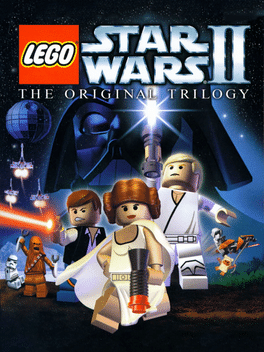


[Image from igdb.com]


Lego Star Wars II: The Original Trilogy

Developer: Traveller's Tales

Publisher: LucasArts

Genre(s): Action-Adventure, 3D Platformer

Platforms: PC, GCN, PS2, Xbox, Xbox 360, DS, GBA, PSP

Release Date: September 12, 2006


Most people would probably ask why Traveller’s Tales would develop a lego game revolving around the notoriously maligned Star Wars prequels before the gilded original trilogy. The correct answer to this question is that the first Lego Star Wars game was a loose tie-in with the release of Revenge of the Sith in 2005, the last of the prequel trilogy created so George Lucas could pay off his yacht. Some may still find it insulting that the three movies that tarnished the Star Wars name were given precedence over the holy trinity of films even with this fact in mind. Fear not, overzealous manchildren; basing the original trilogy of Star Wars movies on the second Lego Star Wars games is a decision that shows a high level of respect for those films. You see, video games have more leeway to expand on compared to films, learning from the mistakes of the previous title while simultaneously augmenting the aspects that already worked. Traveller’s Tales knew that the first Lego Star Wars would be rough, so why not base the initial project around the inferior prequel trilogy around it and use that experience to craft something better for the original trilogy than the sequel? Hindsight could only create something superior, right?

As one could probably guess, setting the original trilogy as the game’s premise has the inherent advantage of familiarity. For example, the game’s hub outside the three films is set in the Mos Eisley Cantina, a raucous saloon placed on Luke Skywalker’s home planet of Tatooine. It took me a little while to recognize the hub in the first Lego Star Wars as “Dexter’s Diner”, even though I had seen Attack of the Clones before playing that game. The Cantina, on the other hand, is so ingrained in the fabric of Star Wars as a brand that I’d be able to recognize it without ever viewing the first film. Those first few notes of that jaunty cantina music can strike up, and I will immediately associate it with the dimly lit watering hole in the heart of the sandy metropolis. Besides its high discernibility, the lively atmosphere of the Cantina is the optimal place for all of George’s multi-million dollar creations in Lego to roam around aimlessly. Other Lego characters will even fight each other to enhance the authenticity of the Cantina. The basis of the hub remains the same, but the Catina outshines the previous hub of the first game with flying colors simply by being associated with warmer Star Wars memories.

Regarding warmer Star Wars memories, Lego Star Wars II also benefits its story mode levels deriving from a much better source: the original Star Wars trilogy. The stories presented in the three films are one of the prime factors in what cemented Star Wars as arguably the biggest film franchise to ever exist. Spoiling the newer prequel trilogy (god forbid) at the time of the first Lego Star Wars release might have been a risk when playing the game, but everyone who is playing through the second game will most likely already be well aware of what’s happening. It also helps that the events of the first three movies make sense as opposed to the jumbled nonsense Once again, the story is told via the body language and facework of the characters without any dialogue, like a film from the silent era. However, Lego Star Wars II includes the characters making wordless warbles for a heightened sense of emotion in lieu of not having any spoken dialogue, and it’s honestly a welcome addition. Depicting these three movies in Lego is inherently silly, so the utterances add to the light-hearted nature of the game. The three films are portrayed the same as the prequel trilogy from the previous game. Three different areas of the Cantina are dedicated to each of the three films, divided evenly between six episodes that tell the film's story (the original trilogy would be damned if one film was unevenly split like with Attack of the Clones!)

In the first Lego Star Wars (especially in multiplayer), being forced to play as anything but a Jedi knight was a disappointing affair. One might think this problem would persist in the original trilogy due to the Jedis being wiped out by Order 66 during Revenge of the Sith and only having an elderly Obi-Wan with force powers to control for one movie. Original trilogy characters like Princess Leia, Han Solo, Chewbacca, and an uninitiated Luke Skywalker control the same as the gun-wielders from the first game, and droids C-3PO and R2D2 are just as clunky and helpless as they always were. However, this was never a problem as it was in the first game because at least I’m more familiar with these characters and like them as opposed to, say, the black guy who guards Padme on Naboo or the color-swapped droid clones of C-3PO and R2D2. Most levels in Lego Star Wars II only offer the characters listed above, with a few exceptions here and there. Still, their constant presence helps the players establish a core dynamic between them. Plus, Han Solo’s double shot with his blaster pistol makes him feel brisk and lively, and Chewbacca’s new ability to rip the arms off of enemies never gets tiring. Playing as the droids still suck, but at least the team will offer another character to play as most of the time.

Of course, I’ve only listed what makes the original trilogy better than the prequels, and that stance will not win me any awards in journalistic insight. How does Lego Star Wars II expand on the first to make for a better game? Well, the changes are only slight but are apparent nonetheless. Lego Star Wars II is much more puzzle-oriented than the previous game. Cues relating to a specific character like the glowing force indicators and the droid doors made up the slight obstacles of the first game, which are still present in this game. Lego Star Wars introduces what I like to refer to as “collection puzzles,” which become utilized much more frequently in subsequent Lego games. The game presents a wide space for the player to gallivant about with a main goal or trajectory in plain sight. To achieve this goal, the player must complete a line of tasks in a specific order. Some require building things out of Legos in a pile (which every character can do now thanks to the new stacking mechanic) or character-specific moves. After a long stretch of circuity, the main goal will be accomplished, and the player can move on to the next block of the level. These sections are more involved than choosing a character for a split second and pressing a button but aren’t as engaging as the developers hope they would be. Their busywork design and lack of puzzle-related acumen make them more tedious than anything, and their widespread presence in these levels pads them to unreasonable lengths.

Any vehicle level in Lego Star Wars II is also worse than the previous game. Vehicle levels in the first game offered some of the steepest challenges and removed the breeziness of infinitely respawning seen in every other level. These levels in Lego Star Wars II, on the other hand, are designed exactly like every other level in the game but with driving or flying at the helm. The puzzles and action in these levels are also limited due to being unable to switch between characters, so what the developers offer results in boring tedium like collecting energy balls. Not even tripping up Lego At-At Walkers on Hoth is all that thrilling. The only level in the game that gets it right is the level on Endor, where the player rides on zoom bikes, but only because the level provides a hybrid of vehicle and foot sections.

Lego Star Wars II provides far more collectibles and other features unseen in the first. The complete roster of unlockable characters is just as vast, but we also get the chance to create our own characters in the hub. Both players can save one character that will either be a gunslinger or Jedi and use them in free mode. It sounds cool, except that the player will have to swap out their creations constantly to do the character-specific parts. Other game modes are offered, but the only one that resonated with me is the bounty hunter mission,s where Boba Fett and his merry band of bounty hunters will hunt down a character in a level for some profit. At the end of the game, a Lego City level that looks like someone rendered a basic Lego playset is available to destroy for potentially a million studs. Oh, and Indiana Jones is an unlockable character, a paradox between him and Han Solo for sure. All of this incentivizes the player to play beyond the story, but it’s all window-dressing at the end of the day.

Lego Star Wars II’s superiority over the first game is entirely unfair. Not only does it get the privilege of being a successor with more polish and pomp, but it’s guaranteed that people will like this entry more than the first one simply due to the source material. However, that seems to be the prime appeal of this game. Unfortunately, Lego Star Wars II did not jump at the chance to improve upon the foundation of the first game, relying too heavily on inherent advantages. Lego Star Wars II is like a cocky rich kid who applies for a job and believes he has a better chance at getting it due to the prestige of his parents over a less fortunate candidate. In the context of this game, it’s like both candidates got the job and shared the workload. Lego Star Wars II is just more of the same, which puts the entire Lego game series into perspective.

Tuesday, September 6, 2022

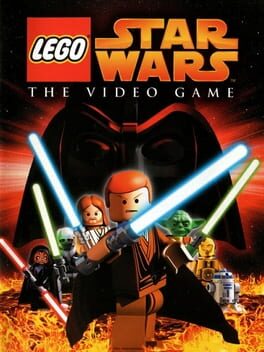
Lego Star Wars: The Video Game Review

 (Originally published to Glitchwave on 5/4/2021)


[Image from igdb.com]


Lego Star Wars: The Video Game

Developer: Traveller's Tales

Publisher: LucasArts

Genre(s): Action-Adventure, 3D Platformer

Platforms: PS2, Xbox, GCN

Release Date: April 2, 2005


Let us celebrate the fourth of May with an essential piece of my childhood. Back in 2005, integrating Lego with Star Wars in the fashion of a video game seemed more than ideal. The aesthetic design of Lego in a video game was so appealing. Besides, what kid wouldn’t want a combination of Star Wars, Legos, and video games? Those three things separately are the holy trinity of youth. Combined together, they made for the ideal concoction for any kid. Since this game came out, the studio that makes these games have milked the concept of making licensed video games with the Lego aesthetic. Batman, Marvel, Lord of the Rings, Harry Potter, and even Rock Band have all gotten the Lego treatment. I even hear the words of a Lego Call Me By Your Name in the works. As simple as the Lego games are, none of them are as simple as the first Lego Star Wars. The game didn’t need to be all that complex and multifaceted anyways, all they really needed was the mix of Lego and a blockbuster franchise, and kids would eat it up like a birthday cake. I certainly did. The first Lego Star Wars is practically a point of reference for how far the series has come and what has stayed the same. Lego Star Wars was the jumping-off point of the Lego franchise, a beta test to see what worked with the Lego foreground.

The game begins like any other piece of Star Wars media: the John Williams theme blaring with the big yellow Star Wars text. It certainly feels and sounds like Star Wars. Once you start the game, you play as Qui-Gon Jinn and a young Obi-Wan Kenobi. The hub world is the cantina from Attack of the Clones, and the doors are labeled 1, 2, and 3 with roman numerals. This is when you realize that your unique Lego experience will have to be through the dreaded prequel trilogy. This was in tandem with the release of Episode III that same year, so I suppose it made sense to tie the first Lego Star Wars with that. The fact of this does not make for an unpleasant experience, however, so don’t write it off just yet. Being that this game served as a beta-test for the Lego blockbuster franchise, the awkward aspects that come with the first game of a series. Wouldn’t it be better to test these out with the subpar prequel trilogy than the original trilogy? It also turns out that implementing the Lego-style with the prequels makes them far more enjoyable.

Each prequel film is reenacted by Lego characters that resemble those found in each movie. The story is told in six different parts going in chronological order. Attack of the Clones only had five sections for some reason. I don’t remember the movie starting with Obi-Wan going to Kamino. The presentation is comically sparse as there isn’t any dialogue between the characters. Each film sort of plays out like a silent-era comedy with only so many methods to illustrate the events of the movies. One could argue that someone would need to see the movies to understand what’s happening, but have you seen these movies? George Lucas couldn’t even tell you the plot of these movies. I much prefer telling these half-assed stories through silly Lego figures than the actual movies.

As you progress through the game, you get a chance to play every fathomable Star Wars character from the prequel trilogy. Every Jedi, guard, Wookie, and clunky droid are accounted for. Essentially, the types of characters you’ll play boil down to those four types. The Jedis wield lightsabers and deflect laser shots with them. They also use force to manipulate objects and defeat enemies. They can also double jump and execute a force jump if performed correctly. With all of this in mind, why would anyone else choose to be anything but a Jedi? Most story missions force you to play as other characters to diversify the gameplay. Characters like Padme and Chewbacca use projectile weapons, and they can use a zip line gadget that propels them upward. Some characters like Jar-Jar can jump to greater heights. Droids move slowly and can’t attack, but they open doors to progress through the level. There are a couple of unique characters that play differently from the others. Jango Fett can hover, and his gun does more damage. Yoda hovers in a chair until he unsheathes his lightsaber; then, he’s as apeshit as he is fighting Count Dooku in the film.

There are tons of characters you play through the story, and tons of other characters unlock. While there are tons of characters to choose from, most of them boil down to these four character types with not much variation. As much as I usually enjoy games with multiple play styles, playing as anything other than the Jedis is lame. You switch between the characters through some incorporeal blue matter which is easy enough, but I still feel like this breaks up the pace of the gameplay. The optimal way to experience this game is with another person in co-op, but everyone starts to draw straws on who will switch to the droids when needed. No way anyone is happy switching from a lightsaber wielder to someone else.

The game is pretty simple, and I guess that comes with the Lego foreground, targeting younger audiences. The levels are very linear, and the puzzles are very easy. The enemy types are battle droids that shoot projectiles which can be easily dealt with by blocking their shots. Once you die, the only consequence is losing a few studs, the currency of this game. There are a few vehicle levels like the pod racing from Episode I and one from Episode II to switch up the gameplay. For some reason, these levels don’t abide by the same rules as the other levels and have checkpoints you go back to if you die, making these the hardest levels in the game and inconsistent with the difficulty. Boss battles are simple but very well-paced. Other Star Wars games execute the lightsaber duels better, but the ones here are still fun.

Lego Star Wars is also a game you will get the most out of if you complete it 100%. It’s not as if people playing this don’t know the plots of these films (or know them as much as humanly possible), so the story isn’t exactly the selling point here, even if depicting the films with the Lego-style is charming. The goal for this game is to fill up the stud total gauge in each level which is always present at the top center of the screen. This will fill up when you get a certain sum of studs in every level, which gives some weight to the monetary penalty of dying. There are also ten superkits in each level, and collecting them will display a vehicle from the Star Wars Universe in the cantina hub world. It’s fairly neat, but you will also earn a ton of money if you do this, which is the real reason. You’ll need to collect a lot of studs. It's fairly grind-intensive, but if the novelty of collecting all of these Star Wars characters hasn’t worn off on you, it’s relatively satisfying to get everything in the game. Once you do this, an extra level unlocks where you get to play as Darth Vader in the first moments of A New Hope. It doesn’t seem like much but considering this was the first and only Lego Star Wars game, my brother and I reveled in playing as Darth Vader after we earned it.

The starting point of the Lego blockbuster franchise was a fairly humbling one. It’s a simple game with plenty of content for any Star Wars fan. However, this game has not aged very well in my eyes. It’s not from a point of the game showing its age, but rather my aging. I liked this game as a kid because it was a charming way to play through three different Star Wars movies, but I also liked it because it was simple and easy. Now that I prefer games that give me a substantial challenge, the novelty this game offers doesn’t appeal to me as much as it did fifteen years ago. It also doesn’t help that the full extent of this novelty warrants grinding to buy every character. It’s a fun game to play with someone else, especially if you’re at a young age, but the simplicity of it will run thin for any experienced gamer. However, I will give this game the benefit of being the launch point for the Lego blockbuster series, and they have improved on this formula in every subsequent Lego game. ...Or did they?

Pokemon Black/White Review

 (Originally published to Glitchwave on 12/18/2025) [Image from glitchwave.com ] Pokémon Black/White Developer: Game Freak Publisher: Ninten...