(Originally published to Glitchwave on 2/9/2026)

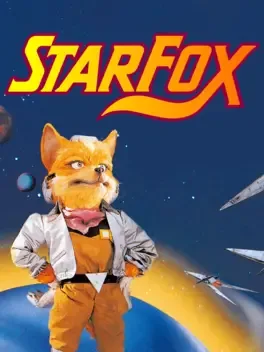
[Image from glitchwave.com]
Star Fox 64
Developer: Nintendo
Publisher: Nintendo
Genre(s): Rail Shooter
Platforms: N64
Release Date: April 27, 1997
Of course, I’m also including Star Fox’s SNES debut in the collective of series titles that suck out loud compared to 64’s magnificence. Lest we all forget, in me showering Star Fox 64 in undiluted adulation, that the framework it was adapting was shaky at best and barely perceptive at worst, as the game asthmatically coughed at the brink of total collapse every step of the way like a weiner kid jogging laps in gym class. In this case, Star Fox 64 is an example of a pitiful dork sprouting their latent physical prowess during the span of summer break and then flaunting their physique upon graduating to the next grade–which is the realm of the third dimension in this instance. Furthering this analogy, the once-whimpy kid didn’t need any fancy-shmancy surgical procedures to cultivate their peak physical potential, just as the Star Fox series didn’t need a considerable overhaul to make its direct sequel palatable. Similar to its equally precocious SNES colleague, Super Mario Kart, simply transitioning to the evolved realm of the third dimension made a world of difference in blossoming what was once far too ambitious for a 16-bit console to sufficiently support. You’d be amazed how naturally a 3D console renders rounded shapes and how clearly their spatial placement between them and the player is compared to having them spontaneously materialize on a pixelated console as it slowly processes everything on screen bit by bit like an old printer inking text on paper line by line (sarcasm can be difficult to translate into text sometimes). In terms of how the third dimension affects the graphics, fleshing out the visuals with the rounded nuance that comes with 3D does admittedly forsake the aesthetic minimalism of the first game. It's the one aspect that I genuinely appreciated that effectively depicted space and a futuristic society in their coldest, most abstractly barren states. Now, the advent of proper 3D has made the esoteric elements of a hyperfuture we can only still hypothesize through our art more accessible and inviting, as if we should be envious that our descendants get to exist in a period where interplanetary travel is a feasible, common convenience. The 3D on display admittedly doesn’t transcend the rudimentary blotches of the N64’s general graphical appearance, but I find the unpolished look to strike a balance between the diminished first game and the portentous portrayal of space that would become a mainstay when gaming graphics reached a glossier standard. It still fulfills my niche illustration of a charmingly frumpier final frontier quite nicely.
Actually, I can’t justifiably string this connection between Mario Kart and Star Fox’s inaugural 3D launches because the plumber’s kart racer franchise, while leaping from pixels to polygons still made for an inherent fundamental improvement, still retained a clumsy jaggedness in its vehicular gameplay that I wouldn’t describe as entirely revolutionary. Star Fox 64, on the other hand, is smoother than silk-woven satin lathered in butter. Soaring through the skies or the blackened, oxygenless cosmos in Fox’s trusty Arwing will immediately feel as second nature to the player as a beaver’s biological inclination to clog a babbling brook with wood. Because the game will instill the sensation that the player automatically acquired the proficiency of a licensed pilot during the subconsciousness of their last sleep session, it will quickly present to them the full roster of maneuvers that Fox can newly perform as soon as he’s scouting through the charred destruction of the first planet, Corneria. If members of the enemy fleet are striking Fox from his ship’s rudder, braking will cease his continual, on-rails momentum to flip the tables and blow them out of the air from the angle of their blind spots. On the opposite end of the spaceship’s gear-shift spectrum, Fox can also engage a boost that briefly hastens his acceleration. A graceful somersault can also be executed with a conjunctive coordination of a specific button press and directional positioning of the analog stick to gain the same advantageous placement behind an enemy. Flicking either the left or right bumper, which typically places the ship on its side twice in swift unison, will cause Fox to perform a “barrel roll,” which will deflect enemy fire with precise timing in addition to lubricating the awkward turns the player will be forced to contend with during the boxy arena sections. Its multifaceted utility is the reason why the name of this maneuver was repeated ad nauseam on the internet to the point of becoming a quintessential, golden-era meme, right? As far as the offensive side of space-age dogfighting is concerned, I sincerely can’t think of anything that could top the serviceability of the green targeting reticle they’ve introduced, or the charged blast that emanates from the Arwing’s frontal laser cannon that can lock onto multiple enemies using the aforementioned targeting reticle. Maybe a lager dispenser that releases with the press of a button into the ship’s cup holder like a gas station coffee machine? Then again, from the perspective of how such a feature would augment the player’s enjoyment to its fullest, I could just pound some brewskis while I play the game. Anyways, what I’m trying to illustrate here is how every quality-of-life inclusion to the series’ space shooter foundation satisfies so many unchecked aspects from its paltry SNES predecessor that anything featured beyond what is already available would seem excessive. Star Fox 64’s gameplay is impeccably airtight in its streamlined simplicity, yet the intended mastery of all of the Arwing’s acrobatics across a plethora of applicable scenarios still fosters a fairly stacked skill ceiling.
Okay, I’ll admit that I was playing dumb in the previous paragraph when I was wondering how the line, “do a barrel roll!” transcended its source material to the ironic echelons of memetic glory. It should be readily apparent to everyone that the line’s appeal stems from Peppy Hare’s emphatic commanding of the flashy gambit, which could only be achieved with a human voice actor supplying their vocal chops to the character. Beyond the directions that Fox’s long-eared crew member exclaims on the field, every single character, whether they be the main characters with an all-encompassing screen presence, an ally making a momentary appearance, to a foe whose adversarial threats are curt due to our heroes silencing them in a duel, they are all treated to the presentational luxury of voice acting that is now functionally facilitated by the cinematic advancements of the third dimension. Even though every actor in the recording booth, whether their character is major or minuscule, gives a performance that is a few notches above the stereotypical shoddiness associated with this early, experimental era of video game voicework, I’d like to focus on how verbalization greatly enhances the relationship between Fox and his friends. Without the indistinct jabbering suppressing the full extent of their personalities, the group dynamic exhibited between the series seminal space-pilot quartet is shown to be as systematically diverse as the four humor temperaments.
Since we’ve already mentioned his indelible catchphrase, it should be noted that Peppy suggests these types of flying techniques to Fox to pronounce his sagely wisdom as the established elder of the foursome. Apparently, a southern accent was deemed a complimentary quirk to the vocal rasp of Peppy’s advanced age, further emphasizing his rank as a seasoned ol’ timer. Whilst the purpose of Peppy’s input is to guide his less experienced squadron leader to the blaze of victory, every sticky scenario that Fox successfully overcomes will be undermined by the sarcasm of the caustic, fiery Falco Lombardi. It seems evident to me that this blue bird of prey wishes he were positioned at the top of this food chain caste above his fellow predatory superior, and the one-sidedness of this rivalry makes his impertinent comments come off as obnoxious, if anything. While his sauciness can be entertaining when it’s not directed at the player, my appreciation of Falco comes with his greater flight resilience and passionate seeking and destroying of enemies in the skies–aspects that are no doubt products of his innate animalistic predisposition. Slippy Toad, on the other hand, should’ve stayed behind on the Great Fox mothership to work with a wrench and to serve caffeinated beverages to his peers. God bless him, but the developers really went out of their way to make this airborne amphibian a grating liability. Sure, Falco and Peppy both plead for the aid of their leader to scratch their backs off the bogies targeting their tails, but I’ll bet that the state of Oklahoma has had longer stretches of time without a tornado sighting compared to how often Slippy wails in a frenzied panic that he’s about to get clipped. Add to the fact that his cries for help are in the high-pitched frequency of a castrato, and Slippy’s intended endearingness as the bright-eyed, inexperienced kid of the group becomes incredibly overbearing. His constant propensity for overestimating his piloting skills even becomes the focal point of a subplot in the game where he’s swatted down by a boss and the rest of the team have to retrieve him from the sandstorming planet that sucked him into its gravitational pull. If I were in charge, I’d interpret his impulsive mistake as a sacrificial gesture and count our losses. Relax, I’m only kidding (sort of) because the hidden strength of Slippy’s inclusion amongst these more proficient pilots is to round out the eclectic arrangement of personalities that complement Fox’s bland, boy scout persona that comes with his typical leader position. Whenever a fraction of this solid dynamic is compromised outside of the sole instance of plot direction, fortunately, Fox’s co-pilots are only out of commission for the following level and then return to the skies fresh as a daisy thanks to the mechanical efforts of ROB, the robotic pilot of the Great Fox aircraft carrier who coincidentally shares the name of the creepily kinetic NES peripheral. In my review of the SNES Star Fox, I stated that permanently losing your partners per campaign made for a depressingly lonely and sterile experience. In Star Fox 64, the same can be said even if one member of the Star Fox fleet skips a level due to their ship being in critical condition, even if the absence of one particular member of this team feels like we’ve shed some dead weight. That’s the extent of how much the game’s buoyancy and charm is carried by these characters and the voice work that supplies them.
More than likely, the player won’t even be faced with the dilemma of having to reluctantly save Slippy from the consequences of his incompetence because they might not fly over the Sector X space section where this scene occurs. In the first Star Fox, the entirety of the Lylat System was segmented into three distinct paths, with each route correlating with a solidified difficulty setting. Star Fox 64 also adopts this method of encouraging replayability, but with a wonkier trajectory at play that is triggered by far cleverer conditions. Immediately as Star Fox & Company set foot (not literally) onto the bombed-out fallout of Corneria, the game will present some stipulations for the player to engage with that will affect the course of the campaign. If the player achieves both the combined conditions of saving Falco from the nasty buggers riding his backside and flying through seven earthy arches along the water’s surface, the blue bird will lead Fox through an upcoming waterfall and omit the level boss at Corneria’s climax. If the player was absentmindedly trusting the linear course and left Falco to the buzzards for being a wiseass, the automatic trajectory will send Fox to the Meteos Asteroid Belt. Still, the player will have the opportunity to alter the linear course again if they failed to do so previously. Provided they can swiftly swim through a series of boost rings, the planet of Katina will welcome Fox on the other side of the psychedelic portal instead of the frigid Fortuna. Even when the player isn’t satisfying all of the conditions that will keep their position of traveling to every planet on the “hard route,” the game will still offer enough divergence to make the player’s campaign as sinuous as a spider’s web. Outside of the obvious replayability factor facilitated by the bisecting routes, there’s another element at play that should further motivate the player to seek out the planets located on the left side of the Lylat Galaxy outside of the automated path. Admittedly, I doubt the player would ever figure out the correct sequence of tasks involved in exploring the Lylat System’s entirety without flipping through a tips and tricks page in an issue of Nintendo Power (because internet connection at the time was slower than a drunken donkey). Still, in the fair likelihood of the player biffing the condition even after they’ve discovered its secret, there is a subtle suggestion in the air that the player is not prepared to face the steeper challenges ahead, like a student failing to test into the gifted classes. Once the player can perform the condition with their eyes closed on subsequent playthroughs, that feeling of personal progress is truly sensational. Fox’s crew constantly even spells out that their leader is becoming a stronger pilot if the player manages to cross over into the steeper sections of the game, providing direct affirmation for the player’s sense of pride.
Honestly, once I committed to the outlined “hard course” to put a period on Star Fox 64 after filling my travel log of everywhere else in the Lylat System, I found this specific sequence of planets to only be marginally more difficult than any other assortment of zigzagging around the galaxy. Sure, some of the levels made me appreciate the respective talents of my crewmen to uncover hidden health rings, offer advice on the situation at hand, and expose a boss’s health bar whereas the ones on the smoother pathway made me take them for granted, and meeting the requirements to keep unlocking every planetary increment of this course instilled an anxiety within me that wasn’t applicable elsewhere. Somehow, the elevated state of affairs was balanced out by enemies harassing my team members less frequently, and the addition of a guest pilot named Kat performing a good chunk of the legwork while protecting Great Fox from a mass of deadly missiles. Can I make a proposition to General Pepper to officially absorb this flirty, pink space kitty into the Star Fox family and demote Slippy to cleaning the headquarters latrines? I need a strong feminine presence in my squadron, sir! Anyways, what I learned from feeling a tad underwhelmed by the so-called “hard route” is that Star Fox 64’s difficulty curve is a spotty situational one that is contingent on the environmental context of the areas across all potential playthroughs.
During every casual playthrough of Star Fox 64 that I embarked on in my younger years, I always ended up passing through Solar, an ill-conceived idea for a level if there ever was one. Given that this radiantly red star is situated smack dab in the center of this solar system like a certain real-life daystar that shines so brightly that you’ll be rendered blind with only a few seconds of eye contact, how do you think hovering above its surface will transpire in an interactive interpretation? Sure, Fox can stave off complete disintegration by continually collecting health rings, but the fact that his crew members can’t be afforded the same source of relief guarantees that he’ll have enough fried chicken, rabbit, and frog to open a French restaurant by the end of the escapade. Great idea, Fox! Instances where Fox himself feels handicapped mostly involve any vehicle intended to be driven elsewhere beyond or below the skies. I appreciate the Landmaster Tank for its contribution in expanding the scope of the series’ on-rails vehicular gameplay, but I’d be lying if I said that the gravity element didn’t tack on an unhealthy, sickening amount of weight while chasing a train on Macbeth and saving Slippy on Titania. I can’t tell if the submarine itself is also inherently hindered by the restrained physical boundaries, or if the intergalactic Atlantis of Aquas is just suffocatingly congested on its own merits. Gee whiz, the water level kinda blows. Traditional boss encounters rarely gave me the business, but the surprise invasion of Star Wolf managed to critically crush me and my teammates, depending on where the game deployed them. Gaze and gawk at this anti-Star Fox troupe with pleasure on Fortuna, but on routes where they appear on the satellite station of Bolse, be prepared to have your entire team scream for help in unison while they refuse to return the favor when Wolf is hunting you like, well, a wolf hunting a caribou. This is the thanks I get from keeping your sorry asses afloat around the clock?
A particularly challenging confrontation with Wolf and his droogs, Leon, Pigma, and Andrew, is also the introductory boss to Venom on the “hard route” before Fox faces his mortal enemy kept in confinement at its core. Either due to the evolution of game graphics or a deliberate effort by the development team, the almighty, evil Andross has thankfully undergone a drastic redesign. His new simian visage is still sinister and is nicely assimilated into the thematic series overtone of anthropomorphic characters interacting in the cosmos. Maybe I’d find any gigantic face with detached hands amongst a hazy, hallucinogenic backdrop to be unnerving by its design alone, even though its appendages prominently spell out a conspicuous weak point that trivializes the encounter. While Andross here doesn’t carry the technical weight of a final boss, even in his true form where he’s shed his skin and brags about the immense size of his exposed brain, there is, however, a hefty hint of narrative substance behind Fox facing off against his final foe. Before General Pepper even gives Fox the order to explore Corneria, the game opens its curtains to a log of expositional lore text like the opening of a Star Wars film. In it, we learn that Peppy is the original remaining member of the Star Fox squadron and that it used to be commanded by James McCloud, aka Fox’s father. Unfortunately, former Star Fox member Pigma sold out his team to Andross by leading them into a trap in which James didn’t survive. Why are pigs portrayed so poorly across several of Nintendo’s IPs? Because of the lore context, Fox is seeking retribution from Andross like a fictional Spanish swordsman beyond following the orders of his superior officers. Yet, Fox doesn’t seem fazed by any reminders of his father’s tragic passing, whether they be sentimental ones from Peppy or callously cruel comments from Wolf and that Judas, Pigma. That is, until we see its impact firsthand when an apparition of his father aids in a dire moment by directing him out of the blast radius from Andross’ chamber on Venom. When Fox exits the ordeal unscathed, and Peppy notices he’s rather stunned, Fox shakes off his concerns. Truthfully, Fox’s reaction to what he just witnessed and his denial of it left me surprisingly chilled.
How, I ask, can a Star Fox sequel surpass the series standard when Star Fox 64 is this rock solid? Naturally, its on-rails gameplay wasn’t going to suffer anymore from a frame rate conceivably in negative numbers on a console that could facilitate its third-person perspective. Still, Star Fox 64 achieves something above and beyond the cliched classification of a “soft reboot” that happens so often when Nintendo’s franchises leap to superior, subsequent hardware. I doubt that the original Star Fox was going to inherently have such charismatic character writing, an energetic, frictionless control scheme, an abundantly varied replay value, and a substantial, unobtrusive narrative underpinning just by banking on the third dimension alone. Despite its treasure trove of marvelous qualities, Star Fox 64 remains a sweetly simple experience that doesn't ambitiously overstep the N64's undeveloped capabilities like its Nintendo contemporaries arguably do. When your 3D debut is without any fatal fundamental flaws during an experimental era of the medium where mistakes were natural, it's healthy to accept that you've peaked and retire accordingly. After all, isn't it ideal in life to quit the rat race as early as comfortably possible?