Wednesday, December 31, 2025

The Legend of Zelda: Phantom Hourglass Review

 (Originally published to Glichwave on 8/23/2025)
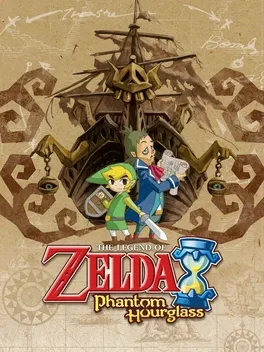


[Image from igdb.com]


The Legend of Zelda: Phantom Hourglass

Developer: Nintendo

Publisher: Nintendo

Genre(s): Action-Adventure

Platforms: DS

Release Date: June 23, 2007


I’ve talked ad nauseam about the Wii’s central motion control mechanic and how a mismanaged utilization of said feature has been known to complicate the overall product of its titles. Nintendo’s handheld at the time, the DS, also had a kinetic conceit at its forefront that spurred a sense of curiosity in non-gamers who weren’t convinced of the medium’s general fun factor. Given that the DS sold like hot cakes on equal measure with its generational console peer, I think the touchpad was an ingenious feature that reeled people into playing video games who normally wouldn’t. The guys at Nintendo know how to make a quick buck, don’t they? While the DS was an astounding success story due to its many laudable merits, the mobile console seems to be immune from the same sorts of criticism that the Wii receives in terms of mucking up the foundational integrity of its games by injecting too much of the console’s central kinetic gimmick into the gameplay. Believe me, the DS is just as guilty of this offense as Nintendo’s seventh-generation home console, and there’s no better piece of evidence to indict it on this charge than The Legend of Zelda: Phantom Hourglass. A fraction of what puts Nintendo’s seminal fantasy series on the Mount Rushmore of the medium is its everlasting ability to innovate. Printing one’s progress with a save, 3D lock-on targeting, and a Groundhog Day time cycle are just a few of the features that the Zelda series has contributed to the greater gaming landscape. Phantom Hourglass attempts to use the unique mechanics of the DS to seemingly double the series’ already impressive resume, but their ambitions this time around stacked up a bit too high, and it crumbled like the Berlin Wall.

By 2007, Zelda fans had dropped their dismissive attitudes towards The Wind Waker and all of its cell-shaded splendor. Otherwise, Nintendo wouldn’t have dared to consider extending its aesthetic and its distinctive canon in the frazzled Zelda timeline. I wouldn’t consider Phantom Hourglass to be a direct sequel to the GameCube’s divisive entry in the series, but more along the lines of an addendum that continues the presence of this particular realm of Zelda’s world and characters. The blondest and most bulbous iteration of Link is reintroduced to us, sailing on a pirate ship, the closing shot of Wind Waker implying that the events of Phantom Hourglass occur anytime after Link had slain Ganondorf in his watery enclosure. Much to my delight, Tetra is also present on this vessel to taunt Link for his drowsiness like the little scamp she is known to be. One might be excited for Tetra to accompany Link on this new adventure and caustically rib him for a constant source of levity, but we can’t forget that the Zelda series has trouble refraining from using a damsel in distress as its plot catalyst. Much to my chagrin, Tetra and the rest of her pirate crew are swallowed into the cursed grasp of an elusive ghost ship, while Link gets washed up on another beach shore like another certain handheld title from the earlier years of the series. By borrowing a smaller ship owned by a greedy, curmudgeonly sea dog named Linebeck, Link makes like Peter Venkman and embarks on a ghost hunt across the uncharted open waters, with a series of dungeons as progression milestones as par for the Zelda course. “Wait, wasn’t a ghost ship already featured in Wind Waker as a point of minor significance during that triforce quest that made everyone want to slight their wrists?” veteran players might ask. Yes, and reframing this menial aspect of a previous game as the focal point of this entry sets a disappointing precedent that the scope and scale have been substantially trimmed down. Usually, I commend any Zelda title that deviates from the trifecta of Link, Zelda, and Ganon(dorf) and the divine quest that ensues with this classic dynamic at play. In this case, however, the plot premise smacks of inherent handheld inferiority to the console version so much that it hurts.

And the instances when Phantom Hourglass acts as a compromised version of Wind Waker keep rolling along as the game progresses, with more blatant examples rather than the connection I’ve made between the imbalanced framing of its similar plot points. Because this Zelda entry is situated mostly on the surface of large bodies of water instead of the rich soil of Hyrule Field and its surrounding areas, sailing is again a prime traversal component. If navigating through the deep, ocean blue tended to be inconvenient and jarring on a home console, imagine how vexing the process is on a handheld system with lesser performance power. Instead of being at the mercy of the savage sea winds, the sailing in Phantom Hourglass involves drawing the trajectory from the ship’s location to the desired destination with the system’s stylus. Simply draw a line that connects the two, and Bob’s your uncle. While some might think that this method of streamlining the sailing process makes for a smoother trip around the drink, you’d sadly be mistaken. The written route that the player scribbles on their system is stern and immutable, forcing them to halt their momentum completely and redraw another path just for the slightest of deviations. The pen might be mightier than the sword, but it evidently can’t outmatch a baton in directing the course of something. Who would’ve thunk it? In addition to any sort of rerouting becoming a greater ordeal than was ever conceivable in Wind Waker, Phantom Hourglass has a habit of making every sailing trip tiresome by bombarding the player with an influx of hazardous obstacles and enemies. Sure, Wind Waker made certain that the player wouldn’t drift off into dreamland on their admittedly empty maiden voyage on the high seas by including some hostile aquatic foes to add some adversity to the journey, but the number of these confrontational critters never exceeded the number of digits on a single hand per journey. The level of enemy activity in Phantom Hourglass’s waters is technically the same, but five or so enemy encounters in a map whose area is reduced by approximately half of Wind Waker’s expanse, every bit of sailing feels quite tempestuous. Why would there be a constant string of barbed nets popping out from under the surface or aerial attacks from winged beasts and sharks if not to keep the player from dozing off? What exactly is the course of action to avoid Linebeck’s scorned old squeeze, Jolene, from ambushing him with a vengeance when the boat’s base acceleration ranges from motionless to gingerly floating atop the waves? Why don’t I just invite her in for some Dark ‘n’ Stormys while we’re at it? To add insult to injury, the player will have to keep adjusting the camera because it insists on centering in front of Link instead of behind him, creating an unnecessary blind spot that makes him vulnerable to everything the ocean throws at them. It’s fortunate then that there is barely anywhere to explore on this map because Link can only drop anchor on a select few of the more sizable islands that already have plenty of notable sights seen during the main questline. All things considered, I’m actually glad to be beset by these restrictions, for the sense of curiosity that Wind Waker once inspired has been quelled by the tautness of the sailing in Phantom Hourglass. When unlocking fast travel felt as relieving as finding water in the desert for a map where every destination is still a hop, skip, and a jump away from one another, you know the standard means of traversal feels as painful as getting kneed in the groin by a Brazilian soccer player.

Then the prevalence of stylus controls continues to shake the gameplay foundation of Phantom Hourglass until it crumbles into rubble. Anytime I’ve commended or given clemency towards a game featuring an unorthodox control scheme that deviates from the analog stick/D-Pad arrows and symmetrical button assortment standard, they’ve either used the extra novelty sparingly, or were implemented in a game that warranted the unconventional kinetic dimension, such as Guitar Hero or WarioWare: Smooth Moves. For an action-adventure game like Zelda, where the character is constantly moving in a nuanced, multidirectional plane, do you think his controls will be fluid and responsive when the game swaps these fundamentals with something so radically irregular? Let me reiterate what’s at play here and emphasize the full extent of what this means: Phantom Hourglass is the only game I’ve played where all of the console/controller’s buttons are totally relieved of duty, taking a vacation to relax their springs and hinges after being excessively pushed and leaving the touchpad to carry the weight of this title while they decompress. Moving Link involves having him follow where the stylus is being dragged on the screen as if it’s a string with a dollar bill attached to it, attacking enemies with the sword during combat requires either poking or swiping at them with the stylus, and using any of the other tools in Link’s arsenal also requires scratching and stabbing the touchpad like a shitty DJ. The boomerang and bombchu items are the ones that actually thrive with this touchpad schematic because drawing their trajectory is a complementary way to engage their utility. I also enjoy the flexibility of where the hammer item can land with the touch pad, even if it looks comically unrealistic. Integrating the shield in this zone of touch pad controls was evidently so complicated that Link now blocks all oncoming projectiles to his front side automatically. You know the developers are treading on some uncharted territory when they implement a fairy as Link’s partner to ease the player into these innovations, and Ciela even utters the same shrill “HEYS” as Navi once did to “aid” the player through this untested terrain. It’s impressive how every conceivable aspect of Zelda’s typical gameplay structure is translated competently to this almost abstract control scheme. However, it’s ultimately a case of fixing something that wasn’t broken in the first place, so it only generates slight amusement from me instead of awe in between the various annoyances.

Reorienting Link with the touch pad took some getting used to, but I never grew comfortable in dealing with all of the other left-field utilizations that Phantom Hourglass consistently injects into the gameplay. Most DS users probably recall that the touch pad wasn’t the only facet of the handheld’s state-of-the-art mechanical features. We can’t forget that the system had a built-in microphone located in the bottom right corner of the bigger screen, mostly because Phantom Hourglass utilizes it enough to the point where it makes me wonder if the developers realized that people tend to play handheld games in public. The player will be blowing into the mic like home-cooked ziti fresh out of the oven, mostly to either extinguish torches and candles, create manual gusts of wind used to power turbines, etc. I wish the game kept its outside-the-box gameplay to a minimum of exhaling once in a blue moon, but the game seriously expects the player to also screech into the microphone like a chimpanzee. The classic “Poe’s Voice” enemies we’ve seen since the 8-bit days can only be defeated if the player pierces their large rabbit ears with shrill noises. To obtain the salvage arm that hoists up sunken treasure, the craftsman on Cannon Island won’t part with his creation unless the player really bellows for him, a task that triggered a red-faced apprehension as if I was being coerced to sing “Barbie Girl” for my high school talent show. After many casual throat clears that didn’t suffice, he finally parted with the ship part when I screamed, “ALRIGHT SHITBRICK, GIVE ME THE SALVAGE ARM OR ELSE I’M GOING TO RIP YOUR NUTS OFF AND FEED THEM TO THE FUCKING SEAGULLS!!!” Wiped the stupid grin off his face, it did. Incidentally, I am now banned from all public transportation in my major metropolitan area. After the game makes the player liable to be prosecuted for disturbing the peace, the outlying gameplay implementations continue even further into territory I’d call borderline illogical. After finding a chart that reveals the location of an essential item, the player must somehow transcribe this information onto their sea map. Do you want to know how to solve this conundrum? I wouldn’t judge anyone for not knowing the correct course of action, because it defies all rational video game conventions. Should I perform the kind service of informing potential players of the solution to this perplexing puzzle? Nah, because I want everyone to experience the aggravated level of befuddlement so they’ll believe me. I don’t mean for this to sound complimentary, but all of the fourth-wall-breaking quirks that Phantom Hourglass consistently bestows remind me of Kojima’s wild ways that spruced up player engagement in the first Metal Gear Solid. However, the core difference between the two is that the brilliance of Metal Gear Solid’s deck of tricks is their intrinsic novelty in and of themselves, not how the player approaches them. Konami completely realized that the player would likely never figure out the magic behind beating Psycho Mantis, and the sheer ingenuity of such a radical gimmick was never lost on any players. When the developers genuinely expect the player to forgo all proper gaming rationality to progress, it shows a lack of awareness and, honestly, exudes a sense of smug satisfaction from the developers that they’ve “cleverly” stumped the player.

In small doses, the leftfield touchpad puzzles that Phantom Hourglass implements can be effective when they’re integrated as brainteasing obstacles that impede progress in the game’s various dungeons. Phantom Hourglass continues the tradition of dividing the narrative in half between two major collectibles, similar to the Spiritual Stones and Sages in Ocarina of Time. There aren’t any discernible thematic or difficulty differences for the dungeons by this grouping, as their distinctiveness is based on their individual merits. Some formulate their conceptual bases around a well-tested element, as in the case of the Temple of Fire and the subsequent Temple of Wind. The Goron Temple doesn’t necessarily have an elemental component attached, but seasoned Zelda fans can guess that it’s an earthy domain with several two-tonned rocks rolling about, and they’d be correct. The “Temple of Courage’s” unique concept is that every aspect of the dungeon must be approached with the same, consistent directional pattern, which can be jotted down on Link’s map using the stylus as a black-ink marker. On the subject of commonly using the stylus to imprint important reminders, extending this feature to certain puzzles exposes an off-kilteredness in its execution. For example, I know for certain that I traced the invisible path in the “Temple of Courage” perfectly as it was written, but I became confused and infuriated as I kept falling through the alleged cracks of the supposed trajectory. Other than the few instances where the game’s distinct properties pronounce their flaws, using the familiar items to solve puzzles with the touchpad are surprisingly quite intuitive. Hell, regarding the unorthodox controls, rolling a Goron around with the direction of the stylus in his respective dungeon complimented his form of movement far more than Link walking about on his little legs. In addition, boss battles that utilize the kinetic extensions of the items are incredibly engaging, such as creating a rope barrier with the hookshot to bounce fire and ice balls at the twin Gleeok heads and using the detached nature of the hammer to smash chunks of the giant stone titan, Eox.

However, no amount of nifty touchpad tricks can salvage the dungeon in Phantom Hourglass that keeps rearing its ugly, multistoried head. The Temple of the Ocean King isn’t a dungeon in Phantom Hourglass; it is THE dungeon of Phantom Hourglass, the sun that all of the lesser planet dungeons revolve around in the Phantom Hourglass galaxy. In this context, I kept praying that this flaming astral body would die in a majestic supernova, but it unfortunately persisted like a case of herpes. Like the aforementioned STD, The Temple of the Ocean King is a chronic occurrence, revisiting Mercay Island and hiking to its northern tip after completing a dungeon and obtaining its core collectible. The direct descent down the temple’s catacombs gets deeper upon every visitation, unlocking a handful of new floors that lead further into the secrets the ancient architectural structure holds. The catch is that no matter how extensive the temple becomes as the game progresses, the player is forced to start from its entrance and work their way down to the lowest point every single time. Imagine if the same thorough process were mandated for Tartarus from Persona 3: the game would simply become unplayable at that point. Sure, the game offers a teleportation portal that transports the player to the temple’s halfway point, but the unfortunate caveat behind this supposed act of clemency is that they’ll have to trek onward with the time they arrived at this point on a previous run. Yes, perhaps the ultimate difficulty stipulation surrounding this massive temple is that there is a clock ticking, or an hourglass draining in this instance, throughout the player’s journey further down the depths of this dank, ruptured pit. It goes without saying, but if Link fails to find footing at the lowest position that this dungeon allows, he’ll succumb to whatever old noxious fumes are stewing down here (asbestos?), and the player will have to revert back to square one at the entrance. Add to this tense condition the fact that the beefy, impervious Darknuts that vigilantly roam every corridor will subtract one minute off the clock if they successfully snatch up Link, and finding the solution to unlock every floor here is a stressful, aneurysm-inducing escapade. Admittedly, there are plenty of translucent pools that act as safe zones where the timer stops, and Link is imperceptible to the Darknut guards, plus sand can be found in some sunken treasure chests to increase the maximum time allowed. In addition, gathering more of Link’s staple items as the game progresses can considerably mitigate the time spent on a single floor. Still, while the leniency is appreciated, I’d rather put a formal stamp on my progress and continue into a batch of new floors every time I am forced to excavate this godforsaken place. Retreading each floor here is a mind-numbing process that grated on me as no previous dungeon has ever before, reminiscent of having to return to the slowest white-collar job imaginable five days out of the week to continue enduring the boredom and tedium of it all for what seems like forever.

Tis a shame then that there is actually an admirable veneer of genuine substance underneath all of the vexing newfangled innovation that Phantom Hourglass insists upon. I’ve often expressed that there is a subcategory of “alternative Zelda games” that deviate from the standard series arc of a prodigal hero conquering the essence of evil with a princess as a crucial key in the villain’s sinister goals. The plot premise of Phantom Hourglass might give off a bad impression that the game’s alternative means of sprucing up the series is but a paltry appetizer to the full-course meal of the Triforce arc, but the narrative stakes expand extensively once Link visits the Ghost Ship that abducted Tetra at the game’s midway point. The antagonist of Phantom Hourglass is not a rogue spirit ship, but a nasty, enigmatic entity named Bellum who thrives on draining the life force from its victims, hence why Tetra has been reduced to a petrified stump. Bellum isn’t exactly a strong villain in the narrative sense, but the heightened stakes he provides allow for a genuine growth arc involving the game’s primary partner character. Those who are grief-stricken by Tetra’s absence will be glad to know that Lineback is a suitable surrogate whose sardonic banter with Link is sure to lighten up the experience in somewhat of an equal measure. Still, Linebeck proves to be far more than the player’s source of entertainment with his constant jackassery, as this salty sea dog’s lust for hidden treasure shifts to authentically strive for heroism once he sees how Link serves as an example. It’s quite touching, believe it or not. Still, Linebeck is not the game’s only source of levity, as the game finds ample time to flex its lighthearted chops in several instances, like when old man Oshus snatches an hourglass from Link with impeccable, unexpected comedic timing or when the player can send whatever message to Jolene in a handwritten note when challenging her to a final duel. I promise it wasn’t vulgar (fingers crossed). Even Ceila and the other fairies that Link recovers have enough conversational dialogue with other characters to elevate them above the nagging, buzzing tutorial device that everyone associates them with because of Navi. Not an easy task, believe me.

How interesting it is that Nintendo decided to showcase a tech demo for the DS after the handheld system had been released for almost three years prior to the release of Phantom Hourglass. One might argue that the overall experience is too lofty to fit into the connotations of a meager test sampler, but if it looks like an apple and tastes like an apple, I’m obviously not going to call it an orange. Actually, now that I think about it, Phantom Hourglass's fully-fledged Zelda content, befitting of a bona fide series title with all of its quirks at play, suggests something beyond showing the capabilities of the system, but rather, illustrating the evolution of gaming that exists beyond the cut-and-dry control scheme of button pushing. Nintendo may beam with pride that they’ve accomplished this just by the fact that Phantom Hourglass is relatively functional, but that’s only true on a purely fundamental basis. Given the tremendously awkward and stilted manner of movement in many instances, especially regarding the sailing, which I didn’t think could get any more rigid than in Wind Waker. Still, the game incorporates plenty of other non-touchpad-oriented properties that would be as egregious with a traditional control scheme. I despise the Temple of the Ocean King so much that mere mention of it is like uttering an inflammatory slur in my direction. If Phantom Hourglass weren’t a slave to its motion control conceit, then the peppy, dynamic character writing and utilization of Link’s items would’ve placed it amongst good company with the more liberal, unconventional Zelda titles.

Monday, December 8, 2025

Ratchet & Clank Future: Tools of Destruction Review

 (Originally published to Glitchwave on 8/18/2025)


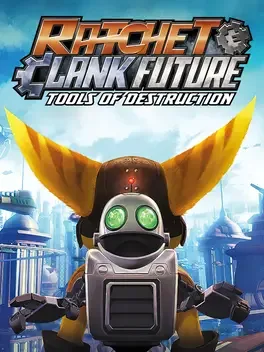
[Image from igdb.com]


Ratchet & Clank Future: Tools of Destruction

Developer: Insomniac

Publisher: SCEI

Genre(s): 3D Platformer, Third-Person Shooter

Platforms: PS3

Release Date: October 23, 2007


Sometimes, I lament that I didn’t purchase a PS3 during the console’s prime. Similar to the preceding generation, I owned two-thirds of the prime console representatives during the seventh generation of gaming due to a lack of disposable income as a pre-teen/teenager, and or indifference to one console’s exclusives. I did not own the original Xbox during my initial introduction to the world of gaming, and that would’ve been the case for its HD follow-up with the circular degree subtitle. However, EVERY single one of my friends during that era owned Microsoft’s sequel console due to the allure of Halo and the trash-mouthed trenches of Xbox Live, so I was compelled to comply with the status quo and strictly become a “social gamer” until the 360’s reign had run its course. Looking back, I think I cherish watching films and TV shows remotely with my friends through the 360’s Netflix app above playing most of the multiplayer modes across the console’s vast lineup. Sure, my teenage life outside of gaming would’ve been different if I had not submitted to popular demand, but my overall experience with the entertainment medium from roughly 2008-2014 would’ve been more enriching if I had stuck with the Sony brand I knew. Several solid exclusive titles for the PS3 slipped through my fingers, and some of the titles that I had tragically missed are the slew of Ratchet & Clank sequels. I absolutely adored the original trilogy of games regarding Insomniac’s 3D platformer-shooter hybrid on the PS2, and Going Commando and Up Your Arsenal easily rank as some of my all-time favorites. Alas, I evidently didn’t love the furry guy and his robot friend enough to purchase the console that contained their subsequent adventures. Finally, as an adult, I accrued enough of my own money to remedy my past mistakes, purchasing a now-defunct PS3 for relatively cheap and a copy of Ratchet & Clank’s first foray into the then-next generation: Tools of Destruction. It was highly unlikely that the futuristic duo’s first PS3 romp was going to overthrow the champions of my childhood, so I lowered my expectations in that regard. However, plenty of unforeseen grievances kept cropping up with Tools of Destruction, making me question the quality of a mainline Ratchet & Clank game for the first time (Deadlocked doesn’t count. Fight me).

Let me just gush over the game’s presentational qualities for a second. Even though I had seen plenty of screenshots and gameplay footage of Tools of Destruction since its release, I never truly felt the extent of the game’s glossy, nouveau sheen until I experienced it in an intimate range. The series of Ratchet & Clank games on the PS3 all included the subtitle “future” to possibly wedge some conceptual discernibility between them and the PS2 titles, but it could easily also apply to the leap into a high-definition display of video game graphics. What better way to flaunt the crystal-clear fidelity of the next generation by buffing the series staple setting of the Kerwan metropolis? After our duo crashes their futuristic vehicle after conducting some unsuccessful tests on it, their journey through their current address that we’ve seen plenty of times before now shines as radiantly as the light beaming through a stained-glass church window. Kerwan’s “Metropolis” has always exuded an aura of busyness, especially since it's a city of the distant future where the overall activity around the area is expected to exceed any city congestion we can possibly fathom. The PS2 games did a fair job at least conveying the intended atmosphere of such a setting, but the perk of high-definition really homes in on the magnificence of the urban sprawl. The level of detail in both the foregrounds and backgrounds is impeccable, with dozens upon dozens of towering buildings looking as if they were constructed with reinforced steel only found in the esoteric reaches of this far-off galaxy. Air traffic looks to be dizzyingly hectic, and I swear that I can see Ratchet’s reflection in that golden Qwark statue found in one of the setting’s many plaza squares. This prologue tutorial section also sees the return of grind rails after Up Your Arsenal omitted them as part of its action-intensive initiative. While every fan should be gleeful that this precarious form of automated platforming is making its triumphant return, let's be honest, it’s integrated here to give the player a grand tour of the graphical spectacle of the urban environment surrounding it. Fritz Lang would’ve shed a single tear if he had lived long enough to witness this showcasing of a futuristic society that he provided the template for so long ago. I realize that this game is almost two decades old at this point and may not uphold the graphical quality that is achievable in present-day gaming, but as an avid Ratchet & Clank fan who has only seen the series through the slightly fuzzy display of standard definition, it’s an awe-striking treat through and through.

Perhaps the introductory segment in Kerwan sets a misleading precedent for the remaining duration of the game, implying that all of the following areas are HD retreads of familiar planets from the Solana Galaxy. However, Ratchet and Clank’s first HD adventure orbits around the Polaris Galaxy, which is being subjugated by a pint-sized, staff-wielding tyrant named Emperor Percival Tachyon, whose prejudice against Ratchet stems from the Lombaxes wiping out his species in a great war that occurred eons ago. Need I remind everyone that this antagonist was created by the same developer who brought Ripto into existence? I’ve heard of a Napoleon complex, but a Napoleon fetish? Anyways, the series of celestial bodies under the diminutive dictator’s control is rendered equally exquisitely as the familiar stomping grounds of the franchise. On Planet Cobalia, which follows the Kerwan prologue, the immediate trajectory will eventually lead Ratchet to a more industrial settlement in the midst of a humid wasteland with savage alien creatures. It’s similar to finding the abandoned Megacorp Outlet on Planet Oozla in Going Commando, but there’s a certain cinematic framing while in the manmade section of Cobalia that evokes the same impressive flow of activity present across Kerwan. The lava surrounding Planet Rykan IV illuminates the station at its center beautifully, and Planet Fastoon effectively illustrates the fallout of the former Lombax civilization. Space piloting segments also return after Up Your Arsenal deemed them unfit to coexist with shooting, and the pulsars and starry superclusters that comprise the visual backdrop are akin to the most extravagant light show imaginable. Space is the place, indeed.

It’s a given at this point that Tools of Destruction looks good enough to eat, but does it fix the issue of linearity that Up Your Arsenal was rife with in the name of pronouncing high-octane shooting action? Marginally, I guess. The number of planets that feature branching paths as the series used to provide is available, but are ultimately sparse in their appearances. The robotic space pirate hub of Planet Ardolis has a grind rail to the left side of the entrance, and following this detached road to its end will result in Ratchet acquiring the component of his armor that magnetizes bolts to it. This planet also obliges the player to revisit it once they obtain the pirate disguise, and unlocking the pathways with said outfit will lead the player towards some golden bolts for their troubles. Other than the instances on Ardolis, other ways in which Tools of Destruction fractures the A to B linearity of shooting hostile shite to bits can be argued if they qualify as such. Mostly, it’s the occurrences of searching for formidable alien leviathans to then trade their souls to a grizzled smuggler, harkening back to killing races of mammoth monsters to collect crystals in Going Commando. The Jurassic jungles of Planet Sargasso provide the traditional wide open plains similar to the settings that fostered this kind of exploration in the series’ second PS2 title, but I think I prefer warping between portals on the remote Nundac Asteroid Ring just for the novelty of this transportation method alone. Ratchet’s new gruff-speaking, toothpick-chewing friend’s black market connections make him the only one fit to sell this game’s iteration of everyone’s favorite juggernaut missile launcher in the universe: the RYNO IV. However, instead of having Ratchet pay an exorbitant amount of bolts for it or give it to him as a reward for completing the game and starting NG+, Ratchet needs to find the scattered schematics for the smuggler to build the weapon in the first place. Finding the blueprints for the series' most famous acronym takes a considerable amount of scrounging around off the beaten path, and the constant process of meticulously looking around every nook and cranny between every wooden box constitutes enough non-linear exploration to satisfy me, with all things considered.

Because the RYNO is in pieces for the vast majority of the game’s run time, the player will have to settle for the inferior array of weaponry purchased from the electronic vendors located with every checkpoint. Still, the eclecticism of Ratchet’s arsenal is arguably the series’ most notable idiosyncrasy, so the new slew of futuristic weapons to use will be an exciting prospect as always. Unfortunately, much of the selection in store here indicates that the weapons have bunked themselves into tropes based on their functional similarities to those from the previous games. “The Combuster” is your run-of-the-mill blaster that aids the player through the less complicated terrain of the early game, the “Buzz Blades” are the same bouncing barrage of sharp circular objects we’ve seen before, and the burst of needles that erupts after every shot of the “Shard Reaper” can’t fool me from the fact that it’s a glorified shotgun. The “Shock Ravager” isn’t inherently derivative as an energized, alternate melee weapon, but it’s of the same whip variant as the “Plasma Whip” from Up Your Arsenal. Still, considering the haphazard “Razor Claws” that make the player liable to take damage instead of dishing it out, perhaps attaching the weapon to a handle is the only way of making a melee weapon practical. Even the “Fusion Grenade” has the same icon as every other explosive weapon, which eases the player into the combat during the introductory stages of the game. Other than what seems like series requisites at this point, Tools of Destruction does display some genuine strokes of genius in the department of eradicating enemies. The ameboids that once squawked at Ratchet while trying to chomp him can now be used at his disposal with the “Plasma Beast,” planting the sentient boogers near enemies to then pop out and pulverize them with their gelatinous fury. Weaponizing a few of the Egyptian plagues takes place with the deadly bugs of the “Nano-Swarmers” and the “Tornado Launcher,” which localizes the blustery weather phenomena to wreak havoc in a smaller radius for a brief period. If all of this firepower isn’t enough, the “Alpha Disruptor” is a worthy substitute for the RYNO that will shred through enemy defenses once it's charged. Honestly, who needs the RYNO when this massively catastrophic cannon does the trick, and for no fees upon its discovery at that? To sweeten the deal, any weapon can be upgraded outside the standard level progression by applying enhancements to it via the allotment of raritanium, a recurring secondary currency that is implemented wonderfully here. Still, it makes me question why the level upgrade system is still in place, as designating which attributes to enhance in this more methodical fashion feels far more player choice-oriented and therefore more engaging.

To feasibly fit all of these deadly new doohickies into Ratchet’s pockets, Tools of Destruction implements THREE circular rings so the player can select one of these weapons at their convenience. One more ring than what I’m accustomed to sounds spacious enough, but an entire wheel may become entirely dedicated to a new idea that Insomniac conjured up. In the proximity of a weapons unit, another vendor will sell Ratchet “devices.” These auxiliary doodads are intended to supplement the primary weapons during the more hectic moments of combat. For example, the “Leech Bomb” will parasitically drain the lifeblood of enemies, giving the player a surplus of health in a pinch if needed. Similarly, Ratchet can also toss a disco ball called the “Groovitron” out on the field to distract every enemy in close range with the infectious lights and rhythms of the penultimate fad from the 1970s, dancing nonchalantly and leaving themselves vulnerable for Ratchet to decimate. While I enjoy the devices based on their utility, I have to wonder why each of them was consigned to a strict supporting role. Because the devices have to be used sparingly and cannot be upgraded through leveling or through Raritanium channeling, the player is barely given any incentive to use them. That, and I’m offended that the classic Morph-O-Ray had been done dirty with its demotion to a device here, turning enemies into robotic penguins with one fling like a flash grenade. If the developers saw how masterfully I transmogrified countless Protopets and thyranoids into cuddly farm animals over the course of the PS2 trilogy, they might have reconsidered relegating the weapon to something the player uses in a pinch. For the game’s sake, it’s fortunate enough that Tools of Destruction puts the player in plenty of drastic situations where the devices are useful, with many of its boss fights. I had to exhaust every Leech Bomb in my inventory because the Kerchu Mech kept smashing Ratchet below the arena’s rafters, and distracting the swabbies of pirate crew captain, Romulus Slag, with the iridescent disco ball was mandatory because his homing energy hooks were already enough to evade all at once. Still, when have the weapons in Ratchet & Clank ever been entirely situational? What reason do the developers have for not integrating these devices into the mix with the prime time weapons? They all take up a precious slot in Ratchet’s inventory wheel regardless!

Besides, Ratchet & Clank have always had non-offensive contraptions used circumstantially with the gadgets, which continue here as another facet of the series’ gameplay. Joining the series staple Swingshot are the Heli-Pods and Gelanator, which manually lift platforms that have an indicator on them and bounce Ratchet upward like a trampoline on a blocky piece of green Jell-O, respectively. I quite enjoy the general utility of the latter gadget mentioned, but I wish that the instances of using the gadget weren’t allocated to such super-specific sections where its utilization is made obvious. Other than the ones that were mentioned and some other requisite items like the Charge Boots and the Hydro-Pack, the remaining gadgets featured in Tools of Destruction can be grouped together by a certain gameplay gimmick that was not feasible in the original trilogy. Lest we forget that during the development of Tools of Destruction, Nintendo was reeling in so much money with the Nintendo Wii that it was borderline criminal. Unwilling to take their market domination sitting down while also not acting bold enough to alienate their avid gamer demographic by completely copying Nintendo’s homework, Sony still implemented minor motion control functionality with the PS3’s iteration of the Dualshock controller. Insomniac figured that the gadgets were used infrequently enough and therefore found a way to comfortably administer gaming’s then-latest kinetic trend sparingly enough without compromising on the meat of the gameplay. Still, despite how light their prevalence is in the overall experience, every instance of motion controls leaves a bad enough impression on the player to negatively resonate with them. The Robo-Wings were incredibly sensitive to any mid-air directional alteration, and if the segments using the Geo-Laser were used as a police sobriety test, they’d haul my ass to jail because every earthy extraction I formed with it was messy enough to make it look like I was shit faced. The developers thankfully give the option to use the analog stick while continuing an electrical current with a metallic ball in this game’s hacking minigame, but I discovered this instance of clemency only after I quit one of them in frustration. Dodging incoming missiles while falling into the battlefield from the skies, as Ratchet occasionally does, is also now dependent on how the player swerves the controller like a steering wheel. However, in this instance, the player also needs to use the analog stick like normal to direct Ratchet’s movement, so what the fuck was the point in applying motion controls to this segment at all? Let’s hope that the developers found as much fault with these little trendy tweaks to the gameplay formula as I did, but I have a feeling that they’ll persist with every PS3 entry in the series that follows and won’t be improved upon.

While Ratchet’s gameplay is being bogged down by an attempt to capitalize on the success of the console competition, I’m glad to report that the few moments where Clank is front and center have barely been changed. He doesn’t enlarge himself to the bodily proportions of a city-destroying Transformer in this game, but any section where he is roaming around at his standard, miniature size is quite loyal to how they were executed on the PS2. Ratchet’s backpack buddy will journey through tighter territory while being accompanied by a posse of even tinier robots who will attack enemies on Clank’s command. This time around, however, Clank’s little army holds relevance to the game’s narrative, surprisingly enough. Their small statures notwithstanding, the “Zoni” are a powerful race of interdimensional robotic creatures who can bend and manipulate the space-time continuum at will. Given that they’ve granted usage of their extraordinary ability to Clank and that they only make their presence known to him and him alone, they certainly recognize the tiny tin man as a worthy warrior fighting for the benefit of the galaxy.

Truthfully, this segway I’ve constructed was not rooted in how the developers wisely chose not to fix what wasn’t broken regarding Clank’s gameplay, but to extend my gripes on how Tools of Destruction continued to adulterate the elements of the franchise. Namely, in this case, how our heroes are now being propped up in the narrative as deific figures that are foretold to bring peace and balance to the cosmos, as told in an ancient prophecy. Clank’s awareness of the Zoni is just one factor of this narrative scope, but Ratchet’s role has been equally blown out of proportion. Other than taking umbrage with the fact that his species condemned his people to extinction, the reason why Tachyon is targeting Ratchet so fervently is because Ratchet is the last Lombax that remains living and breathing, and Ratchet’s role as the sole survivor is elevated even more when he says, on record, that he’s never known another being of his kind in his life. Need I remind Ratchet that crossing paths with Angela was a major narrative factor of his past adventures, and that he assumedly fornicated with said female lombax after the Protopet menace was conquered? Other than the developers’ glaring attempt to retcon a firmly established character in the series’ universe, do you realize what Ratchet has been positioned as with all of the context we’ve been given? That’s right, furry orange Jesus; the extolled, solitary savior of the space age. Considering the privilege of interacting with the Zoni, Clank has also been put on a pedestal as a metallic, mechanical Jesus. Believe me, I saw the birth of this robotic runt, and it was anything but divine. Still, I don’t mean to undermine my favorite character from this franchise because his and Ratchet’s modest pluckiness is what made them great protagonists. A recurring theme of the original trilogy is that despite saving the galaxy on three separate occasions, the duo never truly received their due credit as those to be commended and celebrated for their feats. The series consistently gave more veneration to superficial “heroes” like Captain Qwark through its lens of social commentary, furthering this thesis by deferring Clank to a household name status until he starred in the lead role of a television series as a fictional hero. Their heroism always spoke for itself, and when it's hoisted to the heights of biblical destiny, their charm as passionate do-gooders is completely ousted. Even Talwyn Apogee, Ratchet’s new female ally, starts overtly flirting with the lombax immediately upon meeting him. Ratchet is supposed to earn your arousal, dammit!

While Ratchet & Clank Future: Tools of Destruction feels like the triumphant leap into a newer and bolder future for the franchise, especially from my perspective, I can plainly see that it’s a product from the past era of gaming, from when it was released. The high-definition visuals are breathtaking, even for those who are not accustomed to seeing the space cat and toaster combo with CRTV haziness, but they are not enough to distract from all the eye-rolling practices it commits to that were common during this time. Not even my beloved Ratchet & Clank was immune to dabbling in poorly executed motion controls, and ennobling the once-cartoony satirical series to the overblown realm of a space epic like Star Wars leaves a bad taste in my mouth. Ratchet & Clank was the one series whose original developers did not defect and sell off, but the ways in which Tools of Destruction profoundly misunderstands the strengths of the franchise make it seem like it was created by a new team from another company. Still, I enjoyed all of the elements that were maintained from the PS2 games that were extended efficiently here, so the “future” doesn’t seem entirely dim and grim. However, a future that makes me yearn for the past isn’t exactly radiant either.

Castlevania: Order of Ecclesia Review

 (Originally published to Glitchwave on 8/27/2025) [Image from igdb.com ] Castlevania: Order of Ecclesia Developer: Konami Publisher: Konami...