Monday, June 30, 2025

Super Mario Land 2: 6 Golden Coins Review

(Originally published to Glitchwave on 5/7/2025)


[Image from glitchwave.com]


Super Mario Land 2: 6 Golden Coins

Developer: Nintendo

Publisher: Nintendo

Genre(s): 2D Platformer

Platforms: Game Boy

Release Date: October 21, 1992


How much improvement can one series strive for when it’s being subjugated by primitive technology? That’s the question I’d like everyone to keep in mind when evaluating Super Mario Land 2: 6 Golden Coins. The “Mario Land” subseries that ran exclusively on the original Game Boy was intended to merely supplement time spent away from its console counterpart, mostly on occasions where the young demographic were whisked away not on their own volition. The little handheld could never possibly hope to compete with the console hardware that it was providing a “cheaper” (in the sense of experience, not price) alternative for, so every game on it had to compensate with creativity. The first Super Mario Land sent our plucky plumber to lands totally removed from the Mushroom Kingdom standby, as well as put him in scenarios that the mainline Super Mario Bros. would never consider. Still, despite its striving to offer something original and succeeding, I suspect that the rudimentary hardware of the Game Boy was the reason why the whole Super Mario Land experience ended as soon as it began. While the sequel to Super Mario Land is still limited by the confines of the same black and white brick as the first game, it’s almost fascinating how much more the developers were able to achieve in terms of broadening a mobile Mario’s expanse and ingenuity. To compound on that, it’s astounding how Super Mario Land 2 is almost the greatest outing in Mario’s early days. Key word: almost.

To make itself discernible from its console counterpart, the Mario Land games deviate greatly from the tired tropes that tend to bog down mainline Mario with overuse. These familiarities include placing Bowser as the primary antagonist, and the executive heads at Nintendo told King Koopa to once again take a much-needed leave of absence for the second Land title. The first Land title supplemented Peach for Daisy to slightly spruce up the exhausted damsel in distress role, but the sequel here also extends Bowser’s mandated vacation time to any and all princesses. The conflict in Super Mario Land 2 instead stems from the shenanigans of a fresh-faced Wario, Mario’s sleazy, slovenly, and stinky anti-self doppelganger. Eventually, he’d become as iconic as the secondary Mario characters who are absent from this title, mostly due to the influx of Mario Parties and various sports games that feature the plumber and the rest of the Mushroom Kingdom’s finest. Here in his debut, Wario is but a rambunctious rascal who has somehow taken control over Mario’s estate located in the center of an island that Mario holds a deed to, or something of that sort. Again, starting further from Mario conventions with a new villain stirring up a totally new conflict is something I commend and encourage for any Mario title.

The recuperation process that Mario must undergo is finding the six golden coins alluded to in the title. Their value will not bring Mario opulent riches beyond comprehension, but rather, they are the keys that unlock the front entrance to Mario’s castle. Whether Wario hid these valuable trinkets for good measure after securing Mario’s property or Mario made his security measure as circuitous as possible cannot be confirmed, but they are the Macguffin rewards unlocked by finishing a world and its climactic boss. Before I discuss the meat of Super Mario Land 2 that is its levels, I feel obliged to detail the nifty way in which these levels are orchestrated. Super Mario Bros. 3 played around with the idea of letting the player select its levels in a non-linear fashion, but the range of selection was still rather restricted on the grid schematic. In Super Mario Land 2, the novel idea that the console Mario games were too reserved to fully flaunt extends its potential to something describable as freeform and nonlinear. Mario can conquer the six worlds and retrieve their circular keys in whichever order he pleases. While I would argue that some worlds provide a more substantial challenge than others, the fact that there are no arbitrary borders between them is exciting. The player can even visit the gambling house a limitless number of times to stock up on lives, provided they have at least a modest amount of coins to spare. The map may not be as expansive as any rendering of Hyrule, but I will accept any inkling of allowing player autonomy in any video game, no matter how small. It’s ironic how the mechanically diminished handheld is the one to unshackle the technical boundaries that limited its console equivalents.

The astounding advancements in the design of Super Mario Land 2 come as a total surprise, but what remains constant from the first game is the heightened creativity on display. The first Super Mario Land game took Mario on an Arabic-inspired journey that involved piloting mechanical contraptions that soared through the skies and swam in the seas above and below the standard platforming in between. It thrust Mario in a setting with scenarios he hadn’t undergone before, and it was a refreshing change of pace for a franchise that tends to be rather formulaic. Its sequel is equally as daring with setting Mario in uncharted territory, but it doesn’t stick to a cohesive theme. Instead, the creativity on display in Super Mario Land 2 is dispersed over the six “worlds.” Each major setting features its own individual themes that are totally unique from one another. “Tree Zone” involves Mario ascending up a colossal oak through its interior, using the sticky sap it excretes as an environmental tool to feasibly hop across wide platforms. Traversing through the inside of a gargantuan tree makes the player feel small, but the size-inverse of the fan favorite “Giant Land” from Super Mario Bros. 3 in “Macro Land” will definitely instill a sense of diminutiveness in the player as they stomp on ants that look big enough to eat Mario whole. When a sperm whale does consume Mario in the water world of “Turtle Zone,” the dank, claustrophobic interior anatomy of the giant sea mammal is quite sublime. It’s no wonder that the Zelda series keeps returning to this fantastical setting, and Mario had already beaten them to the punch. “Pumpkin Zone” plays on my penchant for Halloween-themed levels, but I’m also partial to the lighthearted whimsy of toy-themed levels that comprise “Mario Land.” “Space Zone” seems more separated from the rest of the locales on the map because the trip to it is a level in itself. Still, I suppose it makes sense that a setting located inherently outside the planetary atmosphere would require additional steps to arrive there. Mario’s first venture to the dark depths of space here still evokes that feeling of wonder as his future title, whose entire theme centered around the infinite realm of the cosmos. It goes without saying, but the diversity that Super Mario Land 2 bestows in its level themes is delicious, offering the same range of setpieces as Super Mario Bros. 3 without dipping into any cliches.

However, the number of levels per world in Super Mario Land 2 is unfortunately inconsistent. For some reason or other, some worlds are blessed with five or six levels, while others are given a piddly two or three. One would think the worlds with the smaller level selection would compensate with length, like the songs of a progressive rock album, but they should ideally take the same amount of time to complete. The uneven level distribution probably wouldn’t be an issue if not for the fact that the game is an overall walk in the park, another promising theme for one of the game’s worlds, if it didn’t overlap with each one that was actually included. Add to the fact that extra lives can be stocked in bulk thanks to the end-of-level crane games and the abundance of coins for the slot machine, and Super Mario Land 2 is practically carrying the player to the finish line on a palanquin. Or, at least that’s the impression that I got for the majority of the game. Once all six coins were collected and I was faced with the final level of Wario’s domain, it was the point when this puppy started to gnash its fangs like a wolf. It’s perfectly sensible that the final level should be the apex challenge in any game, but it seems as if Super Mario Land 2 has allocated all traces of difficulty to the final level and the final level alone. Wario must be a master technician in the field of booby traps, for this castle is rigged with battalions of piranha plants shooting waves of fireballs at every angle, giant magnetic balls whose pendulous swing cramps the space of the screen, and platforms between calamitous pits of lava that are so slim that they’re practically spires. The cherry on top of this brutal sundae is the fact that the game doesn’t offer any checkpoints, so one hasty move will send the player right back to the entrance. I suggest that everyone stock up on lives like people stash toilet paper in the event of a pandemic, for it's the only way of ensuring enough trial and error before all of Mario’s lives exhaust in attempting to surpass this demanding excursion. Fortunately, the fight against Wario that follows does not feature the same complications as the journey to his chamber. He’ll copy Mario’s fire flower and bunny-eared glide move, but he’s too predictable in his attack patterns. Perhaps he wouldn’t move so sluggishly if he had some self-control with his food intake, eh? All the same, I’m glad I never had to test whether or not starting the fight finally signaled a checkpoint for this godforsaken finale.

It may still be in black and white, but Super Mario Land 2 is anything but minimal. Admittedly, I see cuts in the game with the brief length of its levels as evidence, but let’s not dwell on its shortcomings in a literal, technical sense. The first Super Mario Land strived for creativity to make itself stand out among its more mechanically gifted peers in lieu of being unable to compete with their more advanced hardware. Super Mario Land 2 broadens the first game’s initiative in spades with its extensive range of level designs, but I’d argue that some aspects, like its freeform level design, outclass the parameters of the console Mario games. Hell, the final level made me sweat profusely at every step, but the fact that the steepest Mario challenge is on a handheld title is telling that there is a hidden strength behind Super Mario Land 2 that the console games lack. In an objective sense, Super Mario Land 2 is still undermined by the Game Boy’s limitations, therefore making it ultimately inferior. Still, the fresh content that the first Super Mario Land title provided in a small sampler has been broadened to something more substantial in its sequel, giving the player enough to chew on to put it on a fairly equal plane with at least some of the mainline Mario titles. I’d rather experience something brimming with buoyancy that was marred by endearing cracks in its foundation rather than a well-oiled machine that offered the standard affair, and I’m certainly not alone in this sentiment.

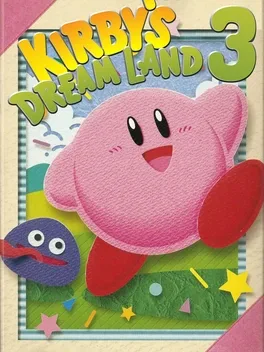
Kirby's Dream Land 3 Review

 (Originally published to Glitchwave on 4/29/2025)


[Image from igdb.com]


Kirby's Dream Land 3

Developer: HAL Laboratories

Publisher: Nintendo

Genre(s): 2D Platformer

Platforms: SNES

Release Date: November 27, 1997


Kirby’s Dream Land 3 sticks out like a sore thumb. For one, it’s the third entry in a Kirby subseries that up until now has been released exclusively on the original Game Boy. Propelling the initial line of Kirby games from a handheld to the console running concurrently with it should seem like an ideal upgrade. However, Nintendo failed to realize that the third Dream Land entry is now in the same league as the Kirby heavy hitters, since it’s not restricted by the Game Boy’s primitive hardware. One would likely place higher expectations on Dream Land 3, considering its advantages, but the game is not at all comparable to the epic scale of Kirby’s Adventure or the sheer variety of Kirby Super Star. All Dream Land 3 does is make me reach a point of clarity, that maybe the rudimentary nature of the Game Boy was not what inherently plagued all of the games sharing the same title.

Well, I suppose it’s lovely seeing Kirby with his fluorescent pink hue again. HAL Laboratories decided not to maintain the Game Boy’s minimalism as a defining trait of the subseries, wisely choosing to depict Dream Land with the same colorful detail as they would with any other SNES game. Still, restoring Dream Land to its state of effervescence with a 16-bit machine is too simple. The restoration process in question evidently involved tracing in the black and white bits of the Dream Land series with crayon, intended to emulate the childlike, whimsical visual style of Yoshi’s Island. Given that the Kirby series is catered to the same, particularly young demographic as Yoshi’s protagonist debut, the cherubic tint of colorful paraffin wax works wonders in pronouncing Dream Land’s wondrous atmosphere. HAL Laboratories probably saw the distinctive visual flair of Yoshi’s Island and were kicking themselves that Kirby couldn’t have patented it for himself. Fortunately, the Nintendo higher-ups allowed them to borrow this pastel aesthetic, and it’s the best-looking Kirby game thus far.

Sadly, the visual style is THE only redeeming quality of Dream Land 3. I can’t explain this, but somehow, Dream Land 3 manages to underperform even in comparison to its Game Boy predecessors. To start my laundry list of grievances, Kirby has never felt more lethargic. The pink blob has never been as spry as, say, Sonic, but his rate of movement here is sluggish as all hell. When Kirby runs, I half expect him to utter exasperated noises that signal his shortness of breath, like Eric Cartman running the gym class pacer test. One might suggest that the solution to Kirby dragging ass on his feet is to simply take advantage of his limitless floating ability. However, they’d fail to realize that flying too often will mitigate entire levels. More so than any other Kirby title before it, the levels in Dream Land 3 are ridiculously linear. Lifting Kirby to the ceiling and maintaining that elevated position with his innate physical floatiness practically guarantees a smooth, uninterrupted trajectory to the goal door. I’m not recommending that this is the ideal tactic, but what’s realistically stopping the player from doing this? Hell, I found myself floating to victory with ease several times, and I’d probably stick to my laurels of experiencing the level the proper way if there were more obstacles in my way that inhibited me, or if Kirby wasn’t such a sloth on his feet.

Admittedly, the game does give the player incentive not to coast through each level absentmindedly by puffing him up to the skies. How does providing over fifty copy abilities sound? Actually, the abundance of copy abilities to potentially use in Dream Land 3 is only true on a technicality. All of the abilities, minus the absurdly lame broom ability where Kirby sweeps enemies to death, are pretty standard ones we’ve seen before. Burning, ice, spark, stone, cutter, needle, and the indispensable parasol all make their return to diversify Kirby’s combat. The expansion of these typical copy abilities lies in another returning element that is distinctive to the Dream Land subseries: animal buddies. Rick, Kine, and Coo enlist once again to “aid” Kirby whenever the opportunity knocks, along with the newcomers of the chubby cat Nago, pink jellyfish ChuChu, and the green bird Pitch, who is far less stockier than Coo. Gooey is a returning helper whom I was always hesitant to classify as an animal buddy. Not only does the bouncing, googly-eyed mound of putty not resemble any creature of the animal kingdom, but it also trails behind Kirby like a partner in Super Star rather than carrying Kirby in some capacity. In addition, all he does is mimic Kirby’s ability to copy the physical properties of enemies. When Kirby has a power equipped with an animal buddy attached, the copy ability translates to their physical forms, which is how the modest number of copy abilities is amplified at least four times the number of enemies that supply them.

The variety on display here should stimulate a sense of curiosity, but the majority of the animal buddies emulating the powers is disappointingly lame. Watch all of Dream Land’s Waddle Dees tremble in fear when the broom turns Coo into a feather duster that Kirby bats around. Get real. Every power that Pitch reinterprets is a pain to aim, and Kine protruding a plunger or a lightbulb out of his face hole has the attack range of an X-ACTO knife. ChuChu is the only animal buddy who produces copy abilities of any interest, soaring on the broom with the grace of a witch and puffing out spikes with the needle ability that spreads over five different angles. Besides those perks to ChuChu, she still has a habit of inhibiting Kirby’s flight. It illustrates something I harped on with the previous Dream Land game, in that the animal buddies often feel like handicaps to Kirby rather than enhancements as intended. Extending the range of copy ability used with the animal buddies maintains a sense of curiosity, but I’d rather keep abilities like the wheel and microphone if it means that Kirby will retain his inherent physicality no matter what he copies.

The other form of imploring the player not to rely too heavily on Kirby’s inexhaustible flying is the various missions each level subtly provides. The Dream Land 3 equivalent of the second game’s rainbow drop collectible is the “heart star,” rewarded by completing a task outside of the main mission of traveling to the end of a level. Where Dream Land 2 featured one of these subsidiary objectives per world, its follow-up decides to implement an opportunity to earn a heart star for every single level in the game. Some of the extra-curricular tasks each level provides are genuinely engaging, mostly because they involve Nintendo easter eggs like assembling the pieces of ROB, the NES peripheral, and freezing Metroids for Samus. Still, the constant supplementary effort to consider adds a layer of tedium to each level, even if their presence does provide enough activity so the player doesn’t fly away with impunity. Many of these tasks are locked behind a specific copy ability that the player couldn’t have possibly anticipated. This fosters replayability, but I’d rather watch grass grow than travel through most of these levels again. Don’t get me started on the demanding memorization puzzles that lock a few of these heart stars. The added layer of involvement results in feeling like busy work.

Despite the grating nature of collecting the heart stars, there is actually some validity in persevering to experience the game’s ending. There’s something rotten in Dream Land, and it's that damned dark matter again attempting to consume Kirby’s continent. If Whispy’s shocking transformation from bumbling oak to hideous, savage monster isn’t an indication that something is seriously wrong, then I don’t know what could be a cause for concern. To uncover the source of the corruption, the player must gather all of the heart stars and defeat the classic red herring of King Dedede, whose fight this time is quite disturbing, with his possessed body flailing about in the air. The power of the complete set of heart stars reveals the embodiment of Dark Matter as a floating black eye, and Kirby must dispatch the ocular evil with the fully-powered Star Rod in a space-shooter section like in the previous game’s final battle. When this phase is over, this fight gets shockingly gruesome. The Dark Matter eye will expand to a bulbous, white orb and shoot spurts of blood at Kirby as its projectiles. After this gastly display, Dark Matter’s bulging red pupil will dislodge itself from the outer eyeball as the third phase of this fight, before Dream Land is its tranquil self once more. Not only is the three-phase endurance test fairly challenging for a Kirby game, but the boss itself is downright horrific. To think that they reinvigorated Dream Land’s color just to depict this uncharacteristic nightmare!

Nintendo did not give one iota of a fuck about Kirby’s Dream Land 3. Besides placing it on a console that everyone’s moms likely sold at a yard sale in the first year that the N64 was front and center, the third and final Kirby title that directly stemmed from his Game Boy debut barely bothered to add much of anything to the formula. Its laziness also extends to neglecting to address the issues presented in the previous game, namely, with the integration of the animal buddies and the tedium of the extra tasks that unlock the true ending. What surprises me is that, despite the engine it's running on being capable of producing more steam, against all logic, Dream Land 3 fails to catch up to its predecessors, which were already mediocre at best. Masking all of its issues with an attractive aesthetic will only convince Kirby’s most impressionable demographic (children) of its quality, but I see right through it. Maybe the devout Kirby fans will still enjoy this colorful charade, provided that it doesn’t put them to sleep first.

Killer7 Review

 (Originally published to Glitchwave on 4/23/2025)


[Image from glitchwave.com]


Killer7

Developer: Grasshopper Manufacture

Publisher: Capcom

Genre(s): Action-Adventure, Rail Shooter

Platforms: GCN, PS2

Release Date: June 9, 2005


Have I ever told you kids about postmodernism? Bring some snacks and buckle up, for the subject is so massively abstruse that I’ll probably stumble every other step when explaining it. Essentially, postmodernism is an artistic and cultural movement that encapsulates the prevailing attitudes of cutting-edge creators in the modern era, dating back to the early 1950s. The aftermath of World War II catalyzed the shift in the contemporary artist’s creative process just as regular ol’ modernism was spurred as a reaction to the First World War. Society simply couldn’t continue living naively in the loving hands of traditionalism after the advent of the atomic bomb or the Panzerfaust, and our art needed to reflect our ever-growing existential anxieties. I learned about the term/movement through a literary lens in college, discussing works like Beckett blue-balling us in Waiting for Godot and all of the jazzy and provocative pieces composed by the Beatniks. Still, postmodernism also encompasses plenty of other artistic media, ranging from the pop art paintings of Andy Warhol or the unconventional design of postmodern architecture. Arthouse films tend not to be explicitly tagged with the “postmodern” label, but one can easily draw parallels to a postmodern ethos to the stream of consciousness etherealism that drives 8 1⁄2, or the meta structure of Synecdoche, New York. Can video games potentially evoke elements of this sophisticated form of expression, especially since the medium is relatively underdeveloped and perceived as pedestrian? Why would anyone reading this even question that for a second? I suppose the most notable game to implement these kinds of postmodern elements is Metal Gear Solid, although Hideo Kojima’s stealth series tends to pull the switch at jarringly inopportune moments. The last minute clusterfuck, narrative grenade in Metal Gear Solid 2 was like eating a delicious banana to then chomp on the bitter, black bruise at its bottom. Unexpectedly tasting something off-kilter and much less digestible at the end is stomach-churning, which is why the end of Raiden’s conspiratorial conquest left an acrid taste in my mouth. However, one game released a little later in the era, Killer7, makes no pretenses to ever mask its postmodern makeup. This entry in the Capcom Five campaign was director Suda 51’s breakout title that catapulted him to international renown. Astonishingly so, for Killer7 is perhaps the epitome of a postmodern video game, with all of its abstract elements on display in their full glory.

I realize this statement is a bit reductive, but postmodernism tends to be quite weird. You can’t craft an ethos based on subverting familiarities and traditions and not befuddle audiences as a result. Killer7, if you caught the correlation, is a more disorienting experience than sitting through a David Lynch film festival high as a kite on acid. Actually, I’ll bet that most gamers will attribute Killer7’s creative process to the lysergic hallucinogen, but I promise that the game isn’t a nonsensical kaleidoscope of random nonsense. Postmodern artists have a defined and diligent method to their madness, even though most of them, admittedly, imbibed enough smack and junk to take a permanent vacation to cloud nine. I can’t comment whether or not Suda 51 has ever indulged in mind-altering substances, but I can at least detect a solid foundation of sincere inspirational beats behind Killer7’s narrative that would prove that he’s not entirely whacked out on goofballs.

Drawing more parallels to Metal Gear Solid again, the narrative backdrop of Killer7 takes place in an alternate timeline of Earth that is conceptually influenced by the current state of world affairs, as well as its future state based on the insight of present-day conditions. Suda 51’s depiction of a 21st-century society is surprisingly an idyllic one, as every nation has declared world peace by firing their nuclear weapons into the sky to have them explode in a frivolous spectacle like “fireworks” for the Earth’s people to marvel at. Another token of the total harmony between all of Earth’s nations is a bridge being erected over the Atlantic Ocean that would connect North America to Europe (but not Africa? Hmmm…), a monumental stride in transportation too far-fetched for our reality from both a technological and a unification standpoint. The state of Earth in Suda 51’s timeline is so halcyon that it verges on being corny, depicting an unreasonable idealism expressed by the most naive “activists” from the hippy era of the 1960s. However, the reason for making the state of affairs so saccharine is to effectively juxtapose it with the grizzly conflict of Killer7. In the wake of everyone lowering their defensive arms to embrace their international brethren, a terrorist known as Kun Lun is unleashing his “Heaven Smile” puppets on executive members of the United Nations by bombing them unexpectedly in close quarters. All the while, the USA and Japan are considering severing ties with one another for each nation’s personal gains, with the contentions between them showing cracks in the congruous amity that the Earth had finally achieved. The only people up to snuff to deal with both the fallout of the USA and Japan and the deadly new crop of politically-charged suicide bombers is the titular assassin syndicate of “Killer7.” Suda 51 might be cynically chiding the practicality of world peace when the game gives context to its narrative, but it’s far too early to pinpoint a working thesis. Believe me, the conspiratorial cavern that is Killer7’s story becomes far more dense, dank, and confusing as the game progresses.

Even if Suda 51 is intending to convey poignant messages of political commentary, they’re all going to get drowned out by the game’s, let's say, eccentric presentation. It bears repeating, but Killer7 is cuckoo for Cocoa Puffs. The plot premise that I summarized in the last paragraph isn’t exposited until after the first full mission of the game, and it was likely incorporated so the player’s befuddlement wouldn’t consume the player to the point where they wouldn’t eject the game from the console in a state of total, enveloping brain fog. By the time the player finishes the first mission and receives a crumb of necessary context, they’ve already been exposed to an onslaught of oddities too numerous to quickly detail. I’ll delve into each of those bizarre aspects in their respective fields of context, but for now, I’d like to discuss the general presentational package that contains and supports all of Killer7’s turbulent elements. Because Killer7 is the epitome of expressionism, the last aesthetic tint that Suda 51 would ever strive for is graphical realism. A cartoonish cel-shaded visual style works wonders with Killer7’s pulpy tone, both in the sense of the brand of exploitation fiction it evidently draws conceptual inspiration from and in pronouncing the lurid blood splatter that spills at every waking moment in this game in buckets. During significant cutscenes, the game will adopt an anime style fitting for the native country where the developers reside. Still, incorporating this idiosyncratic Japanese animation style per cutscene would be predictable for a game of this creative caliber. One level, instead, shifts to a more Western-oriented animation style with more synchronized mouth movements for its cutscenes. Dialogue spoken by NPCs on the field sounds like someone swallowed a voice-changing modulator found in the microphone of a toy, making subtitles a requisite in translating the muffled vocal utterances. Starting a level involves shooting a silhouetted version of the level’s primary target, dissipating in a cloud of red particles at the press of a button. When the player dies in combat, the game over screen consists of the character’s head exploding into a bloody splatter painting of a Japanese character. I can’t translate the meaning of this character to an English word, but I’m sure it’s something fittingly blunt or edgy. Little flourishes such as these all comprise the ostentatious flair that marks Killer7’s aesthetic and style. Its myriad of quirks might strike many gamers as off-putting, but I found each element of zaniness greatly amusing throughout.

Naturally, the disorientation that comes with all of Killer7’s stylistic choices also leads to the game exuding a surreal, absurdist tone. For a game with evident political themes, Killer7 consistently verges into the tongue-in-cheek realm of camp (there’s the Metal Gear Solid connection for the umpteenth time). NPCs speak in roundabout riddles when dialogue is prompted on the field, sometimes bleating about personal anecdotes that seem to have zero relevance to the situation at hand. Did I mention that the common NPCs who deliver this dialogue are a gimp making a perpetual shushing motion with his finger and an eyeless man who wears tank tops? The playable characters all have their own distinct, cheesy one-liners they say after critically killing an enemy, and the cult leader, Ulmeyda, looks less like he preaches the gospel and more like he’s on the set of Boogie Nights acting as a stunt cock for Don Cheadle’s character. Still, Killer 7’s favorite form of irreverence dips back into a tenet of postmodernism: pastiche. Specifically, in the vein of pop culture references. The wardrobe of tank tops belonging to the aforementioned eyeless man, Travis, all display single-worded phrases and or niche music genres that change with every encounter. During a tense discussion before a boss fight, the immortal cereal slogan “tricks are for kids” is spoken sincerely as a crafty rebuttal. Carrier pigeons are often found on the field with notes in their talons written to aid the player (as much as the game can possibly allow), and the titles of these notes are all songs by The Smiths. Given that they’re one of my favorite bands, receiving any of these notes from these rats with wings made me embarrassed at the excitement they instilled in me. If a certain foot-fetishizing auteur director is aware of Killer7’s existence, he would probably feel a sense of pride that the pastiche style that skyrocketed him as one of the masters of his profession has been translated to a whole other medium. Still, I don’t think he’d take credit for Suda 51’s vision for Killer7 and demand royalty checks. Pastiche is not something that Tarantino has patented, as it has been used to throw a monkey wrench into the standards of storytelling for ages now. Still, Tarantino should be watchful that another creator uses pastiche with the same caliber of artful tact as he.

But there is genuine relevance to naming the notes after Smiths songs other than tickling the ribs of music nerds such as I. The connection to the band and Killer7 relates to the shared surname of the seven playable members of the Killer7 syndicate, with the ubiquity of the surname serving as a blank, “John Doe” status of these covert assassins. As the number in the syndicate name suggests, there are seven central members of the organization. Technically, in the spirit of Killer7’s abstract fashion, the name is misleading. There are really eight members, but also possibly two or perhaps one agent of death acting solo given that we’ve seen the characters switch from one another in a blink of an eye during many cutscenes. Ultimately, don’t let Killer7’s surreal nature distract from the fact that there are seven playable characters the player switches between on either the kitsch, retro television monitor in the save room or in the pause menu. Similar to most games that offer a selection of characters to pilot, the professional hitmen (and women) of Killer7 are an eclectic cast with diverse character traits and abilities. Dan Smith is a thirty-something white man who approaches the grave complexions of his job with a cocky, brash swagger. Once powered up, his .357 revolver unleashes a blast of energy as staggering as a hadouken. Kaede is the token female member of the group with a scope to aid her shooting, also externalizing her angst by dramatically cutting her wrists and bleeding profusely on specific obstructions to unveil their secrets. Kevin Smith is a shirtless mute who trades the inconvenient condition of reloading that comes with a firearm for a ceaseless pocketful of light shurikens, and turning himself invisible to bypass both lasers and combat altogether. As I’m writing this, I now realize that his name and speechless demeanor are a reference to the recurring character of yet ANOTHER famous film director who also plasters his works in pastiche pop culture references. The homicidal Latino, Coyote Smith, leaps through the air like a grasshopper and picks locks like a cunning thief. Con Smith is referred to as “The Punk” due to his adolescent age and vulgar, immature attitude. His speedy movement isn’t as situationally helpful on the field as the others’ special abilities, but there are times when he can squeeze under tight crevices because his height has not reached its pubescent maximum yet. Luchador “Max de Smith” is an offensive wildcard with his twin grenade launchers, which are also useful for destroying cracked walls. He’s also the most noble and endearing of the bunch, which means he’s the only one in the operation I’d crack open a cold cerveza with amid casual conversation. Topping the ranks is Harman Smith, a wheelchair-bound elderly man who holds the prestigious title as the leader of Killer7. The player will get the chance to wield his gargantuan, shield-shredding rifle in certain scenarios, but he’s mostly relegated to cutscenes where he’s tasting a bit of the S&M from his maid/mistress Samantha. Admittedly, the motley crew of killers the player can shuffle at their fingertips do not have dynamic arcs or characterization that supersedes Duke Nukem-esque one-liners. Still, one can’t deny that as a collective, the seven assassins run the gamut of personalities and abilities with little to no overlap between them. Their stark differences also warrant swapping each of them out so often that the player will become readily acquainted with all of Harman’s children, guaranteeing that the diversity in store will impress on the player equally as it did for me.

The eighth member of Killer7 is really Harman due to his elevated position as the gang’s chief chairman, but the final assassin I’ll be discussing, Garcian Smith, should be discussed separately because of the particular role assigned to him. One might be enticed to storm the field as this African-American man with a piercing gaze and dapper, white suit, but taking the reins as Garcian is not recommended. He expresses his one immortal quip of “don’t make me say it again, I’m a cleaner” enough times to penetrate even the thickest of players’ skulls. Besides, the player should already feel dissuaded from playing as Garcian as casually as the others because he’s the sole member who cannot upgrade his stats. Plus, his piddly little pistol inflicts middling damage and struggles to target enemies’ weak spots. Despite how unprepared he seems for combat, the player will likely spend an inordinate amount of time playing as Garcian anyway. When one of the other assassins is overwhelmed and smote on the field, the following cutscene where their head combusts does not signal a “game over” as one would anticipate. The onus is then on Garcian to find the general vicinity of the other assassin’s death, in which their chunky remains are somehow conveniently prepared in a doggy bag over a conspicuous chalk outline. After pressing a button in succession, the slain assassin is then free to control once again with their health fully restored. The process seems a tad cumbersome, but the player can still choose to let their former character lie dormant as a bag of rotting flesh and simply select another assassin as a substitute. Also, it should be noted that dying as Garcian WILL result in a genuine game over that reverts back to the last point saved instead of the closest of Harman’s rooms, so keep that element of danger in mind when choosing to pursue the route of resurrection. The method that Killer7 implements to stave off the typical penalty of reverting to a checkpoint upon death is unlike anything I’ve ever seen across any other video game, and the fact that it’s an optional venture with its own risky stakes adds a heaping load of depth to the process.

But how often will the player be forced to gamble with Garcian due to a hasty mishap? Well, that depends on how the player fares with the “Heaven Smiles” enemies scattered all across the field. The legion of deranged, toothy terrorists with intrinsic explosive properties is not the focal point of the narrative after the first chapter, but their lack of story relevance doesn’t deter them from infesting the foregrounds of every level afterwards in droves. Combating the Heaven Smiles is where the shooting element of Killer7 comes into play. Regardless of the various weaponry of the seven assassins, the constant objective when faced with one of these creepy, zombie-esque humanoid figures is relatively the same. The player must scan them to unveil their murky camouflage and fire enough ammunition into them before they amble close enough over to the assassin and embrace them with a lethal, self-destructing explosion. The offensive process sounds simple enough, but the caveat is that the player’s range of sight is greatly limited due to a slow spatial movement in the shooting mode and being unable to move the character’s body. A Heaven Smile could easily appear in a blind spot and inflict a smoldering blast to the face, or it could be difficult to locate one in time as well, due to the gun’s trajectory moving a little too patiently. Because the Heaven Smiles can be a chore to spot, the game at least indicates their presence with their mischievous-sounding laughter. If this chuckle then amplifies to their maniacal howl that would intimidate The Joker, it’s a triggering sound that indicates to the player that it’s too late to repel them, and they’ve got a stinging explosion with their name on it. There are also several different breeds of Heaven’s Smiles crowding every corner that come in all shapes and sizes, indicating that their weaknesses all vary. Some Heaven Smiles’ defenses can only be penetrated by a certain assassin’s arsenal, which incentivizes the player to take the risk of playing as Garcian. Because of their ghastliness, extreme violations of one’s personal space, and unpredictability of their numbers and forms, the Heaven Smiles always place the player on pins and needles like effective enemies should. The sinister snickers they emit, followed by the tense possibility of blowing the player to smithereens, almost verge Killer7 into survival horror territory.

Whenever a Heaven’s Smile is directly in the player’s sight, a quicker, more efficient way of dispatching them that is consistently exploitable is targeting a glowing, staticky yellow spot on their bodies. Whether it be on their neck, arms, or legs, finding a Heaven Smiles’ G-Spot and slamming it with a single, steamy bullet will cause the decayed ghoul to evaporate into a cloud of dust. Whether it be the first time executing a Heaven Smile this way or racking up hundreds of critical kills, the satisfaction of reducing one into ash with a single shot never wavers. Besides the gratification of acute shooting proficiency, it’s essential to hone in on a Heaven Smiles’ sensitive area because it coincides with Killer7’s blood mechanic. Killing a Heaven Smile with a barrage of haphazardly-shot bullets will warrant a modest amount of “thick blood” that is then converted into points of experience on the “B” TV channel in Harman’s Room. When the player hits a Heaven Smiles’ vulnerable point, not only does the amount of thick blood double, but the player earns the alternate “thin blood” that can be used to heal the assassins in the pause menu. If the player thinks they can take advantage of this process and farm the marrow of Heaven Smiles to fully upgrade every assassin, the developers have thought ahead of your gaming shrewdness and imposed a limit on the amount of blood one can deposit per level. Tis a shame to waste even a drop of precious blood, but the incentive of collecting the red matter to improve the varied attributes of the assassins needs to remain a factor to keep delivering the reward of progress. Plenty of other games implement a conversion system through gained currency or experience, but Killer7’s portrayal of it is juicy, both figuratively and literally.

I realized when discussing Killer7’s gameplay that I might have inadvertently labeled it as a first-person shooter. Sure, all shooting in Killer7 is conducted in a first-person perspective, but the entirety of the game is not confined to this intimate line of sight. Killer7 best fits the description of a rail shooter like Time Crisis, but that’s only because it’s the closest description it fits that has a defined, tested foundation. Killer7 is something of a “manual rail shooter.” The player is still confined to a single track of progression, but Killer7 grants the player control of the movement and trajectory of the character at all times instead of being accelerated on a single, constant path by holding down a button. Alternate directions will constantly be interjected on every path like speech bubbles in a comic strip, which will still direct the player down a narrow avenue. Questions may be expressed by skeptical gamers relating to if this constrictive method of progression was really necessary when all it does is make the player more vulnerable by hindering their range of movement. When are they going to learn that Killer7’s whole mantra is based on subverting the tropes that have sunk so deeply into gaming standards that they’ve become comfort zones that clench the gaming industry like quicksand? Debate the practicality of Killer7’s on-rail mechanic until the rooster crows: it doesn’t change the fact that the game is planting seeds on unpaved ground that no other game developers have ever dared to tread. To play devil’s advocate for a bit, the only level in Killer7 that conflicts with the restricted range of movement is the Texas level. The vast parameters of the arid, desert suburb allow Heaven Smiles to ambush the player from a wider assortment of angles, and it presents a sharp spike in difficulty that the game never reaches again anytime afterwards.

Warping the foundation of the rail shooter isn’t even the tour de force of Killer7’s gameplay. Beneath the series of tight pathways more serpentine than the NYC transit system, there’s a hearty integration of puzzles and gated progression impediments that draw comparisons to a dungeon from The Legend of Zelda. Or, since parallels have already been drawn to it, a building from a survival horror game, with spooks around every corner to contend with. Naturally, leading the player towards victory by navigating through a series of complex, roundabout routes showcases a delectably layered level design that consistently keeps every chapter invigorating. However, the one issue I have with the game’s puzzle-laden obstacles is that the game has a habit of giving away too much information. It’s acceptable to mark locations of each progression impediment on the map, but also supplying the image of the assassin or the elemental ring needed is far too obvious a hint. The path of acquiring the ring from the mouth of a decapitated head called Susie, whose subtitles consist of emoticons (aka DIY emojis for all non-millennials), proves to be more puzzling than using the rings themselves. There are exceptions that do require a heftier modicum of mental might, but they tend to be few and far between. I realize that with the unorthodox mechanics at play, the developers minded the intensity of brain throttling that the other aspects of the game were undoubtedly already inflicting. Still, giving the player an overt visual hint of what or who to use is downright patronizing.

Fortunately, it’s splendid that the puzzle aspect of Killer7 is not lost in the game’s attempts to hold their hands on the field. In the time spent maneuvering through the winding pathways of each level, the player might forget that the primary objective they’ve been methodically working towards is whacking a guy at the peak of the conspiracy at hand. Through the player’s meticulous scrounging about through each level, they should come across the “soul shells.” These coagulated clots of blood act as keys that access the entry point to a level’s boss, and the gate strongly resembles the vibrancy of a night club (because of course it does). Introducing a new Heaven Smile as a sampler before a boss is enough of a substantial brain teaser, but facing the primary foe afterwards will require a thorough, insightful inspection of their weaknesses. I won’t spoil how to defeat every boss in the game, but I will say that they’re a cakewalk once the player ascertains the method of execution. Still, deciphering the intended tactic with the correct character will prove to be fairly daunting beforehand. The one outlier that was more combat-oriented was Ayame Blackburn, a rival assassin whose viciousness is veiled by a kawaii, bug-eyed anime girl mask.

I suppose that after divulging every gameplay aspect of Killer7 that I should take a crack at analyzing its narrative. Well, fat chance. I’m not being insubordinate simply because Killer7’s story is extremely oblique, and crumbs of narrative context pelt the player every few seconds like the elderly feeding ducks pieces of bread in the park. No, it’s because Killer7 is an unfinished product from a narrative perspective. Suda 51 was forced to cut hours of material in order to release Killer7 at a digestible standard and considering how obtuse it is already, we can be thankful that there were sensible people on staff who objected to some of Suda 51’s wild ambitions. The full extent of Killer7’s story is instead available in book form as “Hand in Killer7,” which I’m sure clears up all confusion neatly. Still, I can only analyze the contents of the game because the book is another art piece altogether. I think I’ve still dug up something of substance in Killer7’s narrative, even with its missing context, but take my analysis with a grain of salt.

A theme I’ve pinpointed regarding Killer7’s story is the weight of murder from the killer’s point of view. The Killer7 syndicate has ended the lives of many at the pull of a trigger, far preceding the Heaven Smile or the main mission targets. In fact, the player becomes well acquainted with some of the syndicate’s former targets, for they follow them around every corner of each level. Yes, the NPCs who speak in riddles with a vocoder lodged in their trachea are all past victims of Killer7’s brutality. The game implies it by expositing Travis’ story, but the game affirms it when Ulmeyda reappears after his vanquishing with a less defined graphical outline, speaking in the same unintelligible voice. Whether the apparitions are benevolent like Iwazaru or vengeful like Curtis Blackburn, the fact of the matter is that every murder the syndicate commits is still externally ingrained on them like a tattoo. This subtle idea becomes all the more interesting when the finale of the story focuses on Garcian, revealing that he’s really a man named Emir Parkreiner who was trained by the Japanese government at a classified “elementary school” to extinguish their enemies. Years later, we learn in a shocking turn of events that Emir/Garcian killed every member of the Killer7 syndicate in a cold-blooded massacre at a hotel. As the game’s rule of murder evidently dictates, he absorbed the personalities of each assassin, making the tattoo metaphor made before all the more applicable. The revelation that the playable characters revolve around Garcian as the ghosts of his crimes is exceedingly interesting, even if there are holes in this reveal because of the game’s abstractions. Relating to the premise that the game has all but been abandoned by its finale, perhaps the underlying sentiment in the world peace proposition that starts the narrative conflict is that no matter how brotherly each nation may become, the stains of blood created by the sins of the past will never truly wash off. I don’t know, how far off base am I?

Pardon my french, but what the fuck did I just play? If Killer7 is to be assessed by its narrative, then Suda 51 is a pretentious egoist who proposes no solution to solving modern international conflicts, especially ones that are apparently between the USA and his homeland of Japan. However, if we narrow our focus on Killer7’s gameplay, then Suda 51 is a goddamn genius. There have been avant-garde narratives, but the label has never fit the mechanics of a video game until Killer7 combined the action-adventure design of a Zelda dungeon with the progression of a rail shooter and deep fried them into an unprecedented surf and turf of genre-bending. Layer the inconceivable fusion of fresh gameplay mechanics with stylistic and impressionistic flairs of postmodernism, and the game emits rays of ingenuity so severe that most gamers will get burned. Personally, I knew I’d at least respect the unbound flourishes of Killer7’s presentation, but the fact that the game was accessible enough to genuinely have a blast playing it is nothing short of a miracle. Game journalists described Killer7 as a totally unique experience back in 2005, but the same tagline having the same impact and relevance is a testament to Suda 51’s brilliance. Hell, I’m almost confident enough to call him a true visionary.

Friday, May 30, 2025

Hotline Miami 2: Wrong Number Review

 (Originally published to Glitchwave on 4/18/2025)


[Image from glitchwave.com]


Hotline Miami 2: Wrong Number

Developer: Dennaton

Publisher: Devolver Digital

Genre(s): Shoot 'em Up, Multidirectional Shooter

Platforms: PC, PS3, PS4, PS Vita

Release Date: March 10, 2015


It’s telling how monumental Hotline Miami was in the indie circle last decade when a sequel was made a mere three years after its release. Because of their shoestring budget with a working team that could likely have fewer members than a book club, indie games very rarely receive sequels, much less in the normal development period usually taken for their triple-A peers. In the case of Dennaton’s visceral, sleazy, neon-glowing love letter to the excessiveness of the 1980s, its visionary tackling of the top-down shooter resonated strongly enough in the greater gaming zeitgeist to warrant a sequel almost immediately. While I’m sure the fans were stoked to slaughter legions of bald Russian mobsters again, I’m not thoroughly convinced that Hotline Miami was longing for another go-around. It may be unfair to state this with years of retrospection to look back on since Hotline Miami became a smash hit, but Hotline Miami is the kind of title that produces spiritual successors due to how revolutionary its gameplay was. We can use games like Katana Zero and Ruiner that aped Hotline Miami’s precision-based action formula as concrete evidence of my claim, or games such as Furi and Hyper Light Drifter that exude the same extravagant, retro aesthetic. With its impact ringing in the ears of inspired indie developers, is a sequel to Hotline Miami really necessary, especially since Jacket’s harrowing plunge down the city’s seedy underbelly was neatly wrapped in a blood-soaked bow? Considering the content in Hotline Miami 2: Wrong Number, Dennaton wasn’t even convinced that they needed to pack in several painstaking hours of development time to produce a follow-up.

Let’s quickly recap Hotline Miami’s gameplay loop that set the indie sphere ablaze. The player is dropped into an enclosed area, mainly via a swanky vehicle that Don Johnson would likely be driving in Miami Vice, and is tasked to kill every living, breathing creature within its walls with a tactful array of melee weapons and firearms. The core stipulation at play regarding this mission is that the player cannot sustain any semblance of harm. Receiving any kind of damage will stop the player in their tracks, and they will be forced to restart the level from its entrance, or at least from the last floor they’ve cleared. The core concept of Hotline Miami’s gameplay is as solid as quartzite, and its relative simplicity lends well to player enjoyment and emulation from other indie developers. Still, no sequel should simply be content to coast entirely on its predecessor, regardless of its steadfast refinement. The obligatory quality-of-life improvements that Hotline Miami 2 adds to the first game’s fine formula are minimal, but are nonetheless appreciated. Firstly, whenever the player is brandishing a gun, an icon in the bottom left corner now indicates the type of ammunition they’re currently using. It may already seem obvious to the player which type of gun they are using, but in an environment where lightning-fast reactions are key to survival, the player cannot waste even a second wondering what their current ammunition consists of through guesswork. In instances where the player stalls ever-so-slightly in these tense situations, the blowback they are likely to receive from an enemy is not always guaranteed to be fatal. If the player is nicked by a pistol bullet in Hotline Miami 2, there seems to be a chance that they’ll be able to continue their murderous rampage relatively unscathed. They’ll spurt a pint of blood onto the floor, but not enough to render them unconscious, apparently. One might play through the game to its entirety and never even notice these alterations, but it’s nice to know that the developers put even a modicum of consideration into improving their product, as minuscule as it might have been.

Given the minor changes made to Hotline Miami’s formula in this sequel, one might assume that it's a modest rehash of its predecessor that could’ve arguably been better suited as glorified DLC. In regard to every other aspect of Hotline Miami 2, the developers have stretched the parameters of the series to its breaking point. In a literal sense of this statement, the levels in Hotline Miami 2 are far more spacious than those of the first game. The game is mostly set in the foreground of Florida’s southernmost major metropolitan area, but the enemies have evidently picked less dingy, back-alley architectures to establish a stronghold. I’m no architect, but I can discern an expansion in cubic diameter compared to the relatively confined spaces that comprised the previous game’s levels. Some levels in Hotline Miami 2 even divert away from the Sunshine State all the way to the middle of the Pacific in Hawaii. I’ll divulge the context behind this chronic shift in setting soon, but for now, I’d like to use these new, sprawling types of environments to illustrate the fundamental issue in expanding the space of a Hotline Miami level.

Using the Hawaii levels as an example, the lack of defined walls in these outdoor settings greatly increases the rate of vulnerability, positions that are especially worrisome in a game that harshly penalizes the player for any amount of damage they receive. Lest we forget that the enemies in Hotline Miami are hopped up on speed, which gives their fire rate deadeye precision. Even in the enclosed areas set in buildings, the settings are so expansive that they’ll still have to acclimate to dealing with a bevy of blind spots around every corner. I was dusted by the spray of a shotgun blast from an enemy that I couldn’t conceivably catch from my viewpoint too many times to count, and it pissed me off royally. One could argue that all the player needs to do is learn the layout of every enemy’s trajectory and snipe them swiftly with this information, but enemy placement seems to be an inconsistent variable. Not to mention, every inch of each level is crawling with enemies like spiderlings hatched from an egg, so every angle of the level is a possible point of being executed in a flash. On top of obscuring a vital amount of the player’s view needed to detect enemy movement, Hotline Miami 2 adds plenty of level gimmicks that muddle their line of sight to a greater extent in the name of diversifying the series' formula. By far, the level “Seizure” suffers the most from this initiative. The dimly lit aura of a nightclub may be appropriate for the decadent sleaze Hotline Miami exudes, but this type of environment is anything but practical as a level. Maybe I would’ve eaten more carrots over the course of my life if I knew I’d be struggling immensely trying to acclimate to Hotline Miami 2’s misdirection. Trial and error was a relevant gameplay factor in the first game, but the guesswork involved with the sequel’s levels makes the majority of them unnecessarily demanding.

The developers also seem to subscribe to my statement that Hotline Miami is a game that should ideally generate copycats because that’s the conceit that drives the sequel’s narrative. Jacket has become an urban legend since his solo adventure down the rabbit hole of a Miami mafia conspiracy, and his actions have resonated strongly with several of the city’s citizens. A director has been tasked to dramatize the events of the first game through his film titled “Midnight Animal,” using a slovenly man in a pig mask to play Jacket. Putting a cherry on top of the ultraviolence in this film is a good ol’ fashioned rape scene, the most scandalous talking point on the sequel’s graphic content and something I’m almost certain Jacket did not commit. Whether or not the heinousness here is fabricated for shock value on the director’s part, its inclusion is intended to highlight how the severity of these actions is lifted once it’s revealed to be an artistic display in the realm of fiction. However, the veil of celluloid fantasy is blurred when Jacket’s actor, Martin Brown, starts expressing serious intent for real violence, which results in getting him gunned down on set by the film’s lead actress as an act of self-defense. Jacket’s impact doesn’t stop there, as the sequel also dedicates a considerable chunk of screen time to four friends who espouse Jacket’s radical methods. When they all attempt to execute a mission of political upheaval as Jacket did, let’s just say that their results are unfavorable compared to their inspiration. Manny Pardo brandishes the respectable badge of the Miami police force, but he’s eventually revealed to be a notorious serial killer who stalks the city streets. We now get to experience the downfall of the super jingoistic Jake, who was briefly mentioned in the first game. We also see the trials and tribulations of the red long-haired man, who goes by many aliases, as he storms the Pacific front of Hawaii earlier in the 1980s. Between all of the fresh-faced psychotics and fleshing out the stories of supporting characters, there’s an investigative journalist named Evan Wright attempting to make sense of Jacket’s criminal past and the mimicked occurrences of late. Me too, dude.

Hopping to and fro from protagonist to protagonist may diminish any impact of their story arcs, but each character essentially provides the consistent standard of Hotline Miami’s gameplay. Some exceptions where the player is given the same choice of specializing in a quirk that’s granted by a mask depend on the characters, such as the distinctive attributes of the four “fans.” However, the game still tends to forgo the freedom of choice in many instances. Namely, when the player is forced to alternate between the four friends in their climactic level of “Death Wish,” an epic endurance test of a level divided into four sections, where each participant gets their time to shine. Each portion of this level is daunting in its own right, and imagine how excruciating some of the sections are when the player sticks to the specialties of one mask as they would in the first game. This level and “Seizure” are on my Hotline Miami shitlist for imposing the steepest stipulations across all Hotline Miami chapters.

Before anyone attempts to wrap their heads around this jumbled mess of a narrative and streamline it to a point of cohesion, I advise approaching the “story” of Hotline Miami 2 from a different perspective. Linearity and conciseness are evidently not relevant factors to Hotline Miami 2, given how the game teleports from character to character without letting their individual arc breathe for a second. My summation is that Hotline Miami 2’s narrative is not intended as a typical story, but as an essay with each character’s arc as an argumentative body paragraph with a thesis that connects them all. The thesis in question relates to the subject of violence, specifically, violence in the media, and how it can leave a lasting impression on the audience that consumes it. The four “fans” who emulate Jacket’s actions right down to storming the base of the Russian mafia are a given, but I don’t think the developers are suggesting that Miami, or the whole world, was a halcyon utopia before Jacket corrupted it by blowing the brains out of an incalculable number of Russians. “Beard” was putting lethal holes into Russians way out in the Pacific four whole years before the thought of doing so ever crossed Jacket’s mind, and Jake was a contemporary of Jacket’s whose anti-communist fervor ignited a bloodbath whose onus fell completely on him and him alone. The rogue cop, Manny Pardo, can’t resist abusing his badge and creating carnage, and Martin Brown’s lack of capacity to understand the difference between fictional violence and the real thing is disturbing. With these characters, Hotline Miami 2 seems to suggest that humans crave violence and hold a disposition to enact terrible instances of it on the slightest whim. It’s the most primal unit of our ID that we cannot suppress, no matter how base and undignifying it may be. However, some may argue the productivity of that violence depending on the character, for one could justify the intent of someone like Jacket or Beard, whereas there is no excuse for someone like Manny or Martin. Still, at the end of the day, violence is a disgusting mistress no matter its impetus. Solving the crisis of having several unhinged reprobates by disposing of them with a nuclear blast may be a bit dramatic for my tastes, but I suppose it complements the apocalyptic undertones woven in the fabric of Hotline Miami.

As par for the course regarding any sequel, Hotline Miami 2 is bigger than its predecessors, but unfortunately, in all of the wrong ways (no pun intended). The sequel proves that it’s difficult to augment the game’s tried and true formula significantly and produce a product of higher quality as a result, so the developers compensated for a dearth of mechanical inspiration by expanding some of the facets that should’ve been left alone. Widening the parameters of each level and adding arbitrary conditions does not result in a more engaging experience, nor does broadening the story's scope to incomprehensible heights equate to genius narrative building. All it amounts to is frustration, and not the organic kind that marked the first game’s success. Still, despite Dennaton’s efforts to bloat the series like Violet Beauregarde, the fact that they couldn't adulterate Hotline Miami’s foundation too drastically means that the game still retains the addictive essence of the first game, just with a few additional pounds attached. Besides, pretension in a medium generally perceived as a pedestrian time-waster inherently elevates its artistic potential, even if it's unsavory. As long as there is still a game to be played, all instances of auteurism are acceptable, and Hotline Miami 2 skates on this line by the skin of its teeth.

Thursday, May 22, 2025

The Legend of Zelda: Link's Awakening Review

 (Originally published to Glitchwave on 4/7/2025)


[Image from glitchwave.com]


The Legend of Zelda: Link's Awakening

Developer: Nintendo

Publisher: Nintendo

Genre(s): Action-Adventure

Platforms: Game Boy

Release Date: June 6, 1993


The Legend of Zelda: Link’s Awakening is a little weird. This peculiar statement might be disputed nowadays due to the iconic series plunging down rabbit holes that delve deeper into surreal and abstract territory. Still, Link’s Awakening is the first instance of Nintendo’s seminal high fantasy series diverting from its conceptual confinement as the interactive version of the archetypal epic narrative told throughout time. Considering that Nintendo tends to be as attached to the standards of storytelling like an infant to its mother's breast, I can’t do justice in illustrating how refreshing it is whenever one of their franchises flees the coop of conceptual captivity and starts sprouting some radical ideas into the mix that spruces up the fixed formula. Frankly, a smidge of fresh ingredients added to the pot per entry isn’t asking for much. Because Nintendo tends to be adamant on sticking to traditions, any instance where the familiarities are twisted even slightly is a holy gift from God. Tweaking the established properties of Nintendo’s heavyweights seemed to be the secondary selling point of the original Game Boy, other than its obvious portability. To sell a system with inferior hardware to its homebound counterpart, Nintendo had to brew its creative juices to offer something intriguing. Like the Super Mario Land titles, Link’s Awakening intermingles some quirks with the recognizable Zelda fare. Surely, despite its streaks of creativity, Link’s Awakening still can’t possibly hope to match the magnitude of the grandiose, 16-bit series staple that is A Link to the Past, right? Right? Well, even though Link’s Awakening is being supported on a system that a modern graphing calculator could outperform, do not assume that Zelda’s handheld debut is merely an odd alternative tailor-made for lengthy car rides and or the funeral services of great aunts and uncles.

Simply setting a Zelda title outside the parameters of the glorious and all-too storied kingdom of Hyrule is enough to give any Zelda fan such as I a throbbing anticipation boner, and attempting this digression for the first time must’ve been especially arousing for a handful of gamers back in 1993. Instead of waking up in a bed to the call of adventure, Link is found washed ashore on an unknown beach after his ship is capsized by a mighty bolt of lightning during a tempestuous storm. Unconscious with a pint of salty seawater likely clogging his lungs, a girl named Marin arrives and awakens the hero of time from his drenched stupor. She informs him that he has luckily landed on the shore of Koholint Island, the interim setting where Link’s Awakening is paving new ground for the franchise. However, even without a moment to be gracious that he’s not a bubbling corpse floating face down in the ocean, Link desperately wishes to return home to Hyrule. To his chagrin, travelling back from whence he came is not as quick and easy as a click of the ruby slippers. In order to send Link back to familiar territory, he must find eight sacred instruments scattered throughout the island’s temples and conduct a rousing solo symphony to wake the Wind Fish hatchling in the giant, polka-dotted egg that sits atop a volcano. Only with the Wind Fish’s lucidity will Link be transported back to his homeland. Instead of a heroic epic with the magnificent stakes of saving the world, Link’s Awakening is presented with a man-versus-environment sort of conflict, forcing him to adapt to an uncharted land whose context implies he’s in survival mode. Downscaling the scope of a Zelda adventure could arguably risk underwhelming players who have grown accustomed to the formidable task of preventing the world from plunging into unfathomable darkness. Personally, dialing down the majesty of the typical Zelda adventure showcases a range of narrative potential that is often undermined with the cycle of resplendent triforce matters.

Still, I doubt any veteran Zelda fans would be fooled into thinking that Link’s Awakening provides a drastic shift in the standard series narrative by twisting the premise. If you’ve paid close attention, you’ll realize the instruments are surrogates for the triforce pieces, judging by the number of them needed for the orchestra and their MacGuffin roles that pinpoint every significant milestone in the game’s progression. Essentially, the player is still on the same overarching quest that Hyrule has consistently mandated, but the vital differences lie in the finer details. On the surface, traversing through the island nation of Koholint from a top-down angle, screen by screen, will remind any seasoned Zelda fan of exploring through the pixelated planes of Hyrule. Once they spend enough time in this queer little strangeland, its personality will start to flourish.

Given that Koholint is an island enclave surrounded by water, the environment of the setting is more tropical than Hyrule, which is enclosed by a mountain range. Link can revisit the southern shores where he was fortunate enough to be washed upon from the drink to further explore what lies between the sandy dunes. The villages directly north of the crashing waves are incredibly tranquil, probably due to each abode being spaced out by another square from its nearby neighbors. A cemetery located near the central district of Koholint features some strikingly eerie trees where hostile crows can be found perched on their branches. The atmosphere of Koholint can shift from peaceful to disquieting at the drop of a dime. Yet, the shift in mood is never jarringly sudden, making the player startled by the subtle changes if they pay attention. In my perspective, the inclusion of Mario properties, such as Goombas and a docile chain chomp named BowWow that Link borrows to clear away the wild vegetation in a swamp, is the most unnerving aspect of Link’s Awakening. Link apparently drifted so far away from Hyrule that he’s been sucked into a dimensional rift that caused an uncanny quasi-crossover. Despite the many peculiarities one will find around the island that instill a sense of Link being trapped in uncertainty, there are admittedly plenty of geographical similarities to Hyrule. The apex elevation point of the land where the Wind Fish egg sits comfortably is located in the north at a twelve o’clock angle like Death Mountain, which shadows the castle domain located only a few blocks south. However, the castle is as abandoned as the ruins located east of the presumably once-royal estate, bearing no significance as the land’s capital like the regal fortress at the center of Hyrule. While Koholint setpieces may connote strong structural similarities to the standard stomping grounds of the Zelda franchise, one core difference, besides Koholint’s general atmosphere, is that the world map is far more compact. One might negatively attribute this factor to the fact that the original Game Boy could only render so much inside its black and white mechanical and physical confines, but the limitations at play here make the map more succinct. There isn’t a single square of wasted space across the entirety of Koholint Island, giving the player a better opportunity to become more intimately familiar with their surroundings. Since A Link to the Past had already impressed us with its sprawling amplification of Hyrule, it’s honestly refreshing to explore an area scaled down more modestly.

While Koholint Island is comparatively less spacious than Hyrule’s 16-bit overhaul in A Link to the Past, do not conflate the relative ease in navigation with ease in progression. Ostensibly, in order to cause the player as much confusion and instability as the would-be green protagonist is probably feeling, the developers have formulated an invisible haze around Koholint that clouds the player’s sense of orienting themselves to the narrative’s direction. Pixelated Zelda titles tend to be notably obtuse, but Link’s Awakening is borderline ethereal in directing the player towards the main objective. The island’s few, yet charming, denizens will offer hints to the desired destination, but their directions are still clouded with too much subtlety to be of any helpful aid. It’s like asking someone to point in the direction where Las Vegas is located and getting a response saying that it’s a city in Nevada. An owl occasionally swoops down and sends Link on the correct path, but he still obscures too much information from the player for me to label him as his guiding light. Whether or not the locals are acting difficult to scorn the outsider or their manner of speaking doesn’t communicate clearly to Link because he’s a foreigner, finding any indication of the whereabouts of each instrument’s location can often feel as frustratingly hopeless as trying to find shelter in Siberia during a blizzard. A large chunk of the game’s progression runs concurrently with a trading sequence involving several needy Koholint citizens. It begins with Link winning another Mario trinket in the shape of a Yoshi doll during a crane game, and the line of bartering from then on is an exhausting one. The process of finding the specific NPC who asks for the specific item and then stacking over fifteen of these interactions on this initial encounter is an endeavor so circuitous that it would be better fitting for an optional side quest rather than the primary objective to further the story. Sure, the alarming lack of guidance in Link’s Awakening does a fantastic job at fostering that sense of freeform exploration that spurred the series creation, but executing that ethos here in particular feels like one of those off-kiltered days in the woods where Miyamoto ventured too far from home and became frantically lost when the sun set on him. A walkthrough would be a vital auxiliary piece of aid to accompany Link’s Awakening, like with any game. However, what the player truly needs is one of the developers by their side, pointing out not only what to do and where to go, but also the rationale behind their design decisions.

Once the player manages to locate their destination through traversal that feels like spelunking without a flashlight, they will fortunately be treated to what is definitively the finest roster of dungeons the series has seen thus far. Whereas the overworld in Link’s Awakening is unforgivingly ambiguous and A Link to the Past’s dungeons tend to be overly convoluted, the inverse seems to be the case regarding both games’ attributes. The winding labyrinthian constructs that house the various instruments aren’t necessarily straightforward, but none of them involve design gimmicks that are so leftfield that make the player scratch their heads in bafflement until they start bleeding, like the outside forest maze of Skull Woods or the multiple slippery floors of the Ice Palace in A Link to the Past’s latter dark world half. The gimmicks that diversify the dungeons of Link’s Awakening are consistently approachable and do not divert out of the box of dungeon parameters to work with too drastically. For example, the tasteful double entendre of “Key Cavern” involves managing the many metallic door and chest openers that fall from the ceiling upon defeating a block of enemies. “Catfish’s Maw” features both Cheep Cheeps and Bloopers as the aquatic enemies to contend with in this submerged dungeon, and Turtle Rock (no association with the dungeon from A Link to the Past, thank God) features segments where the player has to draw the remainder of the block’s floor by manually pushing around a device that resembles a Roomba. The one exception in Link’s Awakening that does break beyond the boundaries of conventional dungeon traversal is Eagle’s Tower in the northeastern mountains of the island. Here, only the impact of a hefty, green, and black sphere is enough to break the columns that structurally support this stone tower. I struggled in figuring out that razing the top half of the dungeon with this gleaming, glassy globe was the primary objective at hand, and configuring the possible directions to transport it proved to be equally as challenging as any of the harder dungeons in A Link to the Past. Still, the unconventionality of Eagle’s Tower is more enthralling than any dungeon from that game because it’s so satisfying to coordinate the ball’s location with the column and then smash it to smithereens. Hints given by the owl effigies erected across a few of each dungeon’s corridors are far more straightforward than the riddles of their flesh-and-blood counterpart, as long as the player finds the beak that allows Link to communicate with them. Overall, the dungeons of Link’s Awakening excel over the lineups in its console predecessors because of their consistency and balanced difficulty curve. Still, I do not appreciate progression points being impeded by bomb walls with imperceptible cracks, an unfair mark of early Zelda that the developers evidently did not reconsider yet, and that almost ruins the stellar streak in Link’s Awakening.

Much of the progression in each of Link’s Awakening’s dungeons is also contingent on the item that Link receives. Similar to the strengths of the contained areas that they are obtained in, the doodads that make up the space of Link’s trusty bag are equally as exceptional. The collective of items here doesn’t rewrite the content of Zelda's arsenals, but Link’s Awakening warps the way each item is utilized, which in turn makes it refreshing. In Link’s Awakening, the titular hero isn’t confined by a magic meter with a finite source of energy. Because the typical restriction has been lifted, Link is free to use magic items like the Pegasus Boots and the Magic Rod (although this item is obtained too late in the game to go buck wild with it) more liberally than ever before. Other items, such as the separate bag with the magic powder, not only illuminate dim sections of dungeons, but they can also ignite enemies in flames by sprinkling it on them, as if it has the same divine properties as holy water. The quest of collecting twenty seashells to upgrade Link’s sword isn’t nearly as stringent as the chain of trading sequences, for Link only has to collect four-fifths of the total of them scattered across the island. Somehow, the boomerang has transformed from an early game projectile compensation tool to an enemy-shredding powerhouse, the Zelda equivalent to Mega Man 2’s Metal Blade with inexhaustible energy (provided Link keeps catching it on reentry). Lastly, the one truly original item in the game that is the crown jewel of Link’s arsenal is the Roc’s Feather, which allows Link to manually jump to hop over gaps and essentially increase the capabilities of his overall mobility. If giving Link an ability that he struggles with in the astronomically more advanced 3D Zelda games doesn’t sell the player on Link’s Awakening, I don’t know what would.

To my dismay, Link’s Awakening is beset by an unfortunate case of DKC syndrome, even though the game predates Rare’s Donkey Kong resurrection title by a year. This term was coined (by me) to highlight a game in which the bosses are laughably easy, especially when compared to the levels with meaty challenges that precede them. Up until this point, the Zelda franchise hadn’t suffered from this awkward contrast, but Link’s Awakening proves to be a trendsetter for the worse. Given that the first boss is a repeat of Moldorm from A Link to the Past, the boss that every fan unanimously despises, it sets a terrible precedent. Still, future bosses such as the languid shooting section of Hot Head’s fight and the brief hacking of the Angler Fishes’ shiny protuberance elevate the doofy Moldorm into the ranks of a competent boss fight. Yikes. The giant, creepy face that is Facade is an especially new low for Zelda bosses, for I was flabbergasted that the intended method for defeating it was to simply keep dropping bombs on its immovable face. Only with the game’s final boss, the shadowy nightmare that resides in the deep recesses of the Wind Fish egg, does the challenge intended for a boss fight come to fruition. The phantom figure will use its amorphous physicality to transform itself into the shape of many formidable boss fights from the series’ past, and the last phase of the fight will test the player’s proficiency with the Roc’s Feather like an Olympic jump roper. Admittedly, while the final boss of any game should ideally be the most challenging, all of the substantial effort needed to beat it should not be allocated entirely to it.

Conquering the final boss should feel victorious, but the narrative of Link’s Awakening conversely suggests otherwise. In plenty of instances leading up to excavating the interior of the giant egg shell, NPCs and bosses warn Link that finishing his quest will result in the disappearance of Koholint Island. The setting is but the fabrication of the Wind Fish’s coma dream, explaining the illogical traversal and the myriad of Mario properties. One usually wouldn’t put any weight into the words of menaces, but they speak not out of deception, but of fear. When Link frees the Wind Fish from its indefinite slumber, the player witnesses Koholint Island disintegrate before their very eyes, transporting Link to a scene where he’s supporting himself on a wooden slab of his ship to keep himself afloat in the ocean. All the while, Koholint's NPCs, like Marin, whom we've come to know and adore, fade away into the ether of Link's hazy memory. Usually, I’d be lambasting any piece of media that decides to end with the revelation that it was all a dream because it’s the most contrived plot device imaginable. However, in the case of Link’s Awakening, the reveal of Link’s actual whereabouts is quite effective. I don’t buy the stance that he’s the game’s true villain or that he’s acting as a useful idiot for the Wind Fish, for I get the impression that all of the narrative context that would lead any player to that conclusion never even occurred in the first place. Seeing Link still in peril after the events of that fateful storm, when we were so confident that he had at least found somewhere with a solid footing, gives the player total narrative whiplash. His continual state of uncertainty leaves us with a potent sense of dread, and the juxtaposition to the whimsy and wonder of Koholint makes the reveal all the more devastating. Existentialism is a theme that the more unorthodox Zelda titles often explore, but Link’s Awakening presents such heavy themes in the bleakest fashion.

Farore, Nayru, and Din have all but abandoned Link, leaving him in the uncaring arms of lands outside of Hyrule that have evidently caused our hero much strife. For the player, Link stepping outside of Hyrule to a godless realm that exists in the metaphysical space of unknowing is exactly what the franchise needed. Despite how abstract the peculiar land of Koholint is in navigating it, it doesn’t distract from how this island provides the Zelda series with a burst of creativity that Hyrule wouldn’t allow, which extends, but is not limited to, the items, dungeons, and atmosphere. Let us not forget that Link’s Awakening is no less grand in length and content than A Link to the Past, despite that it was designed for a system with less functional power than an Easy-Bake Oven. That alone is impressive enough to elevate Link’s Awakening beyond any of its console predecessors. Decades onward, Link's Awakening maintains its allure because it's still one of the more unique adventures the series can offer. It's a Zelda Adventure oozing with personality and mystique.

Wednesday, May 7, 2025

Spyro the Dragon Review

 (Originally published to Glitchwave on 4/3/2025)


[Image from igdb.com]


Spyro the Dragon

Developer: Insomniac

Publisher: SCEI

Genre(s): 3D Platformer

Platforms: PS1

Release Date: September 10, 1998


In the league of PlayStation exclusive 3D platformers in direct competition with Mario on the N64, Spyro the Dragon was as decorated a soldier as Crash Bandicoot in the bloody battle to dismantle Nintendo’s console market supremacy. Sure, we cannot discount the valiant efforts of the whole roster of PS1 platformer exclusives like Tomba and Ape Escape, but Spyro is the only other representative on the console that matches the renown of the orange marsupial. Not only were both series perceived worthy of receiving the trilogy treatment on their debut systems, but the retrospective, nostalgic ardor from those who fit the young demographic at the time of the PS1’s campaign is equally as fervent. When those kids reached adulthood two decades later and the Crash trilogy was remade for modern gaming standards and sensibilities, the same paint job was given to the Spyro trilogy only a year later due to the vociferous clamoring of fans–who stated that neglecting to revamp Spyro’s three PS1 classics would have diminished the impact of the N. Sane trilogy by proxy. Crash and Spyro have had genuine collaborative tie-in titles in the past, and their respective developers of Insomniac and Naughty Dog, acknowledged the association between their PS1 mascots when they sparked the same tongue-in-cheek rivalry for their following properties: Ratchet & Clank and Jak and Daxter. Needless to say, with all the evidence at hand, Crash and Spyro are like brothers from different mothers. They are like Metallica and Slayer: two separate entities with their respective icon statuses that are consistently grouped by a similar objective during their period of inception. The last parallel I’m going to connect to Crash is that the course of Spyro’s PS1 trilogy shares the same progression arc exhibited per entry as the bandicoot’s. In saying this, one could infer from this statement that Spyro’s self-titled debut is rough, blunt, and rudimentary, and you’d be correct. However, the first Spyro the Dragon game manages to evoke all of those substandard adjectives in a completely different way than that of the first Crash game.

My personal history with Spyro also shares similarities to Crash, as I was introduced to both franchises with their more lukewarm, post-original developer entries in the subsequent console generation on account of having the undeveloped motor skills of a toddler during their PS1 prime. Sorry to soil the fanbase’s illusion that both series are of an unequivocal repute, but I’ve always preferred Crash to Spyro–and it’s not as if I’d put the de facto face of the PS1 on my Mount Rushmore of gaming franchises. The reason why I give Crash a slight edge over his plucky purple compadre is that the Spyro games verge towards a jejune tone and atmosphere. Both series may target a prepubescent demographic, but the kooky, Looney Tunes aura emanating from Crash is more appealing to a general audience than the “once upon a time” storybook construct that comes with a child-friendly game revolving around a dragon. Still, at least Insomniac modestly attempted to balance the sugary sweetness of their work with some self-aware, borderline satirical elements that subvert the classic fairytale tropes, and three years before Shrek would become synonymous with this formula, I might add. This subversion is apparent from the anachronistic microphone seen in the corner of the news interview taking place with some dragon elders. The interviewer asks the scaly beasts about a potentially menacing character named Gnasty Gnorc, but one of them confidently assures the man that Gnasty Gnorc is too “simple and ugly to be a threat to the Dragon Kingdom.” However, the green ogre in question responds to this slander by firing a series of energy blasts from his morning star scepter that immobilize all of the dragon elders in a crystalized casing. However, the hazardous beams either missed the young Spyro due to his smaller physical stature, or Gnasty Gnorc didn’t bother targeting him because he misjudged him by his size. If the latter is the case, Spyro is going to make Gnasty wish he hadn’t settled for a half measure, for now he’s on a quest to free his brethren from their glassy prisons and incinerate Gnasty Gnorc for his transgression against the Dragon Kingdom. Spyro the Dragon’s premise is a Saturday morning cartoon cliche akin to an episode of He-Man, whose exposition is rushed during this introduction. Still, at least there’s a touch of levity, so it doesn’t veer too heavily on the spectrum of a sincere epic or too deeply into the territory of a schmaltzy fairytale that its presentation would imply.

Spyro the Dragon also greatly differentiates itself from Crash Bandicoot in its direction. They’re both undoubtedly 3D platformers, but Spyro was conceived after Super Mario 64 had defined the course of the genre with its collectathon format and was obliged to follow suit. The Dragon Kingdom, facing a crisis of stasis, is divided into five major districts, with Gnasty’s industrial island fortress rounding that number to six as the climactic ending area. Each of these six hubs features around three to four sub-areas that branch off of the central sector, similar to the winding floors of Peach’s Castle in Super Mario 64, except that the transportational medium to these forking paths is gateway arches instead of portal paintings. However, even though the player can clearly detect what the hub area is by its relation to the levels that stem from its perimeter, none of the medians fit my definition of a typical hub. A hub should be a place of respite separated from the action of the levels in its close, yet distinctly defined, borders. Yet, the objective of rescuing the ensnared dragon elders is still a relevant task between arch traveling, with the chaos of enemy activity still functioning as a background noise, or so to speak. The continual action that seeps into the hubs may illustrate how rampant Gnasty’s influence has become with all of the adult dragons out of commission, but I think the cohesion is intended to represent the encompassing level design at play. Including the hubs, Spyro’s areas all display a freeform design that gels beautifully with the collectathon format. A moderately straightaway path will lead Spyro to a podium that will transport him back to the hub he came from, but each area provides plenty of opportunities to divert from this eventual destination and will often reward the player with additional gems or finding dragons frozen in concealed locations. The districts of the Dragon Kingdom even supersede the first PlayStation’s graphical restrictions. The near-sighted graphical fuzz that usually limits the player’s line of sight is washed away, and levels like “Cliff Town” and “Haunted Towers” implore everyone to take advantage of the graphical unclouding by gliding to the location in the distance after looking at them from a prime vantage point in awe. Impressive as the landscapes are from a visual standpoint, their lack of graphical haze could mislead the player into conflating their splendor with their expanse. Even with their intricate, exploration-intensive designs, each level in Spyro the Dragon is likely going to be an ephemeral excursion. The majority of the dragon statues tend to be along the beaten path to the exit, and the alternate routes tend to circle around to the same conclusion anyway. Only on rare occasions will freeing a dragon require a keener exploration effort, such as darting around the tracks of “Tree Tops” or hugging the edge of a cliff in “Dry Canyon.” I’m not suggesting that Spyro the Dragon should’ve implemented the abrupt boot-out system that artificially prolonged each area in Super Mario 64, but I’d gladly trade the defogging of the visual distance in exchange for expanding the total breadth of each area.

Then again, perhaps having the levels load in real time as the player traverses onward and forward would be especially jarring with Spyro’s physicality. Gliding is an innate ability for the little dragon that could, and it’s quite complementary to be able to see the platforms from afar so Spyro can elegantly soar to them from his position. I’d describe Spyro’s sky-skimming as graceful if it weren’t for the fact that the player cannot command Spyro to stop in mid-air, so a miscalculated trajectory can often lead to Spyro falling into the abyss below the clouds. His offensive headbutt maneuver, where he lowers his head and places his horns front and center like a battering ram, can also be quite precarious with its ramming speed and inexhaustible energy. This is why it’s essential to alternate between Spyro’s charge and blowing a blast of fire out of his nostrils, a close-ranged dragon staple with a more stable attack momentum. Still, even though Spyro’s abilities can potentially result in him overreaching past a solid footing, controlling him overall is comfortably smooth as silk. His general physicality isn’t afflicted with the same stifling rigidity akin to Crash in his first outing. However, even with his superior control scheme right out of the gate, Spyro’s mascot appeal is reduced by a few unfortunate characteristics. Downscaling a dragon to a winsome size is a brilliant prospect that would win over anyone, but Spyro’s inherent advantage in the charm department is spoiled whenever he opens his toothy mouth, revealing himself to be a dork who says overbearingly optimistic one-liners. I’d grab a beer with the silent goofball Crash without question, but I’d be afraid that Spyro would fink me out to the authorities for public intoxication.

It’s more likely that Spyro will deplete his stock of lives when the player gets overly eager with his abilities, rather than facing off against the smattering of enemies. The invasive goons in the Dragon Kingdom are abundant in numbers across the magical realm, sometimes even lining up in unison so Spyro can knock them down like bowling pins with his headbutt charge. On the basis of an individual encounter, each enemy is fairly predictable in their attack patterns, with the trick between all of them being whether or not their armor is impenetrable to flames or physical buffeting. If the player doesn’t seem to catch on to this pattern of enemy defenses and they harm him as a result, Spyro’s health system is one of the series’ most idiosyncratic properties, and it’s surprisingly disturbing. While not uttering a single word could make the player question his role as a bona fide character, Spyro is accompanied on his quest by his dragonfly friend/pet Sparx. This glowing bug functions as a refurbished Aku Aku from Crash, a floating augmentation to the protagonist’s health that acts as a shield. Where they differ is that Sparx is a health reserve granted to Spyro automatically instead of an earned perk that can be easily relinquished. Sparx’s base color is a radiant golden, but as Spyro takes damage, his healthy glow will diminish to a sad blue to a sickly green. After that, he’ll realize a pattern and leave Spyro to save his own hide, and Spyro suffering one more hit after Sparx abandons him will result in his death. To either convince Sparx to return or replenish Sparx’s vigor beforehand, Spyro must prey on the small, gentle animals located in packs around the field known as “fodder.” Once Spyro butchers them like the apex predator he is, Sparx will consume the butterfly that pops out of their lifeless bodies to regain his golden sheen. Ghastly ghouls and demonic hellspawn are known to devour souls, but this innocuous-looking insect performs this barbaric act in droves in the name of protecting his buddy. If the player finds this method of regaining health unsettling, it’s unlikely that they’ll have to murder these cute little creatures all that often on account of the game’s general ease. I should also add that enemies are known to drop orbs whose accumulation increases Spyro’s number of lives, so there are more than enough tools offered to keep Spyro afloat in tandem with the unlikelihood of exhausting them.

Spyro the Dragon’s progression difficulty could also be described as leisurely to a fault, but I think the more applicable term is unimpactful. In order for the balloonist to whisk Spyro away on his gallant hot air contraption, Spyro needs to collect a certain amount of the game’s various collectibles to satisfy him. In addition to using Spyro’s magic touch to free the dragon elders, Spyro must also collect the colorful quantity of gems and retrieve dragon eggs from veiled thieves wearing burqas who operate on the field alongside the enemies. Acquiring these collectibles should come naturally through standard traversal, but the player can sign up to do the “flight” stages that involve collecting or extinguishing a series of the same objects or enemies in a sequential order under a time limit. The rhythmic pacing of these optional levels is probably the most demanding the game gets with its typically lenient error margins. Hell, one might become slightly irritated by the swift darting of the thieves while pursuing them, and the irritation might escalate to overzealous anger due to the cheeky bastard’s taunts and chortles. The process of obtaining these secondary collectibles in of itself is not an issue, but how the process overrides finding the dragons on the field in engagement and value. Every collectathon’s main collectible should be the primary focus that furthers the story, and muddling its impact by mixing its importance with all of the others diminishes its impact and relevance.

The facile factors of Spyro the Dragon I’ve discussed before could be excusable from a certain perspective, but the game’s “bosses” are downright embarrassing. I put the term bosses in snarky quotation marks because imposing baddies in gaming that conclude every milestone usually involve direct conflictive contact on the part of the protagonist. For Spyro, every arena is a curved track for the youthful dragon to chase them down like common thieves. To make the encounter even less stimulating, every one of Gnasty Gnorc’s cohorts falls with only a couple of headbutts or singes from Spyro’s fire breath. Surely, the big, stinky cheese in charge of the anti-dragon operation should warrant an epic duel as the game’s climax, right? Wrong. All that Gnasty Gnorc’s narrative significance does for his final “battle” is make the track that Spyro chases him on slightly longer. Two scorching fire blasts are all it takes for the unsightly green ogre to perish, and the anticlimactic scene had me astonished in disbelief. People tend to criticize Crash’s bosses for not being Herculean enough compared to the levels that precede them, but at least they inarguably fit the definition of bosses as opposed to the piddly, inconsequential pursuits that comprise every notable bit of progress in Spyro the Dragon.

It should be no wonder that fans often speak of Spyro in the same excitable breath as Crash Bandicoot in the ranks of PlayStation platformer mascots. While Crash Bandicoot was placed on a higher pedestal in Sony’s minds due to predating Spyro by a few years, Spyro’s whimsical adventure through a graphically alluring fantasy realm with an adorable (as long as he keeps his mouth shut) purple lizard at the helm places it on equal measure with Naughty Dog’s work in terms of a shared accessible, lighthearted charm. Comparisons between the two are also derived from their first entries’ amateurish lack of polish. However, whereas Crash’s rough template beats the player to death with harsh, unflinching demand, Spyro’s conversely relaxes them to the degree of being ineffectual. Because the game is a little too light on difficulty, level length, and substantial boss fights, the entirety of Spyro the Dragon comes in one ear and quickly exits the other. If this was a concentrated effort on Insomniac’s part to cater towards an extremely young audience, I should warn them that dumbing down the content will wear thin on even the most impressionable children. Still, if we use Crash’s evolution through three entries as an example, perhaps broadening Spyro’s formula through its sequels will conjure up something more resonating.

Infernax Review

 (Originally published to Glitchwave on 1/19/2026) [Image from glitchwave.com ] Infernax Developer: Berzerk Studio Publisher: The Arcade Cre...