Wednesday, December 11, 2024

PowerWash Simulator Review

 (Originally published to Glitchwave on 11/14/2024)


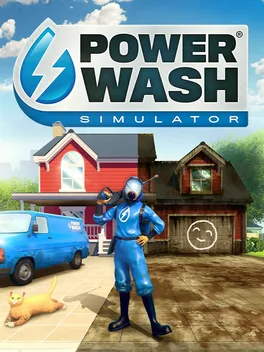
[Image from igdb.com]


PowerWash Simulator

Developer: Futurlab

Publisher: Square Enix

Genre(s): Simulation

Platforms: PC, Switch, PS4, Xbox One, PS5, Xbox Series X

Release Date: July 14, 2022


My first paid job in life was working at a car wash. From my late teens to my early 20s, I drove twenty minutes all the way across my home county as the sun was signaling a new day at either 8 or 9 AM and worked six to eight-hour days on the weekends after attending either high school or college full time during the week. My schedule at this job evolved to working almost full-time during the summer. I sacrificed potential parties and other social gatherings with friends, my hobbies, and my precious sleep for the sake of making minimum wage and to uphold that first step into adult responsibilities. Hey, we all have to make the plunge during this era of adolescence that allows us to adapt to the adult world. Still, I believe that this particular job was rather challenging for a young person with no work experience, or more so than just sitting at a counter and collecting people’s cash in exchange for their services like many teenagers do. This job involved strenuous pressure on one’s feet standing in the washing tunnel and attending to everyone’s individual wishes for their filthy automobiles as they entered one by one like a lunch line. On winter days after snowfall would delay schools and inhibit people from traveling, what felt like the entire population of central Maryland would storm onto the lot and form a ceaselessly ending line that rivaled the length of a console launch event outside of a GameStop for us to blow the salt off their vehicles with pressurized liquid. While I’m on the subject, the tunnel was not heated, so the combination of standing around outside all day in weather below freezing shooting soapy water afflicted me with an unpleasant illness soon after. The people working at the Taco Bell up the hill used to give me their condolences when I took my lunch break on those days. Did I mention this job was dangerous? You can imagine being in close quarters with the general public driving their two-ton steel bullets in your direction makes you liable for grievous injury, which thank God never occurred. Not to mention, what harm they could potentially do to the equipment, which resulted in a calamitous system crash whenever someone ignored our directions. From a customer service standpoint, several of the patrons tended to be particularly quick to harsh vocal aggravation. Fucking up someone’s food is one thing, but mistreating something that many people perceive as a precious member of their family is bound to generate some serious outrage. If dumping out the unholy terrors that were disposed of in our trash cans (that were just empty chemical drums) didn’t befoul my clothing, then the odd aroma of the cleaning chemicals was always enough to make me nauseous once I returned home. I often have dreams where I still work at this job and I’m catapulted into a chaotically stressful, worst-case-scenario day seven years after I left for greener pastures.

When I became aware of a game such as PowerWash Simulator that gamified my teenage wage struggles, my eyebrow raised so high up in incredulity that it almost popped off my head. Are you telling me that there is a video game that simulates my arduous experiences and that there are numbskulls out there that are genuinely…enjoying it? Oh, to be so ignorant. In actuality, once I played PowerWash Simulator, I could see the appeal of the game, or at least from an outsider’s point-of-view, uncolored by performing the real-world parallel for four years. Aiming the water gun at an object until it's spotless is a task that requires little to no strain on one’s brain, and I should know. Really, the monotony of it all is somewhat relaxing compared to the reflexes and acute mind functions needed to succeed with most games. However, the game will start to frustrate players when the size of the objects needed to be hosed down expands to things that would realistically require a team to clean, especially since the game is scrupulous with wiping away its dirt specks. Seems a little counterintuitive for the game’s effortless ethos, does it not?

At the end of the day, PowerWash Simulator probably still wouldn’t stimulate me even if it didn’t remind me of workplace trauma from a decade ago. Comfortable games with menial objectives seem to be an ever-present trend in the modern gaming landscape, and I can’t quite gel with a lack of meatiness in a game even if that’s the point of it. For those who enjoy a humdrum simulation game where one can have a spot of tea over to decompress, I'm sure PowerWash Simulator will be satisfying. Alas, seeing people play this game conjures up the Rolling Stones song, "Gimmie Shelter" as I have uncomfortable flashbacks.

Super C Review

 (Originally published to Glitchwave on 11/8/2024)


[Image from glitchwave.com]


Super C

Developer: Konami

Publisher: Konami

Genre(s): Run 'n Gun

Platforms: Arcade, NES

Release Date: January 8, 1988


As far as the remembrance of the assorted Contra games is concerned, the series second outing, Super C, has received the short end of the legacy stick. Diminishing the legacy of the second title is a common trend for several of gaming's classic franchises that churned out several titles during the early, pixelated eras of gaming, namely on the NES. Because Super C was rarely spoken of compared to the two Contra entries chronologically between it, I assumed that it was yet another example of a sophomore pratfall. Was Super C an instance of a misunderstood deviation in gameplay like Zelda II, or was it a half-assed experiment like Simon's Quest that attempted to execute a methodical approach to gameplay? I highly doubt it's a case of mistaken identity like the American Super Mario Bros. 2, even if the first Contra inspired several imitators. No, to my surprise, Super C is an exemplary run n’ gun experience on the NES. Dare I say, it’s even better than its predecessor which manages to still receive all of the due credit when discussing the iconic examples from this early era of gaming.

If we must assess every aspect of Super C to properly critique it, the only instance of sequel fatigue is that its narrative replicates the one from the first game. The Soviet soldier and extraterrestrial imperialist coalition has returned to enact another attempt at laying waste to the Western world, enslaving the American population either economically or erasing all autonomy completely. While their persistence is honestly admirable, the two causes of their first failure, the testosterone-oozing duo of Bill and Lance, are still ripe and ready to defend the inalienable freedoms given to everyone born in the US of A. Even though our courageous heroes aren’t hesitating to jump into the line of fire again, the player(s) will likely approach this second Contra outing with a cautious sense of dread. If we can confidently state anything regarding Contra’s legacy, Konami’s series is notorious for being so goddamn difficult that playing it will instill a gaming PTSD as deep-seated and intense as stepping into the role of a soldier and experiencing combat in real life. One piece of context regarding Super C, in particular, is that Konami has eliminated their namesake code from this title. It was a precious ten-digit sequence that better ensured the player’s survival during the first game. Now that it’s disappeared without a trace, any player’s confidence is bound to burst from their being like a disembodied soul. Before the player begins to cope with the inevitability of eating borscht and whatever unholy diet that aliens subsist off of for the rest of their lives, I can say with conviction that they won’t struggle to the same extent in Super C even without the generous safety net.

Immediately, Super C’s comparative accessibility should be apparent by the first screen. Unlike the jungle where bullets were shaking from the trees like little lead coconuts, the commie military base presents a more reasonable barrage of deadly objects to contend with for an introductory level. All angles of the screen will see firepower flying toward the player as they move, but they’ll have ample opportunity to react accordingly because the bullets seem to move at a glacial pace. Enemies from behind proceed towards the player at a brisk jog, and the turrets are situated at an incline above a pit in the route. If the player uses the sunken support to their advantage, they can eradicate the machine while avoiding its projectiles completely. If there is one noticeable consistency with Super C’s level design, it’s that the developers decided that the bottomless pits that were littered throughout the first game’s battlegrounds were too common for comfort. In a game where the protagonists will become lifelessly cold and stiff as cardboard by even the slight graze of anything in this environment, they figured that misstepping platforms was too extraneous of a casualty. When the player returns to the jungle in the third area, the humid wilderness has been flattened to a crepe. Swimming in the neck-deep water doesn’t even put the player in a spot of vulnerability as it once did, for they can duck beneath the surface to protect themselves from the whizzing offense of bullets from above. One might state that Contra’s level design has been streamlined, but areas with intensive platforming are still available–just later in the game as an additional obstacle to overcome along with keeping an eye out for enemies and their projectiles. Platforming becomes an intense bout of timing and precision during one particular section in the surreal and sublime alien hive where the roof sequentially rises and falls on the player like a piston. Ascent levels also return from the first Contra, but the player can climb at their own pace without having to worry about being consumed by the screen. Just be wary of enemies materializing on screen and a rogue purple boulder falling from the sky in the fifth area and all other sorts of enemy onslaught can be flexibly mitigated.

Super C also continues the trend of swapping the perspective of level progression for every other area to shuffle the gameplay up a bit. Instead of charging through a facility from a quasi-third-person perspective, Super C adopts a top-down drone view more appropriately fitting for an 8-bit title. From this perspective, Bill and Lance have a clearer view of everything closing in on them, plus the player isn’t forced to readjust entirely to a different control scheme. Discerning where one’s bullet trajectory is also much clearer, for the angle at which the player was aiming at was hard to determine from the backs of Bill/Lance’s thick skulls. Overall, the change that occurs with every other level in the name of diversifying the gameplay isn’t as jarring. The alien base infiltrations were essential to the narrative of the first Contra, but I vastly prefer levels that feature something more compatible with the 8-bit hardware.

The developers also evidently noticed that players tended not to fall as frequently as leaves in autumn when they were properly equipped with effective weaponry. I’m not stating that the standard blaster should be removed or that reverting to using it upon death is an inappropriate penalty. Still, the punishment extends to being stuck with the default weapon in the game for a long swathe of time, and the player is likely to exhaust plenty of lives in that vulnerable period. In Super C, the developers have granted the player with a Berlin Airlift of aid. Flying weapon capsules appear nearly thrice as much as they did in the previous game, and each of them is generous enough to bring a friend if one of them doesn’t suit your fancy. Every single weapon and enhancement item from the first game transfers over as well, so the player should already be accustomed to how each of them will serve their mission. However, even though one’s inkling for a certain weapon should be subjective, it’s guaranteed that every player will be salivating at the chance of a capsule revealing an “S” to signify the almighty spread gun. While the divine beast of weapons technology will still eradicate all that stands before it in three different directions, I’m afraid that our beloved has lost a bit of its unabated luster. Don’t worry–the nerfing of the spread gun is like tweaking an atomic bomb to disintegrate a city instead of an entire country when dropped.

I noticed the spread gun’s relative decline in destructiveness when I was faced against the level-ending bosses of Super C. Unlike the enemies that crumble with one strike of a spread gun bullet, the bosses are obviously heftier challenges. The helicopter boss at the climax of the first level shouldn’t have had enough time to deploy any auxiliary defenses when I was sticking spread gun shots up its ass like an enema. Alas, liberally using the once-divine weapon did not relieve me from dodging its obstacles to prevent losing it upon death. Illustrating this experience may connote that the bosses of Super C are a more formidable bunch but really, it just conveys how the developers knocked the spread gun down a peg so the other weapons stood a fair chance. The reality of the situation is that like every other aspect of Super C, the bosses are another example of comparative ease. The aforementioned helicopter and the Krypto-crustacean unleash smaller enemies on the player, which are far more detectable than swarms of bullets. The Laser Chandellier’s blast pattern is learnable like first-grade arithmetic, and the “Babalu Destructoid Mechanism” will short circuit in seconds when the player notices that his top doesn’t have a cannon attached. The two-phased Jagger Froid fight is as difficult as any of the bosses from the first Contra, but I wanted to highlight him anyway because his horrific alien visage the player will be bombarding with bullets is quite the Gigerian spectacle. The same could be said about the final bosses’ design, achieving the same balance between cool and grotesque. In terms of it's position as the game’s final challenge, it’s a perfect test of one’s proficiency without stepping over into the territory of impossibility.

Is Super C inherently better than the original Contra because it’s easier? Yes, any other questions? Accessibility isn’t always imperative to enhance a gaming experience, or at least that’s an applicable statement for modern video games. In the case of the cruel and unrelenting NES era, I’ll take every helping of sugar to make this medicine go down smoother. Reworking the assets of the previous game to reach something smoother should always be an integral goal of any sequel, and it’s a wonder why so many other franchises of the NES era decided to abscond entirely from the first game’s fabric instead of fixing its foundation. As a result of giving Contra a coat of fresh wax, Super C is one of the most agreeable experiences I’ve had with an early, pixelated video game. Why then isn’t Super C the prime representative for the Contra franchise, or why is it still undermined by the first game? I’ve explained this before, but NES enthusiasts gaming when the system was released are like ODB in that they like it raw. Sorry oldheads, but I don’t think we share the same kink.

Monday, December 9, 2024

Gris Review

 (Originally published to Glitchwave on 11/7/2024)


[Image from glitchwave.com]


Gris

Developer: Nomada Studio

Publisher: Devolver Digital

Genre(s): 2D Platformer, Puzzle Platformer

Platforms: PC, Switch, PS4, Xbox One

Release Date: December 13, 2018


At first glance, Gris reminds me of the critically acclaimed title Journey. Typically, this would be a clear reason for most gamers to seek out Gris. However, in my case and what seems to be my case alone, it’s a core reason to avoid this game completely. Sony’s pretty walking simulator is another subject of my critical scorn that contradicts the status quo. I don’t inherently dislike games that drive their narrative through sparse, non-action-oriented linearity. I quite enjoy the existential deep sea horror of Soma, the surreal dark mystique of Limbo and its anti-fascist younger brother Inside, and the fourth-wall fracturing of the Stanley Parable. In the case of Journey, which ironically seems to be the most well-regarded of the genre, there was no narrative to speak of. In fact, there was very little of anything in Journey that would ideally hold anyone’s interest. There were no puzzles, enemies, obstacles, or any other element that comprise the anatomy of a video game. Platforming was involved intermittently, but jumping on the few suspended circles of foot support was hardly comparable to a Super Mario-style ascent. This emaciated experience ended just as soon as it started, probably because the game was so starved of any gaming fundamentals that it felt faint and collapsed. Due to its fun-sized length and lack of any memorable moments interspersed before its abrupt end, I was flabbergasted at how Journey won over the hearts of the greater gaming population. The game was even the subject of my first “dud review,” a jokey, brief type of written analysis reserved for games that are either notoriously awful or have little to no substance to divulge. Yes, I’ve placed Journey in the same category as Action 52, Sonic R, and Bubsy 3D. What are you gonna do about it? I shouldn’t have bothered to humor Gris since it shares many similarities to the beloved game I’ve been disparaging. However, my interest in Nomada Studio’s interpretation of the walking simulator/cinematic platformer was entirely due to how it reminded me of Journey, for I was optimistic that another developer could reconfigure Journey and inject some much-needed content into the experience.

While the objective of this review is to divulge the gameplay substance of Gris and compare it to Journey, I’d still feel remiss if I glossed over the fact that Gris is gorgeous. Never have I ever heard anyone express a distaste for watercolors, so Gris achieves its elevated visual scope with arguably the most agreeably pleasant paintwork from an aesthetic perspective. A few games have managed to achieve the look of the warm and vibrant art style in the third dimension with the aid of cel-shaded graphics, but rendering Gris with the same expressive visual tint would’ve been needless on account of its 2D perspective. Eschewing the buoyant pop of cel-shaded graphics with the watercolor palette on an X-axis restriction really captures the look of a painting, seeing as all of the esteemed watercolor artworks throughout history are also two-dimensional. Watercolors are inherently alluring, but the developers take full advantage of their choice of aesthetic by rendering some spellbindingly beautiful landscapes. The expressionistic color choices not only display the ethereal atmosphere of a dream, but the most pleasant dream ever experienced that you’d never want to wake up from. Journey’s 3D environment may impress on a technical level, but the flatter dimensional perspective of Gris exudes the sense of playing an interactive work of art in almost a literal sense.

Seeing Gris in its full, immaculate splendor is a treat that needs to be unlocked by the player. In what is either a cruel tease or an enticing incentive, the mission of Gris is to replenish the game of its color. The game will begin with The Protagonist walking through a blank and brittle world bereft of any glowing shades alluded to in the previous paragraph. Soon, the color “red” will start to blossom once again, and every other color of the rainbow will splash the screen incrementally like a chapter-based progression. The restoration process is a linear path from one color to the next that is rarely interrupted. Well, unless the player is struggling with one of the puzzles interspersed between progression milestones. If violent conflict does not gel with the awe-striking immersion of a walking simulator, then I can’t think of a more complementary fit than environmental brain teasers to add a layer of gameplay meat. Many of the thought-provoking impediments in Gris revolve around the abilities that The Protagonist unlocks with every color restored. The Protagonist will inflate her cloak to the shape and size of an anvil to manipulate the leaning direction of rickety platforms and smash through cracked floors. Her cloak will also allow her to glide for short distances once she obtains the requisite platforming maneuver of a double jump. Some platforms near the end of the game are immaterial, so she’ll have to trigger a move that blossoms them to tangibility. Her swift acceleration boost while swimming certainly helps during the prolonged underwater sections. If the player finds themselves faced with a moment that halts progression, cycling through these abilities and applying one is bound to solve the roadblock. Gris doesn’t showcase the most complex of puzzles, but at least they’re stimulating enough to spruce up the straightaway trek.

Beneath the vivid domain and the hike lies the subtle narrative depth of Gris. Or, at least I’d like to believe that this adventure has some sort of profound point to it. I couldn’t deduce any greater substance from Journey, and the fact that the title of the game is so bluntly literal is another reason not to bother reading into its subtext (if it had any). Gris, on the other hand, at least gives the player something to chew on so the game’s flavor will last a bit after they complete it. For starters, one of the only pieces of contextual evidence we have is that the title translates to the Spanish word for grey. This murky tint that lies between white and black is the only prevalent shade at the beginning of the game. The significance behind that particular color most likely relates to The Protagonist’s internal dissonance. She’s not literally reinvigorating the world around her with the glow of its former radiance: it’s a replenishment process for her mental state. Only by partaking in this spiritual trip will The Protagonist find her inner brightness once again. What caused all the color to literally and metaphorically drain out of her life? Perhaps there is some relevance to the stone statue that The Protagonist finds at every progression milestone, climbing into the palm of its hand which releases another color into the atmosphere. In all likelihood, the figure is an effigy of someone who was close to her and has passed on, and their death was the primary cause for their broken state of being. It might be a stretch but hey, there’s at least something to extrapolate.

What a surprise–I found Gris to be a more substantive gaming experience than the game that draws constant comparisons. Then again, for as positive as the general consensus is for Journey, I believed that surpassing it wouldn’t be a herculean undertaking. Honestly, Gris’ adequate quality is entirely contingent on the parallels to Journey. Without noting its comparatively stronger graphical style, gameplay elements, and narrative depth than Journey, Gris still feels a bit empty by the end in all of those departments. If Journey is a hot chick who turns out to be nothing but a boring, vapid airhead underneath her surface, Gris is like her equally beautiful younger sister who studied abroad for one semester of college. You’ll get something of interest out of her for a brief period, but she'll start to falter into nothing once she exhausts the script.

Wednesday, December 4, 2024

P.T. Review

 (Originally published to Glitchwave on 10/31/2024)


[Image from glitchwave.com]


P.T.

Developer: 7780s

Publisher: Konami

Genre(s): Graphic Adventure, Horror

Platforms: PS4

Release Date: August 12, 2014


It is time to pay my respects to Silent Hills, which is probably the most infamous example of a canceled game in the history of the medium. Like a musical prodigy or another sort of precocious wunderkind who has met an early demise, the world collectively weeps for the full potential of their extraordinary talents that could’ve blessed humanity. Alas, death is a fickle matter in the end, and not even the exceptionally gifted are shielded from its unpredictability. Even though what was built as the spiritual successor to Konami’s iconic survival horror series Silent Hill was unfortunately cut down before it fully sprouted, the profound lamentations of those most crestfallen by its cancellation have preserved its legacy. The sole remnant of its existence is “P.T.,” an acronym that simply spells out “playable trailer.” In the gaming biz, an interactive sampler of what is to come is called a “demo,” available for download on consoles that the finished game will be released. I realize that reviewing a demo is a tad cheap and invalidates a proper analysis. However, I can’t ignore what a sizable handful of gamers have dubbed as “the scariest game of all time.”

I should issue a disclaimer that I have not played P.T. and will never play P.T. This isn’t a confession to tarnish my credibility, but the availability of P.T. has all but vanished completely. In 2014, I was an eighteen-year-old preoccupied with my first semester of college and all of the frivolous activities involved with that age that I still plead the fifth on. I missed my opportunity to download P.T. (on a console I didn’t own at the time), and I’m not seeking out a used PS4 or Xbox One that houses the demo. I hope you forgive me for watching someone else play through P.T. on YouTube. After all, doesn’t the “trailer” portion of the title suggest that it can be viewed from an impersonal perspective as well? I think that I can be excused for half-assing this review as I’ll be able to assess P.T. 's quality and its potential via this method just fine.

Immediately, I was quite impressed with the presentation of P.T. The visuals are crisper than a glass of water fresh from a spring. Still, all that the hyperrealistic graphics do is pronounce all of the horrors that lurk in the dark, which is also contrasted appropriately enough with the player’s line of sight while maintaining a potent spookiness. Many people criticize the scare factor of setting something horror-oriented in the modern domicile of the character (probably thanks to the oversaturation of that Paranormal Activity crap), but what’s more unsettling than having the mundane and comfortable shaken up and plunged into the realm of terror? As the player moves back and forth through the corridors of this home, the lighting will grow more eerily dim to signify that the intensity of the horror factor is growing. The piece de resistance of the scary scene is the phantoms that emerge from the darkness, popping out at the player with their grizzly visages and moving about in a horrifically inhuman fashion. Encountering these ghoulish apparitions may verge into the realm of cheap jumpscares. Still, the game effectively supports these flashes of terror by maintaining the tension with odd little instances of bugs crawling down the walls and the sound of a baby crying from an unknown origin. All the while, all the context given to the player is the murder of a family by the patriarchal figure, letting the player conclude that the frightening figures that roam about the house were his victims in a state of purgatorial unrest. The demo ends with a phone call telling the player that they’re “the chosen one” to something without context. Norman Reedus shows himself outside the scene on the streets, and the camera angle and fame status lead us to believe that he would’ve been the face of this project if it had been continued. I’m sure he’s paying the bills just fine without a full release.

Okay, I’ll concede that I’m a little disappointed. I can fully ascertain why so many gamers continue to visit the grave of this aborted fetus of a game every so often and laud it for the appetizer that it was. Still, an appetizer is obviously not a full meal as it still leaves gamers with those unsatiated hunger pangs. However, in their state of grief, it seems like the greater gaming community is coping with the loss of Silent Hills by treating its demo as a full game. Given the effective and nightmarish pacing that made the original Silent Hill the title of “scariest game of all time,” I can certainly see how they could argue its legitimacy as a complete experience. Not every game needs to match the epic length of Red Dead Redemption, after all. I’m not fully subscribing to the mental gymnastics needed to label P.T. as a fully-fledged project, but it sure is one hell of a ride for how brief it is.

Omori Review

 (Originally published to Glitchwave on 10/24/2024)


[Image from glitchwave.com]


Omori

Developer: Omocat

Publisher: Omocat, Playism

Genre(s): JRPG

Platforms: PC, Switch, PS4, Xbox One, 3DS, PS Vita, Xbox Series X

Release Date: December 25, 2020


I debated with heavy consideration whether or not to tackle Omori for the upcoming Halloween season. Since 2021, I've annually handpicked five or six video games to review in October that correspond with the major holiday occurring on the final day of the month. Overt horror games such as Resident Evil and Silent Hill are fairly self-explanatory for even the least avid of gamers. Still, the classification of what constitutes a game appropriate for this time of year has been bent and reconsidered per my better judgment. Castlevania, especially the 8-bit titles on the NES, couldn't even startle a jumpy toddler. Still, an homage to the Universal horror classics of the 1930s makes it equally an essential elder statesman to its medium like the gothic monster movies that inspired it. Destroy All Humans and War of the Monsters are both relatively fitting because the bygone atomic horror period that they’re both tributing used to genuinely frighten audiences during the 1950s. Luigi’s Mansion still evokes the eeriness of navigating through a haunted mansion like Resident Evil even if it forgoes the gore for campy, lighthearted goofiness. With something like Omori, however, there’s something about its conceptual identity that strikes me as inappropriate to induct it into the October canon of horror-themed video games. Sure, there isn’t any doubt that the game fits its psychological horror label like canned juice through a laundry chute (that’s a Silent Hill 2 reference for you), but the way that Omori directs its brand of cerebral torment veers more towards gloom and forlornness rather than panic-inducing encounters with mentally fabricated monsters. Depression, grief, and mental illness are constructs that plague humanity in real life, and the grave nature of these afflictions strike a chord of solemnity that wipes away the fun factor of fictional scares. Omori plasters all of these grim concepts on its thematic bumper like stickers on a minivan, which is the primary reason why I felt reviewing Omori was a tasteless digression from the exhilarating spirit of the spooky season. However, I did state that what crowned Silent Hill 2 the king of horror video games was its unparalleled integration of similar themes into its narrative, evoking a potent feeling of something I dubbed as “emotional horror.” I’ll eat my own words in this instance, for I now must know if Omori expertly captures the same peculiar phenomena that skyrocketed Silent Hill 2 to interactive horror prestige.

One probably couldn’t discern Omori’s horror elements just by taking a gander at it. Okay, the gray and hazy flashes in the opening shots are rather discomforting, and all the reassurances in the text such as “don’t worry” and “everything will be okay” signal that perhaps the aura of Omori is worrisome and that everything might be a catastrophe. Still, this opening sequence evokes cries of angst rather than screams of terror. Once the game includes player involvement, the homey pad known as “WHITE SPACE” may perturb some players with its eerily monochromatic and minimalistic design, and the drawings found in the notebook would send any child straight to a psychiatrist. Again, any and all feelings of consternation set by this scene are negated by Omori’s presentational elements, namely the chibi-sized playable character and other setpieces seen here rendered by the endearing, pixelated graphics. Leaving “white space” through the conveniently generated door teleports the player to a place that could be described as if a zoo managed to put the sickeningly colorful Nyan Cat in captivity and displayed it for human amusement. The land outside of this variegated cell isn’t as profusely vivid, but a more restrained and consistent color scheme still proves to be equally as stimulating. One particularly alluring aspect of the visuals is that while each individual area of Omori’s world disciplines itself to a concrete color palette, the game still displays an overarching idiosyncratic style no matter the specific shade. If the pixelated graphics weren’t charmingly rough-hewn enough, Omori scribbles in the insides of those grainy outlines with pencil-drawn shades where blank, white slivers lie in between for authenticity. The doodle drawings matched with the vibrant, lightly-toned colors of the foregrounds portray something very child-like. They not only speak to the whimsical nature of childhood, but craft something akin to an art style typically associated with children. Even though the art style is amateurish, an inexperienced child could never possibly match Omori’s refinement. Omori doesn’t look scary in the slightest, but its visuals are still wonderfully appealing.

Once the player sees similarities between Omori and a certain Nintendo title from the SNES era, they might make inferences that its horror elements are stealthily waiting beneath the surface for the opportune moment to violently erupt on the player like lava gushing from a volcano. The game I’m obviously referring to is Earthbound, a cult classic oddity with some deceptively disturbing content that has become the building blocks for a plethora of acclaimed indie titles released over the past decade. The quirky, seemingly guileless aesthetic both games share is a fair parallel to draw from, but a more apparent connection to Omori and its primary influence is the relationship between the player and their RPG party. For a sad sack with a perpetual glower, Omori, the title character, has an enterprising social life. South of the tree stump that houses Omori’s aforementioned cell is a playground where all of the local children play merrily until the sun sets. The bossy Berly and her burly, candy-covered companion Van seem to run the roost here but for the sake of relevance, let’s focus on the three central children who encompass Omori’s supporting team. It’s difficult to say which of the three is Omori’s best friend, but the token girl, Aubrey, seems to express the strongest affection towards the grey, stoic boy to the point where I’d call it puppy love. If you ask me, she has better romantic chemistry with the immature and impulsive Kel, and their constant butting of heads will likely lead to a future as teenagers in the back of Kel’s Dad’s Dodge Challenger on prom night. Kel knows not to provoke Aubrey too severely, for he might become victim to a literal butting of Aubrey’s head or a swift clobbering with her baseball bat–hence why she’s the muscle of the group. Add Kel’s older and winsome brother, Hero, into the mix as a positive proton to the negative charge Aubrey and Kel emit and this ensemble is certainly dynamic. As for where Omori fits in this group, he’s essentially Eeyore–the taciturn one that everyone still accepts into their social circle despite his doleful demeanor.

I think the sight of the other three children tailing Omori in a straight and unified line at all times is the image that empirically proves the game’s heavy Earthbound influence. However, this connection between Omori and its much older RPG muse is a tad more nuanced than simply having four children as the playable party members. In Earthbound’s mixed bag of both brilliant and bullshit aspects, one of the game’s better attributes relates to how each kid Ness would scrounge up to aid him on his quest served uniquely different roles on the team. Not only does this apply to their physical stats in combat, but it also applies to how each party member was a distinctive character with their own interesting personalities that made the quartet so eclectic. In Earthbound, characterization kind of slows to a glacial halt for each kid once they are absorbed into the Ness collective. While the characters in Omori hardly look dissimilar on screen unless the player squints, the personability of the title character’s friends never wavers because the game barely ceases in highlighting their distinctive personalities. Banter between characters through frequent dialogue does its job effectively, but Omori extends the transparency of every partner’s distinctiveness through their actions outside of conversation and combat. Traversing through Omori’s weird world will often be stopped by various progress impediments, and each of Omori’s friends has their own particular solution to specific problems. For example, if an object like a ceramic pot or a barrel are blocking the path, Aubrey will smash it to smithereens with her trusty baseball bat. Her hitting skills are also applicable to activate switches as well. However, if those switches aren’t in close quarters, it’ll be up to Kel to stand on a pedestal and channel his inner Dennis the Menace by aiming his slingshot and pelting the button or other object from afar. In the instance where the hindrance is a sentient being, Hero will take the stand to persuade the recalcitrant figure with his nice guy suaveness. Omori’s specialties are mostly contingent on hefty progression milestones, such as being able to slice the spiderwebs in front of the entrance to Pyrefly Forest and swim to the underwater Deep Well after conquering his fear of arachnids and drowning respectively. The player will have to swap out who is leading this congo line in order to enact a character’s specific field talent, and the transitional photos of one character tagging the other are both adorable and on brand for how the foursome perceive one another (I.e Aubrey’s elation when Omori tags her versus the irritation she feels when Kel does it and Hero giving his younger, smaller brother a noogie). The special abilities are just another example of Omori expertly fleshing out its characters outside of their combat attributes, engaging the player with these kids on a scale that Earthbound neglected to reach.

Still, the quartet’s dynamic during combat remains essential as it would for any archetypal JRPG team. If the merged movement of Omori and his friends on the field echoed Earthbound, one can imagine the combat system to be as equally uncanny. Upon encountering a boss or a common enemy, any battle is depicted with an immobile image of the foe at the center with the four characters framed in each corner. Attacks aren’t physically seen and are rather implied by flashes, and enemies are prone to waste a turn nodding off at times. Omori does not borrow Earthbound’s winding slot health mechanic, for perhaps that is a patented attribute whose use in other properties is impermissible. Each character has their individual health bars and magic meters, and they all have a unique set of skills that drain what is known here as “juice”. More skills are unlocked as each character levels up, but many revolve around their designated right-hand item or field ability. Omori stabs and slices foes with his knife like a sashimi chef, Aubrey emerges from her box to wallop enemies with her skull, Kel’s rubber ball ricochets around wildly, and Hero miraculously manages to whip up restorative baked goods with his spatula despite not also being equipped with a stove or oven. If the player instead chooses to engage the standard attack to conserve “juice,” they can still deal critical amounts of damage through the passing mechanic. Before attacking, a menu appears in the blink of an eye with three directional options. The current character can follow up their attack by passing it to one of the others, and the nature of the collaborative encore depends on the character’s skills and interpersonal relationship with the other person. Hero will yell chants that inspire confidence which heal both health and juice, while Kel will toss a ball to his friends, particularly Aubrey, to hit a grand slam into the enemies. Even when there is no dialogue or overt story exposition on screen, Omori still finds ways to cleverly cultivate character interactions.

Passing an attack to Kel when it's Aubrey's turn, however, will instead cause a peculiar status effect, which is my segway into discussing what is probably Omori’s singular contribution to the turn-based RPG combat. Omori is unquestionably a game that revels in vulnerability, wearing every emotion on its sleeves as prominently as an arm-spanning tattoo. Since emotions are a stark thematic construct in Omori, Omocat, the core creative force behind Omori, had the bright idea to integrate this element of the game’s essence into the combat. Whether Omori and friends are inflicting mercurial shifts on the enemies or on each other, the emotion mechanic is vital to success with the game’s combat. Depending on the character, the player can exhaust a bit of juice to either give them a pep talk to fill them with happiness (Aubrey), read them a somber poem to evoke feelings of sadness (Omori), or anger them through annoying yelps and screeches (Kel). Stacking these status afflictions with the same special skills will increase the severity of each emotion to ecstasy, depression, and rage respectively. Only Omori can push the emotional threshold to their extremes with mania, misery, and fury. Basically, the utility of the emotions operates on a rock, paper, and scissors system where an emotion is forceful against one and delicate to another both in terms of offense and defense–as helpfully illustrated on an artful schematic once the mechanic is introduced. While the goal is to contrast the opposing emotion felt by the enemy, the state of each mood still carries certain benefits relating to aspects such as speed, luck, defense, etc. Sure, one can argue that this is a reinterpretation of Pokemon’s (or Shin Megami Tensei) elemental system. However, the way that Omori weaves one of its chief thematic attributes into the combat plausibly and practically makes it anything but derivative.

While the emotion system is more than an admirable mark of intuition, it comes with a glaring flaw that almost soils the combat entirely. Omori’s combat is easy to learn and easy to master, which will cause any lucid player paying attention to never experience strife at any point in the game. The issue stems from the fact that emotions are perpetual until the battle ends, and they can be altered without much effort by the player at any given moment. When the party is all donning the opposing shade on the emotional spectrum, they’ll be able to trounce the enemy with several consecutive super-effective strikes and still have the time and energy to have a joyous picnic afterward. An example of how fundamentally broken this system is with the Sweetheart boss fight, a regal, narcissistic brat who resembles Strawberry Shortcake if the wholesome character had a yandere streak. As the fight progresses, she’ll elevate her “cheerful positivity” to the heights of pure, rapturous bliss. It’s intended to convey the notion to tread lightly around her at her maximum potential but as long as Omori dampens himself and his friends in a shield of sorrow, they’ll smack that manically gleeful smirk off of her irritating face while she barely dents any of them with her pink medieval flail. The intended formidability of this fight is rendered into a sweatless joke, which can really be said about any instance of combat in the game. If the emotions were a temporary slight or stat boost and the player was forced to take advantage of the slimmer window of opportunity, the mechanics would prove to be a thrilling tint to the combat. As it is, I wonder if the title character’s expressionless face is inspired by boredom rather than despair.

Speaking of the aforementioned boss whose battle is practically effortless, Sweetheart involves one of the numerous detours the game takes from Omori’s main quest. The primary goal for Omori & company is to find their sensitive, plant-enthusiast friend Basil, who disappears without a trace after the events of the prologue. The gang must scour every crevice of the Vast Forest to find their frightened, flower-crowned compadre, which will lead them to countless corners of dangerous, uncharted territory. As I stated beforehand regarding Omori’s eclectic color palette, the necessity of sprucing up the pixelated graphics with every shade of a rainbow is to highlight distinctions between all of the world map’s varied districts. The “Otherworld” moon colony that requires the longest ladder imaginable to reach is an audacious fuschia, an attractive, unconventional shade for a quasi-urban environment. The creamsicle sands of the Orange Oasis are the grounds of an excavation site, luring tourists to dig for treasure with its accessible, marketable dinosaur mascot. Places where NPCs are less likely to be found include the misty, spider-infested Pyrefly Forest and the watery trenches of Deep Well, and the latter area evokes such a mesmerizing underwater atmosphere that it made me yearn to remain down here until the character’s lungs collapsed from a lack of oxygen.

I enjoy that the map I’m forced to search every nook and cranny of to find Basil is wonderfully diverse but ultimately, all the diversity does is distract the foursome from their primary objective. Once they deduce that Basil hasn't stepped foot in the Otherworld neighborhood, the gang then shifts their focus to finding an intimate mixtape for a lovesick character called Capt. Spaceboy in its local junkyard. Aubrey receives tickets to a bachelor auction in the village where the common sprout mole enemies reside, and attending the show leads to a long escapade trying to escape Sweetheart’s vain and extravagant castle estate where the fountains jet a richly red liquid that the game describes as “not for children.” Aubrey said she’d humor this outing IF they found the time, and someone responsible like Hero should’ve stamped their foot down and said no to this nonsense. Severing Omori’s friends of their unpaid employment at the Last Resort casino feels like an unconcealed distraction by design, and not a single vital piece of information to Basil’s whereabouts could ever have been found in the elaborate insides of Humphrey the Whale. The gang actually struggles to remember Basil at this point in the game and quite frankly, his relevance was getting a bit fuzzy in my mind as well. Look, I understand that the impetus for all of these plot deviations is from Earthbound doing the same at every waking moment. Random happenstances worked in Earthbound’s favor because the game was unabashedly absurd, and the overarching plot of reaching the sanctuaries allowed for some extracurricular activities in between. In a game where the characters communicate more often on a mission where time is of the essence, too much rerouting makes the player think there’s a glitch in the matrix and that the characters are nonchalant little dickheads.

I’m fairly patient with Omori’s wonky trajectory, but I did reach a point where I found myself asking what was the point of this quirky investigation involving a brooding Myspace-era emo kid and his three friends. Omori’s arbitrary events didn’t even match the humor of Earthbound’s because the game is too puerile and squeaky clean, even though there is clearly a latent sexual tension between Aubrey and Kel. I struggled to find the substance of Omori until Capt. Spaceboy was defeated, for the game then warped to a scene where the title character awakens from the interactive dream that I was just experiencing. Before you dismiss this occurrence as a maddening cliche, transporting to the realm of consciousness unlocks Omori’s foundation that I was beginning to believe the game didn’t have. The world surrounding The Protagonist, who is canonically named Sunny here and not the title’s namesake, once he snaps out of his slumber is where the “domestic RPG” aspects of Earthbound start to shine. Or, it’s when the alluring veil of fantasy is ripped off to expose a drab and dull reality, depending on your perspective. Gone is the lush, psychedelic tint to the visuals, as Sunny’s actual residency adopts a sober, realistic rendering of the real world–pixels withstanding. This also extends to how the protagonist and the NPCs are portrayed, with more melanin in their skin fit for a healthy human being instead of a bunch of bed-sheet-white anemics. There are no submerged casinos or cities in the sky, as only the park is the real-world parallel that crosses over into Sunny’s dream land. That is, unless you discount that he’s inserted his favorite comic book superhero Capt. Spaceboy and the popular starlet Sweetheart into his subconscious, giving context to the elements of HEADSPACE that seemed irrelevant. The character progression that comes with turn-based combat is not relevant here, as Sunny cannot gain experience through battle and is limited to one attack and a single skill involving meditative breathing to restore his health. I wouldn’t be surprised if several players loathe every section of Omori that takes place after Sunny wakes up and exasperatedly rushes through them, for the vibrant locations and the RPG mechanics that grab the player’s attention cryogenically freezes. While nothing here is as appealing as the components of “HEADSPACE,” revealing that the roundabout realm where erratic, almost episodic, events happen on a whim are all but a fabrication conjured up by The Protagonist’s subconscious justifies the scattered progression. Personally, taking a breather from the turbulence of HEADSPACE to a more grounded dimension is refreshing.

The effectiveness of the Persona-esque juxtaposition between Omori’s two realms is based on one universe informing the context of the other. Anyone who has ever slumbered before will tell you that the elements of one’s dreams are ethereal embellishments of recognizable attributes, and this observation is expressed by Omori’s reality if the park is any indication. People’s dreams also tend to feature familiar faces they regularly interact with, so you know that Sunny’s three friends have to be circling around the vicinity somewhere here. However, they are not all waiting in the same spot together, eager for Sunny to meet them and gallivant off fighting the local wildlife or helping an elderly woman save her cat that got stuck up in a tree. In fact, the friendship dynamic of the foursome is fractured entirely here. The young adult Hero has shipped off to university and Aubrey is spending her time with an entirely new group of local kids that vaguely resemble the figures found at the park in Sunny’s dreams. She’s almost unrecognizable with her bubblegum pink hair dye job, and her attitude has shifted into that of an unruly miscreant like the rest of her playground chums. Their prankish deeds barely outdo the Gangreen Gang from The Powerpuff Girls in legality, but they will still draw ire from players because they are obnoxious jerks to Sunny, Kel, and especially poor Basil. Aubrey has entered her “Chloe Price” phase, and comparing her to that hellacious character sickens me considering her HEADSPACE counterpart was so sweet and full of natural exuberance. Kel still exudes the same high spirits, albeit now as a dorky, overly positive goodies-two-shoes instead of a reckless bull in a China shop. Maybe he’s rekindling the energy he once had because he’s excited to see Sunny again after years of The Protagonist’s absence, and perhaps he’s in a people-pleasing mood because Sunny is permanently departing from the neighborhood in three days. Whether it's the fact that Sunny’s lifestyle has turned his name into the pinnacle of irony or that Aubrey is now browbeating her old friends instead of appreciating them, it’s evident that the tender connection these kids once had has been ripped to shreds to the point of total dissipation. Once the player learns of the conditions surrounding the present state of The Protagonist’s being and his non-existent relationships with his former friends, the whimsical ecstasy felt in the HEADSPACE portion of the game is swapped for a potent melancholy. Sunny has ensconced himself in a dreamy, exaggerated dominion of nostalgic bliss, when life was simple and free of both internal and external conflict. The nebulous nature of HEADSPACE that once confounded the player becomes appreciated when we get a glimpse at the bleak reality that spurred its creation. Suddenly, the player is hanging on every moment taking place in HEADSPACE and is as enveloped in the fantasy as the character that created it.

Why Sunny became a recluse and how his loving group of friends was torn asunder isn't another secondary mystery arc taking place in the realm of reality. The player learns as soon as the first full day that Sunny’s dear friends separated due to the untimely death of Mari, Sunny’s sister and beloved member of his friend group. Even though she’s only a memory to the other characters in the real world, the player receives plenty of exposure to this departed character in HEADSPACE where she facilitates the save function with her picnic baskets. She does nothing but supports the gang and praises her younger brother just for being himself, even though he just interprets her compliments with that sustained look of apathy he has. When the player browses Basil’s photo album, either the real one or the HEADSPACE equivalent, seeing Mari in these photos alongside the other characters in their most intimately cherished moments effectively conveys the weight of their loss. She was clearly a lovely influence on her younger brother and their shared group of friends, so it's baffling to everyone why she would’ve committed suicide in her backyard. However, as the game unravels, it’s clear that someone at the local PD should’ve conducted a thorough autopsy. Once Omori collects the keyboard key collectibles necessary in spelling out “WELCOME TO BLACK SPACE” in a game of hangman, completing the puzzle unlocks the passageway into a shadowed mirror version of Omori’s home of WHITE SPACE. It’s here in this sterile, dark no-man's land where the momentary sprinkles of horror that Omori has been dropping to foreshadow this section blossoms into a Wonka’s Tunnel of Terror of freaky, surreal occurrences–ranging from dissecting Sunny’s cat as “punishment” to the fingers of a graphically refined hand being gruesomely severed. The objective surrounding the cavalcade of strange and upsetting instances is to collect the Polaroid pictures scattered around the ground, and piecing all of them together in a photo album in chronological order reveals the truth behind how Mari died. From what I can tell, Mari accidentally broke Sunny’s violin in a scuffle because she felt he was too inexperienced with his instrument to perform a duet with her on the piano. In a fit of anger, Sunny retaliated by pushing her down a flight of stairs, and the impact proved to be fatal. Panicking, he dragged her body to the backyard and hung a noose around her neck to make it seem like a suicide, avoiding the severe consequences of his actions. It’s not clear whether Basil was a witness or an accomplice to this shocking scene, but his involvement here explains why he’s been so inactive in Sunny’s cognizance–avoiding the truth by avoiding the only other person who is privy to it. The black, discorporate figure that has been present during Sunny’s anxious episodes of mental dissonance is also revealed to be the indelible image of Mari’s swollen eye peeking over her hair as she motionlessly hung from the tree branch. When that piece is inserted into the greater puzzle of Omori’s narrative, it’s so upsetting that I’m afraid that I’ll start seeing it when I rise from bed at night to use the bathroom.


They pulled a James fucking Sunderland on us. Up until Sunny’s descent into BLACK SPACE, I was confident that the ethos of Omori was rooted in coping with the bittersweet inevitability of change. I was going to confidently state parallels to Earthbound’s themes of maturing and adapting to the trauma of that initial loss of innocence. Instead, I’ve come to find that the character I’ve been empathizing with and was hoping that he’d pull himself out of the rut he created over something out of his control caused his own crippling malaise. Regardless of whether or not his actions were inadvertent and if his remorse is eating him alive, it doesn’t change the fact that *he killed his own fucking sister.* James Sunderland even had more rationale for doing what he did! Anyway, the damage is irrevocable and is now out on the table. Sunny cannot resurrect Mari, but he still has the power to positively change the outcome of his future without her. If the player has been attentively stomaching the sections in FARAWAY TOWN, it’ll put Sunny on the path of redemption. He’ll still confront Basil in his room which will result in both boys ending up in the hospital, but Sunny will still barge in and say “I have something to tell you…” with his friends all present–signifying that he’s come to terms with his actions. Any variation of this route may also result in Sunny killing himself when the grief is too unbearable to take, especially when he gives into his defeat fighting his Omori doppelganger in WHITE SPACE. Alternately, the player can also abstain from ever interacting with the real world and sink even further into delusional degeneration. The player is in control of Sunny’s destiny, and the outcome could also subtly illustrate how they’d act if they were faced with the same circumstances.

I didn’t think that the cannon that fired a crushing grapeshot of emotion into my gut after playing Silent Hill 2 had more ammunition to do it again with Omori. Alas, Omocat’s creation threw me into the torrent of overwhelming guilt and grief just as effectively as Konami’s masterpiece without copying anything from Silent Hill 2's narrative. Really, the game of interest that Omori bunched itself in a tangled knot with is Earthbound, and some of the assets borrowed from that game ended with complications involving the pacing and combat. However, Omori’s comparatively starker resemblance to Earthbound than the rest of the game’s indie acolytes makes me see that it has flourished all of the aspects of Nintendo’s cult classic that I found excruciating with modern accessibility and a better emphasis on character growth and interactions. It lacks Earthbound’s edge, but all of the improvements more than compensate for that. I’d argue that it takes Earthbound’s template further into refurbishment territory than its own sequel. With its impactful narrative, layered characters, and moments that will make you both sob and keep you awake at night, I can see why Omori earned the same rabid following on the internet as Undertale once did. Omori will persist as a contender for the horror classic canon of gaming.
Tuesday, November 19, 2024

Condemned: Criminal Origins Review

 (Originally published to Glitchwave on 10/19/2024)


[Image from glitchwave.com]


Condemned: Criminal Origins

Developer: Monolith Productions

Publisher: Sega

Genre(s): Action Horror

Platforms: Xbox 360

Release Date: November 16, 2005


Microsoft had some serious stugots releasing Condemned: Criminal Origins as a launch title for the Xbox 360. Whenever a new console first hits the shelves and there is only a select few titles available in its infancy, it's important to pair the system with games that are accessible, recognizable from an already celebrated IP, or at least demonstrate the intricacies of the hardware. This should be a rule of thumb so all gamers don’t feel cheated having nothing to play after paying an exorbitant price for the console. Releasing a freshly original horror game as the system is born isn’t exactly a wise decision from a marketing standpoint, as the horror genre will inherently feature mature content and only appeal to a niche percentage of that adult audience anyway. Sure, I’d be thrilled to unwrap something like Condemned along with my bouncing baby Xbox 360. However, if any media industry focused on putting all of their budgetary eggs in my specialized basket, they would all crash and burn and we’d all have to revert back to stickball and shadow puppets for entertainment. Plus, if I owned the Xbox 360 at its launch when I was only nine and my mom found the box of Condemned with its ghastly cover art lying around, she would’ve shipped the console back to the store in a metal crate and performed an exorcism to cleanse the evil permeating in the air that Condemned left in its wake. Given that the other titles released on the Xbox 360’s day of birth were Kameo, Perfect Dark Zero, and a litany of sports games, Condemned actually seemed like the most savory option for the vast majority of gamers anyway. Microsoft seriously sat Little Timmy down and expected him to piss his pants in fear playing Condemned out of a lack of alternatives, for the idea of going outside was probably even more terrifying. I’d be worried if I were a small child with no experience with this kind of game, for Condemned does something masterful in the horror department outside of outright scares that other games in the genre can’t quite pinpoint.

Many horror video games have a tendency to wear their influences from horror media outside of their medium on their sleeves, and Condemned is just as transparent with its inspiration. Whereas Silent Hill is greatly influenced by Jacob’s Ladder and Twin Peaks and Deadly Premonition is influenced by…also Twin Peaks, Condemned takes a whopping amount of its conceptual identity from David Fincher’s acclaimed neo-noir mystery thriller Se7en. This comparison becomes readily apparent by the introduction which details a squad of police officers tailing a particularly crafty and elusive serial killer suspect. Ethan Thomas, the protagonist, chases the suspect through the hallways of an abandoned business building with his fellow lawmen to catch the psychopathic menace. Alas, even when they’ve cornered him up against a wall, the perp still gets the better of them when he snatches Thomas’ gun and shoots the protagonist’s partners dead on sight. When Thomas hazily awakens from this failed ordeal, he’s shocked and offended that he’s now a wanted man himself. Because the fired gun that killed the two other officers was his, Thomas’ precinct believes that he’s the one committing all of the heinous homicides, disgracing him from his law enforcing position. Even though he’s been disbarred, Thomas proactively still searches for the cunning killer who framed him not only to detain a wild homicidal maniac but to prove his innocence. Even from a distant, vicarious point-of-view as the player, I was as equally appalled by this unfortunate set of circumstances that Thomas found himself in. How did Thomas’ superiors come to this conclusion? Weren’t they the ones who dispatched the three men to the scene after intercepting suspicious activity from their suspect? Is it entirely out of the realm of possibility that the killer on the scene overwhelmed their unit considering they’ve had such a struggle to apprehend him? Are they that desperate to pin the murders on anyone at this point? Sure, letting the perp steal your weapon isn’t medal-winning police work, but they sincerely believe that Thomas has revealed himself as the serial killer through this event. Unless a conspiracy is involved, this precinct is downright incompetent. No wonder their city is in shambles. I never thought the initial resonating emotions in a horror game would be confusion and outrage, and those feelings still persisted as Condemned progressed.

One silver lining regarding Condemned’s haphazardly convenient conflict devices is that Thomas’ pursuit of the true culprit by himself situates him in a place of isolation. Solitude intertwined with the horror genre is an especially effective pairing, and the atmosphere of acting alone is where Condemned thrives. Judging by the ever-present dilapidation of Metro City’s streets and architecture, the area has fallen victim to a litany of unresolved strife and societal malignancies of both the domestic and governmental persuasion. Condemned’s environment is so battered and torn that it’s borderline apocalyptic, even though the existence of an active police department connotes that the establishments of democracy are still active forces in this society. Still, every single sight seen around the city is idly festering in filth like a rotting corpse, an extremely effective depiction of urban decay at its zenith point of destitution. Wherever Thomas finds himself en route to the killer’s location, only the minor setpieces of the specific setting will give them their discernibility, such as the terminals of the metro station or the bookshelves in the public library. Otherwise, the total flatlining of morale or functionality essentially places all of the game’s locations on an equal scale of death-like sterility. Oftentimes, the floors of these once-active communal areas will simply cave in at what seems like random occurrences. Truthfully, it's a sequenced way for the game to provide progress, but the player can rationalize these shortcuts because the foundations of each building are so frail and damaged that it's a wonder how the roofs don’t collapse on Thomas. Traversing through the widespread decrepitude of Condemned’s city with its soiled setpieces is effectively stifling. Parallels to the grimy aesthetic of Se7en are a given, but Condemned’s atmosphere is also reminiscent of Half-Life 2’s environmental debility and Silent Hill’s brooding loneliness.

While I’m on the subject, Condemned’s primary influence in terms of its fellow titles in its medium is transparently Half-Life 2. The journey through a miserably broken urban landscape is one apparent facet from the then-newest contender for all-time gaming greatness, and the linear level designs per setting around this city is yet another aspect that Condemned borrows from Valve’s magnum opus. One might also note that the shared first-person perspective is a commonality between the two games, and the intimate view certainly allows the player to clearly see all of the filth in its feculent glory. However, one’s assumption that Condemned’s choice of viewpoint is fitting for a first-person shooter similar to Half-Life would be sadly mistaken. Instead of abiding by the usual conventions of sticking a gun in the player’s limited line of sight, Condemned emphasizes melee combat. Strewn around the urban wasteland are a number of discarded tools that can now be used as blunt objects for Thomas to defend himself from the terrors that crawl out of the advanced darkness. Several of these melee weapons are classic offensive items such as the fire ax and shovel, while others see Thomas utilizing common, typically innocuous objects like a locker door or a plank of wood in a makeshift fashion. The more pronounced items listed in the former section also have a secondary, situational purpose whenever Thomas finds a specific obstacle. The crowbar will pry open safes, the shovel will skewer gates locked by unknown passcodes, and the trusty fire ax will pierce through the wood of a doorway with little strain. How the player couldn’t easily decimate the door with the sledgehammer doesn’t seem logical to me but alas, the developers will always have Thomas channel his inner Jack Torrance in these instances. Sure, an assortment of guns are also scattered about on the ground such as revolvers and shotguns. However, anyone expecting them to support their playthrough as a crutch will be disappointed, for the amount of ammo in these firearms never exceeds the number of fingers on one hand. It’ll be too soon before Thomas will have to resort to pathetically pistol-whipping enemies with the blunt impact of a rolled-up newspaper. I admire Condemned’s unconventional choice of combat while using a first-person perspective, and the stats between the wide range of melee weapons at the player’s disposal showcase a genuine depth relating to the gameplay.

However, simply because I’m commending Condemned’s combat for its subversiveness doesn’t mean that it’s a standing ovation. The enemies that Thomas will be inflicting fatal blunt force trauma to are the city’s forsaken citizens. Whether they are the victims of a total lack of economic prosperity or are the products of an extreme crack cocaine epidemic, the damned denizens of Metro City are a feral, hostile bunch fitting for their destitute surroundings. The hobo variants located around each corner of the city’s blackened back alleys remind me of the splicers from BioShock, mentally maliferous malcontents with only a handful of brain cells, and at least two of those precious cognitive units are focused on both maintaining their ruptured speech and their desire to kill Thomas. Their methods of bushwhacking the protagonist are an identical match to the player’s mode of combat, grabbing a pipe or a conduit off the wall and swinging it vigorously at Thomas’ head. Whenever these enemies enact the same sort of combat, the duel introduces the defensive side of Condemned’s gameplay. Thomas can block the concussive blows from the Metro City vagrants, provided he can execute the timing needed to perform this defensive maneuver. When performed correctly, the interception will put the crazed ghoul in a daze for a brief period, leaving Thomas with a golden opportunity to whack their brains out. This defensive element to Condemned’s combat greatly raises the skill ceiling, incentivizing the player to practice the exact timing needed to reject damage. A precision-based mechanic is all fine and dandy, and there is a real visceral oomph to every pummel that Thomas delivers, especially in the execution finishers he performs when an enemy is on its knees groveling at his feet. However, I still have some qualms pertaining to a few factors of Condemned’s combat all the same. I would argue that the timing on the blocks is a tad imprecise, but the player soon acclimates to the game’s rushed tempo through frequent encounters. However, it’s whenever the enemies mislead Thomas pretending to reel back a hit just to cancel and dupe him, leaving Thomas vulnerable because of his miscalculation. Sure, this is a tactic that a combatant would realistically employ, but answer this question: would a rhythm game ever think to obscure notes/tabs from the player because they wouldn’t realistically know how to play the song? I hope not. The player will always suffer whenever the enemies outsmart them, which I believe is an unjust way to punish the player for learning and adapting to this mechanic. Fortunately, Condemned provides plenty of aid if the player is cheated one too many times. Health kits that replenish two-thirds of Thomas’ maximum health are commonplace, and Thomas’ taser is the consistent trump card the player can utilize if they struggle with the tense tango of fighting.

The third type of gameplay that Condemned bestows is arguably the most narratively relevant, yet the least stimulating. Lest we forget in the wake of hundreds of subdued crackheads that Thomas is (or was) a professional detective, and he plans to track the whereabouts of this serial killer as he would if he weren’t a fugitive even if this act of subordination is digging the hole he’s already in even deeper. Every few yards on the field, Thomas will encounter a piece of evidence that could be vital to tracking down the murderous maniac. Being in the immediate presence of a clue will be signaled when an indicator appears on the screen, and then Thomas swaps his current weapon to whip out the appropriate gadget. A camera exposes the prints of both footsteps and finger touches, while a UV light machine gathers DNA from bloodstains. Traces of both types of evidence samples are then extracted at their source through the zooming of a digital camera or an infrared gun. Thomas also carries a device that locates the source of particularly odious stenches, but this seems to only take him towards a nearby dead crow collectible which has zero impact on the case at hand. After examining the evidence, the context is relayed through Rosa, the bureau official sticking her neck out for Thomas by collaborating with him on this vigilante mission. As refreshing as this contextually sensible mechanic is in this game, it isn’t all that engaging from a gameplay standpoint. Aiming the devices at the target every so often isn’t exactly on par with the excitement of smacking lunatics across the skull with the top of a school desk. Really, the true reason why Thomas signals Rosa on his cellphone is so she can explain the context behind what was gathered up for the player. The only instance where the detective gadgets are utilized for something invigorating is following the trail of cryptic messages the killer lays out for Thomas at the country home, and getting closer to what they want Thomas to find instills an uncomforting feeling of suspense. Still, noting this section as a highlight is probably an indictment of the game’s pension for linear levels more than anything else.

No matter how many vials of blood or fingerprints Thomas collects and analyzes, none of his findings will result in the unfolded story making a lick of fucking sense. That plot catalyst that drove me up a wall in the beginning only doubles down on its nonsense as the story progresses. Thomas soon finds that the man he’s attempting to track down is no ordinary serial killer: he’s a righteous Robin Hood serial killer whose modus operandi is killing other serial killers, and he’s been cleansing the streets of Metro City’s most dangerous residents for quite some time. Yes, this aired a year before the popular television series with the same premise, so Condemned was evidently an interactive trendsetter that doesn’t receive its due credit. The clues lead Thomas to find that his target’s next victim will be Carl Anderson, also known as “The Torturer,” who inflicts so much physical and psychological torment on his prey that it drives them to commit suicide. Thomas feels a ridiculous conflict of ethics having to save this sadistic psychopath from his person of interest, but his efforts are ultimately futile when he finds Anderson dead in the country house propped up like one of his victims. Thomas is knocked unconscious by the perpetrator and dragged further into the countryside to a farm. Thomas evades his fate when his new friend Malcolm Van Horn interferes. He commits the act of deus ex machina not only to save Thomas but to prevent his nephew Leland Van Horn, the legal name of Serial Killer X, from performing another gruesome act in the name of his own morbid sense of “justice.” At the game’s climax, Malcolm successfully captures his nephew and begs Thomas to show mercy towards him despite his horrific crimes. Oops, I shot that sick fucker between the eyes without a second thought. Whether or not the player decides to pull the trigger, Leland dies anyway from blowing his own brains out. Besides, it will result in the same ending where Thomas meets Rosa for coffee only to find out that she’s wearing a wire working for the bureau to arrest Thomas. Their persistence in capturing Thomas after all these events borders on a Kafkaesque level of absurdity.

There is another thematic element to Condemned’s story implemented to make the developer’s intentions with this plot easier to swallow. However, all it does is turn the patchy story into a downright brain-dead clusterfuck. By the fourth or fifth chapter, Thomas will start experiencing hallucinations where the screen turns a staticky gray, and monstrous apparitions will bombard Thomas momentarily. These hallucinations will eventually manifest as the game’s final boss, who looks like if a cenobite trained in the martial art of kendo. The game closes on a shot where Ethan is writhing over a public bathroom sink as the spirit of the final boss apparently seeps into his essence from behind and transforms him into a beastly terror as the game’s closing shot. The “Oro Dark Primary” is the spiritual embodiment of the evil that dwells in all mankind, and it apparently has prime real estate here in Metro City considering the area is rife with serial killers. Displaying Thomas’ inner demons with these sequences gives the player an impression that this lawman is deservingly disgraced, for he’s as wicked as the suspects that he hunts down. Serial Killer X does state that he’s been “following Thomas’ work” for many years, which is another hint that he’s a twisted bastard behind the badge. I’d like to think that anyone with the cognitive capacity to count to ten would reject this revelation. We know firsthand that Thomas is a victim of mistaken identity upon witnessing Leland shoot his cop buddies, so he’s totally clean of that sin. The game gives no indication that Thomas has ever killed for pleasure, so what other murders would he be talking about? Is he suggesting that Thomas has murdered more people throughout the game in self-defense and this is an instance of the hypocritical pot calling the kettle black? Is it a comment on the justification of police brutality? No, it’s a stupid, failed attempt at a twist with a story that already went sour at the start, and this contrived, metaphysical dogshit only makes the stink of a bad plot reek like an open sewage vent.

Condemned: Criminal Origins is a flawed game in a myriad of aspects. The enemy AI’s cleverness is laudable in theory, but I still believe that it’s fundamentally unfair to catch the player off guard during combat and swiftly reprimand them for having a lack of psychic premonition. If I even humor thinking about its dumb, crackbrained plot again, it’s going to give me a migraine. Still, despite the fact that its flaw spurt out of its pores like a pus-filled zit, it displays an impeccably grim and claustrophobic atmosphere that will strike dread in the player incomparable to most of its peers. Given that Condemned was released right before every game was depicted in this viewpoint, the gameplay and plot could’ve been put under the knife by another IP and awakened anew as a prominent trend in first-person video games. Sadly, it was too daring to take on as a lark, so Condemned unconventional nature remains as unique as it once was. It’s not too late to experience bashing in the heads of drug-addled goons with plywood, even if the one game that revels in this prospect is faulty at best.

Tuesday, November 12, 2024

Deadly Premonition Review

 (Originally published to Glitchwave on 10/13/2024)


[Image from igdb.com]


Deadly Premonition

Developer: Marvelous Entertainment

Publisher: UTV Ignition

Genre(s): Horror, Open-World

Platforms: Xbox 360, PS3

Release Date: February 23, 2010


Deadly Premonition is Twin Peaks if David Lynch and the rest of the cast and crew did whippets in between takes. Baddabing, baddaboom–I’m done with this review. Good night, everyone!
…
Anyway, I could summarize the third-person shooter horror game Deadly Premonition with the jokey blurb because it perfectly encapsulates everything that it offers in a succinct little nutshell. However, the short sentence doesn’t detail Deadly Premonition’s strange legacy, namely how it gained its cult status. In the film world, there’s a myriad of shoddy movies whose relevance is preserved under an ironic phenomenon referred to as “so bad it's good.” Films with nonsensical stories, hammy actors, “endearing” special effects, and other immersion-killing mistakes that would’ve been left in the blooper reel by a more competent filmmaker are obviously not worthy of Oscar contention. Furthermore, they’re also certainly prime for critical scorn from an objective standpoint. Still, the appreciation of any piece of art or entertainment is entirely subjective, and viewers will still actively watch these types of films while fully understanding that they are absolute disasters. Whether it be laughing at the film for its unintentional hilarity or admiration for how it breaks the standards and practices of the filmmaking status quo, all of the flawed elements can still amount to a genuinely enjoyable experience. Take the astounding reputation of The Room as the perfect example of this sensation, still screening at theaters around the world so audiences can lovingly mock it. Can the same sensation be achieved in the medium of video games? Frankly, I’m a bit skeptical. It’s easy to appreciate nonsensical shlock from a viewer's removed perspective because the experience with any film involves the same inert process. With an interactive medium, the clumsy attributes will be actively defying the player throughout their playtime if they choose to persist with it. Given the intriguing reputation of Deadly Premonition, whose fan base adores its messiness, I thought I’d be a new member of the club. However, my skepticism has not dissipated entirely.

Deadly Premonition couldn't have possibly ripped off Twin Peaks more if it wanted to. Sure, not everything is a shot-for-shot recreation, but the line between the parallels that Deadly Premonition is trying to mask to discern itself is so thinly veiled that it's like wearing a mesh outfit to cover one’s naked body. For instance, the popular, beautiful prom queen whose murder serves as the plot catalyst and focal point of the entire plot is not found “dead…wrapped in plastic” over by the shore. Instead, she’s been hung up on a towering tree in a crucifixion position, totally topless with her long blonde hair tastefully covering her breasts and a grievous gash exposed on her torso. The discovery of her freshly deceased corpse devastates the town, which inspires the call for action to prevent future killings in what seems to be a string of similar murders. The severity of the situation invites out-of-towner FBI agent Dale Coo–I mean, Francis “York” Morgan, whose detective expertise is vital to solving the mystery of the case. After a detour through the town’s lakefront, York (his preferred title) meets his subsidiary crew of local sheriff George Woodman and junior deputy Emily Wyatt once dawn arrives. With this gang of law enforcers on the scene, cracking the case of whoever is behind all of the spree killings should be done by breakfast time. Good lord: where do I start with the comparisons? I’ve already covered the similarities with what event begins Deadly Premonition, but the uncanny instances just keep piling on afterward like a Chinese buffet. Is it a coincidence that the first glimpse of our suited protagonist is while he’s driving and mumbling a soliloquy on the situation at hand? Why do I even bother asking this question when I realize it’s entirely rhetorical? Did I mention that York here has access to his own Black Lodge, the otherworldly lounge pad whose iconography is arguably the most indelible image of Twin Peaks? York’s special space suspended between the realm of dreams and reality isn’t decked out with crimson red curtains and a black and white wave pattern as its flooring. Still, a bed of fallen, luridly orange leaves supporting the foundation of a circular living area that only the protagonist is privy to functions the same as Agent Cooper’s swanky and sophisticated waiting room. If the angelic versions of the twin boys Isaach and Isaiah that reside here spoke backward, I would’ve rolled my eyes back so far into my head that it would have rendered me blind. My only hope for Deadly Premonition’s sake is that David Lynch is so old and out of touch that he isn’t aware of the existence of video games. Otherwise, the passionate director will rain fury upon the developers for unabashedly stealing his material. One thing to take note of in comparing Deadly Premonition to its obvious source is that the macabre subject matter is presented much more graphically if the partial nudity and blood spilling out of victim Anna Graham is any indication. By the seventh console generation, censorship in gaming had evidently become less restrained than what was allowed on television in the early 1990s.

If you’re not familiar with the drug I referenced in my opening blurb, and bless you sweet, innocent angel if you’re not, what I was ultimately alluding to is that Deadly Premonition’s attributes resemble those of Twin Peaks in a warped and disoriented fashion. What better way to illustrate the game’s mirrored, bizarro realm relationship with Twin Peaks than by comparing the protagonists? Besides their vocation and exact purpose for driving out to the boonies, Agent Francis “York” Morgan shares several of the same eccentricities as Kyle Maclaughlan’s character from the show. However, York sheds much of Dale Cooper’s personability and charm in favor of cranking up his apparent autism to eleven. York is endlessly fascinated by everything, and he’ll monologue to himself about that particular point of interest tangent after tangent until someone snaps him back to reality. The player will grow weary of York rambling on and on about horror movies, punk rock music (uh oh. Are those two things a tell-tale sign of autism?), and the nostalgia of girls from a bygone era of his life, especially when he’s driving alone in a police vehicle. Actually, York’s enthusiastic words will always be shared with “Zach,” a “character” constantly addressed by York but never seen or heard by anyone. The inclusion of this illusory character would veer the game into the realm of the absurd if the other characters didn’t acknowledge that York seems to have an imaginary friend based on how many times he openly converses with the invisible figure. York believes that the shape of the swirl of milk inside his morning coffee gives him vital intimations on the case at hand, and the grizzliness revolving around the spree killings never wavers his smirk of confidence. In fact, each subsequent tragedy that occurs around town after Anna is treated as a new source of stimuli for York to mull over. Many of the townspeople express an open dislike for York because his social skills are downright abysmal. He’s so aloof that it's as if an alien has invaded the grounds of Greenvale, which is certainly not a source of relief for a town already on edge from the recent murders. George and Emily often admonish York for his unorthodox, borderline nonsensical detective tactics, and their chiding stems from both a disagreement in planning as well as a genuine concern for the man’s mental health. Still, by York’s own admission, one needs an abstract mind to understand the motivations of a psychopathic killer and calculate their next moves. If no one else in Greenvale is equipped to handle a case of such drastic proportions, they shouldn’t be questioning York’s methods. As for his merits as a protagonist, there’s something oddly endearing about York’s quirks that make him more tolerable for the player rather than the characters who interact with him. Dollar store Dale Cooper has a hilarious stoicism streak that combats wonderfully with the terrors the case presents, signifying that he’s the only man suited for this job and is exquisitely insane.

As amusing as York’s neurodivergence is, he also acts as a vehicle for the player to get acquainted with Greenvale’s fine folk. Similarly to the close-knit atmosphere of Twin Peaks, the cast of secondary characters in Deadly Premonition is a diverse community of eclectic characters. Firstly, there’s York’s ragtag partners of George and Emily. The sheriff 'round these parts is exactly what one would expect from a chief officer in a rural, woodland area. He’s a gruff, no-nonsense, broad-shouldered man who likes his beer cold and his football games loud. It’s fitting that his last name is Woodman, for he could easily become a lumberjack if leaving this case unsolved tanks his current career. By his side on duty is Ms. Emily Wyatt, the sweet and devoted policewoman who York soon develops a boyish crush on as they spend more time together. She’s also gorgeous, which is a commentary on how ironic it was that the podunk town of Twin Peaks had dozens of beautiful women as its residents. Rounding out the ensemble of dime pieces to affirm this as a spoof is the loose art museum curator Diane Ames and her sister Becky, gas station co-owner Gina, and cabaret nightclub singer Carol. There are also some older ladies who were allegedly just as radiant in their younger years such as the hotel manager Polly and “Roaming Sigourney,” whose defining characteristic is that she’s so attached to a pot that it’s as if it's superglued to her. See the reference, Twin Peaks fans? Plenty of male characters also live amongst these smoke shows, such as Wesley the gunsmith, rockabilly Keith Ingram, the belligerent Jack whose nickname is “The Raging Bull,” etc. Thomas is also a less integral officer in Greenvale’s police squad who can cook a biscuit that will blow your balls off. One must feel especially concerned for the two towheaded twin boys, Isaach and Isaiah, who are far too young to understand the epidemic plaguing their town. One would think witnessing the crime scene of a gruesome murder would traumatize them, but they naively perceive Anna as a “forest goddess” who has returned to her rightful throne in the arboreal realm. York will have a chance to formally meet with many of Greenvale’s finest at a community center gathering, but the players can choose to ingratiate themselves even further with each of them by engaging with their individual sidequests scattered around the map. Sure, several of these adjunct objectives amount to trivial tasks involving moving some supply boxes in the Ingram’s market and digging through the junkyard owned by the war veteran Lysander for a car part. Still, completing these minuscule missions allows the player to soak in the ongoings of the town whereas York hardly interacts with anyone outside of the police department while on the case. Making the extra effort to visit Greenvale’s civilians will sometimes even reward York with valuable goodies like enhanced firearms. However, the sidequests that lock these coveted items are often the excruciatingly tedious ones, like finding an entire human skeleton for Willie the Dog piece by piece. Doing these tasks is entirely of the player’s own volition for a reason.

Quirky characters withstanding, what particularly makes Deadly Premonition fried and discombobulated is its presentation. The voices are out of sync with each character’s mouth movements, the voice lines often don’t match what is written in the subtitles, character expressions are inappropriately exaggerated, and every character, especially Yorkie Boy, utter lines of dialogue that smack of an amateur (stoned) film school screenwriter that was committed to a psych ward after ingesting too much LSD. Deadly Premonition meets the criteria of a laughably bad movie, but the medium of gaming allows the wonky elements of its presentation to bleed into its gameplay. Glitches run rampant through Deadly Premonition like a multiplying virus. NPCs will drive through solid walls and phase out of them without a scratch like the T-1000, York’s tie will stop hanging off his neck and instead impale him right through his sternum, and the various police vehicles that York has access to will sometimes become as imperceptible as his compadre. York’s controls are also so robotic and stiff that he makes every Silent Hill protagonist look like a spry college athlete by comparison. One could argue that all the game needs is a can of coding duster to clean the clunky cobwebs, but the facets of Deadly Premonition’s gameplay that couldn't have been unintentional are equally as questionable. What is “agent honor,” and why should I concern myself with gathering the assorted medals that increase my “honor points?” What relevance does the sour smell of York’s worn suits have on the character or the case, and why did they feel the need to include a feature where York can grow a scraggly beard if he doesn’t shave while we’re on the subject of his personal hygiene? Why is driving confined to a first-person perspective? Why are the sound bites so dramatic? Why can he become hungry, or tired while we’re at it? I don’t want to dwell too long on every odd attribute the game presents because the list would span the length of an entire page but leave these few examples with the impression that Deadly Premonition is baffling, to say the least.

All of these moments had me grinning like the Cheshire Cat, and even instances where I had a befuddled look on my face still didn’t waver my general sense of joy. However, one aspect of Deadly Premonition did legitimately cause my smile to angle downwards to furious rage and discontent, and that’s the open-world format of the game’s map. One would need to have seen Twin Peaks to understand this statement, but the show was sort of an “open-world” series. Maybe it’s the third-person omniscient perspective in which its events unfold, but the way the show contains every minutia of the plot to the town and its denizen’s individual story arcs shares a commonality with how an open-world video game functions narratively. A game that essentially acts as an interactive version of the show would be remiss if it didn’t capitalize on this prospect that is already organically laid out for them. However, the way in which Deadly Premonition orchestrates its open-world format is yet another of its awkward attributes. Given the examples of York’s cleanliness deteriorating and his need for food, Deadly Premonition focuses on a realism imperative. How this initiative factors into its non-linear open world is that many of the sidequests and persons of interest aren’t available at all times of the day, most notably whenever the sun isn’t shining either due to rainfall or the nightly moonrise. Progressing the story might also be locked by a time constraint, which is a mechanic borrowed from open-world grandaddy Grand Theft Auto. It’s understandable from a realistic perspective why the townsfolk have hung their hats during these hours because that’s how a town in real life operates. However, from a gameplay perspective, roaming around with zilch to do while the clock ticks at a snail’s pace puts the player in a deep slump of profound boredom. Finding a place to rest or smoking a hearty cigar will allow time to pass automatically, but the time expended by lighting up is only a few hours and York’s metabolism is liable to cave if he slumbers for too long. Not to mention, traversing through Greenvale in general is a total slog. A marker will show the location of the current objective, but good luck finding your way anywhere else because the map is zoomed in like the interface of an elderly person’s smartphone. Also, expending a vehicle’s gas is a constant source of stress, for every police vehicle has the gas mileage of a fat guy giving someone a piggyback ride. This issue is compounded by the fact that there is only one gas station in town monopolizing what should be a common convenience. Why? Just…why?

Most of Deadly Premonition’s essential gameplay is spent indoors, and the various architectures of Greenvale are where the game’s horror factor is kicked into high gear. York insists on investigating each building alone while George and Emily stand guard outside, for he requires this solitude (minus Zach) for the place to transform into a terrifying otherworld of sorts similar to the “dungeons” in Silent Hill. In this schizophrenic nightmare realm, the interior will melt like it’s being digested, and red vines will sprout from several corners to block York from entering certain routes. The main objective here is to collect clues so York can undergo a process called “profiling” where he pieces together the evidence in order to formulate a relatively cohesive theory on what occurred and how it pertains to the case. Other obstructions in these areas besides the crimson walls of thorny vegetation are the occasional puzzles and the more frequent enemy placements. For some unexplained reason, the enemies in Deadly Premonition are pale, zombified ghouls with visages splattered by what looks like black ink. They are consistently sluggish no matter if they’re male or female, and their strange habit of doing the Exorcist spider walk leaves them vulnerable to York aiming his sights at them with deadly accuracy. Unless they are in packs and are also carrying firearms of their own, these groaning phantoms are hardly ever an issue. The Ringu girls that crawl along the walls don’t add a challenge but rather lather the combat in an extra layer of tedium. York’s primary pistol also has infinite ammunition, so combat in Deadly Premonition seems superfluous. Actually, enemies were added in the game as an afterthought to “spice up the gameplay for Westerners,” so it’s no wonder that it seems tacked on. The puzzles are also as equally incidental, as they’re so straightforward that a neanderthal could ace them. I enjoy the tense, spooky atmosphere of these sections and the well-illustrated reference to how Agent Cooper tended to piece together clues through extremely surreal tactics. However, they exhibit all of the game’s properties that were obviously close contenders for the cutting room floor.

Near the end of the investigation sections, the game likes to add a third element for York to contend with to disrupt his train of thought. Sometimes, the game will signal the presence of a shrouded figure who resembles the outfit and aura of the “Raincoat Killer” folklore legend that has been told around the town for generations. This ax-wielding maniac is a classic pursuer of the Nemesis variety in which all the player can possibly do in his presence is run like hell and hope they escape his sights. Again, I have to disclaim that Deadly Premonition’s tackling of this horror game trope is riddled with more holes than clothing eaten by moths. Whenever York is scurrying away from this hostile figure, the game doesn’t allow him to manually run and potentially exhaust York’s heart rate meter. No, the game catapults the player into a sequence where the player must violently swing the analog stick back and forth like they’re flicking the bean, which is often interrupted by having to open a door or push a wooden crate obstructing the path to survival. The alternate aspect of gameplay involving the Raincoat Killer is hiding from him in a locker or closet while he menacingly scours the room trying to find York while he does nothing but sit idly and hold his breath. He will never suss out York’s location if the player does this simple task. The hectic dilemma of these scenes with the Raincoat Killer is not the jarring dual screens of both York and the POV of the killer that slows the framerate to a glacial pace, but the absolutely swift reaction time required from the quicktime events to dodge his ax swings. While I mostly find this juggernaut of a character to be more annoying than frightening, he’s quite captivating from a villain design standpoint. That, and I greatly admire his craftsmanship, for lack of a better term. It sounds rather callous, but the elaborate death vices he puts his victims through are incredibly striking, albeit shocking and morbid. He’s truly living up to his Giallo-esque killer persona with these circuitous feats of sadism, and Dario Argento would be proud.

But the mystery that drives Deadly Premonition’s plot is not figuring out that the Raincoat Killer is the perpetrator, but WHO is behind the hooded garb and high beam eyes. For the chunkier early half of the game, York and company cycle through many red herrings. The hapless diner owner, Nick Cormack, is the first suspect detained for questioning, but his crime is merely sleeping around on his wife, Olivia. Thomas is then the first suspect with a credible lead, but he’s only an accessory to the true culprit. He’s also revealed to be a lunatic who fancies crossdressing as a form of self-expression (he’s not a lunatic BECAUSE he crossdresses, it’s just something that accentuates his flamboyant craziness). Once Thomas is subdued by Emily, she believes that the killer has been brought to justice. However, York knows that he’s just the crucial connection that leads them to the true culprit: George Woodman. If you’ve been paying attention up to this point, figuring out that the mustachioed man of rural masculinity hiding out right under our noses is the murderer should come as no surprise. His backstory he tells York over drinks about when his mother used to whip him like his name was Toby as a child matches a logical modus operandi for a killer that only targets women. His unrequited love for Emily, his access to the police files when Thomas is eliminated as a suspect, and his defensiveness whenever York suggests that the Raincoat Killer might not be a fabricated myth all point directly to George. When York confronts his former partner, he reveals his insidious true nature in a boss fight that is epically dripping with anime cheese. Even though his actions are reprehensible, how could George not be placed in the category of sympathetic antagonists with what we know about him? This is an attitude that York approaches George with, something that is equally felt by the player.

Homicidal misogyny is not the only oil that fuels George’s murderous fire. How he transformed into the hulking Akuma beast in his second phase as a boss was due to the power of the seeds. George subscribed to the rumors that killing those women in the ritualistic fashion of cutting out their tongues and feeding them seeds from a breed of tree that grows in town would grant him the gift of immortality. While George is still the man behind the raincoat, the conspiracy unravels even further. It’s here in its final act where Deadly Premonition adopts a JRPG arc like something from Persona, where there is something far bigger beyond the focal point that initially drove the narrative. Greenvale’s elderly, gas-mask-wearing aristocrat, Harry Stewart, tells York a tale from long ago when the town was victim to a military experiment where they released a gas that turned the townsfolk into feral savages that killed each other in the streets. The MVP of this chaotic scene was a man who racked up the most bodies was a man carrying an ax and wearing a red raincoat, and the original raincoat killer was born. In this scene, the camera pans over to a rotund military man who shares a striking resemblance to of Forrest Kaysen, the jolly, dopey man with the dog who always seems to be present during pressing moments of the case. He is actually an eldritch demon who spreads the noxious properties of the red trees, so his job title of “traveling sapling salesman” has tons of sinister connotations. Not only does he implore spiritually broken humans like George to consume the red seeds, but another aspect of spreading his seed, or so to speak, is implanting women with the seedling of a red tree that bursts from their bodies like a baby Xenomorph. Kaysen’s next victim of this visceral fate is Emily, so York’s confrontation with Kaysen at the community center becomes personal. In a three-act boss fight that becomes a chore as it progresses, York finally does away with the looming, hidden threat that has plagued Greenvale for decades. Kaysen’s role taps into the BOB parallel with Twin Peaks, a supernatural force pulling the strings behind the proverbial curtain. However, whereas BOB’s malevolence is never hidden from the audience, it’s almost insulting how the developers want us to be duped by this obvious agent of chaos. There’s no way that this stammering, sweaty fat man with this much main quest screen time isn’t involved with the dark ongoings of this town in some capacity. Never doubt the morning coffee!

…Oh, and the final portion of the game reveals that “Zach” is not a figment of York’s imagination. He’s the FBI agent’s true personality that was hidden from reality as a coping mechanism after the traumatic event of witnessing his father kill his mother and then blow his brains out as a child. More context behind the tragedy is unveiled when the full scene sees his mother with a tree growth protruding from her abdomen with Kaysen laughing maniacally from the side. Sorry, the final act of the game is kind of a clusterfuck and it’s difficult to talk about this twist with everything else happening concisely.

I’m at a loss for words with Deadly Premonition. This uncanny Twin Peaks homage with all of the television series' glorious garmonbozia on display is a frazzled, mind-boggling mess in regard to every aspect of the game. The plot is fucking bonkers, the presentation is incompetent, and the gameplay is often a dreadful slog both in its open world and enclosed areas. Yet, it showcases so many instances of genuine brilliance that I’m facing a crisis on how to judge this game. To what extent is Deadly Premonition taking the piss, and what is it taking the piss out of exactly? Is it taking the piss out of Twin Peaks, and why? Is it taking the piss out of Resident Evil 4 and other popular third-person shooter games with its irreverent use of enemies and quick-time events? Is its target of tongue-in-cheek scrutiny open-world games? I don’t fucking know! In the immortal words of Rich Evans of Red Letter Media fame, bad movies aren’t fun unless the person that made them tried, and one can scratch out the word movies and apply it to video games. Given the positives of Deadly Premonition, it’s clear that core developer Swery65 did not set out to create an interactive dumpster fire despite all of the game’s glaring flaws. Whether or not his intentions were to craft a parody game, the final product encapsulates that phenomenon of a “so bad, it’s good” film in an interactive medium to a masterful degree. Deadly Premonition exudes a creative flair and winsome nature that all other game developers don’t have the chutzpah to put into their creations. Deadly Premonition is not a good game by any stretch of the imagination. Still, I highly recommend it to anyone who plays video games.

Crash Bandicoot 4: It's About Time Review

 (Originally published to Glitchwave on 2/6/2026) [Image from glitchwave.com ] Crash Bandicoot 4: It's About Time Developer: Toys for Bo...