Friday, October 17, 2025

Rabi-Ribi Review

 (Originally published to Glitchwave on 7/13/2025)


[Image from glitchwave.com]


Rabi-Ribi

Developer: GemaYue

Publisher: Sekai Project

Genre(s): Metroidvania, Bullet Hell

Platforms: PC, PS4, PS Vita, Switch

Released Date: January 28, 2016


Don’t tell any of my homies that I’ve been playing Rabi-Ribi. In fact, don’t relay this information to any ladies/prospective dates, potential career outlets, or the local authorities. You might think that obscuring the knowledge of playing a video game from the general public is being rather dramatic, but even taking one quick glimpse at the aesthetic that the games confidently bestow, can you blame me for my “irrational” anxieties? Common wisdom has taught me not to judge a book by its cover, but even the decayed, leathery, ghoulishly evil cover of the Necronomicon is more deceiving than what Rabi-Ribi has in store. Is this game serious with its bodaciously twee anime art style and the cutesy, “UwU” girls at the forefront of it? I know loud and proud bronies that confidently wear t-shirts displaying their affection for the petite cartoon ponies, and even they would fear the potential ridicule they’d receive for associating themselves with the general subsection of Japanese animation that Rabi-Ribi evokes. It’s almost as if GemaYue, the sole developer of Rabi-Ribi, crafted this game privately to relish in some fetish he evidently harbors just to have hackers leak his creation via an underground circuit of the internet, much to his embarrassment. Given that the game’s art style makes me recoil in revulsion, why in the hell did I lower my ten-foot pole that was comfortably keeping a safe distance between me and this game? Well, the kicker is that Rabi-Ribi’s primary genre tag is my forte of Nintendo’s claustrophobic space series marrying Konami’s gothic IP starring the world’s most famous vampire. I simply had to find out if Rabi-Ribi had something of either narrative or mechanical substance beneath its shameful surface, and it’s a case of curiosity killing the cat with cringe.

You’ll forgive me if it sounds like I’m rolling my eyes or groaning when detailing the plot premise of Rabi-Ribi. Erina, our protagonist, wakes up from some sort of stupor in a cardboard box to shock when she sees that she’s been transformed from a rabbit into a human being. She retains some of her features, such as the long, floppy ears, but now she resembles the type of bosomy bunny that roams around Hugh Hefner’s Hollywood mansion (because of course she does). To uncover the mystery of her transformation, Erina makes haste towards her home village of Rabi Rabi Town on Rabi Rabi Island, the residence of many other girls of her oversexualized ilk. Accompanying her on her adventure is a pink-haired pixie named Ribbon, whose outfit reminds me of the girls that used to prowl around my college town’s bar scene, signifying with their clothing that they craved male attention without ever needing to utter that desire. After Erina finds Rumi, the mayor of Rabi Rabi Town, she tasks Erina with finding the rest of the town’s coalition to power a portal that transports the user to another dimension.

If the fact that Erina refers to Rumi as “master” is any indication, all of Rabi-Ribi’s attributes that are difficult to stomach continue deeper than just its aesthetic on the surface. Characters, especially Ribbon, annoyingly refer to themselves in the third person, and the dialogue in general smacks of stereotypically trite feminine verbiage indicative of a male writer who has a narrow and ignorant understanding of how women talk. To make matters worse, Rabi-Ribi is easily one of the more dialogue-intensive Metroidvania games I’ve ever played. Not only do conversations between NPCs prattle on for pages and pages, but gameplay is consistently interrupted with sudden screen-freezing textboxes taking place mostly between Erina and Ribbon. GemaYue evidently didn’t get the memo that Metroidvania games borrow elements from Symphony of the Night, not the derided Simon’s Quest. I don’t think the influx of textboxes was a necessary evil in expositing Rabi-Ribi’s “lofty” narrative, but because it’s the only way they can flaunt the anime figures seen on the cover in an otherwise limited, pixelated graphical plane. Representing a character with their avatar while they speak is a charming presentational detail in a game like Persona, but in a game where the anime style runs too thick to the point where every character has perpetual “fuck me eyes,” every instance of text popping up on screen is quite discomforting. Thank Christ that the rudimentary pixel art on the field greatly diminishes the kawaii illustrations exhibited during text conversations.

Perhaps I should stop harping on Rabi-Ribi’s presentational aspects and delve into the meat of the Metroidvania gameplay. Overall, Rabi-Ribi treats the genre’s patented interconnectivity matched with its utility-gated progression points competently enough. Throughout Erina’s journey of literal self-discovery, she’ll encounter the typical Metroidvania enhancements that allow her to traverse more thoroughly through the terrain, such as aerial maneuvers like double jumping and wall jumping, a powdered lubricant that allows her to slide through tight crevices, and a bomb that blows away rocky obstructions in the shape of a rabbit’s orange vegetable of choice. Utilizing all of these upgrades with a diligent habit of exploration will often reward the player splendidly with items that augment Erina’s other attributes, such as maximum health and damage output. The world map, with an abundance of these aidful trinkets in its deeper recesses, is as colorful and diverse as the rooms of a dollhouse, and the rationale of each district’s placement amongst one another is surprisingly concise considering how it liberally revels in variety. Still, one point of critique on Rabi-Ribi’s world is how the map itself as a point of reference is rather unclear. Its symmetrical, angular schematic is evocative of the one that guided the player through the depths of Zebes in Super Metroid. Still, the underlying difference is that the entire map of any area could potentially be fully illuminated regardless of whether or not it was previously discovered once Samus found a map station. Because Rabi-Ribi’s map exclusively jots down places that the player has already visited and every inch of the area is depicted as a square or rectangle with hazy barriers, players will likely remain oblivious to the uncharted corners without extraneous guesswork involved.

No matter, for Metroidvania progression and exploration seem to be nothing but formalities in Rabi-Ribi. The gameplay aspects that Rabi-Ribi seems to emphasize over all else are combat and light RPG mechanics. Exhibit A: Rabi-Ribi’s “standard difficulty” mostly eschews the exploration/backtracking aspect of the experience, while the “alternate” setting places these aspects at the forefront, like a traditional title in the genre. All other pieces of evidence to the claim that Rabi-Ribi yearns to divert from its genre trappings will be clear whenever the player is forced to fight enemies on the field. Not only are the majority of spaces more congested with enemy activity than the average Metroidvania fare, but every hostile’s offense is so scattered and erratic that it genuinely designates Rabi-Rabi as a “bullet hell” game. Avoiding enemy adversity can be incredibly overwhelming at times, but Erina’s line of defense fortunately covers all bases. It turns out that Ribbon isn’t just a yappy companion always in proximity to Erina’s ear, but a useful tool in inflicting five different shades of projectile damage to enemies, equally as merciless as the firepower they bombard Erina with. When Erina is in intimate range with any enemy, her trusty hammer is certainly effective enough in batting them with blunt force. I’m sure the significance of Erina’s melee weapon of choice stems from its ubiquity among other tarty feminine characters across a wide array of fictional Japanese media (Amy Rose instantly comes to mind), but Erina supersedes this strange feminine stereotype with the grace and adroitness she exhibits when wielding it. Combining both ranges of offense will increase the game’s combat meter, and the rate of achievement is signified by a letter grade that comes with increased battle benefits as the attack chain continues. Add to the fact that most items uncovered during exploration and the wares of Miriam’s shop in Rabi Rabi Town either extend Erina’s offensive and defensive attributes or are healing items intended to stave off her demise, and Rabi-Ribi’s prioritization of combat over traversal as its general modus operandi is perfectly transparent. I’ll excuse the unorthodox Metroidvania design ethos here because it’s executed adequately, but it’s still inexcusable how indiscernible the more humanoid enemies are from the innocuous NPCs.

The full extent of Rabi-Ribi’s combat is on full display with the game’s extensive slew of bosses. Every other girl that resides in Rabi-Ribi’s world that Erina enlists in Rumi’s escapades has a chip on their shoulder when Erina encounters them for some inexplicable reason, which then escalates to a full-out brawl. As unassuming and innocent as these young ladies seem, each of them is a testament to the bullet hell component of Rabi-Ribi’s gameplay. During each boss encounter, every single girl that Erina unintentionally provokes unleashes a harmful fireworks exhibition that is equally as vibrant and profuse as the next. I swear that every display they spew never repeats itself, matching the distinctive nature of snowflakes. Of course, the unpredictability of each boss's stylish showcase makes evading them all the more challenging. It’s here with Rabi-Ribi’s formidable foes where this adorable puppy gnashes its sharp canines, and the player is liable to meet their untimely demise. Healing items are naturally vital in mitigating Erina’s death, but the player will stand a better chance at besting these bunny haters by honing a technique to increase the combat meter. Otherwise, hitting a boss with Erina’s hammer will feel as if it were swapped for one of the inflatable ones they give out as prizes in carnival games. Rabi-Ribi’s bosses are certainly engaging in their unexpectedly steep conditions, but I’d argue that it still isn’t a mark of intuitive gameplay. Bullet hell games are traditionally made for the arcade in mind, which is designed to eventually vanquish the player through increased attrition. When that gameplay aspect translates to a game that is intended to be finished, being faced with a spray of energy that is practically unavoidable does not bode well with the general reasonableness expected from modern games in this format. I’d suggest stocking up on health items to alleviate every inevitable scratch and burn, but the game thought ahead of this and only allows the player to have two of each healing desert in their inventory.

While the bosses were all-around admirable, they still didn’t offset the rest of Rabi-Ribi’s elements that were violating my senses at every waking moment. Before my threshold of tolerating Rabi-Ribi’s off-putting essence reached its breaking point and caused me to vomit, something happened in the game’s narrative that momentarily quelled the nausea. When Erina enters the stele situated at the center of Rabi Rabi’s town square, she is transported to a world unlike the quaint, female-dominated one she’s familiar with. In this modern city setting, Erina and Ribbon are ambushed and sexually harassed by male characters who all take photos of the scantily-clad girl with their smartphones while making crass, lascivious comments. While batting these creeps away with Erina’s hammer in self-defense, I came to a moment of clarity. Considering the gender, unflattering design, and behaviors of this enemy faction, the game finally showed some self-awareness of its implied demographic. Not only that, but the game seemed to be reaching into the realm of metafiction, commenting on the asocial depravity of the worst kinds of fans these types of works attract. Unfortunately, this scene was not extrapolated on, and the game’s plot instead verged towards the lore of a bunny genocide and a figure named Noah who serves as the game’s gruelingly lengthy final boss. I’m greatly disappointed that the game almost conveyed something of substance just to plunge downward back to the catacombs of nonsense. The remainder of Rabi-Ribi’s story should’ve played out as a character vs author/artist conflict, confronting the man in the “real” dimension who penned this pandering filth and satirizing the fan culture that surrounds it. This scenario might be stretching too many fictional insertions on my part to be plausible, but what Rabi-Ribi’s story actually amounts to is nothing but overly convoluted poppycock.

It turns out that Rabi-Ribi is more than just the first Metroidvania game that one can masturbate to, or at least the first one that ostensibly obliges the player to do so. While there isn’t much mechanical depth in its interpretation of a Metroidvania game’s world design, its unusual integration of bullet hell gameplay certainly makes it unique and genuinely enthralling, albeit not entirely approachable. Frustratingly enough, even with its laudable features, I still can’t digest the disgusting implications of its quasi-pornographic art style despite trying my best to overlook them. When the game introduced me to its characters and throttled me through its messy, overwrought plot, all it did was affirm my prejudices against it. Rabi-Ribi may not deserve the ugly title of “Custer’s Revenge for the subsequent century,” but it is still undeserving of being noted as an exemplary title in the Metroidvania canon.

Wednesday, October 15, 2025

The Legend of Zelda: The Minish Cap Review

 (Originally published to Glitchwave on 7/5/2025)


[Image from glitchwave.com]


The Legend of Zelda: The Minish Cap

Developer: Capcom/Flagship

Publisher: Nintendo

Genre(s): Action-Adventure

Platforms: GBA

Release Date: November 4, 2004


Did you know that a third Oracle game was slated to join the Zelda duology on the Game Boy Color? Yes, if the event of two lengthy handheld Zelda titles being released on the same day wasn’t copious enough, Oracle of Secrets was intended to round out the duo to a solid trilogy. Unfortunately, due to the absurd time crunch that comes with trying to create three Zelda games to release in unison, Oracle of Secrets was aborted and thrown in the garbage. Farore, the third Golden Goddess of Hyrule, was also likely teased mercilessly by her sisters for having their central narrative role extinguished, whereas they were fortunate enough to have theirs see the light of day. Although the Goddess of Courage unfortunately never received a Zelda game where she was the leading lady, Capcom did decide to reignite their deferred third Zelda project on one of Nintendo’s handheld systems. However, they didn’t unnail the coffin they laid Oracle of Secrets to rest in, and the Game Boy Color had retired and named a successor in the time that Capcom returned to their ambitions in creating three Zelda titles. One console generation later on the subsequent Game Boy Advance, Capcom’s efforts in keeping their promises resulted in The Legend of Zelda: The Minish Cap. I wouldn’t describe Capcom’s third contribution to the Zelda franchise as either a companion piece to the Oracle games or a spiritual successor. The commonality that this GBA game shares with the Oracle twins really boils down to being crafted by the same third-party developer. This may disappoint all Oracle fans who were clamoring for another game to showcase another attribute of the Zelda franchise and make it the mechanical forefront of the entire experience. I, however, am glad that Capcom did not choose to recapture that particular design ethos that defined their two previous Zelda outputs. The Oracle games were distinctive enough, but ultimately suffered from an unbalance of gameplay attributes that typically comprise a well-rounded Zelda experience. I figured that Capcom taking a whack at a Zelda adventure with more traditional components at play would result in something extraordinary. Alas, abiding by a consistent formula only makes The Minish Cap’s flaws less conspicuous.

Given that the series had revolved around the sun numerous times up to the release of The Minish Cap, seasoned Zelda fans should have a fairly clear idea of what characteristics define a “traditional” Zelda game. The proud kingdom of Hyrule is the prominent fantasy land foreground, its young female heiress is either held in captivity or indisposed, and the instigator of the conflict involving the regal figure is a herculean force of divine evil who is attached to both the princess and the blonde, green-garbed protagonist by a prophetic connection linked by a golden trio of triangles more powerful than the Eye of Providence. If you were keeping a scorecard, The Minish Cap features about 2½ of these tried and true Zelda tropes. Plus, it’s not as if familiar territory is bound by steadfast fidelity and cannot be innovated on. An example of The Minish Cap adding a pinch of its own creative flair to Zelda’s customs is fleshing out the relationship between Link and Zelda. Namely, by channeling Chrono Trigger with the two casually attending a carnival in the Hyrule town square. Judging from both the deja vu of paying homage to Square’s iconic JRPG title and the way in which the Oracle games presented their conflict premises, most players should detect that this merry scene is bound to go awry. Before Zelda can be the belle of the ball in a ceremony relating to a Master Sword-esque Picori Blade, an ominous figure with a strikingly purple color scheme named Vaati emerges and fractures the sacred sword before it is unsheathed from the ground. The villainous Vaati also renders the princess frozen in stone with a single blast of magic for defying his wickedness. It also looks as if Link displays an uncharacteristic cowardice when he decides to dodge the immobilizing blast instead of blocking it with his shield, as it initially looked like he was intending to do to save Zelda, but I digress. With the Picori Blade out of function and the kingdom’s eventual successor to the throne imprisoned in her hardened cell, King Daltus tasks Link to remedy the grief that Vaati has inflicted on this fantasy land through a daunting quest. You know me, I commend any Zelda title that tends to subvert the series’ tropes and tendencies, and offering up a new antagonist into the fray of the more typical Zelda fare here is enough to get into my good graces. Still, Vaati’s dark magician persona, plus his plot to plunge Hyrule into interminable darkness, is all too reminiscent of the series staple swine’s malevolent plans to be praised as a wholly original primary foe, hence the “half” point in how many Zelda trope boxes the Minish Cap checks off.

While Link is still the only suitable contender for a quest of this caliber, this isn’t because of a typical prophetic destiny foretold in the texts relating to the Triforce. The Hyrulian lord details a very specific trajectory in restoring tranquility to his kingdom, and the restoration process will involve the Picori. These impish creatures are believed to be merely a myth by Hyrule’s denizens, but the king assures them that they are just reserved. Specifically, they only reveal themselves to the impressionable eyes of children, their guideline of interacting with humans evidently adopted from the Hayao Miyazaki mythical creature rulebook. Due to both his bond to Hyrule’s royal family and his preadolescent status, Hyrule’s distinguished governing force deems the blonde boy a perfect candidate to venture into esoteric territory and conquer the evil that currently plagues Hyrule. What the Picori relevance of this adventure entails from a gameplay perspective factors into The Minish Cap’s distinctive mechanic. When in the vicinity of an object with a circular shape like a tree stump or a vase fit to house a redwood tree, the “minish portal” encased inside will allow Link to shrink himself to the itty-bitty size of the Picori, which is approximately equal to that of an insect by my estimation. This exceedingly diminutive stature allows Link to traverse through the nooks and crannies of Hyrule that would prove to be far too tight otherwise. These infinitesimal spaces typically consist of cracked openings in walls, climbing creases on the exterior sides of buildings like a makeshift ladder, and going from indoors to outdoors via tiny holes situated at the bottom portions of buildings. If the Hyrulian people believe the Picori to be nothing but pure fiction, why have they modeled such a convenience for them to traverse through in their architecture? I’m surprised Link doesn’t cross paths with any rats or roaches on his adventure, for these entryways are a perfect invitation for infestation from these pests. In more pastoral settings, such as the “Minish Woods,” Link can intimately explore the society of the cute, shrew-like Picori. Their community is as proud and as storied as the larger kingdom surrounding it, despite the fact that their living quarters are composed of hollowed-out fungi and domestic objects carelessly left behind by humans in the dank, damp corners of the woods that they reside in.

While Link’s normal size and the speck size he regularly transitions between present a clear contrast in his stature, the substance of this mechanic lies in how both sizes function as two halves of the traversal equation. Exploration has always been an integral aspect of Zelda’s gameplay makeup, especially in the 2D top-down Zelda titles. Expanding upon this core attribute of the series, since it was rendered in humble 8-bit pixels in the first Zelda game, has usually involved broadening the span of Hyrule’s map, but the Minish Cap presents another variation on the classic Zelda design philosophy. What Minish Cap’s main mechanic does is the inverse of Zelda’s evolution, expanding the breadth of Hyrule by allowing the player to scour every corner of the immediate area more intimately than one ever thought was possible. The ability to dig deeper into the concealed crevices of the kingdom via the shrinkage mechanic unlocks access to an unparalleled dimension of exploration that was inconceivable until now. The joy of discovery isn’t just achieved through marching into uncharted territory, but also by thoroughly examining the layers that exist in one’s proverbial backyard. An argument may arise that the magnitude of Link’s epic journey is squandered when he’s rerouting through the same general perimeter at a different angle in ant form. My rebuttal to this is that the scaffoldings, crawl spaces, and dirt mounds of Hyrule’s houses and tall grasses seem as foreboding as the elevated, molten peaks of Death Mountain when viewed from the perspective of someone or something as small as the Picori, so the epic scope of adventure is warped instead of diminished.

As for the character who facilitates Link’s manual minimizing, Minish Cap is the first top-down Zelda game to feature a companion character, or at least one that stays by Link’s side like the 3D titles. Ezlo was once an esteemed sage in the ranks of the Picori people, but a curse inflicted by the wicked powers of Vaati currently befalls him. One might notice that his handicapped state has molded him into a sentient green head cloth that comfortably fits Link’s towheaded dome, the most visually overt sign of implied partnership that it seems like destiny calling. For being the partner character that is literally attached to Link, Ezlo manages not to smother our intrepid hero, nor does he shrilly squawk in his ear as his big-beaked bird visage would suggest. Ezlo chimes in only at appropriate moments to emphasize whatever the situation is at hand, which keeps the player on the right track without explicitly holding their hand. The character dynamic at play between Link and his magical cap, conveyed in Ezlo’s dialogue, is one of an older, wiser figure guiding his younger sensei through the daunting and unpredictable conditions of adventure. He can also double as a paraglider when faced with a cyclone, intended to launch Link in the air and glide him over to a platform further out of reach. Ezlo is a valuable asset in traversing through the Picori's strange and microscopic realms of Hyrule, and his personality, matched with his restrained input, easily makes him one of the more palatable partner characters that the series has seen.

I believe that the Picori portions of Minish Cap, when Link is but a walking crumb, are intended to pad and supplement the entirety of the game’s world map. I say this because Hyrule seems to have slimmed down considerably since it was last rendered in the top-down perspective way back in A Link to the Past. Zelda worlds, while glancing at them from the downward perspective, tend to be segmented by subtly defined parameters, and the player will know when they’ve stepped outside the boundaries of the rectangular perimeter when the screen shifts to position Link in the center once again. The districts of Hyrule in The Minish Cap allow for more space to traverse through before the transition occurs, and it seems like they’ve successfully contained entire regions of Hyrule to one or two screens, thanks to the GBA’s hardware. Still, the spaces of Hyrule here that provide more room to roam with less interruption could hardly be described as vast, as the player will find themselves in another district in a few seconds while traveling in any cardinal direction. I don’t know if the dimly lit, arboreous terrain that both the Minish Woods and Lake Hylia share made them indiscernible from an aesthetic standpoint, but I had no inkling of a clue that I had stumbled into one or the other due to how brief the journey was between them. All areas located directly below Hyrule Castle and the town square at the northern tip of the kingdom can be grouped as a collective zone due to their flat valley topographical range, even if this general area consists of places like Lon Lon Ranch that are intended to be more notable than the wild boonies of Hyrule that directly surround it. The exceptions to this rule are the craggy hills of Mt. Crenel, the swallowing swamps of the Castor Wilds, the spooky graveyard that lies along the Royal Valley, and the Cloud Tops, where the fluffy liquid accumulations are so thick that they can support a society totally separated from the grounds of Hyrule below. The reason why these particular sections have more meat in their traversal time is that they serve as obstacles to prepare for the dungeon or other enclosed destination that Link is edging closer towards by navigating through them. Otherwise, Minish Cap’s rendition of gaming’s (second) most storied kingdom on the whole is lacking the sprawling expanse that a fabled fantasy land should exhibit. Even the uninhabited mass of grass that is Ocarina of Time’s overworld spanned for what seemed like miles, for better or for worse.

For the most part, Link shrinks whenever a snag involving his size appears on the mainline course of progression. Altering Link’s physical stature is still an aspect of uncovering all of Hyrule’s various goodies and best-kept secrets, but obtaining most of them involves a process outside the realm of simple exploration. Fads are evidently just as prevalent a sociocultural force in Hyrule as they are in our flesh and blood reality, and the hot new trend sweeping the nation is kinstones. These shimmery trinkets are in great abundance throughout Hyrule, included in the contents of chests and in the untended grasses alongside hearts and rupees. Still, despite how commonplace they are, none of Hyrule’s citizens seem to have collected the other halves of their precious kinstone pieces, and Link supplies them with their complete set when he fuses them in a trade sequence. Matching either green, blue, red, or gold clovers and crowns is said to result in good fortune, and this myth is affirmed when a mysterious chest, rare enemy, or other random happenstance suddenly appears somewhere in the overworld. Approaching any of these kinstone-oriented occurrences will indeed grant Link something valuable in some way, shape or form, which can include rupees of high monetary value, heart pieces, scrolls that detail sword techniques, etc. Veteran Zelda fans might recognize that each of these rewards is usually found after digging through Hyrule’s more inconspicuous corners, and this new process of increasing Link’s various assets is quite cheap and tedious. The issue is not that I had to scrounge around for the Hyrule equivalent to Pogs, for every type of kinstone appeared so often that I was practically tripping over them like disassembled Legos. I, and likely the majority of Zelda fans, find fault with the fact that the tantalizing meat of exploration that a Zelda game should ideally foster has been unnecessarily streamlined and diluted with this new mechanic. The exploration aspect of Zelda wasn’t broken, so I’m not sure what compelled Capcom in their attempt to fix it.

Once Link navigates through the more obtrusive territory by shifting his size like Lewis Carroll’s blonde heroine in Wonderland, he will uncover the location of a dungeon that houses one of the four elements needed to restore the Picori Blade to its perky self. One would think that a dungeon’s inherent labyrinthine design would produce a section more complex and meandering than the straightforward dash between the districts of the overworld. Sadly, the dungeons of Minish Cap have been collectively straightened out like dough after being pressed by a rolling pin. When I received a boss key as the final item in any dungeon, I soon realized that the trajectory towards this crucial item was barely ever halted and required backtracking as par for the Zelda course. Plus, theming each of Minish Cap’s dungeons after the elemental Macguffin found at their cores sort of conceptually confines each of them to a tired level trope the series has seen countless times up until this point–even if some of them do admittedly craft interesting progression stipulations around them like using sunlight to melt the ice in “Temple of Droplets.” Really, the substance of each dungeon lies in how heavily they incorporate one of Link’s tools into the thick of traversal, and each of them practically relies on utilizing a specific item almost as a conceptual crutch. The “Gust Jar” is a high-powered, ceramic vacuum cleaner whose impressive suction function can clear “Deepwood Shrine” of its obstructive, rubbery cobwebs or wipe away thick clumps of dirt caking an object. Any physical matter sucked into its powerful vortex can also be used as projectile ammunition, like the “Suck Cannon” from Ratchet & Clank. When the dirt stacks up in masses where they’re as thick as marble in "Fortress of Winds,” Link must use his trusty “Mole Mitts” to claw and dig his way through the blockade of earthy obstructions. The magical properties of “Cane of Pacci” allow Link to transform any vacant hole into a trampoline or flip a specific slew of objects right-side up, and the latter function of the wooden staff is used to a great extent in safely hopping from floating igneous raft to igneous raft over the lava flow in the “Cave of Flames.” Minish Cap skips over the “Roc’s Feather” straight to its upgrade of “Roc’s Cape” to soar with the gusts surrounding “Palace of Winds,” instances of platforming that are less demanding than when we last saw the gliding garment in Oracles of Seasons. Another unique mechanic to The Minish Cap that seems to have as much gameplay precedence as shrinking is cloning Link for a brief period, judging by how prevalently it's employed and that it seems to be the core component of recharging the Picori Sword with every elemental obtained. When Link steps over at least two panels situated on the floor while charging up power in the Picori Sword, Link will grow a wispy doppelganger that will symmetrically stand by his side until it dissipates in approximately 10-15 seconds. The maximum number of clones is four at the Picori Blade’s full potential, and then Link will be able to move humongous tablets the size of Chicago’s “Cloud Bean.” Overall, Link’s various doodads and abilities do a wonderful job at distracting the player from each dungeon’s linearity with their unique properties, in part because puzzles involving their utilization serve as the consistent roadblocks that keep the player from breezily darting to a dungeon’s finish line.

As per Zelda tradition, the tool that Link unlocks will also be used to conquer the dungeon’s boss that lies within its climactic core. Exploiting a boss's weak spot with the item most recently obtained is a Zelda trope as traditional as the Triforce, but the distinctiveness of Link’s tools and abilities here makes the process of dismantling each of these formidable foes especially engaging. Sucking away the dopey, giant ChuChu’s bodily balance with the “Gust Jar” and flipping away Gleerok’s rocky armor with the “Cane of Pacci” involve only one item, and fighting the defrosted, oversized Octorok is a continual pattern of lighting his tail aflame with the lantern to then bat the seeds he expectorates back at him with Link’s shield. Using these items to great effect against the respective bosses is fine in its own right, as it always proves to be, but the duels that incorporate a mix of minimizing and multiplying Link into the action are Minish Cap’s crowning achievements. Link deviously becomes a destructive little virus when he digs through dirt to the Mayan-inspired Mazaal’s core units after causing him to malfunction from the outside, and jumping from the red and blue sky stingrays with the “Roc’s Cape” while hacking at their multiple eyes with Link’s duplicates is one of the most exhilarating boss fights of the entire series. Truly, the final encounter of Vaati is the king of boss circuity amongst the rest, justly so considering he’s propped up as the game’s only hostile force of any narrative consequence. The corrupted ex-Picori displays the extent of his magical might through his multiple phases, forcing the player to frantically scratch their heads with every shift of his physical form, while his ominous eye stares at the player throughout to instill a sense of menace. Vaati inflicts an endurance test on the player as the ultimate hindrance in saving Hyrule, and it makes clever use of every single tool and ability that Link has received throughout his adventure. However, while I admire and adore the thrills that Vaati’s fight fosters, the reason why I sweated with tension and dreaded potential failure wasn’t due to Vaati’s varied opposition. You see, before Vaati’s first phase, Link must first humor his dire trickery and face three rooms of assorted enemies under a time limit before he cracks open Zelda like a stonemason. One ball and chain wielder and an assemblage of keatons prove to be of little significance, but the three darknuts that huddle around each other like a football team at centerfield are a different story. Due to their limited lines of vulnerability, swift sword swipes, and the looming time constraint overhead, these three burly knights ran me ragged. Honestly, they proved to be a sturdier challenge than Vaati, and when the appetizer is meatier than the main course, you start to question the overall quality of the restaurant.

The Legend of Zelda: The Minish Cap is a bite-sized Zelda experience in more ways than just controlling a flea-sized Link for over half of its run time. In some ways, this statement connotes that Capcom brazenly bit a chunk out of their creation before they served it, much to everyone’s dismay and confusion. I stated that Minish Cap bore little to no similarities to the Oracle games, but now I get the impression that there is a correlation between how the duology was received and how it affected Minish Cap’s development. The reason why Minish Cap’s map was slenderized to fit a corset and its dungeons hardly diverted from their immediate track likely stemmed from the migraine-inducing progression trajectory that Ages laid out. Minish Cap’s bosses are probably more puzzled-oriented because players were irritated by the beeping of the heart gauge during Season’s spicier battles. For the latter, I commend Minish Cap wholeheartedly. However, for the former, the result concludes Minish Cap as a bit of a rushed and perfunctory product. Its distinct mechanics elevate it on the whole, but I’m still rather disappointed that it hardly outranks either Oracle game on a scale of overall quality. It’s a shame that Capcom never crafted a masterpiece when Nintendo’s seminal series fell into its lap.

Sunday, September 28, 2025

Sonic Generations Review

 (Originally published to Glitchwave on 7/2/2025)


[Image from glitchwave.com]


Sonic Generations

Developer: Sega, Sonic Team

Publisher: Sega

Genre(s): 3D Platformer

Platforms: Xbox 360, PS3, PC

Release Date: November 1, 2011


Let me ask everyone a hypothetical question: if your 20-year high school reunion was approaching and your life wasn’t in ideal circumstances, would you feel confident in attending? Let’s face it: the impetus of rekindling relationships from the nostalgic era of one’s adolescence in this group setting is to boast about one’s achievements since the pimply days of borrowing daddy’s car and drinking Bud Light with one’s buddies on the weekends while trying to get to second base with the cute clarinetist girl. By then, it’s likely that the vast majority of one’s classmates have earned a college degree, attained self-sustainable wealth from their careers, and reproduced offspring that could be nearing their teenage years themselves. Still, there’s always the one classmate who, despite the decades that have passed, never got their shit together. A chain of irresponsible decisions or idleness made by this person has led to an adult life characterized by self-destruction, dependence, or overall mediocrity that the rest of their former peers find pitiable instead of envious. Initially, celebrating the 20th anniversary of Sonic the Hedgehog with Sonic Generations felt like one of these bums trying to recapture their glorious past. In the world of gaming, Sonic is the epitome of “peaked in high school.” He’s as ostentatious as ever, he’s still uttering his catchphrases and antiquated lingo, and he’s probably the only person in the world who still drinks Zima. All the while, he doesn’t seem to be aware of the perpetual ire and derision he garners from the people surrounding him, who all wonder how he’s still surviving. While Sonic has fumbled numerous times over the years to degrees that would’ve sufficiently murdered any other series on sight, Sonic Colors seemed to show some clarity from the speedy wonder. Sonic’s most recent output on the Wii, which practically took a monastic approach to the blue blur’s gameplay and narrative, received a surprising streak of critical acclaim unseen since the heyday of Sega’s console reign. With the mature level of reflection that Sonic Colors exhibited, perhaps Sega’s pride and joy could pass himself off as dignified and successful for one night to mask all of the deleterious mistakes he’s made.

What I’ve ultimately been alluding to with the high school reunion parallel is the premise of Sonic Generations: a remixed, modernized collective of levels from past Sonic titles, reverting all the way back to the first Sonic game from 1991 to the entries still fresh in gamers’ memories to celebrate the blue blur’s 20th anniversary. The game gives the impression that it’s dialing things down to basics as a means of capturing the simple fidelity of classic Sonic when the player is immediately catapulted to a glossier, polygonal version of Green Hill Zone with no context. After completing the genesis point of Sonic’s two-decade career once again, we are reminded that we aren’t in the primitive days of his early pixelated era when an ominous, demonic presence appears in the sky during a cutscene. Exposition is further detailed when the scene diverts to a lankier, talkier version of Sonic being treated to a surprise birthday party by all of the notable, friendlier Sonic characters, with cake and chili dogs by the barrelful. If they had waited to celebrate the blue blur’s 21st anniversary a year later, Sonic’s compadres could’ve bought a keg, but I digress. This joyous scene is then halted when the dark presence seen previously vacuums up Sonic and his friends into a swirling, black portal, which means the celebration has to be postponed. Sonic regains consciousness in a sterile, blank dimension, and Tails deduces from the entrances to familiar territory the series has covered that they’re trapped in a fractured realm suspended across time and space. Tails also comes to the conclusion that the only way to restore balance between the universe’s vitalities is by revisiting each time period of Sonic’s past, reconnecting the severed chronological chain between them as a result. As much as the narrative conflict ultimately boils down to a glorified string of Sonic’s history, simply playing each level back to back like the opening suggested would be drier than a week-old turkey sandwich. Hey, Sonic Generations presents what is by far the neatest time travel premise the series has seen thus far, so I’ll give them credit for not convoluting this already-sensitive thematic construct like a previous entry that this game is going to contractually revisit.

Sonic Generations arguably also showcases the most restrained example of another Sonic ingredient that has been overcooked since the Genesis era, with the influx of multiple characters being injected into the mix of gameplay. While the opening cutscene displays a treasure trove of Sonic's “pals” that we’ve all controlled at some point or other, Sonic Generations, thankfully, only features two playable characters. Actually, it’s two variations of a single playable character, 2D Sonic representing the blue hedgehog’s winsome, prosperous days, and the newer 3D Sonic embodying the collective embarrassment and irrelevance of his current status. The paradoxical premise of two Sonics interacting together may sound insufferable, but the older, more cartoonishly cherubic Sonic is verbally mute due to the lack of voice acting technology in the rudimentary days of gaming. He’s also lacking the finer traces of subtle edginess he once exuded, but perhaps modern Sonic has evolved to the point where he can flaunt enough attitude for the both of them (ugh)! In addition to the clear contrast between their appearances, demeanors, and punchability, the greatest dichotomy on display between opposite spectrums of the blue blur’s timeline is the differing gameplay modes, hence why the two Sonics’ dimensional differences serve as their discerning nicknames.

As the restricted axis of pixelated gaming would dictate, 2D Sonic operates solely in the depthless, spatially-limited gameplay constrictions of two dimensions. I realize that I’ve made the 2D half of Sonic Generations seem like the lackluster, less-refined portion, but as the general gaming public will tell you, Sonic transitioning to 3D was a greater, reputation-annihilating disaster than the misguided reign of New Coke. Even though the polygonal graphics are distractingly contemporary, I find it unlikely that the Sonic purists who have been clamoring for a return to the classic flat form would chastise 2D Sonic in terms of his gameplay. The 2D Sonic seen here still erupts in a zooming burst of unmitigated speed when he charges himself with the patented “spin dash” maneuver, and attacking enemies reverts to simply bouncing on them from above in a rolled-up, spiked ball form instead of violently homing towards them. Springs, speed tubes, rollercoaster loops, arrays of vertical platforms, and other staunchly 2D Sonic setpieces litter the foregrounds of these levels, and veteran fans will equally recognize the layered level design that’s as complex and sinuous as a hyperactive hedge maze. The blast processing component of the Sega Genesis that enabled Sonic’s lightning-quick swiftness through these winding courses is no longer a relevant factor, for the technical capabilities of seventh-generation consoles have surpassed the now-quaint selling points of Sonic's debut system by units squared. Still, now that facilitating speed is a given, it's wonderful to see that the developers have channeled their efforts into rekindling the intricacies of 2D Sonic’s level design that had been relegated indefinitely to Sega’s archives when 3D became all the rage. While the lustrous graphics smack of dissonant newness, 2D Sonic’s gameplay efficiently evokes the bygone gilded era of the blue blur without question.

Then I suppose that it’s the 3D Sonic half of Sonic Generations that will inspire wincing and dispirited groans from the greater gaming community. When the long-deferred old school Sonic fans are finally granted a full-course meal of 2D Sonic levels, being forced to endure the strand of Sonic that marked his downfall will probably still deter old school veterans from humoring the game altogether. Even though they tend to be a stubborn bunch, I still implore every detractor of 3D Sonic to swallow the blue hedgehog’s more nuanced dimensional range like medicine for their own benefit. Sonic Colors instilled a strong sense of confidence that Sega had experienced a bout of introspection regarding how they were directing Sonic further into the depths of despair with every ill-conceived gimmick and inappropriately lofty narrative premise they devised, and finally decided to show a sense of humility. The sense of self-awareness that Sonic Colors conveyed extends into Sonic Generations by further refining the modern Sonic formula that Sonic Unleashed established and proverbially dragged it through broken glass at every waking moment. Like the previous Sonic entry, the developers have managed to make the newfangled boost mechanic a feasible stride in 3D Sonic’s gameplay evolution by not inflicting punishment on the player for using it. Levels that incorporate long winding tracks with obstacles seldom impeding the player’s trajectory allow Sonic to practically throw caution to the wind and burn the rubber of his sneakers to his heart’s content. When the player is zooming around like lightning and comes across a pace-breaking set piece, such as a platform, enemy, or grind rail, the momentum of the boost mechanic can be both easily halted and course corrected, so Sonic doesn’t careen off a cliff as he would for most instances of boosting in Unleashed. Not only has this instance of innovation from Unleashed been refined to nothing short of total agreeability, but the drift mechanic used to turn at sharp, angular ridges on the extensive tracks has also met a satisfying middle ground between the uncooperativeness in the title of its debut and the constricted rigidness of Colors. Ramps that would engage poorly implemented quick time events now restore Sonic’s boost gauge when he performs flashy midair poses, and chaining Sonic to a streak of enemies with the homing attack is far more precise than it has been lately. A balanced and accessible 3D Sonic is certainly commendable, but what if I told you that this degree of accommodation surpassed mere competency? One reason why former Sonic fans decry the 3D entries is that they tend to condense the levels into a more linear trek compared to the meaty 2D levels that offered alternate paths to victory. One might think that’s the inherent appeal of 2D Sonic, but the branching paths are no longer an exclusive facet of his gameplay. If the player’s reflexes are acute enough while encountering the various modern Sonic set pieces like the rainbow-colored boost rings, their impeccable skill will transport them to a quicker path to the next checkpoint with less resistance. It’s one thing for 3D Sonic’s gameplay to reach a standard of adequacy, but the fact that it's on par with its 2D counterpart in terms of level design quality is something unfathomable. The prevalence of sequences during the 3D levels that flip the camera to the X-axis may continue the argument that Colors instigated, in that the strength of the game lies in harkening back to the foundation that made Sonic a contender for gaming greatness. I’ve tended to object to this assertion, and now that 2D Sonic serves as a clear juxtaposition, I have evidence to support the claim that 3D Sonic’s periodic shifts are fundamentally different from the classic kind of Sonic’s gameplay in design and overall objective. It’s one sum of 3D Sonic’s multifaceted parts that makes the third dimension all the more intriguing, especially since it has managed to hone in on the 2D era’s secret formula for crafting exquisite levels.

The more enterprising aspect of the two types of gameplay is the levels that facilitate them, portals into Sonic’s past with a reinvigorated spark of modernity. It’s here where Sonic Generations hits that Smash Bros. synapse where veteran Sonic fans all sweat in anticipation for which Sonic level is going to receive a nip and tuck treatment. Nine previous Sonic titles are represented in the level roster of Sonic Generations, with one level per game making the cut. From the introduction, we can already conclude that “Green Hill Zone” is the representative for the first Sonic game, for omitting it in favor of any other level from that game would’ve been downright blasphemous. “Chemical Plant Zone” is naturally the contender from the first game’s sequel, for it was the level that truly succeeded “Green Hill Zone’s” formula for a fantastic Sonic bout when every other immediate successor from the same game failed miserably to capture the same magic. The original Genesis trilogy is rounded out with “Sky Sanctuary Zone,” but only if one counts Sonic & Knuckles as the second half portion of the third game on a technicality. This level arguably isn’t as iconic a pick as the former two, but I suppose its inclusion is meant to honor the homeworld of Sonic’s red, gullible echidna friend since he’s an integral character to Sonic’s pixelated prime. If there is a prevailing trend between each of these levels, it’s the exponential rate of refurbishment on display. Obviously, we’re used to seeing these areas exhibited in charming 16-bits, and Sonic, plus the greater gaming medium on the whole, has drastically advanced past the era of pixels these levels were initially designed in. Even regarding the 2D levels, all the commonality between the original versions of these levels and their depictions here is their names, similar setpiece motifs, and general aesthetic themes. Other than that, the developers have given the levels most synonymous with the Sonic series a total rehaul. Still, the developers understood the impact of these levels and treated their recreations with an admirable sense of reverence. The topography of “Green Hill Zone” is still colored with the charming checkerboard pattern of earth with the elegant green grass covering it like delicious icing on a cake, with loops, platform swings, and swirling corkscrews aplenty. “Chemical Plant Zone” still sees Sonic jetting through a series of scientific tubes in ball form and avoiding drowning in the rising, pink chemical liquid. The vertically rotating pulley bars and arcane red orbs that blast Sonic upward like a rocket are transported from the original version of “Sky Sanctuary,” and the climactic ascent up the crumbling Roman-esque tower to the finish line is recreated beautifully. The 3D sections also expand the breadth of the foregrounds and the scope of the area around the level, such as a cave with grind rails in “Green Hill” and the pronounced industrial landscape with its noxious, industry-addled sky surrounding “Chemical Plant” making the scene look as imposing as Eggmanland from Sonic Unleashed. They’re too state-of-the-art to earnestly state that they’re exactly how you remember them, but preserving enough recognizability matched with the modern flourishes is a surefire recipe to please those adamant old school fans and convince newer audiences of their prestige.

Seasoned Sonic fans may be disappointed that Sonic Generations has omitted the inclusion of a level from Sonic CD, likely due to the classic-era entry being released on a Genesis extension instead of the traditional hardware like the numerical titles. Unfortunately, slighting Sonic CD was a necessary evil to maintain the evident narrative theme of splitting Sonic’s timeline into three distinct eras. Following the “original trilogy” of Sonic titles on the Genesis leads to what we can classify as Sonic’s “middle era” with the two Adventure games and Sonic Heroes. These three earlier 3D games encapsulate my rose-tinted association with the blue blur perfectly, so this stretch of the game was naturally the one I was the most invested in. Because of my nostalgic correlation with these levels in particular, I have some discrepancies with the selections they’ve chosen as representation. Namely, Speed Highway as the delegate from the first Sonic Adventure. I would’ve picked “Twinkle Park” or “Red Mountain” due to my personal bias, but I understand that the majority of the population adore Sonic’s sixth Adventure level for the flexibility in level progression that it fosters. Maybe including “Speed Highway” feels redundant because another urban area from the same era in “City Escape” directly follows, but the SA2 representative is an unassailable pick because it’s practically the “Green Hill Zone” of my generation. While I’m content with “Seaside Hill” as the choice for Sonic Heroes, I can’t surmise a reasonable explanation why it was deemed more essential than the others from the same game. If Sonic Heroes doesn’t have what is considered to be a definitive level, then I’d at least suggest digging up “Rail Canyon” or “Lost Jungle” to reconfigure their finicky grind rail sections. Even though including the first level of Sonic Heroes seems arbitrary, the developers evidently had a spark of inspiration when repackaging the game’s introduction. Because the levels of Sonic Heroes tended to be longer than the average Sonic fare, the developers have repurposed the various set pieces that comprise the original level as the focal point of Generations’ deviating paths. At the midway point of the 3D level, the player can either hop across a series of platform islands or drive a kart down a slide with spiked urchins littering the track as deadly obstacles. The developers had also noticed that the oceanic setting of Sonic Heroes’ first level connoted that water would be an element of the foreground, so they factored it into 2D Sonic’s gameplay as a level where he treads under the drink with bubbles popping up as a source of oxygen. Still, extended time beneath the sea floor will only be relevant if the player doesn’t sufficiently reach the ideal path, as opposed to forcing them to wade sluggishly through liquid like a “Labyrinth Zone” scenario. “City Escape” allows 2D Sonic to supplement his standard movement for the automated momentum of a skateboard, while “Speed Highway” involves moving vehicles to take caution, as the intersectional roadway setting would suggest. Overall, the modernized innovation on display with this crop of levels boils down to minor gimmicks and shuffling of familiar level attributes, but that’s all that was necessary to give them a hint of discernibility from their original forms. As someone who cherishes these levels more than most people, I give their remixes my stamp of approval.

After the divisive slew of Sonic’s earliest 3D escapades, most players, myself included, will feel a pang of dread if they’re up to snuff with their Sonic history. The next three levels circle around to Sonic’s dismal present day with his self-titled slop from 2006, Unleashed, and Colors, and I can’t imagine that anyone is excited to get pummeled by these (two) interactive abortions once again. Before you jump off this ship that is presumably sinking, heed this perspective. Although the goal of Sonic Generations is to pay homage to all the Sonic games that precede it, the developers can also take this revisitation project as a golden opportunity to correct the contemporary misdeeds of Sonic the Hedgehog. If the pixelated era was characterized by a rehauling, the middle era a remixing, then the final three levels are due for a reconsideration process to salvage Sonic’s dark days. Firstly, the inherent competence of Sonic Generation’s mechanics already ameliorates the notoriously atrocious Crisis City, and now the player gets to revel in its apocalyptic, firestorm setting instead of feeling like Sega has catapulted them into the agonizing seventh circle of gaming Hell. Conversely, Unleashed’s Italian-inspired “Rooftop Run” is an exemplary fan favorite, but the grueling length of the level, matched with its propensity to spontaneously strike the player with an inexplicable obstacle or platforming snag, had me less than convinced of its outstanding reputation. Now that the original level’s attributes have been split in half between the two Sonics and the steeper platforming challenges are consigned to quicker routes as a reward, I am now exclaiming “ben fatto!” in praise of this vibrant urban cityscape that showcases the captivating iconography of Europe’s boot. Regarding the dichotomy of verdant naturalism and virulent industrialism that is “Planet Whisp” from Sonic Colors, how does one approach a level that wasn’t rife with bullshit and is so fresh in everyone’s memories that it was probably in development concurrently with Generations? Botch it to kingdom come, evidently. In the name of crafting an “appropriate” challenge for the end-game, the developers have bloated both the 2D and 3D versions of the Whisps' homeland to an unnecessarily excruciating degree that fails to capture the essence of its original incarnation. Both the spike and rocket wisps return as fully-fledged mechanics for this level, but I’d rather they transcend their callback novelty to mitigate the slog of the level they’re included in. When the levels that were formally skidmarks on Sonic’s legacy have been completely bleached to spotlessness, it’s a shame that the one level that hadn’t vomited all over the franchise is now dragging them down.

As the player progresses through the game, the white slab of oblivion that is the game’s hub blooms anew with color, or at least around the entrances of the stages to signify their completion. When an entire section is reinvigorated, a whole new slew of side objectives are unlocked on the upper floor of each stage. These pieces of secondary content consist of truncated challenges for the respective levels below them, which include a “ghost race” against a muted doppelganger of 2D Sonic, doubling 3D Sonic’s boost gauge to meet a strict time limit, quickening the offensive rate of the enemies, etc. Many of these challenges will also incorporate one of the series’ secondary characters that are saved from stasis when both of the main acts are completed. As per the condition of each character’s trademarks and relationships to Sonic, their utilization greatly varies on the scale of amusement. Hunting for treasure with Knuckles is almost adorable in execution, and Tails lending his hovering backside namesakes to propel Sonic above the toxic grounds of “Chemical Plant Zone” is as wonderful a platforming aid as has always been. On the other hand, Rogue bewitching enemies with her feminine charms compounds on her on-brand inappropriateness, and all challenges involving the members of Team Chaotix tend to be aggravating in their unique ways. Maybe it’s evidence to the claim that Sonic should’ve stopped socializing and stuck with the friends he made in his pixelated prime, but Amy’s hammer boost is one of the more tedious ones with its finicky launch meter. Even with the implementation of Sonic’s extended social group that varies in terms of tolerance, I don’t detest these additional tasks on their general merits. However, a hefty hint of annoyance occurs when I am constrained to complete at least three per section to progress the game, blowing away the circular mound of matter surrounding a key needed to literally unlock a section’s final portion. I understand that the game is too brief to warrant whatever initial price it was upon its release, but this is the most blatant instance of padding I’ve seen in quite a while.

The player must also proactively gather up the almighty chaos emeralds, but that process involves a more engaging series of objectives with fighting the game’s bosses. Similar to the levels, the daunting duels are also re-enhancements of battles from Sonic’s yesteryears. The ones that are given higher ascendancy as conclusions to a section tend to be the finishing fights for one of the representatives. The Egg Robot from the second Sonic game on the Genesis is a more multifaceted fight with Eggman’s bulky mech that allows for some damage insurance, and adding more platforms in the clash with Perfect Chaos alternates this non-Eggman-oriented final boss splendidly when the boost mechanic makes it all too effortless. Egg Dragoon is admittedly not the foe whose defeat rolls the credits of Sonic Unleashed, but allowing the player to target Eggman’s more modern mechanical marvel from two different weak points displays fantastic variation. Located alongside the side missions are “rival battles,” excursions involving antagonistic Sonic characters whose contentions relate to the blue blur often revolve around their physical similarities. I stated that Sonic CD was given the cold shoulder with its levels, but the game at least still decided to acknowledge its existence by remaking its breakneck battle with Metal Sonic. It’s probably the highlight rival battle included because the following ones against Shadow and Silver are either too confusing or demanding. When the collective power of the seven sacred gems grants the two Sonics the immensely golden glow of Super Sonic, confronting the foreboding time phantom, which is revealed to be yet another mech devised by the doubled brainpower of both Eggman and his former self, who was referred to by a different moniker, is fairly epic in scale. However, the exciting rush of facing off against the game’s final boss depletes quickly because the constant catching up to it grates on the player’s patience. Maybe this boss will prove to be better when another game is released to celebrate Sonic’s 40th anniversary? Until then, it's obvious that the final boss here is the only piece of Sonic content in Generations that wasn’t already supported by a familiar template.

Sonic Generations is a testament that no other video game character shares the same legacy as Sega’s mascot, for better or for worse. By taking the grand tour of Sonic’s storied career, we’re treated to the whirlwind of both his triumphs and tribulations, a dizzying nostalgia trip with more ups and downs than a malfunctioning elevator. However, if someone was introduced to Sonic through Generations, they’d think that Sonic’s history was smooth sailing throughout because of how the solid gameplay foundation of this “greatest hits” compilation brings about a consistent flow of high quality. Except for the mistreatment of “Planet Wisp,” Sonic Generations is both a stunning return to form for the deferred 2D gameplay that put our boy among the stars of gaming glory and the apex of the “boost formula” that defines Sonic’s current era. In fact, I’m going to boldly state that 3D Sonic’s half of Generations shines brighter over its reputable, older counterpart, and I defy all the skeptics to see this revelation for themselves. I’m glad to say that Sonic Colors was not a surprising outlier in a streak of absolute shit that Sonic had been defecating out, and Sonic Generations not only extends this pattern of good fortune, but excels beyond the winning formula of its immediate predecessor to what is possibly the gold standard of Sonic the Hedgehog all around. However, no amount of rewriting Sonic’s history can verge 2D Sonic towards the bright tomorrow that 3D Sonic promises him as he departs. Oh, Sonic…lay off the oxycodone.

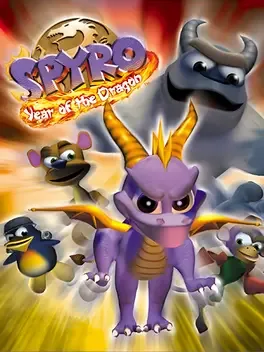
Spyro: Year of the Dragon Review

 (Originally published to Glitchwave on 6/27/2025)


[Image from igdb.com]


Spyro: Year of the Dragon

Developer: Insomniac

Publisher: SCEI

Genre(s): 3D Platformer

Platforms: PS1

Release Date: October 25, 2000


The Spyro series just seemed to shine brighter with every subsequent entry. Like the progression of a satisfying orgasm, Insomniac’s 3D platformer series starring a plucky purple dragon grew increasingly better and better as it pressed onward. This incremental build-up of increased quality culminates in Spyro: Year of the Dragon, the third entry in one of the original PlayStation’s answers to competing with Super Mario 64 and other early, kid-friendly 3D platformers of the same ilk exclusively on the N64. With the hindsight of two games under its belt, the Spyro series used the layers of experience gathered to further the refinement process that had been a focal point of the second game’s development. By stacking onto the series' successes and reconfiguring all of its failures, Spyro: Year of the Dragon became the Return of the King of third entries in gaming. This second sequel towered over its predecessors as the pinnacle of not only the series but 3D platformers in general. Spyro: Year of the Dragon was the game that was finally exemplary enough to make everyone ask, “Mario who?” and usher in Sony’s indomitable reign of console market supremacy.
…
Alright, did I actually fool someone with my line of bullshit? Perhaps I’d bait someone with my opening paragraph if they either don’t understand hyperbole or have never read one of my reviews before. Even without drawing direct parallels to the course of the original Crash trilogy and how Crash Bandicoot: Warped was the ridiculous second sequel that streamlined the series and added too much stuff for the sake of preserving its appeal after two entries, everyone should know that every third and final game in any trilogy is guilty of implementing the same practices. Spyro: Year of the Dragon, of course, is absolutely not an exception to this rule. In fact, the bloatedness on display in Spyro’s third outing makes the kooky augmentations of Warped look reserved by comparison. You might be aware of the unfortunate pattern that plagues any video game series’ second sequel, but you don’t know the extent of it until you’ve played Spyro: Year of the Dragon.

Spyro: Year of the Dragon begins with an eggnapping, the primordial form of a kidnapping. A cloaked figure and her team of rhino creatures, who evidently have mole-like digging properties, ransack the Dragon Kingdom of its eggs literally out from under their noses, boldly taking them from their outdoor quarters as they sleep. Somehow, even after compromising their position by carelessly stepping on Hunter’s tail, the egg bandits still manage to escape from their little heist unscathed, even with tons of towering dragon elders on the scene. How useless is Hunter proven to be when these thieves outrun the innate speed of his cheetah birthright? The following scene, witnessed by series staple tutorial fairy, Zoe, depicts the cloaked figure handing an egg to a regal figure sitting on a throne of sorts. Judging by her commanding demeanor, we’re to believe that she falls on the tyrannical spectrum of rulers, and she does not have virtuous intentions with these dragon eggs. Naturally, the onus is on Spyro (and Hunter, I guess) to retrieve their stolen property one by one. The conflict that Year of the Dragon presents doesn’t have the clear aura of worry that Ripto’s Rage exuded with its premise. Still, the stakes of losing the entire newborn populace of an endangered species and the implications that the series’ new villain might boil em, mash em, and stick em in a stew like common potatoes should not bode well with either Spyro or the player.

Surprisingly, Year of the Dragon progresses forward by reverting a bit back to the practices of the first game. Namely, treating its collectathon format in the literal fashion of locating the whereabouts of the game’s main Macguffin strewn about the map. Like the immobilized dragon elders Spyro needed to find in his amateur adventuring days, freeing an appropriate number of eggs from captivity is what progresses the narrative. Once found, the little dragon tykes pop out from their eggs as what I can discern is a token of their gratitude, and each of them is already born with names that run the gamut of both male and female baby books. Yes, I even found a dragon that shared my name eventually. Besides the standby gems that serve as currency, the eggs are the sole collectible in Year of the Dragon, solving the issue presented in Ripto’s Rage when two primary collectibles started waging war for higher precedence. The eggs replace both the talismans and orbs simultaneously, rewards for trekking to a level’s main goal line, and the branching paths with other activities available. This way, the collectibles are far more concise and organized, and every achievement is of equal standing. I may still be wondering what I did to warrant a reward when I reach the end of any of these levels, as I did in Ripto’s Rage, but I’m at least no longer questioning the validity of what I achieved because there is another collectible to consider.

Year of the Dragon illustrates the importance of performing the bare minimum task of hiking to the other warp gate of each level because a representative from that level’s friendly NPC race will recognize Spyro’s “aid” and return the favor by crafting the airborne travel mechanism that will carry Spyro to the next realm upon completion. Each of these NPCs that Spyro converses with all shares a commonality of adorable chibi sizes, but they all greatly vary in shapes, designs, and silly accents. “Sunny Villa” has Roman bears wearing togas with Italian accents, the rabbits of “Dino Mines” all sound like Jimmy Stewart, the fireflies that illuminate “Spooky Swamp” all insist on uttering every line of dialogue as a haiku, etc. To interact with all of these adorable, kooky characters, Spyro must supersede the bare minimum of walking the linear path to the level’s other end. A condition of the eggs performing both halves of the two collectibles featured in Ripto’s Rage is that the player will need a certain amount of them to unlock more of the game’s content, as collecting the orbs once fulfilled. The amount needed is never too steep, and every single egg is accounted for when the game considers the totals. Again, I can’t stress enough how Year of the Dragon finally perfected the series’ collectathon process, melding the two attempts that weren’t quite right and hitting a bullseye with the fusion. Gathering up eggs like it’s Easter Sunday is both a smooth and varied excursion throughout, and I was relieved when the game didn’t suddenly erect a brick wall at the finale to halt my progress like hitting a moose dead-on with my car.

Many eggs can be uncovered while taking the stroll to the level’s exit gate, which can vary from sitting pretty in the grass or inconspicuous heights and corners that require an acute knowledge of the level’s layout. The main collectible even invites the cheeky, cloaked egg thieves to return after their absence in Ripto’s Rage, engaging the chase sequences from the first game that were actually enthralling. Still, a sizable percentage of them are obtained through completing “side quests” that involve mechanics outside the gliding, jumping, ramming, and fire-breathing maneuvers regularly used on the field. In Ripto’s Rage, orbs were earned by completing these secondary objectives located outside, around, and or beyond the linear trek to receiving a talisman. Finding the NPC who gives Spyro this condition to earn an orb required keen exploration in and of itself, exposing the rich layers and details present in each level. It’s a tad disheartening that Year of the Dragon forgoes the organic symmetry of combining the main path with the notable destinations in favor of implementing portals with loading screens, but ultimately, HOW some of the eggs are earned through these auxiliary escapades that smack of tired third entry syndrome. Vehicles are an alternate means of gameplay that were an element to earning a few orbs in Ripto’s Rage, most notably the trolley segment in “Breeze Harbor.” Year of the Dragon recognizes that a dragon living a storybook fantasy realm, hopping onto a mechanical marvel and riding it, is a knowingly unfitting deviation from his innate abilities, but the ironic humour of such a scene wears thin when it occurs far too often for comfort. The Egyptian-inspired “Haunted Tomb” features a tank battle between Spyro and four other heavily-armed combatants, and the rigid dodging controls with the other tanks firing shells from all angles make victory in this BattleBots match in favor of whoever pleases RNGesus. I refused to even humor the second round, where there are ten goddamn tanks in the arena all at once. The tank that skids through water isn’t any more fluid (no pun intended), and neither is the one that hovers about in the air. Really, the zenith point of ridiculousness regarding Year of the Dragon’s penchant for accelerating Spyro’s movement with a contraption is the plethora of skateboarding sections, setting Spyro in a skatepark while Hunter judges his skills from a distance. Yes, to spruce up the series’ gameplay after two entries, Spyro emulates Tony Hawk of all things. During these sections, I found myself pedantically mulling over the fact that Spyro isn’t (and physically can’t) accelerate the board’s movement with his legs, but the true issue is that hopping off of a ramp or flying upward on an incline tends to be incredibly unresponsive. Cowabunga, dude? Hell nah. As for how this third entry condescendingly dilutes its attributes for accessibility’s sake, as they tend to do, the speedways, a staple of Spyro that always proved to be a competent means of offering an alternate mode of gameplay, are unfortunately dumbed down due to their compact design. Sparx even expresses his lack of confidence in Spyro by suggesting the order in which to tackle the four categories. Bite me, you glowing bug.

To compound on the prevalent annoyance and or rank silliness that smudge Year of the Dragon’s “side quests,” many of them are also exclusively allocated to sections where the player controls the game’s four other playable characters. Gee, with Spyro’s new friends from Avalar congesting the screen at every other moment in Ripto’s Rage, who could’ve guessed that its follow-up would clutter the game with even more characters? I’m so used to composing at least one paragraph dedicated to what I call “Sonic’s shitty social circle” when discussing many of the blue blur’s 3D titles, and now, I can swap Sonic for Spyro (without ruining the alliteration in the title at that), and my scorn is just as applicable. In addition to conducting the toll-like progression impediments littered throughout the land, the Scroogelike scoundrel Moneybags has tacked on selling the prisoners of the main antagonist as another scheme to gain more profit. The legalities of this practice aside, once Spyro pays their ransom, sections involving each character’s set of unique skills are unlocked for the chance of gathering more dragon eggs. Sheila the Kangaroo’s superhopping ability is the most appropriate for a platformer, but she lacks the grace of our purple protagonist. A flying penguin causes my persnickety nature to flare up again, but the true complaint I have regarding “secret agent” Sgt. Byrd is that his sections tend to heavily restrict his ability. The only exception to this is letting him free-roam to collect bones in “Enchanted Towers.” Bentley the Yeti is the powerhouse with his giant icicle club, but the developers should’ve made his sections more methodical, considering how many big blocks he moves to use as platforms and his unexpectedly articulate personality. He’d evidently make for a better puzzle-solver than a boxer, that’s for damn sure. Lastly, mad monkey Agent 9 offers shooting gameplay in both the third and first-person perspectives. The time playing as Agent 9 conjured up many unpleasant memories of times when Banjo cocked Kazooie like a gun in Banjo Tooie, and firing lasers as this space-suited simian was equally as mismatched and demanding. Similar to any instance of Spyro piloting a vehicle, the other playable characters are testament to the fact that variety isn’t inherently an enhancement to preserve the player’s attention.

I suppose boss fights count as an alternate means of receiving eggs, considering that one is earned upon defeating one, just like all of the tasks that unlock its availability leading up to it. It’s no secret that the Spyro series once struggled immensely in this department, and Ripto’s Rage corrected the first game’s baffling mistake of narratively weighted chases with foes that are fought with health bars like typical boss battles. Like learning to ride a bike, Year of the Dragon doesn’t forget how to craft adequate milestone baddies from the exceptional example that Ripto’s Rage laid out. The magically mutated trio of Buzz, Spike, and Scorch are all fine multiphased fights that conclude each realm nicely. Year of the Dragon even doubles the selection of bosses by offering one tucked away in a level per realm, and these duels of lesser narrative stature are equally as involved as the mandatory ones, especially the twin dragons of “Fireworks Factory.” I even like blasting the mechanical shark Bluto in the circular pool arena in “Seashell Shore,” despite having to use the clunky speedboat that fires the ammunition. Still, all of my complaints regarding the various vehicles culminate to a blood-boiling degree with the final boss of the Sorceress, in which every conceivable vehicle is dropped onto the stage as the only means of blowing off chunks of her health bar. Even her true final fight en route to the game’s full completion heavily involves using the hovercraft to shoot down her saucer. It’s hardly as epic as finishing off Ripto, and it proves to be far more of a headache.

On top of both of her gimmicky final fights, what also bothers me regarding The Sorceress is that she’s practically a non-entity in terms of her role in the overall narrative. Sure, she’s the one pulling the strings of the egg-stealing operation, but her idle position of making commands from the comfort of her throne hardly matches the vigor of Ripto, seizing Avalar district by district on the backside of Gulp like an insidious imperial general. The only character in Year of the Dragon that is an active force of antagonism is Bianca, the blonde bunny who stole the eggs and occasionally attempts to cause Spyro grief on his mission to recover them. Inherent subordinate status aside, the fact that The Sorceress scolds her during every interaction and that Spyro and Hunter charitably help when her lack of finesse in witchery becomes a liability to herself, it’s obvious that she eventually defects from her lackey role to join Spyro on the side of heroism. When she does become another member of Spyro’s “team,” all the game does is relegate her presence entirely to a B-plot with Hunter. In fact, these two interact with one another so much that it blooms into a romantic relationship, in which Spyro laments that “another noble warrior falls victim to the plague of love.” Damn, Spyro, two adventures were enough to transform you into a jaded curmudgeon, eh? Is this a Charles Bukowski quote? Anyways, without a solid antagonist, the conflict turns flat and starts to evoke feelings of picking up one’s scattered trash after a bad storm blows through, like rescuing the dragon elders in the first game.

Forget what I said about Crash Bandicoot: Warped exemplifying all of the unsavory hallmarks of a third entry trying to reinvigorate a weathered franchise. Two years later, its younger brother on the PS1 caught up and really showed Naughty Dog how to masterfully bloat a series like a stomach after too much Taco Bell. I’m almost convinced that Insomniac was totally aware of the trappings of a third entry and unabashedly embraced the inevitable. How else do you explain aspects such as skateboarding or the influx of playable characters that aren't Spyro in the slightest? They are such prevalent forces that drive Year of the Dragon, creating a diversion like a younger sibling screaming loudly to distract their parents from noticing the older sibling stealing snacks from the pantry. In this context, all of the new additions serve to distract the player from noticing how Spyro’s gameplay has barely been innovated on in any profound manner. Still, I suppose even with all of Year of the Dragon’s messiness, it’s a more resonating Spyro experience than the rough template of its first outing. Still, in making this statement, I realize that it's another checkmark on the scorecard of Year of the Dragon’s third entry proclivities that make it the archetypal game that rounds off a trilogy…for better or for worse.

Monday, September 22, 2025

God of War II Review

 (Originally published to Glitchwave on 6/24/2025)


[Image from glitchwave.com]


God of War II

Developer: Santa Monica Studios

Publisher: SCE

Genre(s): Hack 'n Slash

Platforms: PS2

Release Date: March 13, 2007


Ah, so here’s where the God of War series garnered so much of its acclaim. I can’t say I’m too surprised. It should be the rule of thumb at this point that the first video game sequel is primed to be the exemplary entry of any franchise, a reflection on the finished product of their initial image that improves upon the untested template with a healthy mix of hindsight and critical feedback. Unlike films whose sequels often falter due to the medium’s inherent overreliance on using its narrative and characters as its substantial backbone, the interactive elements of video games, intermingled with the same components of film, add a broad layer of properties that allow more room to expand on and produce a smoother product with tweaking and reconsideration. One could argue that the narrative arc of the haunted Spartan warrior came to a satisfying conclusion at the end of the first game when he accomplished his absurdly daunting mission of annihilating Ares and dismantling his position on Olympus as the distinguished “God of war,” even though the air of dissatisfaction on Kratos’ part suggests that there are diminishing returns to his achievement. From a gameplay standpoint, however, concluding God of War with its initial outing would’ve shown a blatant showing of laziness or delusion from the developers, implying that everything was hunky dory. Inappropriate platforming mixed with strictly and cheaply implemented QTE combat sections hardly constitute the definition of a modern gaming masterpiece in my book. Giving the developers the benefit of the doubt that these shaky attributes aren’t self-conscious decisions that they deem as integral to God of War’s gameplay core, a sequel grants them enough opportunity to amend their mistakes and crease those oily hinges. Only by doing so will they create a follow-up that wins over the one percent of gamers (me) that weren’t convinced of the first game’s seemingly unanimous adulation. Did the finished product of God of War II placate me enough to a degree where I’m echoing its praises all the way to the heights of Olympus? For the most part, yes, but something is still bothering me that keeps me from boarding the God of War hype train.

God of War II begins immediately on the frame that ended the previous game, which is Kratos sitting with a stare of discontent on the former throne of Ares. It’s the most I’ve ever seen someone pout upon receiving a promotion, but then again, he never even applied for the position in the first place. One might wonder how controlling Kratos will fare this time around, considering that he’s now a divine entity with the powers of both immortality and gigantism at his disposal, but the enhanced Kratos is only witnessed from a voyeuristic point of view in the game’s opening cutscene. Kratos is still a proud Spartan at heart, so it behooves him to stand (literally) tall beside them in battle against the ancient Greek city of Rhodes. Considering that the Gods are intended to act non-partisanly over all civilizations that reside in the Mediterranean country, Zeus, the head honcho of Olympus, intervenes on Kratos’ attempts to tip the scales of battle in the favor of his homeland by sapping the newly-appointed deity of his holy divinity. Channeling the last drop of his godly abilities into powering the fabled Blade of Olympus, Zeus arrives to fatally plunge the sacred greatsword into Kratos’ vital arteries as punishment for his insubordination. In addition to slaying their allied juggernaut, Zeus extends the punitive measure to erasing the entire Spartan army off the map with a cataclysmic blast of energy, a decision that is certain to tick Kratos off, to say the least. Once he escapes from the clutches of the Underworld for the second time, Kratos collaborates with the Titans, another formidable faction of the ancient Greek mythos, to take revenge against Zeus for both his transgressions against our protagonist and the God of Thunder’s betrayal of the Titans during his pre-Olympian era. The only feasible way of sticking it to a God of Zeus's unparalleled stature is for Kratos to locate the whereabouts of the Sisters of Fate, a trio of time controllers whose specific abilities will prove paramount to at least penetrating the defenses of the almighty king of Olympus. If you thought the notion of killing a single God was preposterous, Kratos must be off his fucking rocker if he thinks he stands any chance of vanquishing THE grand poobah of Greek Gods himself: the chairman of the most esteemed board imaginable. His unabating anger must be fogging up all traces of rationality like a four-way street intersection in Silent Hill. Still, Kratos’s insane ambitions raise the stakes of the game’s narrative as any solid sequel ideally should, prompting it through Kratos’s on-brand qualms with the higher powers and his punk rock defiance. No wonder the developers made him bald.

Journeying to the sororal domain of ancient Greece’s time bearers is sure to be as strenuous a trek as uncovering Pandora’s Box in the first game. I mostly use “strenuous” as a means of describing the lofty scope of the mission, fitting for the Greek epics of yore that serve as God of War’s conceptual foundation. However, the adjective could also pertain to its level of difficulty from a player's standpoint, seeing how arduous select moments of the first game proved to be. The first game might have suggested to the player to lower the game’s combat difficulty whenever Kratos meets his untimely demise numerous times in the same scene (and it still does here), but most of the struggles that triggered these post-death pop-ups stemmed from the egregious platforming challenges. I compared Kratos to Mario when poking fun at the bevy of jumping the “ghost of Sparta” was forced to perform, but considering how many of the first game’s platforming involved balance beams, the developers wanted their burly murderer to emulate Simone Biles–an even more hilariously mismatched comparison, for sure. That one vertical climb in the Underworld has made me irrationally upset at any tall architectural structures, ranging from lighthouses to silos–whose outer walls ideally shouldn’t be scaled either. When I encountered another section in GOW II’s prologue that required Kratos to carefully tiptoe across, I wanted to scream out a NOOOO as emphatically as our protagonist must have uttered when he accidentally slaughtered his wife and daughter. However, I found this particular balance beam section to be agreeably smooth, as Kratos never slipped and dangled from its side on account of my lack of perceived precision. As the game progressed, I found that the developers had forgone their favorite form of acrobatics in favor of agile feats that better suited their protagonist. GOW II’s prevalent, distinctive platforming mechanic is the chain swing, latching onto fixtures and a series of stalactites to propel Kratos onward and upward like Indiana Jones using his whip to cross a chasm. Unlike many of the mechanics in God of War that involve an extraneous roulette of button combinations, all the player has to do to execute this maneuver is look for the R1 trigger and jump whenever they feel confident that Kratos will swing to the desired destination. They can also hold down another button to gain momentum if deemed necessary. Returning alternative means of platforming on the route to the Sisters of Fate seems to be steeped in wall climbing and rope crawling, both of which carried little to no serious complications. For standard platforming instances, all of the awkwardness regarding Kratos’ questionable jumping abilities can be course-corrected by the wings of Icarus, sprouting upon leaping in the air twice to glide for a short while. Admittedly, this nifty extension isn’t available until over halfway into the game, but only then will there be platforming feats that require its use. Overall, Kratos generally feels more adroit than in his last appearance, which resolves one of my biggest grievances regarding the properties of the previous game. Still, with Kratos’ newfound nimbleness, why couldn’t there have been more balance beams integrated with all the game’s other platforming facets? It’s better to be safe than sorry again, I guess.

Despite Kratos exhibiting a smoother aerodynamicism, the brute will initially still feel less capable from a combat standpoint in lieu of Zeus stripping him of his powers like a parent taking away their child’s electronics. Accumulating auxiliary powers to accompany the dueling chain blades was an earned process through progressing the game, and the player would probably feel cheated if Kratos was still hanging on to yesterday’s set of skills. Fortunately, GoW II offers a whole new slew of secondary tactics to use in massacring all the notable creatures that encompass the ancient Greek lorebooks, and incrementally receiving each of them per progression milestone is sure to garner those warm feelings of gratification once again. Still, that sense of achievement might be undermined by the fact that many of Kratos’s magic powers are quite similar to those he already possessed before they were discarded, like Samus’s suit upgrades. “Typhon’s Bane” is a magical bow and arrow combination that functions as Kratos’ long-ranged means of offense as “Zeus’s Lightning” once did, but I suppose it would be counterintuitive for Zeus to aid Kratos again, considering that his surrogate son is on a murderous warpath with him as his primary target. I’m convinced that the developers did a Google search on gorgons solely for the purpose of not reusing Medusa’s head as the tool that infamously immobilizes enemies into stone. Now, it’s her sister Eurayle’s hideous, decapitated head that Kratos flashes to enemies like an obnoxiously bright searchlight to then quickly smash them into rubble. One could argue that “Cronos’ Rage” is a severely diminished version of the absolute typhoon of electricity that was “Poseidon’s Rage,” but the smaller scale of the elemental attack depletes significantly less energy. Because of the comparative cost-effectiveness of this paralyzing electrical burst, I now use it practically as a crutch to render enemies as vulnerable as little lambs when they convulse wildly. Admittedly, the only semblance of originality between the foursome of magical moves here is the “Atlas Quake,” where Kratos stomps the ground with such ferocity that the impact of his foot fractures the Richter scale. As for the alternate melee weapon that can serve as substitutes for Kratos’ trademark chain blades, GoW II offers two distinct blunt instruments if one isn’t enough to make them defect from the series’ traditional means of combat. The barbarian hammer is a whopping tank of a weapon that makes any heavy-duty sledgehammer look ineffectual by comparison. Still, I prefer the “spear of destiny” that Kratos dislodges from the neck hole of a deceased griffin because the sharper, narrower utensil proved to penetrate the stubborn enemies that constantly block, whereas the other two fail to make a dent in their defenses. If all else fails, Kratos’ rage meter can now be triggered at any percentage point instead of needing to be full to activate. There are now also yellow energy pellets found in tandem with the health and energy ones that specifically charge the meter, so Kratos never has to wait long before unleashing his unbounded fury upon all that oppose him, and never flinches when stacking a combo chain. Or, they can reduce damage more organically by mastering Kratos’ counter move, which then channels the hazard intended to harm into a destructive energy he can volley back to them. Some may decry that Kratos’ move pool here is more shallow than what they’re already accustomed to, relating to either their derivativeness or less severe offensive output. However, I enjoy the fact that these powers have been subdued compared to their first game counterparts because it allows them to complement the chain blades instead of chugging through Kratos’ magic trying to substitute them. As a result, there is a synergy between all of the tools in Kratos’ arsenal, and combat is overall smoother and better defined.

But not all of God of War’s attributes required considerable revision; otherwise, I believe that more people would’ve been more critical towards it during its initial launch. If there is one aspect of God of War that is unquestionably the series’ continual tour de force, it’s the awe-striking spectacle fit for the grandiose Greek epic at its narrative and conceptual core. While the cinematic techniques of letting the developers’ keen eye direct the course of action are equally as prevalent in maintaining the scope of the spectacle at play here, what preserves its effectiveness is the fresh batch of settings and backdrops to marvel at. A trend I noticed regarding GoW II’s areas is that they seem to be more diverse than those of the first game. On his way to his destination with detours galore, Kratos will find himself in the grassy, damp “Bog of the Forgotten,” an ominous swamp that houses a temple in the catacombs of its thick layers of unkempt herbage. The flowing lava surrounding the mighty titan of Atlas may not be as sublime as the blood-red stream of the Underworld, but I prefer that the cavernous insides of the colossal creature arouse a feeling of exploration instead of crippling anxiety. “Typhon’s Cavernous Prison” is a glimpse into a snow-oriented area due to its high elevation in a mountain range, and the dimmed lighting inside the “Loom Chamber” aids in effectively exuding a sense of danger and wonder that simultaneously impresses the player and gives them the heebie-jeebies. Riding through the skies on the renowned flying horse Pegasus is practically the closest God of War will create something that can be classified as a “vehicle section,” snatching other winged mythical creatures with the chain blades while soaring majestically past the dense, blinding clouds. If I had to pick one sight and or setting whose spectacle induced that single-tear shedding moment, it would be hopping on the backsides of the “Steeds of Time,” marveling at the immensity of these equine architectures overlooking the gorgeous late afternoon sun over the horizon. Walking on the kilometer-spanning chain that connects this trio of animal-themed uber vessels from the “Temple of Lahkesis” is also a scene to behold because the camera shifts in front of Kratos to frame both the length of the chain and the distance between the two solid support foundations in a captivating wide lens shot. The bombastic cinematic flair matched with the apex of sixth-generation graphics definitely made the PS2 sweat like a sauna, but working the second Sony console to its breaking point was worth it to render a polygonal presentation of this caliber.

Maybe the reason why areas that comprise the narrative trajectory of GoW II seem more varied is due to the game pacing itself being a tad more tactful. Gone are the lengthy swathes of keeping Kratos in the same area for what feels like an eternity, and the fact that the sequel here trades what I call “panic puzzles” for more methodical brainteasers akin to those in a Zelda dungeon means that the player is less likely to be trapped in a maddening, Sisyphean loop attempting to overcome the same challenge. Perhaps areas feel more defined because there is a consistent streak of boss battles serving as solid progression points. It’s almost baffling how few significant foes were present over the course of the first God of War, and each of the three titanic tests of Kratos’ strength and dexterity was agonizing and bloated in its own particular ways. When GoW II multiplies the number of bosses from the first game in spades, every single one of them is surprisingly far more fair and functional on the player’s part as opposed to the excruciating duels subjected to them previously. Among all seventeen of these notable figures across the vast Greek mythos, I’ve discerned that they are all grouped in distinct categorizations. Similarly to the aforementioned Icarus, whose distinguishing wings Kratos plucks from his backside like rooting turnips from the earth, Kratos will be accosted by a series of other Greek legends whose tales are chronicled as fastidiously despite them being mortals juxtaposed with arcane creatures and Gods in the same pantheon. Theseus smugly, and stupidly, downplays the wrath of Kratos when he challenges the bald beast on the mast of one of the steeds, summoning the minotaurs he’s famous for slaying as assistance while he pelts Kratos with magic from above. “The Barbarian King” confronts Kratos once again after Ares infamously thwarted the man’s first opportunity to smash his head in like a pumpkin with his comically-sized hammer, and now he has the elevation and speed of being on horseback as advantages. He’s admittedly a figure fabricated by the minds of the developers, but he shares a similarity with the array of Greek legends in that they prove to be worthy opponents even though they stare down Kratos at the same, comparatively diminutive eye level. However, my kudos gets thrown out the window with Perseus, a whelp of a man whose ambition to conquer Kratos is laughable. The Kraken shares the behemoth size of the first God of War’s bosses, but all of my grievances with this feared pirate consumer are trivial nitpicks, such as the fact that there is no water to be found in his battle arena, and his face is far too personable for a grotesque sea leviathan. The Sisters of Fate can certainly be categorized by their blood relations, and they all offer distinctive battle attributes that equally engage the body as well as the mind. Still, two of the three sisters fall under a prevalent subcategory of bosses that showcase an alarming amount of nudity. Don’t get excited, dear reader, for Gorgon queen Eurayle is every man’s catfishing nightmare, and Clotho is like the Great Mighty Poo if the garganuan mass of excrement were covered from head to toe in mammary glands. It’s a sight that risks premature erectile dysfunction for any young, impressionable male players. Still, no matter the categorization each boss could potentially fall into, they all consistently offer a nuanced blend of combat and puzzle-oriented weak spot detections that never overstays its welcome or relies too heavily on button prompt sequences to automate the action.

So far, I’ve done nothing but commend GoW II for directly fixing all that I found fault with Kratos’ initial adventure. However, despite the glowing praise I’ve bestowed upon this sequel, there is still a revolting turd that the developers forgot to remove from their punchbowl. Of course, I am referring to the *fucking quicktime events,* God of War’s favorite method of manufacturing accomplishment with brainless button pushing. While my complaints still inherently stem from their overall inclusion, I have to admit that my least favorite aspect of God of War is at least more agreeable than they were in the previous title. QTE sequences no longer require the absurdly acute reflexes of a jungle cat, allowing the player to comprehend which button to press in a reasonable timeframe. While the button-oriented QTE sequences prove to be more lenient, any of them involving the analog stick are unfortunately just as inflexible, if not even more so, than they were in the previous game. Believe me, I rotated the rubbery control unit 360 degrees as gracefully as a figure skater, but the game still wasn’t satisfied with my attempt and punished me for my lack of perceived accuracy. I couldn’t execute a gorgon enemy in its weakened state for the life of me due to this quicktime requirement, so I always decided to hack at its lingering lifeforce to save myself the trouble. The QTE prompt may crumble to signify the player’s failure now, but I still need a clearer indication of WHAT I did wrong, in addition to informing me that I’ve failed. Unfortunately, even the button-oriented QTEs that I had foolishly begun to trust had reverted back to their former state of strictness during the game’s climax, where a reinvigorated future Kratos reverts the Sisters’ clock to demand a rematch against the Greek God patriarch Zeus. After several tense phases of swiftly dodging Zeus’s thunderous fists and absorbing his lightning with expertly-timed counters, Kratos realizes that, once Zeus enlarges himself again, besting the big man with brute force may not be a winning strategy. In a clever plan to lower Zeus’ guard, Kratos lowers his arms and submits defeat, which leads to Zeus shrinking and brandishing a blade above Kratos’ neck as he gestures a ritualistic execution. In order to prevent Zeus from smiting Kratos with a downward blade swipe, Kratos will counter only if the player presses the correct controller button that flashes on screen. The problem is, the window to press either one of four buttons is so skeletally slim that the player practically has to freeze-frame it like they’re analyzing the Zapruder film. In addition, the player must continue to pause this cutscene in order to ideally catch the following QTEs that commence Kratos violently plunging the Blade of Olympus into Zeus with a vengeance, rapidly blinking like the player has just accidentally squeezed lemon juice into their eyes. I understand that Zeus should serve as the pinnacle of challenges in this game, which is stacked with a staggering number of them, but this is the absolute worst direction to take to ensure that the father of the Gods will inflict the harshest punishment on the player. Did proficiently avoiding all of his firepower beforehand not prove to be ball-busting enough? Inexcusable.

I’m starting to think that my memory has failed me regarding the timeline of God of War’s legacy. I was confident that the gaming community lifted the series to the echelons of gaming’s greats as soon as the first title, but I’m beginning to believe that my recollections are hazy. With all that God of War II directly improves upon its predecessor, I’m now almost certain that 2007 is when Sony’s bloody homage to the classic Greek mythos became a contender for gaming greatness. I, myself, am so impressed with the various enhancements and changes on display that I’m now drinking the Kratos Kool-Aid, which probably kicks like Dave’s Insanity Sauce, knowing the figure fronting it. Still, I’m not guzzling it to the point of drunkenness like many other gamers, for no game that uses QTEs in this fashion should be considered for gaming royalty. Still, they’re not brazen enough for me to put the series’ legacy into contention as they were in the first game. I couldn’t appreciate the spectacle of the first game because it was beating me half to death with erroneous attributes. Now that they’ve mostly been ironed out, I give the God of War experience a round of emphatic applause.

Star Fox 64 Review

 (Originally published to Glitchwave on 2/9/2026) [Image from glitchwave.com ] Star Fox 64 Developer: Nintendo Publisher: Nintendo Genre(s):...