Thursday, April 10, 2025

Pokemon Ruby/Sapphire Review

 (Originally published to Glitchwave on 3/11/2025)


[Image from glitchwave.com]


Pokemon Ruby/Sapphire

Developer: Game Freak

Publisher: Nintendo

Genre(s): JRPG

Platforms: GBA

Release Date: November 21, 2002


The third Pokemon generation ideally should've been the period where my nostalgic fondness for the franchise is rooted. Surprisingly enough, however, the then-current era of the series during the pinnacle of my Pokemon obsession as a child was met with hesitation and indifference. Even though I was introduced to the series in 2003, the courier guiding me through the Pokemon phenomenon was my older cousin, who was old enough to have been acquainted with Pokemon in its classic era. Initial exposure via personal interactions is a more effective method of influence than commercials or hype-driven word of mouth that I was no doubt ignoring with the third generation of Pokemon. Because the first two Pokemon eras were my introductory point to the franchise, I, like the seasoned fan my cousin was, scoffed at Pokemon Ruby/Sapphire. In stating this, my apprehension in giving Ruby/Sapphire the time of day was not due to social pressures. Like the typical child, I was vehemently opposed to change. Ruby/Sapphire was not another extension branching from the original Pokemon era like Gold/Silver was. Rather, it forsook the old guard entirely in favor of new implementations. It didn't help that the anime series also adopted the same ethos of starting anew when Ash finished his Johto quest and began his adventure in Ruby/Sapphire's region with a whole new cast of secondary character accompanying him, which meant that every bit of new Pokemon content was catapulting me out of my comfort zone. After picking Pokemon back up ten years later (which was ten years ago now) as an adult and proactively experiencing all of the Pokemon generations I had glossed over, I've come to find that Pokemon Ruby/Sapphire is a testament to the fact that change, for a lack of a better term, is good.

Even though Ruby/Sapphire features a plethora of elements unrecognizable to returning players, the adventure arc of a small town boy progressively becoming “the best that no one ever was” still drives the Pokemon narrative. The potential Pokemon champion in the making now resides on the island nation of Hoenn, and is newly a resident of the tranquil burg Littleroot Town along with his mom. Conveniently enough for an eager, up-and-coming pokemon trainer, a pokemon professor resides in the same zip code along with his laboratory where three new starter pokemon are being exhibited. Shifting the lineup of starter pokemon was already a unit of change that genwunners had to cope with in Gold/Silver. Still, at least the dynamic of opposing elemental types between the three starters had been preserved with Gold/Silver’s selection, and that pattern persists in Ruby/Sapphire. Representing the grass typing is Treecko, a little green gecko who chews a blade of grass in between his sly smirk of confidence. The adorable orange chickadee Torchic is Treecko's elemental contrast, a chicken with an extraordinarily fiery spice level like Korean barbeque. Torchic’s opposing force of nature is Mudkip, modeled after an obscure amphibian known as an axolotl. They’re certainly real, but they’re usually not colored blue like this precious mud salamander. As adorably winsome as these three are in their youthful states, the developers have amended the mistakes that were made regarding the Johto starters. Through evolution, the Hoenn starters transform from delightful little dumplings into some seriously awe-inspiring powerhouses by their final phase. I don’t claim to out fox any pokemon professor in the field of biological research, but I detect that it's the fully evolved starter pokemon’s dual typings that elevates their fighting prowess. Swampert is equally as adored as its pipsqueak self for perfecting the exquisite water and ground fusion that Wooper and Quagsire conceived. As long as the player minds its severe allergy to grass like a proactive parent, their Swampert will cause them to laugh maniacally at every electric pokemon’s attempt to shock them to no avail as it retaliates by earthquaking their health bars to nothing. I love Swampert as much as the next guy, but Torchic’s final form, Blaziken, is an immaculate, majestic beast with no proper imitators to speak of. Blaziken kicks a metric shit ton of ass, and it's the secondary fighting type property that takes this statement to literal territory. Just Blaziken’s design alone with its glaring color scheme and battle stance that’s as upright and disciplined as a mythical martial arts master compels me to ink it somewhere to immortalize its bodaciousness–either on my body or on a wild party van caravaning around the country. Blaziken is ten times cooler than Charizard, and I’ll take all the flack that I’m bound to receive for this opinion with stride. I hate to bag on the grass starter as plenty of pokefans are prone to do, but Sceptile is admittedly the weak link in this roster due to sticking to its one elemental designation throughout its life cycle. Still, its zooming agility and suave demeanor runs circles around several starter pokemon from any other generation both literally and figuratively. The trio of pokemon parting gifts here are without a doubt superior to the ones offered when beginning one’s journey through Johto, but I will boldly claim that Hoenn’s starters outclass the original three. One simply can’t deny their outstanding appeal in both design and battle properties even if they’re loyally fixated on the classics.

While I was perfectly comfortable with restocking the grass, fire, and water starting selections, Pokemon Ruby/Sapphire made me distraught when it decided to omit the vast majority of the pokemon that appeared in the previous two generations. Only a modest selection of Kanto and Johto’s pokemon aren’t endemic to their original regions. Students of karate will still likely have Machop or Machoke as their buddies in brawn, and Koffing and Grimer are still a pollutant pair of poison pokemon, signifying that Hoenn is experiencing the same consequences to overindustrialzation. The player will still reel up Magikarp and Goldeen while fishing, and the toxic jellyfish Tentacool remains a likely encounter while surfing. When spelunking through any of Hoenn’s caves, guess which eyeless, two-toothed bat will dive from the ceiling to confuse the player’s pokemon at a maddening rate? You guessed it. Pokemon such as Natu/Xatu and Marill/Azumarill can also be found in Hoenn so Johto’s contributions to the Pokedex haven’t been forgotten either. While the returning pokemon slightly curb my sentimentality, the paltry number of familiar faces was not enough to placate my childish sensibilities. Two decades later as an adult who has adopted mature-minded concepts such as restraint and avoiding oversaturation, I can firmly state that the 135 of Hoenn’s native creatures are just as exemplary as Professor’s Birch’s starting selection.

I’ve also conceptualized an understanding that Pokemon should be analyzed and appreciated for more than their superficial design qualities, but the creatures that roam around the nation of Hoenn are simply too visually striking to gloss over their physical allure. The glamorous Gardevoir and the “fairer Gyarados” Milotic are the first two pokemon I’d classify as beautiful, although I have to interject that applying this adjective does not mean that I am sexually attracted to either of them. I hate that the fanbase has made me resort to disclaiming that. For those who are more entranced by the ferocity of the older pokemon I compared Milotic to, Hoenn features a myriad of intimidating pokemon that will make any opponent quake and quiver in fear just by glancing at them, much less fighting them. Shiftry is a long-haired tree nymph with a glaring look of malice, the cactus Cacturne is as if the desert vegetation was possessed by the spirit of a serial killer like Chucky, and I don’t think it’s necessary to give a detailed description to the razor-toothed shark Sharpedo to illustrate how terrifying it is to anyone. Exploud has pitifully mediocre stats, but one probably couldn’t detect that from its red eyes of pure anger and its gaping mouth that spans the diameter of a sinkhole. The first three pokemon that I’ve listed to highlight their fright factor also share a commonality in that they are all secondary dark type pokemon, a new elemental attribute that debuted in the last Pokemon generation just for Gold/Silver to treat the new breed of beast as an afterthought with their selective rarity. In Ruby/Sapphire, any player can obtain a pokemon of this shadowed distinction with the ashened pup Poochyena lurking in the grasses just outside of Littleroot. Other types that were a scarce discovery in previous Pokemon titles are also far more frequent with Game Freak’s new inclusions, such as Swablu and Trapinch evolving into the primary dragon types of Altaria and Vibrava/Flygon. Who would’ve ever thought that they could ever conveniently catch a pokemon that could evolve into this exalted elemental typing just by walking through the tall hedges along the main path? From a battle standpoint, several of Hoenn’s pokemon excel due to many of them having the potential to evolve twice. Aggron and Slaking are practically demi-legendaries from their immensity alone, and I’d discuss the merits of Ludicolo only if I wouldn’t get in trouble detailing its racy ethnic resemblances. Even the new pokemon that are averse to evolving like Absol, Zangoose, and Tropius supersede the lukewarm reputation that their categorization tends to have. The mischievous, diamond-eyed Sableye is even the first pokemon with no weaknesses, a promising pitch for anyone to include it in their posse. As a collective, the ratio of fantastically designed and mechanically imposing pokemon greatly outweighs the few unimpressive duds (Luvdisc, Spinda), more so than the esteemed first generation’s lineup and for the record, any batch of new pokemon since.

Unfortunately, the new slew of marvelous pokemon that reside in Hoenn are somewhat impractical from a certain standpoint. Sure, the influx of dark and dragon pokemon is a splendid gesture of innovation, but it's not as if common trainers are packing a plethora of psychic types or a deluge of other dragons in their pockets. Grass and water types will be found in abundance between sporadic field encounters and in trainer battles, which is why the lack of fire and electric pokemon in Hoenn will frustrate everyone. The sparse fire pokemon selection is confined to a steaming cave called “Fiery Path” where the player can encounter either newcomers Numel and Torkoal or the returning Slugma from Gold/Silver’s second quest through Kanto. Given that all of these hot pokemon are all modeled after a camel, a tortoise, and a goddamn snail, every battle scenario will automatically result in politely letting the opponent strike first like allowing someone to pass by on a road intersection. Add another point to Blaziken’s scorecard as the greatest starter pokemon to ever exist. Wingull and its evolved form Pelipper seem to be Hoenn’s most commonplace pokemon either in the wild or in the hands of miscellaneous trainers, plus the continued prevalence of Gyarados is more evidence that electric pokemon are more viable than their presence would dictate. If the player wishes to refrain from sticking to the classics with Magnemite and Voltorb, then the staticky canine Electrike/Manectric is the only suitable choice to engage with the profusion of water pokemon that a grass type can’t quite combat as effectively. Get the fuck out of here if you think you’re going to conquer any of these sea behemoths using either of the oppositely charged rodent twins, Plusle and Minun. While the overall roster of Game Freak’s 135 new creations are spectacular in their own right, only a few really thrive in this environment–a tragic oversight on Game Freak’s part.

Why are there enough grass and water pokemon across Hoenn to fill an arboretum and an aquarium? Well, it’s a formality based on how the region is designed. Similarly to Kanto and Johto before it, Hoenn is based off of the real Japanese region of Kyushu, the southernmost chain of the Asian nation’s islands. Considering that this area of the country is slightly closer to the equator, its climate can be described as subtropical. The grasses that encompass the region’s fields are thicker and wildly unkempt with more exposure to sunlight, and deep, open waters often comprise the routes between key destinations, docking on sandy beach shores after surfing for miles and miles. Hence, why grass and water type pokemon are so prevalent in Hoenn’s ecosystem. Overlooking the tousled valleys and crashing waves of sea water is a volcano that peppers its immediate surroundings with ash, and there is also a stretch of desert where sandstorms rage so turbulently that it's recommended to only traverse through it with a pair of goggles. In the northern part of the region where the climate is fairly moderate, people live amongst the towering, girthy trees like the Ewoks of Endor in Fortree City. Flowers are an organic and enterprising source of commerce in Hoenn, and berries can be plucked right from their loamy origins every few yards. In my summation, Hoenn’s topography is a marriage between California and Hawaii. In addition, Hoenn’s general atmosphere can also be compared to that of the two western, oceanside American states. The attitude exuded across Hoenn by its denizens is complacently laid back, comparable to that of a “surfer dude” if Dewford Town’s gym leader Brawly is any indication. Hoenn isn’t interested in competing with Kanto accelerating modernity and all of the stresses that come with its newfangled revolutions. Still, unlike with Johto whose tranquility stemmed from a commitment to preserving an unadorned traditionalism, Hoenn’s people exude a hippy-dippy vibe, where “siesta” is in their daily vocabulary and they’re conscious about their carbon footprint, but out of a legitimate concern for the environment and not to gain social capital with their neighbors. Is Oddish a common pokemon in Hoenn because the natives like to smoke them? I’m asking for a friend. Anyways, this sun-baked land of serenity is my choice pokemon region for all of the environmental qualities listed above. That being said, navigating between the urban destinations where the gyms are often located via a watery channel can get irritating due to its lack of defined borders and the constant torrent of invasive water pokemon.

Hoenn is certainly pretty and so are the majority of its native pokemon, but how does this picturesque Pokemon country contribute to evolving the series attributes as a sequel? The enhanced visuals that naturally come with the advanced GBA hardware compared to the GBC are a given, so I won’t wax poetic about the refined pixel art on display despite its attractiveness. In terms of Ruby/Sapphire’s mechanical innovations on what is now a defined, familiar formula, they are mild but admirable. Type-based immunity has always been a factor of Pokemon’s defensive components, using common sense to determine that ground attacks should not touch any airborne pokemon and steel should be impervious to poison due to the pokemon of that distinction not having any biological cells to infect. With “abilities,” a pokemon’s total invulnerability to certain attacks and status afflictions is extended based on their physicality. For example, Weezing’s secondary poison typing guaranteed it be decimated by “dig” or “earthquake” despite the fact that it hovers above all solid footing just like any flying pokemon. Thanks to the abilities feature giving credence to this characteristic with “levitate,” all that the sickly, purple series of tumors has to be cautious of now is weaponized psychosis. Ghost type Shuppet/Banette can’t be put to sleep due to “insomnia,” and Makuhita/Hariyama’s “guts” boosts its attack if it’s encumbered by any status afflictions. Not only will these distinctive attributes cause seasoned pokemon trainers to reconsider the elemental combat that they’ve likely honed to a science, it will also factor into another substantial change that Ruby/Sapphire debuts. If one sees two trainers standing so close to one another as if they’re sides are glued together, conversing with either of them will engage in a “double battle,” whose conditions are that the player must battle with two of their pokemon simultaneously. It’s a wonder how it took the third generation of the series for Game Freak to think of doubling the pokemon action. Nevertheless, a team effort for two different pokemon in one’s party expands the diameters of combat exponentially. Whereas having two active pokemon at once increases the potential for effective offense, it can also make one pokemon a liability depending on the other team’s arsenal of tactics. The player should also refrain from unleashing any sprawling offensive moves as they normally would in fighting scenarios, for the radius of the super move will likely damage their partner pokemon to varying circumstantial degrees. I don’t think my Camerupt ever forgave me for carelessly dousing it with my Crawdaunt’s “surf” once during a double battle. While a tag team duel with a pair of one’s pokemon party seems like an overlooked requisite finally coming to fruition, it’s a shame that I could probably count all of the instances where this kind of duel takes place on all of my fingers.

One addition to Ruby/Sapphire that augments the Pokemon experience is completely separated from the equation of battle entirely. If the player has grown numb from the highs of Pokemon conquest after three entries, Hoenn offers an alternative outlet for them to flaunt their expertise in the shape of pokemon pageantry. In a select few cities, an extravagant-looking building will be the domain where these pokemon contests occur, akin to something of a dog show. The judges will determine a pokemon’s gusto and superstar factor by a number of different qualities, of which the player can determine their inherent strengths in this department through a statistical menu completely separated from their battle properties. Natural beauty is obviously an advantage like with any contest of the sort, but a pokemon can also sway the judges into applauding them by exhibiting other characteristics like toughness and their composure if their appearance can’t make them swoon (a tough conversation to have, for sure). Honestly, I only know the general process of this irregular Pokemon event because the game never incentivized me to channel my inner overzealous housewife. I’m not saying that this surrogate showcase of a pokemon trainer’s aptitude has no right to exist or that I’m minimizing its intuitiveness. Still, the optional status of a very feminine-oriented mechanic in a series with a resolutely male-centric demographic is bound to generate nothing but ambivalence.

If practicing the catwalk with your pokemon doesn’t suit your fancy, Ruby/Sapphire still presents other distractions from the player’s ambitious goal to trounce the executives of the Pokemon League. “Rival” battles are yet again serve as a brief halt in one’s progress, but I use the term in quotes because the opposing trainers no longer carry any heated, contentious connotations. May is the canon name of the female protagonist who will periodically challenge the male protagonist throughout the game after starting their pokemon careers on the same day from their homespun town of Littleroot. Her penchant of pestering Brendan, the canon name for the male protagonist, seems less out of fierce competition for glory and more as an excuse to interact with him while he’s out on the town. Will any girls tell me if this puppy love dynamic is as endearing with the genders reversed? It probably isn't. The timid and reputedly anemic Wally is another character that fits the role of rival on a technicality, attempting to best the protagonist after he aided the capture of his first pokemon. Calling Wally a rival is laughable, and anyone who loses to this stuttering squirt should harbor an embarrassment equivalent to getting KO-ed by Glass Joe. Truly, the overarching rivalry B-plot of Ruby/Sapphire revolves around two feuding syndicates whose goals conflict with one another: Team Magma and Team Aqua. Depending on the version of the game, the player will either intrude on Team Magma’s plans to repave Hoenn with arid earth or Team Aqua from flooding the country to biblical proportions. One’s heart and soul might align with either the landlubbers or the scurvy-ridden sea scallywags but personally, I wish I could approach either of these Team Rocket substitutes from an impartial standpoint instead of being forced to aid one of them–complacently turning an eye to the batshit absurdity of the other’s mission. At least the climax of dealing with their nonsense results in potentially obtaining either Groudon or Kyogre, the legendary pokemon on each version’s box art.

Despite having to subscribe to one group's ecological insanity in order to stop the other, I felt that the Team Magma/Aqua subplot was of greater substance than that of Ruby/Sapphire’s main arc. Sure, the gratification of defeating the challenging elite four is still electrifying, especially since the champion Steven has the arachnid sentinel Metagross in his roster–who hits like a Mack truck and is completely unwavered by all status afflictions. Still, Steven himself is an unsatisfying champion to overthrow in the narrative sense because he bears little to no impact on the player’s growth as a trainer. The opulent mineral-enthusiast is present at many points in the player’s journey, but his helpfulness never suggests his role as a prime Pokemon contender in the ranks of Hoenn’s elite. Are we intended to be shocked when we open the ivory doors to the champion’s corridors and see Steven? The revelation doesn’t exactly hold a candle to seeing your rival seated in the proverbial throne room, the shitstain who has been antagonizing you that you’ve grown to despise. The closest resemblance to an effective Pokemon growth arc in Ruby/Sapphire comes with dealing with your Dad, Norman, who is the gym leader of Petalburg. Returning to one’s closest city to defeat Dad after such a feat was deemed improbable indeed carries the weight of maturation, but the fact that he’s the fifth gym leader instead of the last one, like looping around back to Viridian in Kanto, peaks this arc far too soon. Come to think of it, why couldn’t Norman have been the secret pokemon champion, hiding his prodigious title from his kid and then pulling the rug out from under them once they reached his domain? That would’ve been a dynamic punch to the gut.

I should’ve never let myself be guided into the Pokemon series by a genwunner. The third Pokemon generation that, by all logic, should’ve been my gateway into the series, considering the impressionability of my age at the time. I now realize it would’ve been the perfect generation to start imbibing Nintendo’s most potent drug. I’m now elated that Game Freak chose to discontinue the encounters of many already established pokemon, for the stellar selection of new ones wouldn’t have had room to breathe with them clogging the space. That space in question, the region of Hoenn, is so inviting with its lovely geography that it’s worthy of a vacation destination in an ideal realm of feasibility. If anyone has managed to elude the Pokemon phenomenon and is curious, I can’t think of a better introductory point to the franchise than Ruby/Sapphire. However, for veterans of the franchise, it’s a bit underwhelming in many aspects. The repeated progression without too many substantial ways of mixing it up indicates that the series is now stewing in its own idiosyncrasies, like being left in the tub for too long. Pokemon Ruby/Sapphire is a treasure in a vacuum, but I can see why this is where Pokemania fizzled out.

Monday, March 31, 2025

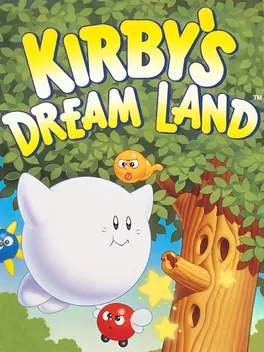
Kirby's Dream Land 2 Review

 (Originally published to Glitchwave on 3/8/2025)


[Image from glitchwave.com]


Kirby's Dream Land 2

Developer: HAL Laboratory

Publisher: Nintendo

Genre(s): 2D Platformer

Platforms: Gameboy

Release Date: March 21, 1995


It’s puzzling how Kirby’s Dream Land received two sequels after the release of Kirby’s Adventure. Actually, my statement should probably read off as feeling perplexed as to why Nintendo bothered producing another Kirby title on the muted, minimal original Gameboy. The console colors of the NES allowed Kirby and his cosmic wonderland to flourish with pixelated radiance. Kirby’s candy-coated aesthetic is an integral asset to the general appeal of his series, for it sure isn’t its challenge and level design driving the franchise’s continued relevance in Nintendo’s catalog of IPs. When we’ve been introduced to Dream Land through hardware that could feasibly render it in all its vivid glory, what makes them think anyone would want to return to the blank minimalism of its introduction? Are the Dream Land games now running concurrent to Kirby’s Adventure as the inferior handheld counterparts like the “Land” series of Mario titles on the original Gameboy? This indeed appears to be the case. Although it might seem disenfranchising that there are more Kirby games on the original Gameboy than the grand total of one on the NES, the handheld Dream Land titles could still incorporate fresh and interesting features and ideas into the Kirby foundation if Super Mario Land serves as an example. Instead of proving and plodding along the first Dream Land’s obsolescence, Kirby’s Dream Land 2 changes up the Kirby formula to help it stand apart from Kirby’s Adventure, but to questionable degrees of quality.


Still, HAL Laboratory transferred plenty of properties from Kirby’s Adventure into the second Dream Land titles as pronounced quality-of-life changes that could never be reversed. One reason why the first Dream Land felt like a morsel of a game was that there were only five main levels that passed by the player quicker than a shooting star. Adventure elongated the Kirby experience by taking a note from Mario and dividing each thematic world into a handful of sub-levels that all culminate into fighting a boss. Kirby will travel around the cosmos on his warp star in a stage select menu and soar down to that world’s hub where a selection of doors will lead Kirby through the various levels in their sequential order. Naturally, this extends the total runtime of the second Dream Land game more than quadruple the length of its predecessor, so that unsatiated hunger I left with the first Dream Land is sufficiently quenched here in its sequel. Still, while I feel that criticizing each level’s visuals is belaboring the point that the Gameboy’s visuals are compressed as hell, I can still prod at the uninspired names of these worlds. “Grass Land”, “Big Forest”, and “Iceberg”, guys? These names aren’t exactly evocative of a wondrous ethereal realm that exceeds the bounds of our reality, are they? Another Kirby attribute that debuted in Kirby’s Adventure whose absence in the first Dream Land arguably provides the most substantial reason for its antiquity is the ability to copy the physical properties of Dream Land’s denizens. Rest assured, Dream Land 2 has carried over Kirby’s greatest idiosyncrasy, so he’ll be blasting his frost breath, rolling around like a rock, and puffing himself up with spikes like an alert hedgehog (etc.) like always.


From what I’ve stated so far, Dream Land 2 does indeed sound like the handheld version of Kirby’s Adventure that compromises presentational performance for the sake of mobility. However, one unique attribute featured in Dream Land 2 sure to pique the interest of those unsatisfied by the inherent convenience of the Gameboy are Kirby’s animal buddies. Whenever Kirby faces off against a miniboss in a level, a sack dangling from the ceiling will fall upon its defeat and reveal one of three cuddly creatures with their distinctive traversal strengths. Hopping on the backside of Rick the Hamster is like a cuter version of Donkey Kong riding on Rambi from Donkey Kong Country. While Rick excels on the ground, Coo the Owl commands the air while Kine the Fish naturally swims underwater with the grace of…well, a fish. Besides their enhanced traversal capabilities per their respective physicalities, the coolest aspect of the animal buddies is how they repurpose Kirby’s copy abilities whenever he’s partnered with them. For example, the scattered spark that emits with the lightning ability is reconfigured as a beam with far greater of an attack radius while riding on Rick’s backside. Bringing an umbrella while flying around with Coo can allow the fluffy bird of prey to spin violently like a tornado, and the added heat of fire will cause Kine to spew projectile fireballs–as paradoxical as that sounds. If expanding Kirby’s copy abilities from Adventure comes in the shape of collaborating with these adorable creatures, then I welcome the change wholeheartedly.


No one can be so cold as to completely write off the adorable animal buddies as a welcome addition that gives Dream Land 2 an individual appeal compared to Kirby’s Adventure. Still, my time rescuing them from their crude confinements and using them on the field makes me wonder if they really enhance Kirby’s gameplay as intended. One shockingly subtle aspect of Kirby as a character that rarely resonates in the minds of the gaming community is how disturbingly powerful the wad of space gum is behind his inoffensive exterior. Sure, some of the powers Kirby can impersonate are stronger and or have a bigger attack range with the aid of the animal buddies, but the fact that their traversal aid only accounts for one particular terrain makes them feel sluggish and awkward in any other instance, ie. Kine and Coo on land and Rick with most obstacles. The animal buddies handicap Kirby’s movement equally as they enhance it, and Kirby already had an astronomical physical aptitude. Perhaps the animal buddies’ abilities would be better assets to the game if they were mandatory for certain progression points, but that would be incredibly obnoxious and unintuitive.


And suggesting these impediments was really just a segway into discussing the instances where the game does require the presence of a specific animal buddy to unlock a portion of the game’s content. The “rainbow drops” are the one collectible hidden in one obscured corner per world, and obtaining them is crucial in unlocking the game’s true final boss. Yes, this is the Kirby game that begins this kind of end game charade to the full completion route, and it’s arguably the most vexing to accomplish out of all Kirby titles that do this. The method of gaining these would-be colorful droplets are all incredibly circuitous and are likely never to be naturally found by the player without the auxiliary reference of a guide. The path to one particular rainbow drop involves a long swath of time using Kine on land. Must I elaborate further on why this process is a complete hassle? Upon attempting to conquer this arduous quest, I also found myself getting stuck in places with the animal buddies that wouldn’t have been a problem with Kirby on his lonesome. Normally, I’d commend a Kirby game for providing a challenge in its otherwise easygoing atmosphere, but the rainbow drop collecting process turns Dream Land into Nightmare Land (this sounded clever in my head). Just treat the black, ominous phantom expelled from King Dedede’s body upon his defeat as a cliffhanger for the following few Kirby games where the “dark matter” is a relevant plot point. The boss fight that engages afterward if the player successfully collects all of the rainbow drops isn’t all that thrilling anyway.


Alas, the unfortunate dynamic between a console Nintendo title and the handheld entry from the same series holds true with Kirby’s Adventure and the second Kirby’s Dream Land title. However, I can definitively say that Dream Land 2’s inferiority to Kirby’s Adventure isn’t simply due to its heavily restricted visuals. Once you play Dream Land 2 and see all of the properties that it borrowed from Kirby’s Adventure like its world progression and bosses and waters them down ever-so-slightly to the point where it's either noticeably worse or underwhelmingly identical. The animal buddies feature that Dream Land 2 implements to provide evidence of its own merits is fun initially, but is soon revealed to be bogged down by so many clashing moments in the level design even if the player isn’t compelled to go the distance with the rainbow drops. All the same, at least Kirby’s Dream Land 2 updates the Kirby formula to the content and length of a suitable Kirby experience far past the appetizer that was its Gameboy predecessor. Still, compared to Kirby’s Adventure that directly precedes it, know that buying Kirby on-the-go will short change the player nevertheless.

Friday, March 28, 2025

Spongebob Squarepants: The Cosmic Shake Review

 (Originally published to Glitchwave on 2/28/2025)


[Image from glitchwave.com]


SpongeBob SquarePants: The Cosmic Shake

Developer: Purple Lamp

Publisher: THQ

Genre(s): 3D Platformer

Platforms: PC, PS4, Xbox One, PS5, Xbox Series X

Release Date: January 31, 2023


With their initial task of reworking, or should I say, “rehydrating,” the cult classic licensed game Spongebob Squarepants: Battle for Bikini Bottom to fit the modern standards of gaming concluded, Purple Lamp Studios were still under contract as the core developer for all of Spongebob’s future interactive adventures. Whether or not one found Rehydrated to be the splendid makeover job that made Battle for Bikini Bottom bloom anew or thought it paled in comparison to the original despite its glossy new graphics was superfluous. The fact of the matter was that Purple Lamp was given the keys to the Spongebob gaming mansion once owned by Heavy Iron, and the gaming community had to trust that they wouldn’t burn it to the ground. Really, the problem with Rehydrated was that Purple Lamp felt obligated to fix what wasn’t broken for the sake of putting in a hard day’s work. When the developers tinker with air-tight aspects of something that already exists just for the sake of change alone, the contentment of those used to the smooth familiarities is bound to be upset. I can’t comment that this is the encompassing reason why Rehydrated garnered mixed reception from critics and fans alike, but that’s my own personal gripe with Purple Lamp’s remake of my most cherished video game from childhood. Purple Lamp simply needed to pave their own path with the Spongebob IP instead of attempting to spruce up one with its own cemented legacy. I was confident with Purple Lamp’s competency displayed with Rehydrated that they’d thrive in the creation process of a completely new product. Spongebob Squarepants: The Cosmic Shake is Rehydrated’s spiritual successor entirely of Purple Lamp’s own creation, and it’s probably the most delightful Spongebob video game adaptation since the original Battle for Bikini Bottom.

Truthfully, the nagging issue I initially had upon playing The Cosmic Shake had nothing to do with Purple Lamp’s involvement as its developer. One vital component of Battle for Bikini Bottom’s greatness, besides its impeccable gameplay, is that it was released in the glory days of Spongebob’s golden period when Stephen Hillenburg was still at the creative helm of the cartoon sensation. The timeless humor that propelled Spongebob to the stratosphere of the animated television Gods shone as brightly in Battle for Bikini Bottom as it did with the episodes that ran concurrently. Given that the quality of Spongebob took a noticeable nosedive immediately after Hillenburg resigned from his post, imagine how immensely The Cosmic Shake will suffer by being a Spongebob product decades after the source material declined. To my delight, The Cosmic Shake isn’t afflicted with the deepening Flanderization the show keeps digging itself into as it continues to air. Firstly, the plot premise of The Cosmic Shake takes a similar approach to Battle for Bikini Bottom, letting the main antagonist of the story take advantage of Spongebob’s childlike naivety. Only this time, he’s not blameless for the chaos that ensues. Spongebob is given a special bottle of bubble soap from a mysterious vendor operating out of Glove World. When Spongebob brings it around town (literally) and blows several spectacular bubbles without any concern, he learns the hard way how special this particular bottle of glossy liquid is when it shreds the space-time continuum. With Bikini Bottom in a state of disarray like it was pounded by Hurricane Katrina, Spongebob must rely on the cosmic insight of the mermaid who gave him the magic, volatile bubble soap to restore his hometown that has been profoundly affected by the calamity. The plot premise is refreshing because modern Spongebob has a penchant for inconveniencing his fellow Bikini Bottomites without being aware of his toxic influence, much less taking responsibility for it. As Spongebob ventures out on his mission to amend his mistakes, it’s also relieving that he barely exhibits all of the irritating, watered-down characteristics of his personality that have cropped up due to the show overstaying far past its prime. He’s that kind hearted, gregarious invertebrate that I and everyone else around my age fell head over heels with instead of the infuriating cretin he’s become who alternates between intensely singing and crying like a theater kid in desperate need of a prescription to Ritalin. All of the notable secondary characters are also suppressing their dumbed-down traits the show has unfortunately seeped into their personas as well. The Cosmic Shake may not provide any moments that generate a hearty laugh from me, but it satisfies the metric of a quality modern Spongebob product in that it isn’t insufferable.

Except for Revenge of the Flying Dutchman, every Spongebob video game I’ve played involves one or more of Spongebob’s friends performing a significant portion of the legwork as playable characters. The Cosmic Shake waives this recurring trend and puts Spongebob on his lonesome. Patrick still has a prominent presence as a character, but he’s been relegated to a diminutive sidekick. Like Daxter, all he does is hover over Spongebob’s shoulder for the entire duration of the game, providing commentary and banter for entertainment value. Because Spongebob has been tasked to undergo this intrepid quest without any aid on the field, he’s gained quite the platformer move pool to work off of. From Sandy, Spongebob has inherited her swinging and gliding abilities, with the former executed with Spongebob latching his enormous tongue to hanging fish hooks (ouch!) and the latter move involves using a pizza box about the classic first-season episode “Pizza Delivery.” I hate to be one of those guys, but it’s the pizza inside the box with parachute properties, not the box itself. Boy, I hope someone got fired for that blunder. Similar to the hooks, Spongebob can karate kick a series of balloons reminiscent of Sonic’s homing attack. Spongebob’s base method of offense is his tried and true bubble wand from BfBB, with the karate kick and a ground pound covering the space of the air and the ground in between. Both the bubble-oriented maneuvers were conjured up by Purple lamp, with a surfboard that glides to distances unreachable with the inexplicably magical pizza box and blowing a bubble that ensnares enemies in a state of vulnerability. Covering plenty of bases with this eclectic set of moves should put the player in a state of confidence. Every new move is easy to learn and just as practical to master, with plenty of utilization on the field afterward once they are unlocked. If one still can’t use all of these skills to blaze towards victory, the player can take advantage of Spongebob’s cartwheel move for defensive purposes. Dodge rolling? In a Spongebob game? We truly live in strange times.

Bikini Bottom’s properties lost in the bubble cataclysm also extend to Spongebob’s friends, also known as the notable supporting cast from the show. The vicious vortexes opened by the arcane bubble soap have sucked each of Spongebob’s friends into alternate dimensions of Bikini Bottom’s notable districts, and Spongebob must traverse through these bizarro realms of familiar territory to blow his compadres back home like Dorothy from Oz. The omniverse trope has been exceedingly popular across all forms of fiction over the past decade, and I’ve always cynically surmised that the infinite possibilities that come with this concept provide a cop out for writers to never have to consider the logic or rationality behind any of their ideas. I’ll accept Spongebob using this exhausted device since it’s used for lighthearted variety instead of abstract convolution.

The rustic wilderness of Jellyfish Fields fits nicely as the frontier for a wild west setting, with Spongebob riding around on seahorses between barrels of hay and oncoming trains. The urban ritziness of Downtown Bikini Bottom is apparently comparable to Hollywood, considering a portion of the city is being sectioned off to film a karate kung fu film starring Spongebob and Sandy. The beachy Goo Lagoon fits perfectly for a pirate-themed romp, but the Halloweeny theme driving Rock Bottom’s revisit presents a misunderstanding of why the submerged city was effectively spooky in BfBB. The setting is supposed to be the cold and unnerving kind of spooky, not an underwater version of Jack Skellington’s residence. After skipping a few vital BfBB settings in their consecutive streak before returning to the Kelp Forest as it is was before the dawn of civilization, Cosmic Shake starts paving over ground uncharted in BfBB by teleporting Spongebob to a medieval settlement in the Sulfur Fields and returning to the amusement park of Glove World as a fully traversable environment. One can tell that each level’s theme functions as a distinct, kooky adventure premise, and that each area’s coat of refurbishment branches off of the original setting’s atmosphere sensibly. This logical correlation also extends to which of Spongebob’s associates is providing the progression path, with Mr. Krabs as a high-profile bank robber in Jellyfish Fields and his bratty whale daughter Pearl as a literal princess in part of the medieval caste in the Sulfur Fields. I’m sick to death of various pieces of modern media using the multidimensional trope so liberally as if its perceived unlimited potential will never exhaust and become a cliche, with The Cosmic Shake as yet another example in a long lineup of them. Still, I can’t deny that it fosters a varied gamut of level premises that ensure the player is never bored by repetition.

However, one significant aspect of each of The Cosmic Shake’s areas that does, unfortunately, instill a moderate feeling of boredom in me is their design. Progressing through every single district of Bikini Bottom and its neighboring city below it is as linear as following the yellow brick road. Admittedly, many of BfBB’s levels are formatted with a straightforward climb or trek, but some of the later levels, like the Mermalair and the Kelp Forest, weren’t afraid to throw a monkey wrench into the course of linearity with some more methodical sections. No matter their placement in the game, each level of The Cosmic Shake barely shakes up (no pun intended) the format in the slightest. Most of the time, the disruptions on the field are enemy gauntlet barricades where Spongebob is forced to eliminate all of the jelly creatures, either created by the tampering of the sacred bubble soap product or they’ve traveled to Bikini Bottom from some horrid cosmic realm via a resonance cascade-like portal. Like the robots from BfBB, these grotesque purple monsters emerge with various physical and offensive properties. Some of them even transmit the tactics of Plankton’s mechanical creations with a jelly that shoots tartar sauce from a squirt gun and a duplicator who shares a strong resemblance to Mr. Krabs’ abominable “appetizer” from “Squilliam Returns.” With their assorted abilities all targeting Spongebob at once, the army of these extraterrestrial curiosities will efficiently keep the player alert when their battles arise. Still, waiting for the opportunity to hit some bulkier enemies like the strapping brute who wields a bathtub and the tall sandworms tends to make some fighting scenarios a little grating. When the game actually provides progression impediments that are implemented with the level design, like searching for cactus juice or locating pirate ships to reel a sock to the top of their mast like a flag, the game soils the scavenger hunt by highlighting their locations with targets seen from any angle. What’s the fun in that? Even if games are developed with a younger demographic in mind, providing a reference pronounced so obviously whenever something needs to be located severely undermines the player’s intelligence.

Some of The Cosmic Shake’s bosses are also unfortunately beset by oddly facile gameplay scenarios. Retrieving Mr. Krabs from his joyous stint of funneling in stolen money as an outlaw involves a chase sequence on seahorseback, but one cannot tell that bringing Mr. Krabs to justice is part of this goal because Spongebob’s manager is barely present during this sequence. Seeing Prawn again after I figured he would be endemic to BfBB was a delightful surprise, and his pelting of Spongebob with explosive pies throughout Goo Lagoon’s beaches is both a wonderful reference and a thrilling threat to constantly keep a vigilant eye out for. Still, the process of seizing his ship so the Flying Dutchman can reclaim control over all pirate activity in Goo Lagoon is achieved so suddenly that I’m still confused as to exactly what I did to shoot the pretentious shrimp out of the sky. Having an old hag with witch powers use her spells to spill a birthday cake out of Spongebob’s hands isn’t a unique challenge: it’s an annoyance. However, the other half of The Cosmic Shake’s climactic battles among the duds actually involve intimate combat and intricate battle mechanics with a Spongebob series regular. The swift, crafty Sandy and the blubbering cave whale version of Pearl will make the player utilize the dodge rolling maneuver in both of their fights, quickly darting around the ricocheting of a heaving hamster wheel with spikes and tidal waves of tears, respectively. “Fighting” a gigantically mutated Gary, possessed like Regan from The Exorcist if the pea soup projectiles are any indication, is another unorthodox duel where the target of Spongebob’s offense is rather the three candy machines whose bountiful supply of sugar has apparently transformed Gary into this monstrosity. Unlike the cake deliveries in the castle, dodging Gary’s gaze as Spongebob climbs the sprawling staircase of Rock Bottom’s museum is quite tense. Shooting Glove World’s disturbing mascot with the contents sucked up in a reef blower is also one of the more rousing brawls. None of these fights against slightly adulterated forms of Spongebob’s friends are comparable to gaming’s brow-sweating brawls like The Nameless King or anything, but I commend the last few mentioned because there is at least a discernible amount of effort in their encounters as opposed to the ones I critiqued. The game’s final boss, where Kassandra uses a particularly irate Squidward as a vessel to crush Spongebob, technically fits the more exemplary half of boss fights, but the general encompassing ease of them all, regardless of the mechanics, makes this concluding duel rather anticlimactic. It’s probably an apologetic gesture for how Purple Lamp misappropriated Robot Squidward in Rehydrated, but now the studio has to redeem itself again for an unmemorable final boss fight.

If the player wants gameplay from The Cosmic Shake that requires a more concerted approach, they can still receive that by seeking out the optional collectibles. Scattered around every bizarro realm of Bikini Bottom are several gold doubloons, a currency used to purchase the treasure trove of fan service the game provides: the costumes. Sure, Madame Kassandra gives Spongebob a fitting new costume for the environment he’s about to visit per her attuned feminine judgment for fashion. Still, collecting the coins unlocks a whole wardrobe of recognizable outfits from the cartoon series that are sure to titillate any Spongebob fan. My bias veers me towards the ones from the first three seasons, but I did spend plenty of my playthrough walking about in hippie Spongebob’s sandals and Rockstar Spongebob’s ridiculous platform boots with the same amount of amusement. Interactively wearing a reference is certainly a perk, but collecting the coins themselves is its own reward. They are located in places that are genuinely difficult to spot on the immediate path, and the fact that no radar easily susses out their locations to the player like every main objective fosters an organic, meticulous searching process. A sizable number of coins are also unobtainable until Spongebob acquires a specific move, so collecting them also increases the game’s replay value tenfold. With the promise of diversifying Spongebob’s outfit and a substantial challenge, I highly recommend that every player go the distance and invest in a Scrooge McDuck-sized coin purse.

I still decree that Spongebob Squarepants: The Cosmic Shake is undoubtedly the dorky, excitable sea sponge’s second finest outing in an interactive medium. It doesn’t sound like exalting praise, but considering how many times Nickelodeon’s hottest property has been misused in gaming, I can assure you that I’m giving kudos to Purple Lamp. In saying this, The Cosmic Shake’s placement as a silver-award winner among Spongebob’s interactive titles still ranks far below the golden God that is Battle for Bikini Bottom, and I’m referring to the original, of course. Purple Lamp’s questionable mechanics that were present in their Rehydrated remake are still driving our yellow protagonist. While they don’t bother me as much as they previously did when they were adulterating my beloved BfBB, their streamlined feel still makes moving around as Spongebob feel less impactful. Really, it’s more appropriate for The Cosmic Shake because the entire game exudes a sense of ironing out BfBB to a point of steaming out much of its tender juices. The level design is far too linear for my liking, and this narrow progression naturally invites the game to sanction many uninspired aspects of gameplay that verge too heavily into effortless territory. Is this the standard for modern games with a school-aged demographic in mind? Still, The Cosmic Shake radiates the same old school Spongebob charm that its gilded predecessor did, and that’s all a Spongebob fan can possibly ask for after years of annoying all of the kids who grew up with his earlier episodes. A worthwhile licensed game is still elevated by evoking the aura of its source material, and The Cosmic Shake is adequate enough on that merit alone.

Tuesday, March 25, 2025

Sonic Unleashed Review

(Originally published to Glitchwave on 2/26/2025)


[Image from glitchwave.com]


Sonic Unleashed

Developer: Sega

Publisher: Sega

Genre(s): 3D Platformer, Beat 'em Up

Platforms: PS3, Xbox 360

Release Date: November 20, 2008


The silver lining in playing the eponymous 2006 Sonic game is that any one of the blue blur's titles will seem like a breath of fresh air in comparison. Now that the worst is out of the way, it's time to let my guard down and treat myself to a bonafide Sonic delight...with the game where he transforms into a werewolf…

*sigh* Well, I didn’t say that every Sonic game released after his stinking self-titled 3D game was a masterpiece. The blue blur’s near future peeking over the horizon was brighter, but only marginally so, like the blackness of night reverted back to the dim shade of dusk instead of the shining radiance of a new morning. Naturally, everyone knows that the waning light of evening shade is not bright enough to have a picnic. While Sonic Unleashed did not plunge down to the abyssal cesspit of gaming’s greatest failures like the HD Sonic game before it, it still didn’t redeem Sonic in the eyes of the general gaming public. All it did was supply more verifiable proof that Sonic should’ve been buried alongside Sega’s other stalwart series when their tenure in the console market had fizzled out, even in spite of Sonic’s higher status as a revered gaming celebrity. Since Sonic Unleashed made the stain that Sonic 06 imprinted on the franchise more salient, it’s been given the same retrospective treatment that all of the other once-slandered 3D Sonic games have been blessed with. It is now a lauded cult classic amongst the delusionally dutiful Sonic fans, receiving genuine praise in hindsight rather than the polite leeways given to his 2006 effort (using the term pejoratively). Upon noticing that these 3D Sonic games that were once perceived as pisspoor were garnering new assessments with so much time passed, I still remained skeptical regarding Sonic 06. I attempted to appreciate the finer details of its level design and ambitious narrative, but every time I tried to stop and smell the roses, the game ravaged me mercilessly like a randy roadside trucker. Of course, I never let my guard down, so I was never too disappointed. However, with Sonic Unleashed, I fully trusted the fans’ laudation, and I was foolish enough to believe them. I’ll certainly never do that again.

From every initial impression, everyone can plainly see that the primary driving force/gimmick of Sonic Unleashed’s conceptual identity is that Sonic periodically transforms into a mangier, toothier version of himself that resembles a beast from mythical werewolf lore. How did Sonic come in contact with a howling, nocturnal terror, and how did it catch up with him to sink its teeth into his flesh? The game’s introduction reveals that Sonic was not afflicted with the werewolf curse in the traditional fashion. Instead, the fate befell him when he meddled with Eggman’s newest scheme. Similarly to Sonic 06, Sonic Unleashed felt it necessary to start the story with Eggman engaging in some new nefarious deed, only for it to be momentarily halted by Sonic’s heroism. However, where Sonic won the battle in Sonic 06’s introduction while the war waged on, the falling action of Unleashed’s opening sequence sees Sonic undergo more blowback than ever. Eggman manages to trap Sonic in an electrical vice that saps all of his Super Sonic energy, and the mix of anger and anguish somehow results in Sonic’s hair and teeth growing exponentially. Since Sonic is subdued, Eggman can carry on with his plans, which involve firing a colossal energy cannon onto a planet that divides it into fragments. After he succeeds, he disposes of Sonic like trash by releasing the oxygen valve of his spaceship, blasting Sonic into the infinite plain of the universe. Unleashed has evidently taken a note from Super Mario Galaxy and showcased the high stakes of the story by illustrating that evil can win and our intrepid protagonist can be smote. It’s an especially humbling scene for Sonic, for he’s got a reputation for being the cockiest sumbitch in the gaming medium. His friends aren’t in the vicinity to avenge him, and he can’t harness the power of “chaos control” to teleport himself to safety. His doom seems sealed here, and it's sure to strike a chord in the Sonic fanbase.

Of course, we know full well that Sonic cannot be permanently vanquished, much less in an opening cutscene. Still, Eggman rupturing an entire planet sets a grim precedent that suggests Sonic will have his work cut out for him once he recuperates. Conveniently, Sonic is sucked into the gravitational pull of the shattered globe and lands briskly on the soil of the land of Apotos where he is greeted by a mysterious, furry pixie creature that he dubs “Chip.” Roaming around the hub of the hilly valley, the player might notice that this land shares several architectural similarities with the country of Greece. The stark similarities are no coincidence, as the collective of Unleashed’s levels/hubs are concretely modeled after real-world locations. Every subsequent 3D Sonic game distanced him further away from his home planet of Mobius and leaned Sonic closer towards integrating with humanity, and catapulting the blue blur into a simulacrum of our beloved Earth is about as close he’s going to get to vicariously interacting with the player. Personally, it’s a little too close for comfort. When Sonic flies out of Apotos on Tails’ biplane, every destination afterwards demonstrates the same discernible parallels to the same degree as the first area. Africa is represented twice on the world map, with Shamar representing the northern, Arabic Middle Eastern section and Mazuri the vast savannah of the Serengeti. For more urban locales, Spagonia is evidently Italy with its Euro-romantic atmosphere, while Empire City is an on-the-nose depiction of the congested cityscape of New York City. Chun-nan is unmistakably China, but I cannot say for certain whether or not Adabat is also another strip of Asia or an island nation in the Pacific. The frigid Holoska irks me a bit, for there is no place on Earth where penguins and indigenous Eskimo people coexist. Still, I quite enjoyed my time playing “Where in the world is Sonic the Hedgehog?” Globetrotting around the uncanny, cartoonish mirror image of our world evidently provides enough diversity without having to tap into the exhausted roulette of typical elemental tropes found across most games in the platformer genre. Plus, Sonic being placed among the humans in this game isn’t as off putting as it was in the hub of Soleanna because the NPCs are also rendered to be as animated looking as Sonic. The areas are, without a doubt, the most inspired and interesting aspect of Sonic Unleashed.

But how do these comparatively domestic locales fare as Sonic levels? Quite beautifully, actually. With great consideration, Sega has managed to reconfigure the exhilarating spectacle of something like Green Hill Zone or Lost World in an environment that is somewhat confined to real-world parameters. Greece is already a picturesque country in the real world, so imagine ripping through grind rails above its crisp blue waters while its postcard-worthy landscapes are situated as backdrops. The same sense of wonder and amazement that comes with zooming through a divine urban environment is exuded to the same extent in Spagonia, with the clocktower as the centerpiece of the action that is a blast to scale upward and downward with Sonic’s outstanding velocity. Holska’s thick walls of ice serve as perfect tracks for ice luge segments, and after sliding down the frosty channels, Sonic scales the backside of a gigantic arctic whale before being jetted into the sky by the stream of water ejected from its blowhole. Running through the winding dragon constructs in Chun-nan is a fantastic integration of regional set pieces in the level design, and coasting through the Brooklyn Bridge in seconds in Empire City is a cathartic achievement for any American such as myself. For settings that are seemingly confined to elements of the real world, Sega has managed to make the most ostentatious Sonic levels the series has ever seen. However, the selection is a bit top-heavy as every level I’ve described is the first act of three. I’m thankful that the mandatory level that progresses the game is the tour de force, but every level in the same area that follows is an unsubstantial, smaller reshaping of what the player has already experienced.

However, the breathtaking exhilaration that comes with each level is significantly diminished by Sonic’s gameplay. Every Sonic fan who adores Unleashed claims that its stages are faultless, but I’ve discovered several refutes to their assessments that are too numerous to count. One particular innovation on Sonic’s gameplay that debuts in Unleashed is the boost mechanic. Provided Sonic has enough rings, holding down a certain button on the controller will hasten his maximum speed to a precarious degree unseen in any previous Sonic title. Any seasoned Sonic fan will know that precariousness with Sonic will often lead to calamity, which happened far too often in Unleashed for me to appreciate the breakneck pace that the game fosters. Given that Unleashed is still a platformer like all of the Sonic titles before it, one can assume that there are obstacles intended to impede the progress of the player, and failing to navigate through said obstacles will often result in an untimely death via sharp arrays of spikes or falling down bottomless pits. With Sonic constantly blazing through these levels at the unparalleled rate of speed that Unleashed sanctions, one can imagine how common an occurrence it is that the player will haphazardly kill Sonic when confronted with more complicated terrain that they couldn’t have possibly anticipated. Not only is the likelihood of Sonic’s demise increased by the mismatching of speed and methodical jumping, but it's bound to happen countless times because there are so many instances of these deadly platforming buffers scattered throughout each level. Sonic has to slow to a crawl to turn through a particularly sharp bend of highway road in Empire City because the drift mechanic is incredibly tanky, and the grind rail sections tend to thwart the player by sticking a ball of spikes on the end of a line that fatally trip Sonic into the abyss if the player doesn’t course correct in a literal split second. Immediately as Sonic prepares to rush into Adabat, navigating through the boardwalk right at the very beginning involves dashing over wooden flooring designed diagonally like a crossword puzzle at a speed so reckless that Sonic should be fined a ticket for endangering himself. A challenging section that tests the player’s proficiency with the quick step mechanic is appropriate for a later level, but does it have to take place during the first few seconds of the level before the player has time to take their first breath? Even if the player is shrewd enough to catch the intermittent platforming sections that shift the perspective slightly, carefully placing Sonic on the platforms with precision is not guaranteed. Sonic’s overall control, no matter the context, always has the antsy acceleration to it like he’s itching to blast off, so slipping off the platforms with his eagerness is also a likely scenario that is bound to aggravate the player. Course correcting with the homing attack is also not an option anymore, thanks to the boost mechanic. And here I thought that 3D Sonic remedied the recurring issue that classic Sonic had with imperceptible obstacles stalling Sonic dead in his tracks. Did Sega not think that sprinting through loops bouncing all over as Sonic wasn’t stimulating enough? If the boost mechanic were present with the level design from either Sonic Adventure title, it would be heavenly. Alas, placing constant impediments in front of Sonic at Mach speed is pure hell, making for the most brutally unyielding, memorization-intensive Sonic game to date. The player should not be forced to master a level just to finish it.

If I have found so many grievances with what is perceived as the solid half of Unleashed’s gameplay, imagine the vitriol I’m going to spew in regards to the other half of the game that even the game’s enthusiasts can’t earnestly defend. In disregard of storied werewolf logic, every nightly eclipse of the sun by the moon, no matter its shape, transforms Sonic into his grizzlier counterpart. Instead of rolling around at the speed of sound, Werewolf (sorry, “werehog”) Sonic’s levels are slower-paced beat ‘em up sections, scratching and gnashing at armies of foes and racking up hit combos in the process. The languidness of the werewolf sections also gives way to incorporating puzzles and platforms of a more methodical variety. Truthfully, the night sections of Unleashed are an honest-to-God homage to God of War. Not only should the beat ‘em up combat ring familiar, but Unleashed also adopts idiosyncrasies specific to Sony’s ancient Greek epic, with quick time events and balance beams galore. I’d like to add that these particular attributes are not exactly upstanding merits to God of War’s gameplay, so imagine how poorly they are executed in Unleashed’s imitation of them. Similar to Kratos, Werehog Sonic is an elephant constantly being forced to climb a tree. He's a strapping creature capable of mass destruction, expected to perform feats out of his physical element. Even with the innate ability to double jump, Werehog Sonic couldn’t even dunk on a driveway basketball hoop. Every leap to another platform should involve a frantic tapping of the button that latches Sonic onto the edges, for it’s the only way to ensure that his lack of acrobatic skill, matched with the finicky target system, won’t result in Sonic screaming his head off as he falls to his untimely death. Any section involving climbing poles is especially aggravating, for the directional controls seldom cooperate with the player’s intended trajectory for jumping off. As for Werehog Sonic’s forte of beat ‘em up combat, it’s fairly adequate. The Werehog will alternate between light and heavy attacks with his strangely elastic arms between two buttons, and the effectiveness of his punches and scratches can be increased with the yellow, floating spinning tops accumulated through defeating enemies in a menu that appears upon completing a level. Werehog Sonic can also ignite a fury mode of sorts with enough auxiliary energy that will allow him to tear through Eggman’s rotund robots and the shadowy lizard creatures like a buzzsaw through a log. The Werehog’s shield only having a finite amount of uses is absolute bullshit, however. While the combat itself is fine, it greatly wears out its welcome due to each Werehog level presenting a consecutive stream of battle bouts per level. Because the Werehog is Sonic’s slower alter ego, each of his levels takes approximately 20-30 minutes to finish on average, five to six times the run time of a regular Sonic level. Even the alternate gameplay of other characters in previous Sonic games didn’t prolong their levels to that sluggish extent. On the subject of 3D Sonic’s tendency to incorporate other variations of gameplay, the Werehog by far presents the greatest dichotomy to the widest and worst degree. The formula of repetitive combat sequences with rigid and awkward platforming segments turning the tedium into utter frustration always proved to be a full-on assault to my patience and well-being. The Werehog levels make me want to shoot Sonic with a silver bullet to put him out of his misery, or shoot myself with one if it's the quicker method to stop playing these godforsaken levels.

To add insult to injury, there were plenty of intermission moments in between the action stages because said stages were inaccessible. Out of the player’s peripheral vision in either the action stages or the hubs, one might notice some tokens scattered about with either a sun or crescent moon pattern painted on them. If one assumes that these collectibles are an optional lark, one had better think again. Collecting the medals of contrasting cosmic bodies is paramount to progression, and the later levels in the game require an outrageous amount to unlock them. Sonic’s gameplay has always somewhat fit the classification of a platformer, but never the collectathon subfaction of them for reasons that should be obvious. Gathering all of these circular trinkets is somewhat appropriate for the Werehog stages, for the slower pace of his gameplay gives him ample opportunity to digress from progression to search meticulously. However, sun medals are far more common and plentiful than the moon ones in the Werehog stages while the opposite is true for Sonic during the daytime. In order to access the Werehog stages, the game seriously expects Sonic to divert from his path of perilously blazing through the stage to stop and consider the possibility that a medal might be located in an inconspicuous corner. As expected, halting Sonic’s momentum this drastically is counterintuitive to his distinguishing, speedy gameplay. Besides the nonsensical manner in which these medals are collected, having to uncover over one hundred of each type of medal to gain passage to every level the game offers is ludicrous and turns the game into a grinding regimen. The ordeal is so vexing and wearisome that it provides more reason to cock the hypothetical gun I mentioned in the last paragraph.

Once the player manages to persevere through the medal collecting process and survive every action stage, they still won’t be ready to face the challenges that arise in Unleashed’s climax. After the second and equally unmemorable segment of flying Tails’ biplane, Sonic will be confronted with the fresh fruits of Eggman’s labor. Since Eggman could continue his business after momentarily smiting Sonic in the introduction, his uninterrupted schedule has allowed him to create a passion project he’s mentioned many times before. “Eggmanland” is the sprawling city in the doctor’s image that he always sought to construct, a gaudy industrial theme park drenched in a sleazy, nightlife neon. Sonic must wipe this abominable metropolis off the map by navigating through it as Unleashed’s climactic level, and it’s one hell of a grandiose finale. In saying this, the intended context I’m trying to illustrate with the scope of Eggman Land is that it’s an endurance test to end all endurance tests. Six segments divide the total length of Eggmanland’s run time, alternating between regular Sonic and his beastly form. Besides the upset of the tides that are bound to transpire with the abrupt hourglass switches, every segment that comprises the run time of Eggmanland features what are undoubtedly the most brutal gameplay segments across Unleashed’s play time. Platforming as the Werehog on pipes overlooking a river of lava takes extreme precision to keep him from smoldering to a crisp, and the bombardment of Eggman’s robots antagonizing Werehog Sonic is far more overwhelming to confront than any combat encounters in previous levels. Normal Sonic isn’t off the hook either, as the cheeky Eggman bumpers have strict hitboxes and the luge section is fit for an Olympic event. The quick time events that correlate with the wall jumps here require such lightning-fast reaction time that I resorted to pausing the game to prepare. No comment. With the player’s ego being curb-stomped at every waking moment in Eggmanland, what makes this unmitigated onslaught particularly maddening is that all six segments aren’t registered as individual acts. The approximate time to complete all six segments that comprise Eggmanland can take anywhere between 45 minutes to *over a fucking hour* to complete. I guess this nightmare of a level should be expected when Eggman’s evil ambitions finally come to fruition, and it makes for what is definitively the most grueling and punishing Sonic level in existence–even among contenders like Labyrinth Zone and Cannon’s Core. Whoever at Sega devised this fuckness should be put on trial for committing a crime against humanity.

When the player eventually receives a hint of relief upon finishing Eggmanland, Unleashed refuses to put the brakes on the game’s unrelenting momentum. Up until Eggmanland, one aspect of Unleashed that I quite enjoyed was the boss battles, whose fights barricaded the entrance to the temples. Denting Eggman’s various animal mechs was an absolute thrill that utilized Sonic’s newfound, blisteringly-fast speed better than the actual levels leading up to them, and the game even managed to produce some engaging bosses with the Werehog’s beat ‘em up gameplay despite how many quick time events were included to ruin them. Eggman’s last hurrah with the Egg Dragoon is also a fine inclusion to finish off the mad doctor’s newest roulette of mechs, and I wish it were the final duel of Unleashed.

Eggman’s impetus for cracking open the earth with a concentrated blast was to awaken a sinister entity called Dark Gaia, prophetically foretold to obliterate the world once every ten millennia. Because Eggman has prematurely disturbed this harbinger of the apocalypse in an effort to control it, he’s ready to erase the world as we know it. As per the thematic constructs of Unleashed, there has to be a benevolent counterpart to Dark Gaia’s malevolence, and the opposite on that spectrum is none other than Chip. The embodiment of goodwill in its premature form as a furry little pixie creature makes sense…I think. In the final moments of Unleashed, Chip finally starts contributing to the narrative and combats his evil twin by forming a giant stone golem to duke it out in epic kaiju fashion. The rinse and repeat process of steadily flying towards him as he pelts Chip’s rock-em sock-em boulder man with meteors and laser blasts deviates from any other form of Sonic gameplay so radically that it's inappropriate for it to culminate in the climax. When Sonic has the opportunity to close in on Dark Gaia and the gameplay reverts back to something familiar, the requirements to deliver the critical blows to Dark Gaia are so strict that it's bound to deplete as many lives as Eggmanland. Even when the game features the obligatory Super Sonic section, destroying Dark Gaia’s snakes while minding Chip’s health simultaneously barely acts as the simple period that finalizes the adventure. Being invulnerable is what makes him super! Dark Gaia kept proverbially dunking my head underwater after I almost drowned in Eggmanland’s unwavering brutality, and I couldn’t have been more relieved when it was finally over.

From this day forward, all praise that Sonic fans espouse regarding the blue blur’s 3D output will be falling on deaf ears. I’m convinced that Sonic fans only adore the speedy spectacle that comes with the whirlwind flight that comes with daytime Sonic, and I can’t deny that it’s intoxicating. However, getting swiftly kicked in the yarbles with the countless lethal obstacles interrupting that rush is not my definition of fun. Needless to say, I’m also echoing the sentiment that the Werehog stages are a slog, so both gameplay styles in Unleashed pissed me off in equal measure. Add a mandatory grinding mechanic to the narrative that is ultimately arbitrary in the grand scheme of things, plus a level that encapsulates what gaming damnation likely is, and Sonic Unleashed changes from a curiosity to a source of offense and befuddlement at its newfound acclaim. It’s at least better than Sonic 06, but this is not a metric that future Sonic games should strive for. Hell, if Sonic 06 had that valuable time to marinate into a competent product, it probably would’ve been better than Sonic Unleashed.

Wednesday, March 19, 2025

Mario Kart: Super Circuit Review

 (Originally published to Glitchwave on 2/18/2025)


[Image from glitchwave.com]


Mario Kart: Super Circuit

Developer: Intelligent Systems

Publisher: Nintendo

Genre(s): Kart Racer

Platforms: GBA

Release Date: July 21, 2001


Mario Kart: Super Circuit really took a hot, steaming dump all over the evolutionary strides that Mario Kart 64 laid out for the format of Mario’s kart-racing institution, did it not? Sorry to start this review on a crudely negative note, but the retroversion of the series that Super Circuit displays is a little disheartening. The cardinal point of Super Circuit’s regression is admittedly inherent because it's a mobile Mario Kart game. The GBA may have exhibited prettier pixel art than any of Nintendo’s pixelated home consoles, but it is still confined to the limited capabilities of 2D graphics nonetheless. Therefore, since I’ve stated that Mario Kart can’t properly exist without the dimensional depth of 3D, Super Circuit should’ve been buried in the heap of Nintendo’s idea scrapyard along with the sequel to the Virtual Boy and Luigi-brand Viagra. Truly, Nintendo should’ve waited to properly succeed Mario Kart 64 when the next 3D console (the Gamecube) was sufficiently up and running. However, while I still believe the third dimension is an integral aspect to Mario Kart’s fun factor, replaying Mario Kart 64 to review it was a lesson that 3D did not intrinsically make it a masterpiece. Even though 3D drastically deepened the immersiveness of the gameplay, several snags soiled the Mario Kart 64 experience. Developing in a radically new spatial plane proved to generate mistakes that were just as amateurish as the ones seen in Super Mario Kart. Because Mario Kart 64 was radically different from Super Mario Kart due to its additional dimensional schematics, Super Circuit is the first instance of a direct sequel in the series that could revise the formula of one of the rudimentary Mario Kart games before it. Depressingly enough, it’s in the 2D realm of Super Mario Kart, but perhaps hindsight can fix something barely functional and blossom it into a fun little butterfly.

To my surprise, the initial quality-of-life enhancement I was proactively searching for was something that stemmed from Mario Kart 64, not Super Mario Kart. Besides the rubberbanding in Mario Kart 64 implemented to keep all CPUs at an intimate distance regardless of the player’s skill as a racer, the aspect of the series 3D debut that appalled me to no end was the invisible statistical merits assigned to each character. No, it wasn’t the fact that such a complex discernment was put in place for an accessible kart racer–just that the game withheld this information from me, and my inclination to play as Toad came with unforeseen consequences. In Super Circuit, I’d be less inclined to play as the Mushroom Kingdom’s most notable NPC because the character menu would show me that he’s as light as a feather and as delicate as a dandelion. Yes, Super Circuit unveils each character’s stats that Mario Kart 64 obscured, presenting that there is a hint of depth and consideration to one’s selection beyond surface-level enjoyment. Mario and Luigi are naturally the balanced ones in this equation while the heavier characters like Donkey Kong, Wario, and Bowser trade acceleration and speed for brute strength. On the other end of the weight spectrum, smaller characters such as the aforementioned Toad along with Yoshi and Peach aren’t as durable but tend to be lighting fast and can drift around the various curvatures of the tracks with greater ease and proficiency. You’ll notice in describing the three general weight classes each character falls under that Super Circuit’s roster is the exact same lineup of familiar Mushroom Kingdom faces seen in Mario Kart 64. Is keeping the roster intact an attempt to garner forgiveness for fogging up their racing traits in the previous title? If it is, I’ll accept their apology because it’s a simple change the series desperately needed. If the player did not mind or didn't even notice the statistical differences between every character in Mario Kart 64 and wants to keep racing on blind faith, a random option is located in the center of the character select screen to ensure an unsystematic Mario Kart experience.

Another issue regarding the pixelated plain of Super Mario Kart is that the familiar backdrops of Mario’s world that served as track themes were rendered in a quite askew fashion. Sure, they were easily recognizable, but through a warped, disoriented lens as if the player took too many of Mario’s mushrooms, if you catch my drift. Besides the jarring visuals, the tracks themselves hardly offered much in the way of variation in terms of obstacles or hazards. All of the game’s efforts to keep the player’s guard on high alert were seemingly allocated to a select few tracks such as the variations on Bowser’s fiery domain and the courses that comprise that game’s Special Cup. Still, perhaps the influx of hazards in these particular tracks made for race courses that were too unyielding for the player to focus on anything else around them. Super Circuit greatly balances the load of hazards for every track on display and enhances the visuals of the pixelated provinces that comprise the Mushroom Kingdom. With a direct comparison to note, witness how vibrant and spacious “Bowser’s Castle” looks compared to the confined grey corners of how it's depicted on the SNES. “Shy Guy Beach” not only looks bright and inviting, but the tide washing up and covering all but elevated bumps of sand forces the players to hop on their karts with great precision. Not to mention, the Shy Guy pirate ship constantly blasting the tropical dunes with cannon fire is a thrilling obstacle to navigate around. “Ribbon Road’s” red carpet track is as lurid as a premiere event in Hollywood, and the puddles of rainwater in “Luigi Circuit” actually cause hydroplaning instead of simply slowing the kart’s speed ever-so slightly. I don’t how the Wallace and Gromit wonderland of “Cheese Land” is relevant to Mario, but the mountain range of coagulated dairy extract looks good enough to eat (literally). Super Circuit’s “Rainbow Road” looks marvelous, and having the narrow borders of the track bounce the player like rubber can be used to hop over portions of the track for courageous players. Seeing Bowser’s Castle from Paper Mario in the background is also a cool little reference that signals how high in the sky the colorful pathway is located. The sickening angle that came with Mode 7 on the SNES has been rectified and the pixels now pop with a smooth visual flair that is very pleasant to the eyes.

Basically, that’s Mario Kart: Super Circuit in a nutshell. I determined whether or not to divulge how harsh the letter grade ranking system is after finishing each Grand Prix cup or how it was the first Mario Kart game to incorporate racetracks from previous titles, but I decided that these aspects were too trivial to extrapolate on. All the other Mario Kart attributes such as the items, the grand prix format, and the reemergence of coins are continued as they were from either Super Mario Kart or Mario Kart 64. Even though it washes the grain out of Super Mario Kart’s pixel art, adjusts the viewpoint of a 2D game in a 3D perspective to make it look more feasible, and the tracks are far more memorable for their designs and various hazards, Super Circuit doesn’t add anything all that revolutionary to the Mario Kart formula. I commended it for revealing the statistical differences of each character, but the lineup of characters that Super Circuit uncovers the veil from is the exact same as Mario Kart 64. Any quality-of-life features Super Circuit implements are ultimately marginal changes to the overall Mario Kart experience. The game used to coast on the novelty of being a mobile Mario Kart game. However, in this day and age where future mobile Mario Kart games have outclassed Mario Kart 64 with both superior hardware and years of hindsight to pull from, Mario Kart: Super Circuit is the one entry in this popular franchise that any gamer can overlook due to its menial impact.

Saturday, March 15, 2025

Kirby's Dream Land Review

 (Originally published to Glitchwave on 2/9/2025)


[Image from igdb.com]


Kirby's Dream Land

Developer: Hal Laboratories

Publisher: Nintendo

Genre(s): 2D Platformer

Platforms: Gameboy

Release Date: April 27, 1992


In 1984, Nintendo was slapped with a damning lawsuit from Universal Pictures, who claimed that the character of Donkey Kong was a direct infringement of their classic skyscraper-climbing, T-Rex-walloping movie monster King Kong. Nintendo argued that there was room for more than one gargantuan gorilla in the world of fiction, and the hired lawyer defending the Japanese company’s right to depict oversized apes in their interactive media was Mr. John Kirby. Because John Kirby’s argumentative acumen won the lawsuit for Nintendo, they decided to show their gratitude by immortalizing this man as one of their now-trademark characters: the adorable space blob Kirby. It’s hard to say whether or not Nintendo already created Kirby and were circling around the board room struggling to find a fitting name for their brand new bundle of fun or if it was spurred by obligation to compensate their legal representatives in ways other than finances. Still, it’s hard to imagine Nintendo’s floating mesh of goop without his strangely Irish denomination three decades onward. It’s also hard to tell if Mr. Kirby was at all flattered by how Nintendo decided to tribute him. Judging by how old the man was at the time, he was most likely completely ambivalent to video games and never gave it much thought. Personally, if I were in this man’s shoes as an avid gamer, I wouldn’t be jumping for joy. Sure, I’d find it amusing that there was a video game character sharing my namesake and would shamelessly use it as my permanent conversational icebreaker. Still, I’ve always had my grievances with Kirby and associating a piece of my identity with a series that consistently irks me isn’t exactly life-affirming. This would be especially true for Kirby’s Dream Land, the little guy’s gaming debut on the original Game Boy. If Nintendo had presented this title to me as a kind gesture, I’d revert the work I had done and sue them myself.

It’s also hard to imagine a colorless, muted Kirby without his glowing pink sheen, considering he’s the video game character synonymous with that bright and effervescent shade. Alas, anyone introduced to the stumpy orb here wouldn’t be aware of his striking bubblegum hue because the two bits holding the original Gameboy’s visuals together could not render color in their graphics if its life depended on it. Hence, why Kirby and his magical space dimension of Dream Land is depicted in stark black and white. With decades of hindsight, seeing Dream Land with the Gameboy’s monochromatic visual lens is quite depressing because Kirby’s otherworldly stomping grounds is such a vivid splendor with all of its striking colors. However, I believe there is some merit to seeing Dream Land at its most modest. The moniker of this place that exists somewhere over the rainbow in the unfathomable reaches of the cosmos connotes that it's so fantastical that it can only be perceptible in the ethereal realm of sleep. It’s a little known fact, but folks back in the early to mid 20th century used to dream in greyscale due to the overexposure of black and white visuals depicted in film and television. With this in mind, the argument that Dream Land looks particularly hazy and dreamlike is a sound stance. It may not be as captivating as a Jean Cocteau film, but Dream Land’s graphical compromise still fits the intended tone that Kirby’s setting usually evokes.

Kirby’s typical gameplay of floating all over the horizontally-confined space from point A to B is not one of the recognizable series’ attributes compromised by Nintendo’s most primitive piece of hardware. However, in Kirby’s earliest iteration, one might be surprised at how many of the known intricacies of the standard progression process aren’t available. For one, Kirby’s distinctive ability to suck all that surrounds him into his mouth like a black hole and copy the physical properties of the creatures swallowed up in his orifice has been halved. Kirby can still inhale all in his vicinity like a Mach five tornado, but he cannot even swallow the creature, much less brandish its identity upon consuming it. The player will have to settle for spitting the contents in his mouth and pelting other creatures with them to kill two birds with one stone. The combo potential is somewhat nice, but I’d rather mix and match the elemental properties and lay waste to Dream Land’s denizens with a consistent streak of energy. I don’t think I’m alone in expressing this wish. To keep the gameplay from growing stale from the incessant expectorating, at least the game offers power-ups such as the spicy curry and mint leaves that both involve Kirby transforming his spit into a projectile weapon without the need to suck up ammunition. You’ll excuse me if I’m not exactly enthralled by the extremely limited range of gameplay variations on display.

However, one aspect we’ve all come to associate with Kirby that he still possesses in his earliest incarnation is the impressive ability to fly inexhaustibly through the air like a balloon. This physical characteristic of Kirby’s is the primary reason why his titles tend to be a cake walk, or I suppose a “cake float” in this context. Because Kirby's flight of fancy is still as boundless as ever, it makes his debut title just as breezy as expected. Dream Land consists of five levels with a boss as each level’s climax, and it is doubtful that the player will find themselves in a snag at any point. One exception could be the boss rush at the end which involves fighting each of the game’s four bosses in succession without any respite in between. The endurance test would’ve been far more tense if the individual bosses like the girthy oak tree Whispy and the cyclops storm cloud Kracko served a decent challenge and if there weren’t any checkpoints placed in between each fight. Surviving the roulette of repeated Dream Land bosses culminates in facing off against classic mainstay Kirby archrival King Dedede in a wrestling ring, and this lengthy and fairly complex final boss actually stands as an adequate way to end the game. It’s just rather off putting that the finale is cheapened by the simple and brief stroll leading up to it.

Perhaps my statement that ended my opening paragraph was a bit too dramatic. I would be floored if Nintendo tributed me with a character that shared my namesake, and I’m sure the lawyer was honored by their consideration even if he had never touched a game controller in his life. Still, if Nintendo had me play the game they created with my contribution in mind at its prerelease, I’d be concerned that the game wasn’t finished yet. I’ve come to realize that an aspect of the Gameboy was not only decreasing the number of pixels and colors from Nintendo’s console equivalent–the length was also compromised. Despite its hour-long length, Super Mario Land, for example, at least deviated from the setpieces of the standard Mario fare, which in turn made it refreshing. With Kirby’s Dream Land as the gumball’s debut and all of the inadequacies of the Gameboy at play, the game feels like a treatment for the series instead of a triumphant premiere. When a full meal of Kirby often fails to satisfy me, imagine how my stomach still proverbially rumbles after playing the rudimentary sampler with less caloric value.

Thursday, March 13, 2025

Contra: Hard Corps Review

 (Originally published to Glitchwave on 1/29/2025)


[Image from glitchwave.com]


Contra: Hard Corps

Developer: Konami

Publisher: Konami

Genre(s): Run 'n Gun

Platforms: Genesis/Mega Drive

Release Date: August 8, 1994


How could you, Konami? How could you nonchalantly abandon Nintendo and philander with the enemy behind their backs? If you aren’t technically obligated to develop games solely for Nintendo by contract, shouldn’t you feel some sense of devotion for the console maker that propelled you to a household name in gaming? You ungrateful pricks.

…In all seriousness, from a business persuasion, Konami developing a title in their iconic, genre-defining run ‘n gun franchise for Sega’s console was a rather ungracious maneuver considering that every Contra game beforehand was released on Nintendo’s entertainment system and its “super” successor. Contra would’ve never received the renown it has for being one of gaming’s harshest ballbusters if Nintendo didn’t supply the foundation by supporting it with its hardware. Hence, why defecting to the company waging war with Nintendo for ultimate gaming glory makes Konami bigger turncoats than Benedict Arnold. Shockingly enough, Contra wasn’t Konami’s only series mutinying on Nintendo when the gaming titans needed them the most. Earlier the same year, Konami had released Castlevania: Bloodlines for the Sega Genesis. Similarly to Contra, this was the first instance of Konami’s gothic, quasi-horror series broadening its presence on a console that was not produced by Nintendo, or at least it was in the Western world. While an exemplary Castlevania title in its own right, Bloodlines failed to surpass the buttery smooth and glossy refinement of its generational peer of Super Castlevania IV on the SNES. Sega’s choice to implement limited continues was an uncharacteristic feature for the series that slackened the Bloodlines experience, but the grainy graphics and inappropriate sound design possibly provided empirical evidence that the Genesis might have been inherently inferior to the SNES. Does Contra: Hard Corps also inadvertently expose the cracks in Sega’s tank they’ve been driving to bulldoze Nintendo into the dirt of gaming’s graveyard? While it shares the same dynamic to Contra III as Bloodlines does with Super Castlevania, Contra: Hard Corps manages to achieve far more substantial than Bloodlines ever did while unshackled by the overseers at Nintendo.

Even though Hard Corps is marketed as a Contra III alternative, the game’s premise suggests that it’s still a direct sequel whose events take place soon after the falling action of the previous game in the franchise. The alien menace that finally seized our planet after two titles trying to safeguard the grasp of their horrid clutches have been officially expelled from Earth by the commendatory efforts of Jimbo and Sully (if you’re American, at least). Now, the concern of a hostile takeover has shifted towards another standby science fiction trope that often threatens the welfare of humankind: the robots and cyborgs we will no doubt create in droves when our technology reaches the point where they can be feasibly manufactured. Hey, now that the primary enemies of the series only drip oil when shot instead of gushing biological matter, Europe and Australia won’t have to take their censorship pen and cross out any unsavory content (oh wait, they did it anyway by keeping the playable characters as robots)! Still, whether or not Hard Corps’ futuristic warriors are organic life fighting to preserve their livelihood on Earth or cybernetic machines defending their human creators on their behalf, Hard Corps’ characters align with something that I’ve now realized is a distinctly Sega trait. In the menu before the game begins, the player is now given the choice between four distinct characters a la Streets of Rage and plenty of Sega’s other homegrown series. Ray is the most fitting character for Contra’s legacy of archetypal male action-heroes who bleed beer and steak juice. On the off-chance that a girl is manning the controller, the blonde Sheena is the spunky female equivalent they’ll most likely gravitate towards. Browny is a diminutively-sized robot who wields a gun taller than he is, and the fourth and final character in the roster is a cyborgian wolfman wearing sunglasses named Brad Fang. Finally, a Contra character fitting MY niche demographic of seriously hairy dudes with artificial body parts. It seems peculiar that this range of player choice seemed to be endemic to games published by Sega, but more elements of player choice incorporated into any franchise is always a fantastic addition.

However, the characters of Hard Corps all possess more mechanical depth than simply widening the gamut of faces for the player to potentially attach to for arbitrary reasons. Beyond their stark aesthetic differences, the character that one selects in Hard Corps greatly impacts the way that the game is played due to each of them accessing entirely unique arsenals of weapons. As one could tell from his physical similarities to previous Contra protagonists, Ray carries a plethora of classic Contra weapons such as the Spread Gun, the homing missiles, and the laser that shoots a continual beam. Sheena’s selection of firearms seems almost identical to Roy’s at first, but then reveals some quirks later down the line. Her standard blaster can be augmented to shoot bullets the size of boulders with an upgrade, and the scattered laser modification that she flaunts is truly devastating. Fang’s arsenal collectively has the most destructive range, modifying his pea-shooter as the flamethrower stream from Contra III along with wave beams and a blast of energy that can be charged to unleash a magnificent amount of damage. Browny is the wildcard with the most unusual weaponry, fitting for the game’s most unusual character. His arsenal may not be as powerful as Fang’s collection of military-grade toys, but the little robot’s boomerang ring, automatic yo-yo beam, and rectangular laser that can stretch over a 180 degree span of the screen will absolutely decimate the throngs of common enemies across the screen. Needless to say, making each of the four playable characters distinctive with completely dissimilar arrays of weapons will surely entice the player to keep playing beyond the campaign of a single character.

Some commonalities between all four characters are channeling Mega Man with a slide maneuver that requires expert proficiency to avoid the enemy’s exhausting rate of firepower. Mastering the grounded acrobatic move will ensure swift evasion, but I was not inclined to practice it on account of being accustomed to jumping to dodge incoming bullets. I didn’t feel safe learning a whole new mechanic amid the tense, hostile environment. I also didn’t stray from my comfort zone to use the alternate shooting mechanic that locks the player’s movement to ensure sharper accuracy, for I felt too vulnerable in a state unable to dodge at all. Another shared gameplay aspect is that each character has access to the screen-spanning bomb intended to clear out an overwhelming raucous of enemies in a pinch. Not only is it disappointing that the blast radius of what is supposed to be a juggernaut explosive has been reduced, but having to scroll to it on the game’s weapon select pad while the action is roaring like an open flame is greatly counterintuitive to the convenience that this weapon once had in Contra III. Other than failing to consider that the bomb should’ve been assigned to a separate button, Hard Corps’ method of organizing the player’s stacked arsenal is a wonderful quality-of-life enhancement. Instead of accidentally trading off your favorite weapon by tripping over another capsule in the heat of action, the flying units are now labeled with letters that coincide with where they fit in this grid. With this system in place, the player is less likely to be trapped with the piddly base weapon after a slight mistake. Plus, the condensed selection of weapons per character removes the dud ones used as filler that disappoint the player when they float overhead.

The question still lingering in the air with all of the weapon variety Hard Corps exhibits is if it still fosters that distinctively diabolical difficulty curve that gave the series a dire reputation. Is the Pope still catholic? If Bloodlines is any indication, Sega’s interpretation of a series usually featured on a Nintendo system is the rougher counterpart with more austere mechanics and sterner attitudes on failure penalties. As to be anticipated, Hard Corps retains the harsh, unflinching atmosphere that elevated the series in infamy. Where Hard Corps differs from its Nintendo predecessors is that the onslaught that the robot menace inflicts is seemingly more brutal than anything the aliens unleashed onto the player. Hard Corps pumps up the high-octane, incendiary energy of the run n’ gun gameplay to eleven. If the introduction where the character mows down a lane of robots in the city streets before hopping out of the vehicle doesn’t set an exhilarating precedent, there are plenty of other instances in Hard Corps that will get the player’s adrenaline running like a substitute for cocaine. When the player reaches the jungle, they are greeted with a swarm of savages leaping from every conceivable border of the screen. One moment sees the player sprinting down an empty highway chasing a sturdy boss robot, and the visual gimmick of sprinting towards the screen doesn’t distract from the concrete gameplay elements like the Mode 7 top-down sections from Contra III. Any instance where the player is hanging on a helicopter or traveling quicker than a plausible pacing on foot sees the screen move so dizzyingly fast that it's bound to trigger epilepsy. There isn’t a single instance of downtime or a slight calm moment before the storm–every second of Hard Corps launches the player in a hurricane of explosions and destructive mayhem, and you better bet that this motherfucker is a category five level of severity. I guess the Genesis has its idiosyncratic “blast processing” attributing to this unforeseen realm of extreme chaos, which is one aspect of Sega’s console that exceeds Nintendo’s in this case. As one could likely infer from the rip-snorting threshold of action that Hard Corps is injecting to a point of an overdose, the constant bombardment of dangerous scenarios makes the player more likely to perish at an inordinate rate. Truthfully, this is a caveat to Hard Corps that will make the player struggle as equally as they stare in awe of the bodacious presentation. In what is perhaps the most shocking piece of context to Hard Corps, the Japanese version of the game marks the addition of health points to stave off dying immediately after being grazed by the smallest bullet. If the homeland of Konami that typically treats Western gamers as babies who need pacification finds it imperative to keep the aid to themselves for good measure, you’ve got a real barn burner on your hands.

Besides being the definitively fastest and most intense Contra title, Hard Corps surprisingly manages to be the most cerebral entry in the series as well. How does Hard Corps achieve what seems to be contradictory to all of the defining traits I’ve discussed thus far? Yet another first for the series that Hard Corps debuts is the inclusion of cutscenes in between bosses, displayed as text conversations between the player’s selected character and the opposing foe in their vicinity. Not to mention, the game reverts back to the home base in the menu where the commander of this taskforce gives them new intel on their mission, keeping the player up to date on how the mission is unfolding. The plot that unravels through the dialogue is the harrowing prospect of the terrorist hackers behind the robotic pandemonium expanding the growth of a rare cell of the alien race that once ruled Earth and using their biological experiment to upset mankind’s dominant reign on the planet once more. The stakes are thrilling and the twist that happens is a nice surprise, but what impresses me regarding the story is how player choice determines how it progresses. After the first level, the player can decide whether or not to intervene in a laboratory attack or pursue an evil mercenary named Deadeye Joe. Obviously, the player cannot do both simultaneously, so the choice made leads the player down a completely different path from the other. Fans of Konami’s other IPs should be reminded of the alternate routes in Castlevania III that change the player’s trajectory and the levels they experience. However, whereas every path eventually intersects to the same conclusion in Castlevania III, there are six (good) possible endings per route plus four different final bosses depending on the route. They all result in defeating Colonel Bahamut, which ends his reign of terror, but the levels that lead up to this falling action and the bosses that the player faces will be so radically divergent that it’s like playing a whole different game altogether. If the four distinct protagonists didn’t persuade the player to sink more time into Hard Corps, then experiencing a new pathway per character provides an even better incentive.

Holy fucking fiery shitballs, Batman. Did Contra: Hard Corps just melt my fucking face off with its righteousness? I feel like I’ve been on a rollercoaster whose velocity was so intense and electrifying that my hair is sticking up. Still, the rollercoaster ride in question provides far more lasting appeal than havoc and commotion aplenty, even though that is a prime selling point. Admittedly, Hard Corps is still beset by the same snags as Bloodlines being developed on Sega’s hardware, or at least the shortcomings are more noticeable with the Nintendo counterpart by comparison. However, Hard Corps seems more aware of the blips of the Genesis and intuitively works around them, providing plenty of quality-of-life enhancements still achievable despite the more rudimentary hardware. Also, the staggering amount of content that Hard Corps implements provides one of the most impressive replay values of any game I’ve played, like going on the rollercoaster again with different loops and inclines to keep the player stimulated. I’ve attributed plenty of superlative adjectives to Contra: Hard Corps compared to the previous games in the series, such as it being the hardest, most thrilling, biggest, and smartest Contra game to date. Should I just name it the best game in the franchise for the sake of brevity? No fucking doubt. I’ll be damned, but Sega actually has what Nintendon’t for once, and it’s frustrating that Sega couldn’t realize that it wasn’t Sonic.

Crash Bandicoot 4: It's About Time Review

 (Originally published to Glitchwave on 2/6/2026) [Image from glitchwave.com ] Crash Bandicoot 4: It's About Time Developer: Toys for Bo...