Sunday, June 30, 2024

Crash Bandicoot: Warped Review

 (Originally published to Glitchwave on 6/16/2024)


[Image from glitchwave.com]


Crash Bandicoot: Warped

Developer: Naughty Dog

Publisher: SCEI

Genre(s): 3D Platformer

Platforms: PS1

Release Date: November 4, 1998


I think I’ve pinpointed the reason why Crash Bandicoot 2: Cortex Strikes Back didn’t resonate strongly with me despite its admirable quality. For some reason or other, I expect the Crash Bandicoot franchise to be the funny fat friend among the platformer console representatives, the guy who relishes in silliness and self-inserts himself as the butt of every joke. Quickly-paced, fluid platforming with an emphasis on swift accuracy is fine and dandy, and Crash’s reminiscent gameplay to the design tenets of the 2D era was refreshing once Mario and the rest of his imitators started collecting objects in a non-linear, 3D spatial plane. Still, Crash’s linearity causes the final product to be kind of bare bones in comparison, which leaves a lot to be desired. Keep the kooky characters and story subdued to maintain that sense of general simplicity, and then the Crash Bandicoot franchise becomes an instance of unfulfilled potential. Given that Crash is already a goofy platformer mascot in both his design and general demeanor and that Looney Tunes influence is conspicuously dripping from all of the franchise’s presentational pores, it’s apparent to me that Crash Bandicoot yearns to frolic naked in the rain while belting out a tune to signify its devil-may-care wackiness. Yet, something or someone is suppressing Crash to a moderate level of silliness, and that’s not enough to please me. Normally, I’d lambaste a third entry’s trend of blowing the formula the second game strived to refine from the first game’s template out of proportion with gimmicks. In this case, however, letting the developers run buck wild with the franchise’s formula for Crash Bandicoot: Warped might be beneficial to allowing Crash Bandicoot’s coy freak flag to fly freely.

Judging from Warped’s premise, we’re already verging closer to the realm of ridiculousness. Another seamless segway between subsequent Crash Bandicoot entries sees our recurring main antagonist, Dr. Neo Cortex, yet again immediately plunging into a stroke of incidental fortune. Somehow, the crumbling collision of Cortex’s fallen space station has miraculously landed on the concealed burial site of Uka-Uka, Aku-Aku’s evil twin who sealed his bizarro kin away from civilization to keep him from wreaking havoc. Now that his entombment has been breached, he collaborates with Cortex on yet another escapade to gather all of the world’s crystals. One giant obstacle in achieving this goal is that Crash already has all of the crystals in his possession from the last title in the series, but this minor stipulation means nothing to the malevolent Uka Uka. Using a connection to an evil genius who dwarfs Cortex in intellect named Dr. N. Tropy, Cortex and his new detached, sinister partner in crime use a time machine to collect the crystals in their earliest incarnations. Feeling that there has been a disturbance in the force, Aku Aku frantically gathers Crash and Coco and leads them to the “Time Twisting Machine” to chase down his brother and Cortex and double their crystal collection. Not only is the plot wonderfully daft, but it holds the highest stakes for a Crash Bandicoot plot premise so far.

If the contextual hints of the plot were too subtle, the “warped” subtitle of Crash 3’s official title refers to a timewarp. The levels of the third Crash Bandicoot game are a cavalcade of areas that exploit the vast range of possibilities that come with a time travel theme. Essentially, how I’d describe it is Crash acting as a feral Carmen Sandiego, traveling throughout the space-time continuum and placing himself in the foreground of a plethora of notable time periods and the general geographical areas of where they are historically associated. However, Cortex’s goons with the goggles are already mucking up the historical timeline with their presence, so Crash running about doesn’t stick out like a sore, orange thumb quite as jarringly. Much of the silliness the game exudes comes from seeing the franchise’s familiar properties mixed with the supposedly tampered times across history. The dungeons and dragons fantasy tropes associated with medieval times are intermingled with Cortex’s henchmen larping as knights, ogres, and frog princes, and the overall presentation is reminiscent of something farcical like Shrek. Crash will scour the Middle East to run along the sandy rooftops of the earliest human civilizations and go spelunking through the dimly lit catacombs of their pharaoh’s voluminous resting places. All the while, the geeky lab guys will be donning burkas while attempting to pelt Crash with Molotov cocktails. The prehistoric areas situated around the perimeter of a volcano are littered with the gargantuan lizards endemic to this antediluvian age, but Cortex’s men still roam around in the waters waiting to pull him into the drink. Besides the amusing adulteration of these periods with Crash Bandicoot elements, the array of level themes on display is both the most varied and eye-popping we’ve seen across the trilogy. Still, the levels overall still suffer from the same erratic theme inconsistencies as they did in the previous game. Plenty of medieval levels are featured outside the designated area where the warp pad’s backdrop is a series of wooden contraptions to signify that particular period, and the same goes for the theme for every subsequent wrap area afterward. For some reason, all of the levels involving a futuristic metropolis are allocated to the final one with the appropriate backdrop. I realize this is a pedantic nitpick, but why do they bother offering a theme for the five levels when they keep refusing to uphold it?

I suppose Crash 3’s case of not committing to the theme of a warp room is to make room for the assorted levels that do not involve the tried and true platform hopping that defines Crash Bandicoot’s core gameplay. Crash 3’s instances of sprucing up the series formula as a third entry is almost entitled to provide consistent deviations from the gameplay that the developers apparently thought we’ve grown tired of playing. Both previous Crash games had their token riding levels on a warthog and little Polar through humid jungles and between arctic mountains respectively, and Crash 3 also includes two instances of this type of rushing level on an animal not equipped with brakes. The developers felt like relegating Coco entirely to the background to chide her brother for being stupid from time to time was unfitting for a prominent secondary character, so they’ve tasked her with performing these kinds of levels to relieve Crash of the workload. On the back of her new little tiger friend, Pura, Coco storms across the perimeter of the Great Wall of China as it's being built, and the epic scale of the setting mixed with the multi-tracked design immediately makes it my favorite iteration of these kinds of levels. Coco also covers the two levels where she rides a jet ski around a rippling obstacle course filled to the brim with bombs to dodge. As for the titular character, Crash covers plenty of the non-platforming fare that Crash 3 provides in spades. A few instances involve motorcycle races on cracked highway roads somewhere in the arid American West, with Crash wearing a leather jacket and sunglasses like he’s Dennis Hopper's character from Easy Rider. He’s not as cool-looking in this attire as he thinks. Crash also ascends to the sky to engage in bouts of dogfighting, with the bogey pilots shooting Crash as a distraction from the objective of blasting the bigger planes out of the sky. The new scuba levels played entirely on a 2D axis incorporate a torpedo launcher that quickens Crash’s speed like a vehicle, but it’s entirely ancillary to Crash darting around vicious sea creatures and the electrical pipes in these watery trenches. I don’t find any of these breaks from the regular Crash Bandicoot programming to be tedious, nor are they mechanically flawed in any sort. Still, I’d rather the developers had conjured up another strand of platforming levels that fits the time travel theme more concretely. A Victorian-era theme where Crash bats off Cortex’s goons wearing bowler hats in misty London back alleys, perhaps?

I’ll give the non-platforming-oriented levels in Crash 3 some leeway because they are nothing but occasional distractions that are removed enough to exist on their own merits. However, another annoying facet of a third entry’s flowery features are ones that inflate the core gameplay that results in them ironically deflating it. Unfortunately, Crash 3 has infected the franchise’s core gameplay with this sort of practice. One might say that Crash is a simple character, and I’m not referring to his unimpressive cognitive ability. His uncomplicated arrangement of physical dexterity is perfectly apt for his platforming prowess, so every moment-to-moment maneuver needs to be calculated accurately. The second game decided to supplement Crash’s movement with a slide move, crawling, and body slam because his range of movement was perhaps too stringent, but it didn’t compromise the level of platforming skill needed by the player to be successful and keep the game engaging. Crash 3 augments Crash’s move pool with power-ups that all accentuate his range of physicality extensively. Now, Crash can perform a double jump, spin for much longer, and add more oomph to his body slam to the point where it can bust open those grated crates. The moves added in Crash 2 were enough to hone Crash’s physicality to a degree of agreeability, but all of these extra capabilities almost course correct almost every mistake the player could possibly make. I piled on an exorbitant amount of lives in Crash 3 without ever exhausting them, and this is a game in the same series where I felt it necessary to save my game level by level in fear of probable failure. Did I mention that one of these upgrades is a wumpa fruit launcher that Crash can carefully aim at any enemy from a distance? I can’t think of a more egregious pacebreaker in a fast-acting platformer that ensures the player never has to deal with any danger in the slightest.

The developer’s assertion for these upgrades is that they are given as incremental rewards for every milestone the player completes, which is clearing each level per area of the warp room hub. Oh, and defeating a boss that caps off the series of five levels so the player can progress onward to the next selection. Unlike the dichotomy usually seen between the difficulty of the levels and the ease of the bosses, I guess there is a complimentary synergy now that both are of relative ease. However, I’ve always given Crash’s bosses clemency because of the personality each boss exudes with plenty of creative distinctiveness between them, and the ones here are no exception. However, I’m a bit saddened that the returning Tiny Tiger is the only one who revels in the time travel plot device, becoming a Roman gladiator who challenges Crash to a duel in a crowded, roaring arena. Cortex’s rocket-plated N. Brio replacement., N. Gin, takes his second fight out of the confines of a space station out to the wrathful and boundless reaches of space, where Coco takes the stand to blast off the weaponized ligaments of N. Gin’s mech in what is my favorite boss fight of the trilogy. I also have to give commendations to the newcomer Dingodile, whose unpredictability in using his flamethrower genuinely threw me off a handful of times. The anti-father time of N. Trophy is an underutilized boss, for I believe the facilitator of the plot’s main conflict should be given higher precedence than the third boss of five. I suppose Uka Uka is still the most menacing of the bunch, but how does one go about fighting a mask? The developers have decided to end the short reign of terror from the penultimate foe by integrating a partnered duel with both Cortex and his new negative influence. While Crash dodges Cortex’s laser fire, Aku Aku is duking it out with his evil twin in the foreground, and the ferocity of their fighting at least makes for an overwhelming obstacle to contend with for a satisfying final battle.

Of course, the Crash series has always provided extracurricular content to accelerate the difficulty if the base requirements aren’t meeting the desired level of challenge. Breaking every crate to collect the gems still remains a lofty completionist goal, but another stipulation is introduced in Crash 3 that locks the game’s true ending where Cortex and Uka Uka are sucked back into timeless oblivion with the time-twisted machine and are humiliatingly infantilized. The last upgrade Crash receives upon defeating Cortex and Uka Uka is a peculiar pair of tennis shoes whose winged soles allow Crash to sprint on the field with the unmitigated velocity of Jesse Owens. Like the Olympic runner, Crash mustn't stagger if he covets the gold, which can be achieved through the new time relics. Upon revisiting a level, a conspicuous yellow clock will be floating near the entrance, and colliding with it will begin a time trial where Crash must light a fire under his ass and run like the wind to the level’s end. He must also complete the level without dying, so there’s another factor that magnifies the challenge. Depending on how long the player takes to reach the goal will coincide with the color of the relic they receive, which ranges from platinum for an outstanding achievement to an unsatisfactory blue that doesn’t even represent any position of real-life athletic accolades. To better ensure one’s triumphant success, normal crates will be transformed into yellow boxes with single-digit numbers on them that signify how long the tricking clock will be frozen for when the player smashes them. Out of every aspect Crash 3 implements, the time trials are a stroke of brilliance that should invigorate the player even if they aren’t concerned with the completionist bonus with which they are affiliated.

Crash Bandicoot: Warped exemplifies all of the irritating aspects that usually come with a third entry to a series to the extent that it should serve as the textbook definition of the common trend. It’s far more extravagant with its plot and level designs like a third entry tends to be, but I welcomed this inevitability with open arms because my idea of Crash is a comical romp that should be outrageous. However, I’m still completely turned off when it commits to another habit of third entries, which is turning the once-demanding gameplay we’ve come to anticipate into a process of holding the player’s hand with all of the quality-of-life features. Sure, the gems and the newly introduced time relics will put hair on any player’s chest, but I feel as if the challenge of the base game and that of the completionist route are so unbalanced that the game does little to prepare the player for the additional content. All the while, I’m sorry to say that slightly amusing me with Crash gallivanting through history doesn’t qualify as a laugh riot I had hoped for. I’m sorry for being such a fussy bitch, Crash Bandicoot. Still, even though the game didn't quite tickle that synapse in my brain, Crash Bandicoot: Warped's enhanced wackiness does make it the most fun title in the Crash Bandicoot PS1 trilogy.

Wednesday, June 26, 2024

Pikmin Review

 (Originally published to Glitchwave on 6/7/2024)


[Image from glitchwave.com]


Pikmin

Developer: Nintendo

Publisher: Nintendo

Genre(s): Real-Time Strategy

Platforms: GCN

Release Date: October 26, 2001


The Gamecube wasn’t just a system designed to confuse and aggravate fans of Nintendo’s old-guard franchises with distinguishing, yet odd choices. Between a cel-shaded Zelda and Mario blasting away lurid goo with a power washer, Nintendo’s second 3D console debuted plenty of fresh faces that are now considered integral to Nintendo’s history as a video game magnate. The most notable of these fetal franchises is probably Pikmin, only because Animal Crossing technically launched in the late period of the N64’s life in Japan. Nintendo’s depiction of a real-time strategy game in its uniquely accessible and adorably on-brand manner has never become a breadwinner among Nintendo’s gilded assortment of IPs. Still, the few titles that the Pikmin franchise has produced are akin to the smooth consistency of a Grand Mariner brandy; every title so far has been nothing short of satisfying, which is something I cannot say for plenty of Nintendo’s other franchises. Given the ambition of developing for an untested genre, one could assume the first Pikmin title that provided us entertainment in the early days of the Gamecube would have been as jagged as an unpaved country road. Somehow, Pikmin’s formula was already a perfectly proficient execution of an RTS game despite how inexperienced the company was with this certain type of game.

Contrary to when I described Pikmin as “adorably on-brand” for Nintendo standards, all of the context underneath the game’s charming surface subjects the player to constant, torturous tension. A cartoonish-looking spaceship fitting for a child’s toy box is blasted out of the starry darkness of space by a meteor, and the collision halts the ship off course as it plummets into the gravitational pull of the nearest planet. Captain Olimar, the pilot of this ship, miraculously exits his vessel unscathed. However, his precious spacecraft has been fractured and is unfit to carry its captain through the hostile depths of the outer limits to reach his home planet. Also, in a damning twist of fate, overexposure to the planet’s abundant oxygen emissions will kill the lungless Olimar in thirty days. This amount is also the number of ship pieces missing in the crash landing scattered around the planet that Olimar needs to retrieve to soar off into space once again. No pressure, eh? To everyone’s surprise, Pikmin is an anxiety-inducing game about ensuring the survival of its protagonist, and I can’t recall any other Nintendo IP that establishes this sense of dread from the first cutscene. Fellow Nintendo space traveler Samus Aran always hikes deeper into the overwhelming rabbit hole of space’s grim possibilities eventually, but every circumstance of Olimar’s person versus nature conflict leads the player to believe that he might be totally fucked from the get-go.

Before Olimar accepts that his situation is impossible to overcome and lets the planet’s oxygen suffocate him, he stumbles upon an intriguing discovery. In the nearby area of his ship’s wreckage, a strange contraption lifts and props itself on three legs and ejects what looks like a leaf with a red root that sinks into the ground upon landing. Olimar’s curiosity leads him to pluck the tripod’s offspring out of the earth, and it’s revealed to be a small, bipedal creature that resembles a hybrid between an insect and a plant. Thinking that he’s the first hyper-intelligent being to witness this, Olimar patents this creature as a “pikmin,” the namesake of the series title. Through a string of Darwinian discoveries, Olimar’s scientific intuition leads him to hypothesize that the pikmin can be manipulated into doing his bidding. Namely, retrieving the misplaced ship parts. This process, in a nutshell, is the name of the game in Pikmin. Olimar will gather up to a maximum of one hundred of these queer little sprouts and lead them towards one of the S.S. Dolphin’s various pieces of engineering anatomy as they all collectively lift it and book it towards Olimar’s ship to absorb it as a part of the total reconstruction. Many of these pieces will be located in spots inconvenient for Olimar, so he’ll also have to factor in the specific properties of the three species of pikmin that he encounters. Firstly, the red pikmin are immune to fire and tend to be the scrappiest fighters. The yellow pikmin are the lightest and therefore can be flung at the highest angle to reach loftier positions. They are also the only type of pikmin that have an affinity for the explosive rocks gathered in the shady corners of the map, which will be used to raze the stony walls that obstruct some select pathways. Lastly, the blue ones are the only submersible pikmin that remain unbothered when exposed to water, so using them to collect machinery sitting in a pond or a lake is a no-brainer.

Anyone can now see Pikmin’s RTS dynamic between the player and their underlings, and who can deny the beguiling presence of these little guys? However, the cuteness factor tends to wane on the player because…how do I put this delicately? The pikmin are not very bright. One could chalk their lack of personal safety and inability to follow directions to having the proportionally-sized brain of an ant, or perhaps the fact that most of them are freshly hatched and are therefore immature newborns. Either or, playing Pikmin can sometimes feel like Olimar is Werner Herzog directing the Peruvian natives to pull that steamboat up a mountain while filming Fitzcarraldo. The non-blue pikmin will not avoid the bodies of water knowing full well they cannot swim, they will diverge from following Olimar whenever a patch of grass or a rocky mound of dirt is on the path, and they will continue to attack enemies even when Olimar blows his command whistle to direct them towards him. I get particularly frustrated with the yellow pikmin, for the special bomb handling they do is rather precarious when their placements involve the particular Pikmin’s choosing. A maddening instance of this involved one changing the direction of throwing a bomb towards Olimar and the other pikmin instead of a wall as intended because one of the flying, translucent creatures that drop that sweet nectar they crave flew overhead. I flung that treacherous fucker into the nearest drink and gleefully watched him struggle for air until he exhausted himself and drowned. Then again, I suppose if the team shows a lack of resolve, it’s entirely the coach’s responsibility. Olimar is physically frail and probably crippled a bit from the impact, so he cannot fend for himself in the slightest. However, he is a man of science who can resort to using his superior intellect to brave the harsh elements. He uses words such as “odiferous” and “gaunt” in his daily journal logs, so the player must match his sharp cognitive capabilities by becoming an efficient pikmin tactician. The trick to keeping any and all pikmin in line is separating the colors like laundry, blowing the command whistle to summon them back, and controlling the direction in which the pikmin follow Olimar in a coordinated march. It seems simple, but not knowing when to utilize these tactics is the difference between Olimar seeing his family again and meeting a horrible fate. His committed, fun-sized followers are still a blessing for his situation, but Olimar’s still got his work cut out for him.

Given the dire scenario for our protagonist, one would probably think that the pikmin’s home world is a hellish nightmare filled with fire and brimstone. However, one of the greatest ironies of Pikmin is that its “toxic” world that will kill Olimar in a month’s time is gorgeous. At the start of each day when Olimar and his pikmin troops flutter on the ground to dock their S.S. Dolphin and onion ships respectively, the panoramic view the player sees of the environment is breathtaking. If I had to guess, Olimar is the first visitor from outside the ecosystem because the setting feels so pristine. The tutorial level of Olimar’s initial landing site and the Forest of Hope are naturalistic, arboreous wildernesses where rays of sunlight always gleam off of the emerald green foliage. The pikmin’s habitat is where Henry David Thoreau would’ve loved to have spent the remainder of his days, building a log cabin on this territory and writing about the enchanting discoveries as Olimar is doing, but purely for enjoyment. As surprisingly divine as this environment is, it still exudes a rather disquieting aura. Olimar’s presence along with the mechanical wonder that is the S.S. Dolphin and its misplaced components are the only source of technological adulteration this world has experienced, so the pikmin are basically the most advanced resource aiding his escape and ensuring Olimar’s survival. All the while, one will notice that Olimar fits comfortably in the trunks of trees and through the apertures in the dirt fit for a bug, so the scope of the setting is overwhelmingly large whether or not Olimar is usually this minuscule in his normal perspective. The wet grove of the Distant Spring is equally as striking as the previously mentioned destinations, but the vapor that emanates off the bodies of water that surround it shrouds it in an ethereal haze. If the lack of communication and familiarity is a consistent theme of Pikmin’s general feelings of isolation, this area’s atmosphere makes the player wonder if Olimar still exists in reality. The Forest Navel is too dim to really comment on its topography, but spelunking in this underground cavern is still a marvel of interplanetary exploration. It’s a shame that this world is too pernicious for our protagonist because its naturalistic beauty is both literally and figuratively out of this world.

But as any environmentalist will tell you, nature is a cruel mistress that includes instances of brutal ecology at work that are simultaneously vile as they are fascinating. The pikmin are not the only organic lifeforms that inhabit this alien planet and considering how tiny they are, one can dreadfully assume that they’re not at the apex of the food chain around here. While Olimar is scoping out his missing ship parts for his minions to deliver back to their original source, he also must navigate through the plethora of predators found aplenty on the field. The Pikmin’s most common enemy is the spotted, bug-eyed, and fittingly-named bulbous bulborbs, who’ll snatch a pikmin in its mouth and eat it whole, bones and all. The bigger variant of these beasts is not to be approached lightly, for they’ll shovel droves of pikmin into its gaping mouth like cereal. Their beastly appetite is not satiated after consuming a dozen of Olimar’s minuscule men: they’ll only stop their pikmin feast when Olimar is completely alone, almost just to spite his efforts to escape. Traveling outside of the arboreal areas will see Olimar encountering even more bullies such as the fire-spewing blowhog and the hopping, amphibious wollyhops who smash pikmin with the sheer force of their weight with a body slam. The biggest dickheads are swooping snitchbugs, whose motive to hover over Olimar, snatch up his pikmin, and place them in an inconvenient place across the map couldn’t be something other than to cause him grief. As intimidating and damaging as the enemies are, the player still has to consistently engage with them because they are giant impediments to Olimar’s goals. Some of the imposing creatures even possess some of the S.S. Dolphin's parts and will not part with them under any sort of peaceful negotiations. This includes the oddly grounded Burrowing Snagret bird who hides beneath the dirt, the impenetrable Armored Cannon Beetle, and the tall, gangly Beady Long Legs. While Olimar can utilize methods to trounce the pikmin’s many assailants, every player needs to come to terms with and find coping mechanisms to the fact that each one of their pikmin will eventually die a grizzly death at the hands of their natural-born predators. Just because these soldiers are cuter than your average RTS squadron doesn’t mean that they are precious. The pikmin are still a means to an end and should be treated as statistics, as callous as that sounds.

The hostile creatures that reside on this planet are just one obstacle for Olimar to contend with on his mission to restore his spaceship. Attempting to squash enemies by bum-rushing them is liable to deplete the pikmin population, and the amount of them that Olimar has at his disposal can decline so dramatically that he’ll be forced to spend valuable time replenishing his losses by having the remaining pikmin drag the fresh corpses of enemies to their ship and the pellets with numbers of differing numerical quantities to the onions. Areas also do not provide a perfectly smooth trek to each piece, as rock walls and neck-deep pools are littered around as segments of the natural topography. For instance, there are a series of stony blockades right outside the entrance of the Forest Navel that need a suicide vest’s amount of bombs to blow past, and the ratio of water versus land in the Distant Spring is weighted heavily in the former’s favor, so blue pikmin are the only variant who can traverse the majority of this place without much difficulty. All of these variables are especially relevant to Pikmin’s gameplay because the thirty-day deadline is not something that Olimar is concerned within a narrative sense: it's a factor interwoven into the gameplay that is constantly looming over the player’s heads at every waking moment. Due to the lack of illumination and the apparent hunting hour of each enemy, Olimar only has the period of daylight in the twenty-four-hour cycle to actively search for the ship parts with the pikmin. Actually, the period between dawn and dusk in Pikmin is only approximately twelve minutes for the player, with a reference of an incremental reference bar at the top of the screen. At the end of the day, the game will stress Olimar to halt whatever activity his pikmin are performing and gather them to their onion homes, for any unaccompanied pikmin will be decimated by One might assume that the time limit is to be taken lightly. The amount of ship parts is equal to the number of days before Olimar succumbs to “oxygen poisoning,” so this connotes that the player should ideally collect one piece per day, no? Well, all the supplementary objectives I’ve mentioned before have a habit of stacking onto the player to the point where that’s all the player can manage in one day. Everyone will experience a day in Pikmin where they’ll be kicking themselves for their unproductivity, but it's only inevitable because of how staggering all of the various obstructions can be to Olimar reaching his goal. If the player sincerely feels as if they’ve wasted a day, the game, fortunately, gives them the option to revert back to the previous save point to correct their mistakes. However, skilled players are able to collect every last piece per area in one sitting once they learn to efficiently double-task, and the gratification one feels making Olimar as adept a leader as General Patton is utterly joyous.

As the game progresses, Olimar alleviates the stressful anguish of failing to collect one piece per day when he disclaims that not every ship part is integral to rebuffing his ship to return home. A modest twenty-five is all that is needed to rocket Olimar back into the stars safely, but the game never really highlights which ones are essential and which ones can pile onto the scrapyard. Olimar will comment on the functionality of every part once they are in his grasp, and he’ll even disparage some parts as worthless junk as a hint. Unfortunately, Olimar doesn’t seem to know the finer details of his spacecraft as he ideally should, for my skimping over the few parts for the sake of time resulted in Olimar’s demise by the final day. Yes, I gathered twenty-six ship pieces, a single part more than the requisite number, but Olimar’s ship still fumbled upon liftoff and slammed back onto the planet’s dirt once again. This time, it was fatal for our little spaceman. As crestfallen as I was and frustrated at what I believed to be an instance of miscommunication, the game’s “bad ending” is the more substantial. One subtle aspect of Pikmin is the level of veneration the multi-colored creatures express for Olimar. Before his arrival, these pathetic, bite-sized imps were like the plankton of their ecosystem: fodder food for even the weakest of animals to feast upon. Once Olimar’s self-preserving drive organized them like an army, the pikmin population grew exponentially. Now, every other organism in their vicinity knows to tread a little lighter with them, and it’s all thanks to Olimar’s example. As a sign of their gratitude for their fallen leader, the incomplete ending sees the pikmin carry Olimar’s lifeless body to the onion, and out pops a reborn Olimar as a pikmin complete with that leaf on his head. While I failed to complete the overarching mission, this ending conveys that earning the respect and loyalty of the pikmin is its own reward, and I’m touched. However, if this reincarnation of Olimar has the brain of a pikmin, he’s suffered a fate I wouldn’t wish on my worst enemy.

Admittedly, I do not have much experience with the real-time strategy genre of video games, for they tend to exist on a platform that I did not grow up with and does not gel with my preferred gaming tendencies. Still, I can confidently state that Pikmin is not an example of a baby’s first RTS game because it's exclusive to a “lowbrow” console and also because Nintendo developed it. It’s just as challenging as any of its peers due to the strict margin of error and the masterful level of skill needed to accomplish the task at hand. In fact, what the player has to withstand in Pikmin is immense, for all of the lush and visually inviting aspects that would presumably make Pikmin a more accessible game have made the factor of copious death typical for an RTS game all the more traumatizing. Pikmin made me fret, made me awestruck, and made me emotionally invested in the protagonist's plight and his relationship with the fragile little lifeforms who were helping him relieve it. I'll assume that the RTS mechanics improved significantly with subsequent entries for now, but the first Pikmin will still resonate with me regardless of its early-on hiccups because of its surprising substance.

Thursday, June 20, 2024

Half-Life 2 Review

 (Originally published to Glitchwave on 6/1/2024)


[Image from glitchwave.com]


Half-Life 2

Developer: Valve

Publisher: Sierra

Genre(s): First-Person Shooter

Platforms: PC

Release Date: November 16, 2004


“Rise and shine, Mr. Freeman. Rise and shine. Not that I wish to imply that you’ve been sleeping on the job. No one is more deserving of a rest, and all the effort in the world would’ve gone to waste until…well, let’s just say your hour has come again. The right man in the wrong place can make all the difference in the world. So, wake up, Mr. Freeman. Wake up and…smell the ashes…”

For as monumental a game as the first Half-Life was, it’s astounding how its 2004 sequel, Half-Life 2, has completely eclipsed its impact. Lest we forget how groundbreaking and influential the first Half-Life’s innovations were not only to the FPS genre, but how it indelibly affected the entire gaming zeitgeist that will persist until the heat death of the universe. If one witnesses a game with seamless cutscenes, a linear progression path where the breaks between them are but brief loading screens, exuding a bleak atmosphere in an organic, somewhat plausible environment, one can infer that the game has an umbilical cord stemming from Half-Life feeding it inspirational nutrients. However, upon poking and prodding a developer in an attempt to force them into fessing up on the extent of how much they’ve borrowed from Valve’s visionary masterwork, they’ll never cite it as where their direction for their project initially sparked. Despite how ungrateful and downright transparent this might seem without the proper context, they’ll actually refer to Half-Life 2 as their muse every time. After all, the unique idiosyncrasies that Half-Life pioneered didn’t catch on until Half-Life 2’s release, and many of its followers proved to be some of the era-defining titles of their generation. Why does Half-Life 2 receive the credit for Valve’s revolutionary accomplishments when we can all clearly see that its predecessor was the title that furnished all of these ingenious attributes? To be quite frank, the simple reason is that Half-Life 2 is exceptionally better than the game from which it's inheriting its genetic material. Many gamers believe that the extent of Half-Life 2’s superiority is so immense that it renders the first game obsolete, a beta test merely displaying all of the innovative strides in their fetal form before launching them to prime time with the sequel. I, for one, am not this overzealous in displacing Half-Life 2 over Valve’s previous output despite my shared opinion that it triumphs over it in every possible manner. Both are distinctive enough to warrant existing on their own merits. However, Half-Life 2 excels in every single mechanical aspect of the game that plotted out the Half-Life formula, so it’s no wonder why the general public lauds it as Valve’s crowning contribution to gaming.

Half-Life 2’s status as a direct sequel is muddied enough that it’s really up to the player’s own interpretation. Yes, everyone can plainly see that the events of Half-Life 2 transpire after the first game with a cause-and-effect kind of correlation. However, the question that the game leaves suspended in the air of loose ambiguity is how suddenly this game begins after the first one ends. Half-Life 2’s introductory image mirrors the concluding sequence that finished the previous game: the shifty, enigmatic G-Man monologues to Gordon Freeman about his indispensable role in the impending chaos and disorder that will render this world in a state of ruin. Or, Gordon’s onus to ameliorate the collapse that has befallen it already. This ethereal, transient character acts as the conjunctive tendon that connects the distinct narratives of the two games. What piqued my curiosity was the bridge of inactivity wedged between both of them. As claimed in his opening statement, the G-Man isn’t suggesting that Gordon has been slacking on his duties. Still, there is a hint of idleness to Gordon’s status regarding his proactive efforts to the cause, whatever that may be. Is this sequel the “next assignment” that the G-Man alluded to at the very end of the first game, imploring him to teleport to it via a green portal? Is it a cheeky meta-comment on how the players themselves have been inoperative in controlling Gordon because of a six-year development period between the two titles? Whatever the true implications behind the G-Man’s oblique words are, the player can definitely see that an inordinate amount of time has passed since the last Half-Life game after his ominous preamble finishes and Gordon snaps back to reality.

Instead of being taken on a tram ride through a sightseeing tour, Half-Life 2’s approach of introducing the player to its setting and letting them marinate in its tone is a tad more manual. After the public transit stops, an eyesore video broadcast of a gray-haired man in brown business attire informs Gordon that a place called City 17 is his destination. Gordon’s exit trajectory out of the metro station has the unenthusiastic, wistful pacing of escorting incoming prisoners to their maximum security cells, or even cattle with the awareness that they’re being led to the slaughter. It could be the fact that the NPCs that are on the same pathway as Gordon don muted blue jumpsuits, and the stationed, uniformed men wearing gas masks conduct the flow of arrivals with the curt assertiveness of prison guards. We formally understand the orderly scope of this sequence when Gordon diverts from his intended path and the masked officers beeline up one of the city’s dilapidated apartment complexes to forcefully apprehend him. Once Gordon gets backed into a corner and one of these figures has the opportunity to concuss him, one of them surprisingly returns the favor to Gordon’s assailant and then leads him into a safer area. Gordon’s savior is a man named Barney who has been masquerading as one of the guards as a spy for the “resistance,” a group of people that Gordon must get acquainted with as soon as possible.

If there was any lingering doubt as to whether or not Black Mesa or the American government successfully contained the resonance cascade that catalyzed the events of the first game, Half-Life 2’s introduction firmly instills the fact that they failed miserably. The hostile alien threat that was at least endemic to the interior of the laboratory’s expansive walls ostensibly became too rampant to brush under the rug. It seeped into the floorboards of the collective earthly society to the point where the flood of alien influence has washed away its democratic constitution. As one would have predicted, the extraterrestrial species of Xen have exerted their superior strength and bevy of intergalactic resources to enslave the human race and are subjugating them under a dystopian dictatorship. Surprisingly enough, the face of this fascist dominion isn’t any of the warped, grotesque visages the developers could’ve conjured up from Xen. The despicable human host of the authoritarian regime that the player definitely at least glanced at from the jumbotron screen on their arrival is Wallace Breen, the former head administrator of Black Mesa who is using his administrative acumen to enlarge the scope of his position of power as the omnipotent human ruler of Earth. Yes, not one former sovereign union: the entire fucking world. Breen is both the highest bidder and the highest buyer for his home planet, negotiating with the Combine’s imperialistic terms and landing the role as the sole human beneficiary. This massive paradigm shift that shook the Earth to its core should appropriately be documented with the same comprehensive detail of both world wars and presented to Gordon/the player in a crash course of exposition to catch them up since they’ve been absent. However, even with Half-Life’s world drastically turned on its head since we saw it last, the game chooses to illustrate the havoc that occurred strictly through subtle world-building. Exactly how the Combine expropriated Earth as one of their intergalactic assets is uncertain, but we certainly get the visual impression that their efforts in the acquisition were catastrophic. Topographically, we can discern that “City 17” couldn’t be the grounds of former New Mexico where Black Mesa once stood because of the coastal highway and leafless, skinny oak trees instead of cacti interspersed between arid canyons. The district that Gordon finds himself traversing through exudes something akin to the Eastern Bloc: the cold, ruinous urban remnants of communism’s deleterious effects done to former Soviet Union Europe. Or, it could be the recurring presence of Combine agitprop strewn around, with the most shameless and laughably deceiving image being a graffiti art of a Combine soldier gently cradling a helpless human infant in its arms. Come to think of it, it doesn’t matter what area of the world is now referred to as “City 17” because the blank, numerical title of this district implies that every corner of the earth has been reduced to a series of arbitrary numbers organized by the Combine. Any and all culture has been eradicated and the potential for human prosperity is rendered totally impotent. The first Half-Life’s mood was one of tension and fear, with the prevailing anxiety of how the situation could get worse. Half-Life 2 is the affirmation of those worries come to fruition, and the excruciating weight of the Combine’s oppression leaves the general aura in a deep depression.

Even though Half-Life 2’s atmosphere conveys the impression that all hope is lost, this doesn’t halt the efforts of the resistance to overthrow Dr. Breen and his interstellar benefactors. The experience of ascending upwards from Black Mesa’s buried test chambers was a lonely excursion, and a factor of why Gordon seemed like a lone wolf on his undertaking was that every one of the NPCs was static, copy-pasted character tropes. Besides the City 17 commoners wearing their prisoner uniforms who are scared shitless of their Combine oppressors, the ones brave enough to rebel are an eclectic cast of personable characters. Firstly, a peculiarity between all of the distinctive NPCs is that they were all apparently former Black Mesa alumni who remember the day when the resonance cascade disrupted Earth’s balance indefinitely as lucidly as Gordon. For the player, what should be relieving interactions with Gordon’s former colleagues are a slew of those awkward instances of someone pressing you to remember meeting them from a party or another instance of a brief, casual interaction and they were too unimpressionable to recall. The connection I’ve made to clear the hazy confusion of reacquaintance is that the ex-Black Mesa members of the resistance militia are fleshed-out, concrete 2.0 versions of the few common NPCs surrounding the facility's perimeter. Barney is the canonical name of the pistol-wielding security guard that I once dubbed as “Security Steve,” having a rapport with Gordon as casual and agreeable as his plucky former role would dictate. Dr. Isaac Kleiner is the white Black Mesa scientist while Eli Vance is the African-American version of the scholarly men dressed in white lab coats. However, the contrast between Eli’s laid-back, cool personality and the eccentric Kleiner displays a deeper characterization beyond what was a racial color swap for the same role. My favorite essential character in the fight against the Combine does not vaguely resemble any of the avatar NPCs of the first game, for Black Mesa’s glass ceiling was evidently too bulletproof for any woman to penetrate. Or, Eli Vance’s daughter, Alyx Vance, was far too young at the time of Black Mesa’s prime and is now a capable young lady on the same scale of mechanical expertise as her dear old dad. Alyx is intelligent, athletic, adept with firearm precision, and maintains a balance between her father’s collected demeanor with her impassioned fire to dismantle the Combine’s grip on the Earth and avenge her departed mother by proxy. For my money, she’s a textbook example of an admirable depiction of women in gaming. However, even with all of her strong and nuanced characteristics, a crop of gamers are still going to take advantage of the seamless nature of the cutscenes as an ample opportunity to stare at her ass whenever she’s assisting Gordon or making conversation. Don’t leave me hanging, fellas: if I can admit it, so can you. Regardless if the NPCs are vague old friends or fresh faces to all parties involved, they all beam with absolute delight when they cross paths with Gordon. Man, this world must truly be in dire straits if this bespectacled schlub is being given the star-studded treatment comparable to Brad Pitt on the red carpet. Then again, Gordon was the Black Mesa MVP who took it upon himself to travel to Xen and slay their leader, so perhaps the little faith his presence provides goes a long way in such destitute times. If Gordon can’t do it, no one can, so he better perform a miracle for the sake of the human race.

However, another new female NPC that isn’t giddy to get Gordon’s autograph is the prickly, stern scientist Judith Mossman, who awaits Gordon in the makeshift, grassroots Black Mesa East location alongside Eli Vance. The experimental teleportation process from Kleiner’s lab works wonders on Alyx, but Kleiner’s castrated pet headcrab, Lamarr, tinkers with the machine while Gordon is strapped in the chamber. Kleiner can detach the creature’s mind-control claw, but he can’t neuter it enough to the point where it's entirely docile. As a result of the headcrab’s mischief, Gordon must travel to the remote base of resistance operations on foot and brave the Combine opposition. Once Barney gives Gordon back his trusty crowbar to defend himself, the languid introductory pacing of the first two chapters is disrupted and the game’s action is kicked into high gear from here on out. The third chapter was also when the first Half-Life stripped off its patient, quasi-cinematic initiative and revealed its high-octane FPS bearings underneath. Half-Life 2 still retains the uneven pacing structures of each individual chapter, with some like “Black Mesa East” serving as expositional midpoints in the narrative and the “Water Hazard” chapter leading up to Gordon’s arrival to Eli Vance’s hideout feeling incredibly long-winded. However, where Half-Life 2 evolves from the repeated format of pacing that the first game established is that every chapter, no matter its length, is all killer with no filler to be found. Instances such as the ball and chain strain of “On a Rail” and the inappropriately platforming-intensive “Residue Processing” are thankfully not repeated. Half-Life 2 maintains its engaging momentum by broadening and diversifying the scope of each chapter’s setting since the series is no longer confined to the premises of Black Mesa and its vast, yet interiorly restricted corporate corridors. Playing as Gordon Freeman has never felt so badass than in “Route Kanal,” painting the streets parallel to a series of storm drains and sewage systems red with the blood of the Combine police unit in what is speedily paced like a Max Payne game. Ice-T would send Gordon flowers and a “thank you” card if he could. The two chapters where Gordon infiltrates the abandoned prison turned Combine detainment center, Nova Prospekt, also exudes the adrenalized rush of FPS combat when Gordon pumps rounds upon rounds of steaming hot lead into the Combine security guards. Storming the streets of City 17 with Gordon’s fellow comrades in the resistance is equally as epic, but it's most unfortunate that the squad of allies that “Follow Freeman” are as useless as tits on a barnacle. “Water Hazard” and “Highway 17” showcase an evolved understanding of the vehicle accompaniment gimmick that “On a Rail” presented for a buggy and motorboat respectively, and there isn’t any doubt as to whether these vehicles are transporting Gordon or if he’s transporting them.

The chapter in Half-Life 2 that best encompasses the FPS thrills in what is the game’s most disparate and insulated setting is “We Don’t Go To Ravenholm,” a setback alternate route Gordon must undergo in which its foreboding title is a preempted quote from Alyx. Excuse me, Alyx, but what’s this “we” shit? I will proactively take this pathway back up to the City 17 train tracks of my own volition, thank you very much. Similarly to the town of Silent Hill, the ominous name of this secluded former mining town has me guessing whether it was always named this or if it was dubbed thee after it became a horrific cesspit. Alternatively, it could be the zoning project name given by Dr. Breen to clear the headcrab zombie refuse out of City 17 to gentrify the downtown section of the city, or at least what constitutes gentrification in his eyes. This spooky burg where it is perpetually the hour of the wolf is congested with headcrabs and their grizzly, reanimated host bodies galore. The sole exception to Ravenholm’s homogenous population is an intact human being named Father Grigori, a bald priest who perceives his misfortune circumstances here as his divine occupation assigned by God, something he compares to a “shepherd tending to his flock.” His manic laughter and zombie blood lust connote that he’s not taking his situation in stride as it seems, but at least he’s stable enough to politely escort Gordon through Ravenholm’s vacant buildings and dim back alleys of the damned. Ravenholm might discard the clever horror subtleties that both the first Half-Life and this game normally sprinkle into the prevailing tone of despair. Still, this condemned reminder of the resonance cascade’s worst effects on human society provides the pinnacle of Half-Life 2 level design, pacing, and overall fun factor. Ravenholm is one of my favorite levels across any video game I’ve played.

Speaking of Ravenholm’s infestation of headcrab zombies, some of Xen’s invaders that Gordon subdued right out of the resonance cascade have evidently gone extinct since their arrival on Earth. Instead of providing the creatively diverse arrangement of aliens as the first game did, only a few of the extraterrestrial beasts were deemed worthy of returning. The Combine haven’t found a solution to rid the world of the pesky headcrab scourge, and Gordon will still have to watch out for yard-length tongues that drape from City 17 ceilings ready to consume him whole and spit his skull out onto the pavement. Sure, the vortigaunts are seen still walking around, but returning players may be confused when Gordon is forced to lower his weapons whenever one of these gangly aliens is in their sights. Since the events of the resonance cascade, this common enemy type has been domesticated by the humans and is now in allegiance with the resistance due to their peasant status as wageless working-class slaves. They can now articulate themselves in fluent English, albeit with their own mannerisms like referring to Gordon as “the Freeman,” and they now channel their once-deadly finger energy into restoring Gordon’s armor. I almost feel inclined to apologize to them for slaughtering hundreds of them upon exiting the portal to Earth. As charmed as I am to now call the vortigaunts my friends, their assimilation into the resistance is a disconcerting reminder that the Combine have raised the stakes of the alien threat.

While the headcrabs and barnacles seem to be the remaining hostile species from Xen, Half-Life 2’s method of diversifying the enemy variety is splitting the few recurring enemies into different shades. For example, the familiar headcrabs have two new variations: a skinnier, lighter one that scurries around like a rat and a tar-black one that shrieks loudly and whose venomous bite will deplete Gordon’s health down to a single digit. Don’t worry, his HEV suit will drain the venom and gradually restore his health to its pre-poisoned status, provided he doesn’t sustain more damage while the affliction is still flowing in his bloodstream. On top of having to contend with altering forms of headcrabs, each of them also coincides with a new zombified body to latch onto and possess. Besides the lumbering, moaning headcrab zombies that became of Black Mesa’s casualties, the quicker headcrab will transform its deceased host into a savage, feral zombie that sprints at Gordon and claws him like a wild panther. The darker headcrab engulfs its victims in numbers, providing a burly shield around them as it flings its headcrab protectors onto Gordon like a disgusting vagrant flicking its scabs. The same schematic of enemy diversification also applies in the exact same fashion with the Combine troopers. The street patrol wearing white gas masks carry pistols and are the easiest to dispatch. Once Gordon exits Ravenholm and finds himself on the shores of City 17, the Combine soldiers that await him wear sturdier, padded armor. Lastly, the ones wearing a monochromatically white suit are less durable than their greyer affiliates but will launch a ball of pure energy from their weapons that will deal severe damage to all it catches in its ricocheting path. The new outlier enemy that only comes in one form are the antlions, wildcat-sized insectoid creatures that only attack Gordon if he compounds the disturbance of the Combine fracking of their sandy domain with the rumbling of his footsteps. I’m not certain whether the little flying units armed with razors that the City 17 commoners refer to as “man hacks” constitute as enemies or if they’re auxiliary tools unleashed by Combine soldiers. If you’re not convinced and still think you’ll grow weary of shooting the same kinds of enemies despite their slight deviations, the two central enemy types also exude far more personality than any of the aliens the developers have omitted. The wails from a headcrab zombie, when they are set ablaze, are morbidly hilarious, and the Combine sniper exclaiming “shit!” when Gordon lobs a grenade from their roost is a moment I wish I could endlessly rewind.

Carrying over the weapons from the first Half-Life game is also approached by making some cuts to the roster. The obligatory FPS weapons contractually transition over, which of course includes the handgun, shotgun, machine gun, and the sparsely replenished revolver with some serious kick. While they function the same, slight consideration of the amplitude of the shotgun was all this close-ranged firearm needed to change from a tepid disappointment to my standby weapon of choice. The crossbow will skewer Combine to billboards and other fixtures, and the super effective tau cannon is now a fixture of the buggy vehicle so Gordon doesn’t have to collect Combine blood on the front bumper. As delighted as I am that every returning weapon is utilized efficiently and there is no inverted aiming control to acclimate to, I cannot express the same fondness for the rocket launcher. The destructive RPG now comes with heat-seeking missiles, but the chance that they’ll hit the intended target is still a roll of the dice. They’re the only one of Gordon’s weapons efficacious enough to blow the Combine gunships out of the sky, and at least limitless ammo caches are situated around the gunship’s spawn points. Still, the best-case scenario is that the gunships will shoot the oncoming missile down, and the worst is that it will bounce back at Gordon and kill him instantly. The bugbait is in essence the same weapon as the snark, only now it bewitches antlions already found on the field into doing Gordon’s bidding by throwing it to sic them onto Combine soldiers or heeding to Gordon’s location. God only knows the odor of the pheromone this thing emits when Gordon squeezes it. Besides the automatic Combine assault weapon of the pulse rifle, the array of new toys to play with is rather unimpressive. That is, unless you disregard Half-Life 2’s prized, tour de force of offense as a weapon because it doesn’t need ammunition to function. When Gordon finally makes his rendezvous in Black Mesa East, Alyx welcomes him by giving him the latest and greatest in futuristic technology: the Gravity Gun. Before Gordon has to skedaddle on through Ravenholm when the Combine intercepts the location of the resistance’s hideout, Gordon tests this glowing, orange claw by playing fetch with Alyx’s iron giant, canine-brained guardian simply named “Dog.” In addition to every other outstanding aspect of Ravenholm, the amount of detritus scattered about that Gordon can utilize with the Gravity Gun is a sizable fraction of this area’s spectacular quality. Saw blades, barrels, detached car doors, and every conceivable piece of furniture can be pulled into the tractor beam and pushed violently onto enemies at the same deadly velocity as a bullet, with controls so simple that a monkey could operate it (but we’re glad that one isn’t). Not only does the Gravity Gun tap into an alluring sense of curiosity because it has no precursors, recycling what are usually objects of no significance as vital ammunition is a brilliantly economic way of conserving ammo for all other tools in one’s arsenal, ensuring the player is never rendered defenseless. You know how emphatically I fawn over the Metal Blade from Mega Man 2? The Gravity Gun is the 21st-century 3D gaming equivalent of the Metal Blade with its unmitigated awesomeness and unsurpassable glory.

Of course, something like the Gravity Gun would still prove to be impractical if Valve didn’t exceed yet another boundary of gaming mechanics with an unrivaled, ultramodern physics engine. Valve’s contemporaries were far too occupied attempting to advance gaming’s visuals to match the fidelity of film or real life, while Valve was focused on progressing how video games could emulate Newton’s laws that define how the real physical world abides. The Gravity Gun’s pull and push functionality is a marvelous example of witnessing real physical phenomena in action, a general smoothness with hints of wobbly movement natural for objects being manipulated by a gravitational force. Drop a household object like a soda can or a comb onto the floor from a reasonable distance and compare the way the object reacts in the fall to how Gordon unhands things in Half-Life 2, and you’ll be astonished at how mirrored both instances will be. Half-Life 2’s physics engine also makes executing enemies uproariously entertaining, as Combine soldiers will sometimes die in such animated fashions that it borders on slapstick comedy. Under the surface-level appeal of ragdoll deaths and other instances of sheer amusement, Valve cleverly utilizes their killer app with some genuinely engaging physics puzzles. One may not think that stacking cinder blocks on a plank of wood to balance it on one side so Gordon can jump onto a steep platform or collecting washing machines to meet the weight requirement for a gate would be as stimulating as mowing down Combine, but us gamers were mesmerized at these puzzles when this game was released. Furthermore, Half-Life 2 also manages to blow every other game out of the water in graphical detail anyway. All the City 17 grime is still prettier than any other game released in the same year.

For as unorthodox a weapon as the Gravity Gun is, it eventually becomes the exclusive means of offense once Gordon finds an underground passage into Dr. Breen’s citadel, a thousand-story spire situated in the center of City 17 so soaring that it impales the atmospheric barrier between Earth and space. The automated security checkpoint at the citadel’s forcefield gate disintegrates everything in Gordon’s arsenal, but the antimatter reaction somehow fuses with the intact Gravity Gun and upgrades the might of the device where it can dislodge monitors bolted to the walls and roll through Combine soldiers like bowling pins. This all-powerful apparatus makes the player feel impenetrable, and it’s exactly what Gordon needs to intimidate Dr. Breen in his quarters. But first, Gordon must rescue Eli Vance from his constrictive contraption and confront Judith Mossman for her treacherous double-agent activity working for Dr. Breen. I guess girls do go crazy for a sharp-dressed man, or maybe they’re likely to submit to the will of the man who holds one hundred percent of the executive power in the world. Instead of deploying more Combine guards to rid Gordon from his office, Dr. Breen treats this scene as a Black Mesa family reunion and expresses that he’d like to establish a working relationship with Gordon and the others akin to their positions in their former place of employment. Obviously, Gordon doesn’t cede to this megalomaniac’s bullshit, and Dr. Breen attempts to escape the citadel when Gordon denies his offer. Breen’s final act is attempting to escape the citadel by entering the portal that leads to the Combine’s homeworld, where he will stay with no way to contact him. By using the boosted power of the Gravity Gun, Half-Life 2’s climactic point is a series of tossing energy balls that flow from the radiating silos near the citadel's peak, with a couple of gunships to distract Gordon from his goal of thwarting Breen’s permanent departure. Some may complain that this hardly counts as a final boss because there is no herculean foe to conquer, but they should remind themselves how excruciatingly resilient the Nihilanth was and be thankful that this final challenge is over quickly if the player is timely enough. After all, having the celebratory feeling of victory halted by a deathly explosion affecting our two heroes, which is then frozen by the G-Man, is certainly fitting as a climax in a Half-Life game, wouldn’t you say?

I don’t even know where to begin listing Half-Life 2’s phenomenal accomplishments. I inadvertently started to claim that they were underserved at the start of this review as if the first Half-Life was the entry that truly deserved the acclaim. I may have wrongfully implied that its successor takes the credit because it translates all of its innovations into a game with sharper visuals and more quality-of-life enhancements. While this is still true, one can plainly see that Half-Life 2 had a plethora of its own radical ideas that it wanted to execute, and these innovations are as numerous as the first games. Never before has any video game mechanically felt this vibrant and immersive in the sense of branching virtual kineticism to real-life physics. For as dismal and dirty as the world depicted in Half-Life 2 is, I've rarely experienced a game that felt so lively with buoyant characters, shooting gameplay, and world immersion. If the Half-Life games were two of Thomas Edison’s inventions, the first game would be the phonograph, and this one would be the lightbulb. Both are revolutionary in their own right, but we still use the same method of illuminating a room as Edison's original model to this day. Half-Life 2 isn’t just a next-generation leap for Gordon Freeman’s story: it’s a benchmark that arguably ushered in the modern era of gaming.


(Originally published to Glitchwave on 7/15/2024)


[Image from glitchwave.com]

Half-Life 2: Episode 1

Category: Addendum Game

Platforms: PC

Release Date: June 1, 2006


Everyone by now should be aware of Valve’s strange aversion to the number three. Besides all of the jokes that the internet has passed around the cyberspace campfire relating to this odd phenomenon that applies to absolutely every one of Valve’s IPs, fans were, and still are, disconcerted with the company’s inability to finalize the story of Half-Life with a well-rounded trilogy. What perplexes fans even more is that Valve evidently had more fuel in the Half-Life tank, but decided to burn that precious oil in decimal increments attached to its second entry immediately after its release. Half-Life 2: Episode 1 is the subsequent entry in the Half-Life saga that avoids Gabe Newell’s accursed number with a loophole. This way, Valve could sleep peacefully at night knowing that they’ve continued their work without provoking the consequences of whatever haunted significance the number three bears to them. Still, this bite-sized bit of Half-Life content probably wasn’t the best course of action to further Half-Life’s story.

The G-Man cliffhanger we received upon completing the base game’s story did not lend itself to an immediate resolution for what happened to our heroes, so a boost of narrative convenience is injected here to promptly pick them off where we left off without any obstructions like the tower-decimating explosion getting in the way. We can infer that G-Man’s ability to freeze Gordon into the ether of another plane of existence will shield him from total catastrophe, but what about poor Miss Alyx Vance also caught in the crossfire? The solution to preserving who was probably the most popular character in Half-Life 2 from the logical disintegration she is fated to be quite confounding. A group of purple, somewhat spiritual vortigaunts arrives to ensconce Alyx in an otherworldly black abyss, which seems to exist in the same abstract, cosmic realm as the G-Man because he looks none too pleased with their interference. Because both are saved by what could be classified as divine intervention, Alyx and Gordon can celebrate Breen’s defeat and the liberation of Earth together. However, even though the skies over City 17 rain down with the ashes of Breen’s once foreboding symbol of Breen’s absolute eminence like a flurry of snowflakes, Gordon and Alyx shouldn’t be performing a victory dance in the streets just yet. In fact, staying in the district of City 17 is the exact point of conflict that Episode 1 displays. Dr. Kleiner intercepts Breen’s telecommunications array to inform the survivors of the Combine onslaught that Gordon’s shaking of the citadel’s core has triggered a meltdown whose imminent reaction will totally obliviate City 17 and everyone still residing in it. One last train ride filled with citizens is leaving for a one-way destination, and it would be wise of Gordon and Alyx not to test their luck with another blast of nuclear annihilation and depend on arcane forces to protect them again. However, the citadel railcar that leads right to the train station is unfortunately derailed, but Gordon is no stranger to inconvenient detours.

If you couldn’t tell from the plot summary, Alyx will be following Gordon while he’s rushing to avoid being late for a very important date with his only means of escaping the deadly blast zone. Before anyone jumps to conclusions, her accompaniment is not where Episode 1 falters, despite its dreadful escort mission implications. We already know that Alyx is perfectly capable of defending herself from the invading forces caused by Black Mesa’s dire mistakes from the shining example she set in the base Half-Life 2 game. In all honesty, what Episode 1 excels in is its enrichment of what was an intermittent partner mechanic with Alyx. For example, the duo is forced to traverse through an underground tunnel infested with head crabs and their animated human host bodies they’ve infected alike. This place is as dark as the pits of hell due to the foundational dilapidation and lack of human activity as of late, and the designated power stations configured to illuminate this place are few and far between. Gordon must rely on his flashlight to guide him but much to his dismay, the tool’s utility is finite. Gordon must supplement the lack of illumination by holding the flares that are scattered about, and the flickering flame emanating from the pyrotechnic sticks gives Alyx enough of a light source to shoot the zombies dead on sight to compensate for Gordon's busy hands. Because the residue from the stress ball that emitted Antlion splooge has evidently dissipated, the bugs are back to biting Gordon with their enormous pincers. The road leading to the train station is also periodically paved with antlions nesting holes, which ceaselessly spawn the mutated insects unless Gordon plugs their exit by pushing a stationary car into it. Through this process, Alyx will execute the giant green pests more quickly if Gordon flips them on their backs with the gravity gun. I suppose Gordon doesn’t necessarily need Alyx to assist him along this distressing journey, but her continued aptitude and spunky demeanor make her anything but burdensome. At least her concrete partnership provides something nice to look at in an environment so scarred and tattered. Apparently, the feeling is mutual as many of Alyx’s quips are not-so-subtle flirtations toward the speechless scientist. You should see the look of excitement on her face when Kleiner implores the survivors to begin procreating to stabilize the declining human population.

Episode 1 adds a few new enemies to the fray of gameplay on Gordon’s trip out of the city’s confines. We might have glanced at the stalkers momentarily while Gordon was infiltrating the citadel, but the descent here in Episode 1 actually involves direct interaction with the disturbingly malformed and soulless Combine slaves. Their laser eye theoretically deals serious damage, but whatever means of protecting themselves is irrelevant when Gordon still possesses the supercharged gravity gun that ended the base game. A more daunting foe that Gordon encounters when his gravity gun has reverted back to its marginally more modest self is the “zombine,” a zombified corpse of a dead Combine soldier that answers my lingering question of whether or not the headcrabs could even penetrate and defile in the first place. Because they died wearing their sturdy police armor, this strand of the living dead will have to be pumped with considerably more lead than the average civilian zombie. The headcrab cranial recharge has also somehow made these Kamikazee soldiers more clever, using the fact that they’re already dead to grieve Gordon and Alyx with a sacrificial grenade they pull the pin on while running toward them. As fresh as these foes are, they are ultimately new ingredients intermingled with the linear shooting with occasional bits of platforming that define Half-Life. One relatively new gameplay mechanic previously unseen is protecting surviving members of the resistance as they make passage toward the train station from their nearby quarters. Unexpectedly, this process isn’t as grueling as one might expect from their experience of having this militia as an incompetent support team fighting through City 17. The meager opposition from Combine soldiers during this section illustrates how impacted they are by the closing of their interplanetary portals. However, running back and forth at least five times to retrieve more resistance members greatly grated my patience. Can’t they all form a unified line behind Gordon to their destination? Wait, that might be asking too much.

Alyx was certainly a buoyant aspect of Half-Life 2 that was greatly appreciated by its fans, and she remains a ray of sunshine in her destitute situation. However, I cannot confidently say that she was so integral to the experience that she needed to be the backbone of any subsequent Half-Life material. Besides augmenting Alyx’s capabilities because of her elongated presence, Episode 1 fails to provide anything innovative with Half-Life 2’s gameplay, making it an unworthy addendum. Is it worth it to see City 17 blown to smithereens from the caboose of the train? Somewhat, but I expect more from a developer known for flaunting effortless feats of gaming innovation.


(Originally published to Glitchwave on 7/24/2024)


[Image from glitchwave.com]


Half-Life 2: Episode 2

Category: Addendum Game

Platforms: PC, Xbox 360, PS3

Release Date: October 10, 2007


Surely one could infer from Episode 1’s subtitle that more Half-Life 2 content would soon follow. City 17 may have reached its climactic demise, but the fight for freedom against the Combine oppressors keeps on trucking. Now that the base game’s core setting has been completely obliviated, where does Half-Life 2: Episode 2 take place to continue Gordon and Alyx’s mission of preserving the welfare of the human race? Beyond City 17 lies a plethora of possibilities, to expand the parameters that the base game set to a fresh and exciting degree. Of course, I am alluding to more than the literal narrative context that Episode 2 takes place somewhere past what was City 17’s jurisdiction. Half-Life 2 takes our heroes off the grid in both the literal and figurative sense, and it’s exactly what this episodic addendum needed.

Gordon and Alyx’s one-way destination strays away from the (literal) urban decay of City 17 considerably. Directly outside of the planned dystopian municipality are the great outdoors, fields with lanky pine trees and valleys of blustering foliage with seismic mountains as the persistent background scene. Log cabins built for the modern age of real estate reside on hills located between babbling brooks. Gordon’s train has docked itself in what looks like a scenic greeting card from the temperate wilderness of Canada, and it is quite breathtaking. One could compare the biotic environment that surrounds Episode 2 to a chapter from the base game like “Highway 17,” and the comparison is almost airtight once Gordon is given a car to traverse through the winding, hilly roads that span for miles. However, the less congested, organic setting that Episode 2 bestows is a far cry from the cloudy shores along the highway. In fact, this area is the one Half-Life environment that comes the closest to being appropriately described as beautiful, something unprecedented in a series synonymous with cold, depressed, and sterile foregrounds. Considering this is the first time I’ve issued this description for Half-Life, it goes without saying that this arboreous landscape is a refreshing change of pace, unlike the set pieces that Episode 1 reused from the base game.

But Gordon and Alyx haven’t come here to unwind and live a humdrum, Norman Rockwell existence with a few racially ambiguous children. Tension is still afoot because The Combine still haven’t accepted defeat, and now they’re trying to use the colossal energy cloud that has formed over the citadel after its devastating meltdown to rekindle their intergalactic connection to the Earth and ignite another invasion. The scientific geniuses formerly of Black Mesa predict that the incoming wormhole the Combine are attempting to generate will be so massive that it will be impossible to seal. To prevent an irrevocable fate for mankind, Gordon and Alyx must travel to yet another distant laboratory where Eli, Kleiner, and company are held up; this time, a rocket facility deep in the heart of the White Forest. Blasting off the rocket into the center with a Combine transmitter Alyx is carrying will close the portal, but she and Gordon must haul ass to test this theory.

As soon as Eli and Kleiner inform the duo of their mission, Gordon immediately has to undergo the mother of all detours that divert away from the primary goal completely. Alyx is mortally wounded by a new Combine recruit totally endemic to the White Forest, and the two impalements in her torso could be fatal if not treated. Gordon, with the aid of a helpful vortigaunt, ventures underground through the mines to an antlion nest to extract larvae with healing properties. Comparisons between the White Forest’s rural landscape and that of the base game’s less congested areas are at least understandable, but I challenge anyone to draw parallels between the antlion mines and any area from regular Half-Life 2. The sublime aura of this dank, claustrophobic cavern is most reminiscent of Xen if anything because of the otherworldly isolation. That, and some of the cavern’s crevices where groups of antlion grubs vegetate and feed are so vile that you’d think benevolent Mother Earth couldn’t possibly produce something this revolting.

This tense escapade to resurrect Alyx from the dead introduces another two enemies as Episode 1 did, but these foes are far more prevalent threats. Episode 2 does away with an enemy like the stalkers who have seen only a handful of times and were hardly a cause for intimidation, so I suppose the new breed of antlions with the bulbous heads and pale skin could be categorized as supporting troops in the same league as the zombine. Watch out for whenever this bug spits its acid saliva at Gordon, for it is so corrosive that the hazmat suit will not be able to recover Gordon’s health entirely. Alyx’s assailant is a “hunter” and while this tripedal beast the size of a moose is another variant of Combine soldier, their movement, design, and tendency to work alone puts them in a league of their own. They were originally referred to as a “mini-strider” in their development due to their heavy attack output and leathery defenses, so heed that description as a forewarning to pump these things with the heaviest of lead whenever they rear their ugly heads.

Gordon will be exhausting his ammunition, both in his arsenal and the detritus on the ground for the gravity gun to manipulate, because Episode 2 seems to be heavily skewed towards combat rather than puzzles or platforming. The first instance of Episode 2’s intense bouts of gunfire are the hoards of antlions that ambush Gordon and two guys who have been stationed down here together long enough to the point where they bicker like an old married couple. Together, they must protect the vortigaunts summoning Alyx back to the land of the living by manning the five tunnels that spew antlions like a sieve. When the Combine entraps Gordon’s car with two force fields, the battle between the horde of soldiers that flock to the nearby abandoned cabin is reminiscent of the film Straw Dogs. All of these endurance tests are merely warm-ups to Episode 2’s grand finale. An army of Striders, each with two hunters by their side, are zeroing in on the precious rocket silo mere minutes before Kleiner was ready to blast it into the unfinished interplanetary portal, and Gordon will have to knock them off their sky-scraping spider legs one by one. Before the prospect of completing this task makes the player hyperventilate with anxiety, Episode 2, fortunately, cuts the player some slack with what I consider to be Episode 2’s greatest innovation. In the time the Black Mesa alum has been working in this woodland facility, a GI character named Arne Magnusson has gathered the collective brain power at his disposal to create a weapon that he conceitedly named after himself called the “Magnusson bomb.” All Gordon has to do is toss this explosive device to the central body of the strider with the force of the gravity gun, and a successful landing will make the bomb automatically stick to the strider like glue. Shoot the bomb with a single bullet from another weapon and the strider is blown to smithereens in seconds. Gone is the tedium of pounding these juggernaut Combine AT-AT Walkers with at least a dozen rockets. Because taking down striders is far more manageable with this innovation, the rush of zooming through the forest gathering these bombs to halt the striders in their tracks before they decimate the silo is an epic example of tower defense. While we're at it, launching back the bombs that the Combine chopper drops with the gravity gun is also an appreciated new method of assaulting their air vehicles.

The happiest of happy occasions occur after the striders surrender and the expanding, worrisome portal is shut off once again, but the ecstasy of this momentous achievement is ultimately fleeting. When the personification of the word ominous known as the G-Man disrupts the story in the middle portion instead of the beginning or end, everyone knows that something horrible awaits them. This speculation is affirmed by his foreboding words to an unconscious Alyx when he relays a message to Eli to “prepare for unforeseen consequences.” When Alyx slips this line into her dialogue with her dad, the words turn Eli’s skin pale as a bedsheet. The successful defense of the silo and the closing of the portal should ideally be the satisfying falling action, but those feelings of consternation caused by their “mutual friend” still linger. The grave premonitions come to fruition when the plump Combine advisors attack Alyx, Gordon, and Eli, and one pierces the back of Eli’s head with its barbed tongue and sucks his gray matter clean. Dog intervenes to save Alyx and Gordon, and the screen turns black as Alyx is sobbing hysterically while holding her father’s dead body. Plenty of Half-Life fans are disappointed by this bummer ending, mostly because it’s been unresolved by the deferred development of any subsequent releases. Personally, I believe that the grim and shocking ending to the Half-Life saga fits the apocalyptic and grievous tone the series has always upheld.

Half-Life 2: Episode 2’s reputation has been slightly blemished by the fact that it was the last glimpse of Half-Life content for the unseen future, and killing off a major character we’ve come to respect is an upsetting last glance into this iconic series that makes most people uncomfortable. Blue balling their audience with misery and dread aside, Episode 2 finally provides a worthy expansion to a story that was arguably already resolved. Its dramatic deviation from Half-Life 2’s central setting allows new possibilities that the developers more than take great advantage of. On its own merits, which it has plenty of, Episode 2 could rival the Half-Life 2 tree it is branching from in overall quality.
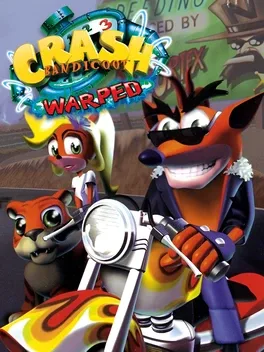
Monday, June 10, 2024

Perfect Dark Review

 (Originally published to Glitchwave on 5/26/2024)


[Image from glitchwave.com]


Perfect Dark

Developer: Rare

Publisher: Nintendo

Genre(s): First-Person Shooter

Platforms: N64

Release Date: May 22, 2000


Rare wasn’t a one-trick pony regarding the titles they developed for Nintendo’s first 3D console. The N64 age was what I’d consider to be the British developer’s golden era, crafting a plethora of fresh and distinctive IPs over the span of five years. Their creative flux was facilitated by a lucrative partnership with the most successful company in gaming, and Nintendo benefited wonderfully from Rare’s dedication to innovation and overall quality. However, a fair quantity of Rare’s output on the N64 catered towards the younger demographic that Nintendo already had cornered the market of to the point of direct correlation. As I understand it, N64 purchasers were fed so many sugary sweet wholesome games featuring kooky, inoffensive cartoon characters that they were liable to contract gaming diabetes. Diddy Kong Racing was so puerile in its presentation that it made Mario Kart 64 look like the chariot races from Ben-Hur by comparison. As much as I respect and adore Banjo-Kazooie (and its sequel to a considerably lesser extent), expressing your fondness for the collectathon platformer past a certain age is bound to raise some judgmental eyebrows and cast some not-so-subtle snickers in your direction. Blast Corps and Jet Force Gemini injected some high-octane adrenaline into Rare’s catalog, but the tone of these two games exuded something that was still ultimately aimed at pleasing youngsters. No, Conker’s Bad Fur Day is not the exception to this rule, as the game was more juvenile than having someone pull your finger at a funeral. Simply because the game is rife with content that is inappropriate for children doesn’t mean it alienates them with an air of sophistication. However, Perfect Dark is the Rate title that an adult could be inclined to incorporate into their cultured leisure activities alongside breaking open a glass of scotch of Bordeaux wine while putting on some Sade or Bill Evans Trio to unwind.

Perfect Dark’s inherent maturity comes from the fact that it’s a first-person shooter title. Upon revealing this information about the game’s identity, hundreds of gamers are going to interject with Goldeneye 007 to dispute my claim that Perfect Dark was Rare’s first foray into enlightened territory. After all, who can possibly outclass the iconic, debonair British spy who always orders his vodka martinis shaken, not stirred, and is the unparalleled epitome of a ladies' man? Hell, some could argue that a James Bond video game adaptation being one of Rare’s properties negates the necessity for Perfect Dark to deviate from the company’s normal practices of pumping out kid-friendly material. However, Perfect Dark’s dignification transcends Goldeneye 007 in more than just its tone and content. Perfect Dark bends the gung-ho gameplay of the first-person shooter genre upward into an intelligency arch, towering over its fast-paced, electric peers by making its players think critically about the overall objective of an FPS game’s levels in a slower, methodical manner. Does this complex approach complement the genre’s general format, or does it prove to be a counterintuitive mistake that causes unnecessary dissonance? With Perfect Dark, either stance is entirely debatable.

On top of the way Perfect Dark conducts itself, the game is irrefutably a technical marvel beyond the boundaries of a standard N64 game. While Perfect Dark is staunchly associated with the now-retro period of the early 3D age alongside the rest of Rare’s notable N64 releases, I mean that it surpassed the others on a technical level in an impartial sense. Perfect Dark’s full scope was so ambitious that it literally could not be exhibited entirely on the primitive 3D console. Everything except the bare-bones multiplayer mode is inaccessible unless the player purchases an expansion pack that adds several gigabytes of RAM to the N64, and only then can the player experience Perfect Dark in its comprehensive glory. The auxiliary aid of the external apparatus renders a noirish, futuristic world akin to the unmistakable cyberpunk aesthetic of the science fiction classic Blade Runner. All Perfect Dark’s setting needs is the Atari logo spanning across the side of a skyscraper to really hone in on that state of a spellbinding, cybernetic world, but featuring another company’s insignia in a video game, not of that company’s creation might involve a serious lawsuit. Requisite, albeit still fantastical, setpieces like flying automobiles zoom through the city skyline illuminated by the artificial iridescence of urban lighting. A conversation of great urgency via telecommunications is heard in the backdrop of this scene, ending when a woman in a skin-tight uniform shimmies down from the chopper the camera has had a narrowed focus on throughout the cutscene onto the roof of one of the tallest buildings in this metropolitan area, signaling the time for action is nigh. Somewhere in Japan, Hideo Kojima’s ego is either bursting with pride that his auteur strides in gaming are being emulated, or he’s green with envy that another developer has managed to craft an opening with the same heightened cinematic scope that he believed was unparalleled. Either way, comparing Perfect Dark’s introduction sequence to that of Metal Gear Solid’s is a lofty compliment, and it should reel the player into the futuristic adventure they are about to embark on. With the enhancement to the system’s capabilities, Perfect Dark’s graphics and cinematic splendor exceed all that we thought was possible on the N64. However, I cannot say that Perfect Dark compares to MGS in the voice acting department, as it’s indicative of the subpar, directionless vocal delivery associated with the growing pains of 3D gaming. Every (human) character has either an American or British accent with the half-and-half consistency of a coin flip, and as much as I snicker at how infamous lines like “No! That wasn’t meant to happen!” are spoken, I don’t think I’m intended to find humor in them given the context. The game doesn’t exactly scream camp to me like Resident Evil.

The character descending from the chopper hovering from above is secret agent Joanna Dark, the game’s protagonist whose “Perfect Dark” alias is the namesake of the title. Some people have been campaigning recently to gender swap James Bond for both a fresh character perspective and to depict more shrewd, capable female protagonists in pieces of media for the sake of inclusivity. Little do they know, gaming was somehow light years ahead of the curve in this regard. It’s uncertain how Joanna prefers the concentration of her gin-oriented cocktails, but this young lady is certainly as adept in executing feats of classified government espionage as her male inspiration. Her sultry, feminine charms are also a plus that Agent 007 could never exude for obvious reasons. Joanna is the prime secret operative working for the Carrington Institute, a research facility whose goal is to halt the clandestine affairs of the military weapons corporation dataDyne. Because dataDyne knows that their recent business interactions are shady and illegal, they’ve armed themselves to the teeth with a battalion of alert guards prepared to strike down any snakes in the proverbial grass. The one-(wo)man-army of Joanna Dark is facing a legion of opposition defending their roost, so it's of the utmost importance for her to approach every corner and crevice of their facilities with caution and masterful coordination. If this sounds overwhelming to the player, the game offers them plenty of room for preparation. Exiting the menu from the laptop where the main missions are selected will transport the player to navigate through the Carrington Institute. Not only will simply traipsing around the clean and professional hallways of this high clearance institute allow the player to grasp the base controls but certain sections are dedicated to allowing Joanna to brush up on her fieldwork. An indoor firing range will display an array of targets to test Joanna’s reflexive shooting aim, and a room painted with a black and white grid will emulate various obstacles to maneuver around, materialized via VR technology. Sure, presenting ways to train one’s abilities to better ensure accuracy in dire situations isn’t something previous FPS games have neglected to provide. However, the freeform, interactive space of the Carrington Institute is a neat little touch of deeper interactivity that creates an immersive quality unfound by simply selecting these training options from a menu. The developers took note that neutral hub zones were a prevalent attribute to the 3D era’s evolution of level design, and flaunting the Carrington Institute is one of the N64’s most atypical examples.

While Joanna is capable of walking to any of the institute’s facilities, she’ll still have to be transported to any of the game’s main levels that further the story by selecting them from the menu on a laptop screen. Perfect Dark’s story is divided into chapters, and those chapters are often spliced up even further by the missions in fractions of two to three. If a chapter is fractured, the collective individual missions are usually confined by a particular arc or setting, such as the main dataDyne building as the focal point of the first chapter or the three-act mission arc of rescuing the American president in the fifth one. Joanna’s overarching assignment to end dataDyne’s scheming will take her to a myriad of eclectic locations. Outside of the sterile, Nakatomi Plaza hallways of the dataDyne headquarters and the underground laboratories where the corporation’s secrets are obscured from the public eye, this operation will also take Joanna on a tour of oceanside villas, inside the quarters of a submarine, and the private jet of the most enterprising executive officials in the world. Joanna even burgles into Area 51, which is as thrilling as one could imagine. The streets of cyber-age Chicago in the third chapter are especially awe-striking, with that neon-drenched urban glow that made the visuals of Ridley Scott’s magnum opus (and Akira while we’re on the subject) so captivating. Joanna is treated to a grand tour of level setpieces, but they all tend to adopt the same design despite their expansive topographical range. The earliest FPS titles were confined to a labyrinthian level construct, and Perfect Dark continues to trap the player in claustrophobic, monochromatic corridors as if it's devoted to some kind of genre tradition. Admittedly, the offices of a thirty-story building and the interior of a nautical station are appropriately serpentine. However, the dim ice caves of the snowy tundra where the Air Force One jet plummets is a clear indication that the game’s areas are constrained to this sort of construct. As a result of this cohesive design, traversing through Perfect Dark’s levels can be as frustratingly dizzying as attempting to escape a hedge maze while drunk as a skunk.

Lest we forget in discussing Perfect Dark’s levels is that it's still an FPS game, so anyone can logically assume that the vexing search for an exit will constantly be distracted by swathes of armed guards for Joanna to subdue. One could also draw conclusions from the spy implications that Joanna’s carrying a treasure trove of weapons and gadgets to use on the field as well. The Carrington Institute doesn’t supply Joanna with any drastically covert items like a stick of lip gloss that melts steel walls when pressed on surfaces, or bubblegum that disables security cameras when it is spat on the lens. Still, the revolving array of doodads the agency does grant Joanna are government-grade materials and are bound to draw a sense of curiosity from the player. Joanna’s primary weapon that seems most commonplace in her utility belt is a scoped pistol called “The Falcon,” and it can be supplemented by the slew of automatic firearms that the guards generously leave behind after Joanna has picked them off. The Dragon, Cyclone, and the K7 Avenger are as deadly and proficient as their badass names would suggest. They are also the weapons I recommend using during missions because their ammunition can be replenished plentifully due to enemies prevalently using them to strike Joanna down. If it sounds like the institute has overestimated Joanna’s abilities by only granting her access to a peashooter with minimal ammunition, fear not: their budget is exorbitant enough to supply their finest operative with some creative and esoteric gadgets financed by the cumulative tax dollars of the people. A crossbow may not seem unorthodox for something exclusive to secret agents, nor does it seem efficient for killing. However, it proves to be the only weapon in the game that ensures a quick dispatch for any target in Joanna’s sights. Sleep arrows are an alternate type of ammunition for delicate targets who must be sedated temporarily. The agency provides a laser that is comfortably placed on Joanna’s wrist like a watch, and a sniper rifle is evidently too essential a weapon to have Joanna scrounge on the field. The fetching weapon that outclasses all of its peers in Perfect Dark is definitely the Laptop Gun, a sub-machine gun that also functions as a detached, automated turret disguised as a seemingly innocuous laptop. Joanna is also equipped with plenty of non-deadly gadgets that are entirely situational to specific objectives such as night vision goggles and the voyeuristic CamSpy. No matter the size or firepower of a weapon, all of them are equipped with a secondary view that zeros in on a target from afar. While the utility of this feature seems like a no-brainer, the aiming controls when looking through the reticle are more slippery than a sea lion. Couldn’t the agency have provided Joanna with some Diazepam to calm her nervous tremors? Actually, it doesn’t matter how unwavering this supplementary sight is because aiming in the standard viewpoint is already course-corrected by the game. Because the FPS genre’s core gameplay mechanic is automatically assisted, the satisfaction that should’ve come with mowing down enemies with Joanna’s eclectic arsenal was ultimately unfulfilled.

Then I quickly realized that shooting combat is not the focal gameplay aspect of Perfect Dark as it is for the average FPS title. I’ve mentioned the word “objective” plenty throughout this review so far, but I have yet to emphasize how pertinent the mission objectives are in establishing Perfect Dark’s directional identity that discerns it from its more guerilla FPS peers. Before the introductory cinematic that sets the scene for a mission, the player is given a checklist of tasks that they must complete in order to succeed. Only during the first mission is Joanna’s trajectory a straightforward trek from point A to Zed, as these objectives will have her scatter across the map searching for solutions to where one of these objectives is located and how to approach it. The number of objectives needed to complete the level coincides with the three different difficulties, with the easiest “agent” requiring three objectives, the standard “special” with four, and the most daunting “perfect agent” presenting a whopping five of which to contend. Every objective found in the simplest difficulty is shuffled with the additional one or two, and the peremptory ones needed for the harder difficulties are still actively occurring even if the player doesn’t have to bother with them. As stressful as the prospect of adding more tasks to the workload might be for some players, maximizing the productivity in each area with the highest number of objectives is the best way to fully engage with an area to its fullest extent. Doing so will also inject more context into many of the scenarios that the easiest difficulty omits for the sake of mitigation. For example, the scene in which Elvis the alien miraculously wakes from his vegetative state in what is essentially a levitating coffin all bright-eyed and bushy-tailed on “agent” difficulty seems too conveniently instantaneous. One objective for the “special agent” difficulty sees Joanna resurrecting the intergalactic creature with a medkit after acting as his sole pallbearer and suddenly, all of my confusion and skepticism was assuaged. Still, regardless of whether or not the player wishes to leave each level without a trace of unfinished business, the objective model alone requires a concerted amount of brain power and patience from the player that no other FPS game has ever come close to factoring into their gameplay.

However, there is an underlying issue with the objective-latent pace of the missions, for it makes the game severely demanding. The missions in Perfect Dark are rather delicate, to say the least, and the margin of error for many of the level’s objectives can be as thin as dental floss. The simplest of mistakes can compromise Joanna’s efforts entirely, and she’ll be forced to abort the mission and have her Secret Service badge revoked indefinitely for her insubordination. I first had the impression that Perfect Dark was intentionally languid so the player could meticulously seek out objectives and carefully consider their options. Eventually, I learned that the game’s true intentions were to have the player fail intentionally unless they have honest-to-god Secret Service training and can deal with any of these situations accordingly. This way, every mistake will eventually ensure a flawless run that will lead the player to victory, but this should only be for those who are concerned with beating their timed scores. Sure, the specifics of the objectives are elucidated upon in the dossier, but there are still some stipulations that the game still keeps in the dark. I was not aware of the thirty-second timer that started before the suitcase carrying Joanna’s equipment was compromised by the mountain lodge’s security, nor was I aware that killing the stewardess’s bodyguards was a punishable faux pas that violated the agency’s code of ethics. When a mission is aborted due to the player’s supposed ineptitude, all progress is reverted right back to the beginning. Not to mention, they’ll still have to factor in the amount of damage Joanna receives, and her death will naturally signal a failed mission as well. The game may direct the player’s aim towards an enemy with more assistance than other FPS titles, but this still does not guarantee that they won’t have the sharpened reflexes to shoot Joanna before they are even sighted in her peripheral. Beyond the “agent” difficulty, allowing an enemy to graze Joanna will result in a hefty decrease in Joanna’s health. Joanna is cooked once the red health threshold fills completely (with blood, no doubt). Shields can be utilized as protective armor, and they seem to be more durable than Joanna’s suit. However, on the harder difficulties, the shields found in the locations of the “agent” difficulty have been erased from the equation completely. Does it seem fair that the player’s extra attention in searching for additional aid is all for naught? An agreeable solution to balancing the higher difficulty settings would be to diminish the shield at the same rate as Joanna’s health because she sure as hell is still going to need them to survive. As it is, Perfect Dark tends to put more on the player’s plate than what is manageable.

Maybe the rate of Perfect Dark’s difficulty is on a steep incline because the stakes of the story ratchet upwards to an incomprehensible, galactic crisis. Perfect Dark’s central conflict supersedes the ordeal between the Carrington Institute and dataDyne, as both are acting as the allying benefactors for two alien factions fighting in a war for interplanetary dominance. The Carrington Institute is siding with the greyer, meeker Maians who look like the sketch artist's depiction of every conspirator’s account of their experience of being abducted by aliens. On the feuding side, dataDyne is in league with the Skedar race of aliens, who are indescribably beastly monsters with the power of shape-shifting their appearances (to something less horrific). Negotiations with dataDyne’s austere head honcho, the reputable, sour-faced Cassandra de Vries, have led the Skedar to an artifact submerged in the abyss of the Pacific Ocean. The transactional reward for dataDyne’s efforts is to finance the corporation with enough assets to crush every one of their competitors, but their first inclination with the superweapon is to test its unspeakable potency on Earth before they use it to wipe the Maians from existence. No wonder the floating dataDyne AI John Carroll defected and joined Carrington’s cause. With the help of Maian’s representative Elvis, who is surprisingly far more charming than his archetypal alien design should allow, Joanna makes De Vries learn the error of her ways. She then takes the fight to the Skedar leader on their home planet, who has been posing as a human operative named Mr. Blonde. Besides the unconventional boss fight against the supreme Skedar lifeform, the ending is rather anticlimactic. Joanna and Elvis congratulating themselves on a job well done as they return to their respective environments isn't a conclusion with the sense of urgency that this epic ordeal should have warranted. Considering that situations differ between difficulties, the outcome of completing the final task should also depend on the extent of the player’s accomplishments.

Despite the resounding success of Goldeneye 007, Rare still wasn’t finished in proving their point that original FPS titles could exist competently on a console’s hardware. Goldeneye 007 provided enough evidence that this hypothesis was feasible, but Perfect Dark is the next leap from Rare’s previous FPS title that suggested that some console FPS games could surpass the quality of those on the PC. Perfect Dark is a layered and cerebral FPS game that trumped the PC crowd’s precious progenitors by cooling its formula to the point of rich refinement that only the patient and acute and clever gamers could entertain. Perhaps I’m not as astute of a gamer as I thought, but there’s a difference between a sharp wit and intuition and psychic foresight that the game sometimes expects from its players. Goldeneye passed the ocular pat down to sit and fraternize with the regulars at the FPS bar, but Perfect Dark is the Frasier Crane of this analogy that talks of urbane subjects whether or not the other patrons understand him.

Tres bien, Rareware.

Infernax Review

 (Originally published to Glitchwave on 1/19/2026) [Image from glitchwave.com ] Infernax Developer: Berzerk Studio Publisher: The Arcade Cre...