Monday, January 26, 2026

Mega Man 8 Review

 (Originally published to Glitchwave on 9/1/2025)


[Image from glitchwave.com]


Mega Man 8

Developer: Capcom

Publisher: Capcom

Genre(s): 2D Platformer

Platforms: PS1

Release Date: December 17, 1996


Goddammit, Capcom. Is there no end to your shamelessness? Isn’t there some sort of industry regulation preventing Capcom from milking Mega Man until its nipples are as crusty and depleted as an old sow’s? What am I saying, of course there isn’t! As history tells it, after the blue bomber had tardily leaped into the 16-bit generation with Mega Man X, and with its sequels that bore the same “X” signifier, it gave gamers the impression that the original iteration of Capcom’s de facto mascot was confined to the franchise’s early titles on the NES. However, with the release of the seventh mainline Mega Man game on the SNES, it seemed like Capcom’s goal was to maximize the series’ profit margin by releasing either two games per year. Or, at least churn out one representative to fill the gaps that might occur with elongated development periods. Twice the serving of Mega Man’s yearly output may sound either exciting or excessive, depending on the perspective of the fanbase. Personally, I’ve adopted the negative attitude of the latter because I barely see any merit in continuing the mainline Mega Man series besides Capcom putting more money in their pockets. Mega Man 7 proved to be a worthy entry compared to the last two released on the NES, with its smoother difficulty curve and addition of an item shop in the main menu, but it hardly compares to the level of narrative and gameplay depth that the X series achieves with essentially the same formula. Well, now that we’ve established that Capcom feels no artistic reservations about plodding along with Mega Man’s stagnant, beta form, certainly Mega Man 8 was an inevitability. Unlike Mega Man 4, 5, and 6 that extended the NES’ lifespan far past its prime, the SNES wouldn’t let the series take advantage of the same squatter's rights policy and kicked its ass forward to the next generation. Because Nintendo was awfully stuffy on preserving the relevance of pixels at the time, Mega Man’s new home was the original PlayStation. Despite its initiative to showcase 3D graphics, Sony’s debut console would prove to let sequels of the pixelated variety flourish, if Symphony of the Night is any indication. Is Mega Man 8 just as exemplary in the category of old guard sequels that maintained their glory despite the industry backlash? No, not especially.

No one can fault me for constantly drawing comparisons between the mainline Mega Man series and its upgraded X counterpart. Ever since the first X game introduced its conflict premise with an impressive interactive prologue, every Mega Man game had to imitate it, even the less involved initial series. After a domestic scuffle above some city streets with Mega Man’s returning rival, Bass, Mega Man is tasked by Dr. Light to retrieve a fallen meteor that radiates an unexplainably powerful energy. While stomping through the beachy shore en route to Mega Man’s mission objective, the worst-case scenario of Dr. Wily obtaining the glowing space rock occurs, and we all know that he’s bound to conduct evil experiments with it. However, what Mega Man does successfully uncover at this moment is the wounded body of another robot from the same outer reaches of the cosmos as the meteor. Mega Man carries this aching automaton back to the lab so Dr. Light can nurse it back on its feet, while the titular tin can journeys forward to halt the grey, mustachioed menace once again. While I tend to harp on the transparency behind the slight derivativeness of this prologue, I realize that perhaps the series couldn’t regress back to an automated, expositional sequence once Mega Man X paved this more involved possibility. Offering an interactive introductory level is a wonderful way of getting the player acclimated to the controls and the beginning narrative beats.

While ironing out the introduction with an interactive sequence proves to be engaging, it’s the presentation of Mega Man 8 that might inspire some emphatic groaning from fans. In fact, Mega Man 8’s presentation is bar none the most excruciating aspect of the game, and I don’t even know where to begin with listing its fatal flaws. Let’s start with the game’s overall graphical aesthetic, I suppose. Like a broken record, I have to compare Mega Man 8 to the X games because I detect a clear correlation between how the look of those titles influences the aesthetic of future mainline ones. Actually, I noticed this dynamic being introduced in Mega Man 7, but the eighth game continuing this specific contrast affirms my suspicions. Given the lighter, warmer, and more cartoonish graphical style that permeates through the mainline games after X sharpened the sheen to a point of stark seriousness, I think the developers are attempting to convey that the mainline games are now the more kid-friendly counterpart to Mega Man’s advanced subseries. Admittedly, Mega Man has always been designed for a demographic that might still believe in Santa Claus, but it’s not as if the X games are adult enough to be pitched to the executives at HBO for a potential TV pilot. The “younger” equivalent of a subseries that is already youth-appropriate renders the mainline games to look sickeningly sophomoric. Mega Man 8 looks like a kindergartner’s first foray into the gaming medium, and it’s far too saccharine to swallow. While I’m on the subject of the mainline games now acting as the junior versions of the “mature” X titles, did they have to turn Mega Man into a screeching castrato to signify his boyish physicality? Actually, this probably wasn’t the intention and was just a casualty of whatever farting around occurred in the recording booth. Ladies and gentlemen, out of all of the horrendous voicework of the PS1 era that I’ve dug through, I think I’ve finally struck the septic tank. I can confidently make a guarantee to all of you that all of the Jill sandwiches can’t hold a candle to the awkward, quarter-assed, mumbling, speech-impediment-ridden dialogue “performed” by the voice cast of Mega Man 8. When the robotics genius Dr. Light sounds like a bad impression of Buckwheat, who stutters and misreads his lines at that, you make the argument that video games should be mute like Helen Keller. The animation where these awful line reads occur is pretty neat, however, or at least the novelty of seeing them rendered competently on a primitive 3D console is amusing.

But Mega Man was never intended to be an extravagant display of gaming’s technical evolution. Beneath all of the game’s newfangled atrocities lies the same Mega Man we’re all accustomed to, for better or for worse. While I no longer expect much from the mainline Mega Man series, I can detect that some creative juices were still stewing in the Capcom studios. As per usual, the stage selection is an eclectic mix of environments due to the varied elemental gimmicks of the robot masters at their dead ends. At first, hopping and skipping across a series of mid-air platforms in Tengu Man’s stage will remind all Mega Man veterans of Air Man’s cloudy domain from the second game. However, the blue fan android’s level didn’t feature a vertical segment where Mega Man has to direct himself away from spike balls scattered about while floating upward in a plastic bubble. Clown Man’s castle is definitely the most childish-looking stage in the game, but I enjoy the teleportation doors the stage uses as one of its circus-oriented hijinks. Sword Man and Astro Man’s stages are probably the most ambitious levels in terms of how they fracture the linearity of the typical Mega Man level. I prefer the four obstacles that lock further passage into Sword Man’s temple rather than Astro Man’s door maze that reminds me too much of the headache-inducing Great Cave Offensive for comfort. Some stages feature automated scrolling sections where Mega Man flies on Rush’s backside, and Beat, Eddie, and Auto can join the aerial firefight to clog the screen with bullets like DoDonPachi. I also prefer the team effort here to the other scrolling section I’ve yet to mention, for that one has given me a new outlet to disturb my neighbors and raise my blood pressure. The first section of Frost Man’s level sees Mega Man riding a jetboard on the snow stage’s icy terrain, and the track tends to be quite turbulent and precarious. One miscalculation of a jump or slide, and it’s curtains for the blue bomber. The margin of error involved with this scrolling section is broader than the wingspan of an NBA player, and the penalty for a single mistake that can happen in a flash is strict and absolute. Sure, the game gives the player visual cues so they can anticipate when to either jump or slide, but each of these signs has no rhythmic sensibility to speak of and can hardly be processed when Mega Man is zooming around like an F1 racer with its brakes cut. What is this, the fucking Turbo Tunnel? Except for this unhinged horse shit, most of Mega Man 8’s level gimmicks serve as serviceable variations on recycled level themes.

Of course, I can’t discuss the levels of a Mega Man game thoroughly without mentioning the robot masters at each of their cores. Besides their half-hearted attempts to sound menacing in their compressed vocal utterances, the octet of hostile machines is really just as adequate as always. Grenade Man blasts the floor of the arena after his health bar collapses to a certain level, revealing another stage with elevated ridges like Quick Man’s encounter. Frost Man must suffer from a pituitary problem, because the ice boss is so ginormous that his character model doesn’t fit his introduction screen in the menu. Hearing his mentally-deficient line delivery also might almost make the player feel remorseful for destroying the big lug (almost). Clown Man seems to have the widest array of attacks at his disposal, Tengu Man is incredibly difficult to reach on account of being airborne, Sword Man has a habit of separating himself as if he can slice his torso at will, and Search Man marks the debut of a double robot master in the vein of conjoined twins. Really, my favorite robot master here is Aqua Man for all of the wrong reasons. His shared moniker with that of a famous DC superhero amusingly begs the question if “Bat Man” and “Spider Man” could be upcoming robot masters in the future, and I guffawed at his greeting, where he presents a rainbow banner that brandishes his name. At least he’s loud and proud about it? As for their respective weapons that all serve as their specific weaknesses, alas, I have to stop hoping for another Metal Blade to grace my presence. In the meantime, the “Flame Sword” dished out impressive damage at a short range, the “Homing Sniper” erased every tiny enemy from the equation with little effort, and I found myself using Aqua Man’s “Water Balloon” as a substitute for the regular blaster almost as much as the Metal Blade (with diminished results, naturally). I also tended to use the other boss weapons like the “Thunder Claw” and “Tornado Hold,” but only because the game kept obliging me to do so with platforming sections that required their usage; an admirable innovation that persuades the player to use their deck to its fullest. Still, while using these weapons for their traditional purposes, exploiting a robot master’s weakness with them this time around has shifted from helpful to straight-up, sadistically annihilating them. Any exposure to their respective kryptonites will have them convulse as you’ve just fried a fish with a taser, and their extended window of vulnerability turns every duel into an absolute cakewalk.

Fighting against the robot masters will expose the fact that Mega Man 8 has a very inconsistent difficulty curve. Like with the previous game, escaping the backwards practices of the NES titles made for a much easier Mega Man experience. Mega Man 8’s contribution to the accessibility initiative is providing solid checkpoints between the two halves of these elongated levels, even when the player exhausts each of their lives. Mega Man 8 also forgoes series staples like E-tanks for upgrades purchased in Roll’s shop that enhance Mega Man’s platforming and offensive capabilities. While these alterations are bound to disgust seasoned players, the strange thing is that they’re hardly relevant factors to the real meat of Mega Man 8’s harder moments. As we’ve discussed, the harsh and chaotic jet board section in Frost Man’s stage stands head and shoulders above all others in terms of a steep challenge. I fail to see how augmenting Mega Man’s blaster or any other perk they’ve implemented really serves the player in any impactful manner with this scenario. During the Dr. Wily climax, which is intended to be consistently more demanding than all eight previous levels combined, all the difficulty of the upward trek is allotted to the starting line. Another treacherous jetboard segment rockets this journey off that makes the previous one seem like a Sunday afternoon stroll by comparison, followed by a series of swinging on hooks with the “Thunder Claw” that requires practically perfect precision, and then caps off with a boss where the only means of harming it involves angling the game’s clumsy default soccer ball weapon with the proficiency of Pele. Hope you weren’t just bouncing off this thing for a bigger platforming boost! Did I mention that the player must accomplish all of this without getting a game over? And to think that this would be the ultimate instance where the checkpoint system would come in handy! After the player manages to persevere through this gauntlet of torment, nothing that follows will compare to its austerity. The next boss can be defeated just by holding down the shoot button. Bass is a predictable little bitch, and I would gladly face off against Flubber Demon over his lemon-colored cousin any day of the week. How does the mad doctor dish out punishment as the series’ penultimate foe, especially since he was an absolute nightmare in his last appearance? Half-heartedly at best. Every one of his attacks is perfectly avoidable, and Rush’s new ability to airdrop goodies refuelled Mega Man for his equally unstimulating second phase. Don’t think I’ll be recounting this one in therapy.

Yep, I’m still subscribed to the thought that “mainline Mega Man” is a redundancy when the X series exists. In an alternate timeline where the NES showed some discipline and released only three or four Mega Man games, and the X series never saw the light of day, perhaps Mega Man 8 would have made a more substantial impact on the series. As it is, the presentational pacing, the upgrades, and finding ways to fracture a level’s linearity would only be impressive if we didn’t know that Mega Man 8 was copying these innovations from the X series. Still, Mega Man 7 was just as guilty of monkey see, monkey do, but its smoothness made all of its attempts to catch up at least agreeable. Mega Man 8, on the other hand, is a mess of decisions that are admirable at best and excruciating at worst. And no, they certainly aren’t limited to the abysmal voice “acting,” if you can call it that. When Mega Man 8 was wearing on my patience, I wished that I was being bored by Mega Man 5 and 6 again. Lord, lay this series to rest and just let the X subseries officially take its mantle.

Friday, January 23, 2026

Red Dead Redemption Review

 (Originally published to Glitchwave on 8/31/2025)


[Image from glitchwave.com]


Red Dead Redemption

Developer: Rockstar

Publisher: Rockstar

Genre(s): Open-World, Third-Person Shooter

Platforms: Xbox 360, PS3

Release Date: May 18, 2010


I have a feeling that much of the initial anticipation for Red Dead Redemption after it was announced was somewhat lukewarm. It’s not that everyone had reason to believe that Rockstar couldn’t sufficiently craft another exceptional open-world IP that further cemented their prestige as pioneering pillars of the subgenre. Rather, it’s the thematic realm that Red Dead Redemption delves into that I can’t imagine gamers in the 21st century would express all that much enthusiasm towards. You see, in the less sophisticated era of the previous century’s middle stretch of decades, westerns ruled the roost in the greater media landscape. People adored vicarious trips into the times of America enacting its “Manifest Destiny” initiative and sowing their imperialist seeds on the more arid, mountainous soil that exists on the other side of the Mississippi River. The conservative attitudes of the period caused people to adopt an almost wistful fondness for the unvarnished nature of this geographical range of settlements and the supposed “heroes” who adapted to its harshness the most proficiently. John Wayne couldn’t act his way out of a paper bag, but his red-blooded, broad-shouldered screen presence in several classic western films made him the poster boy of the genre and a symbol of the stark masculinity that had ostensibly vanished as society progressed onward. In this evolution of American ideals, the western genre’s popularity was ousted by the radical potential of stories and ideas facilitated by the science-fiction genre, whose remaining dominance in our modern media proves its ability to innovate, whereas the western genre faltered due to its conceptual confines. The shift of relevance from one genre to the other was so pervasive that it was an underlying theme of Toy Story of all things. Similar to Woody being overshadowed by Buzz Lightyear, we are all Andys who crave the stimulation found in the unknown, hypothetical reaches of space and futurism that the western genre cannot provide. One could even use the middling reception to Rockstar’s Red Dead Revolver as proof that the western genre cannot thrive in our overstimulated society. However, Red Dead Redemption became a smash hit and a close critical companion to Grand Theft Auto because its open-world foundation taps into a facet of the western genre that its spiritual predecessor failed to foster. Among all that’s associated with its unmistakable iconography, straying further from the already-established American societies along the Atlantic coast carries the connotations of this budding range of land also separating from its laws and moral practices by proxy, hence the “wild” signifier often attached to the region. Because this territory is a little loose with its rules and regulations, one can assume that gamers can make as much mayhem here as they’re accustomed to with GTA’s modern, urban environments.

Given that a fraction of Red Dead Redemption’s appeal is the potential for unhinged carnage, certainly the game doesn’t subscribe to the traditional Western values of a black and white, good versus evil moral compass. The narrative of every single Rockstar game has been filtered under a lens of scathing satire that critiques societal standards, and this attitude being applied here implies that human civilization was rife with vice, greed, and other inadequacies far before the advent of various information age technologies. Take the scene surrounding the train ride in the game’s opening cutscene as evidence of the general ethos that Rockstar showcases regarding the practices and public sentiments of this supposedly idealistic period of American history. Two elegantly-dressed elderly women express their shared ignorant and bigoted opinions regarding the country’s mission to “civilize” the land’s natives, while an evangelist pontificates the gospel to a wide-eyed religious girl, who naively hangs on his every word he speaks, two seats in front of them. However, the talking heads exist here only to establish the narrative tone that the game is going to veer towards for the remaining duration. The focal point here we’re intended to direct our attention towards is the man in the cowboy hat silently seated in the middle, if the fact that this introductory cinematic has been following this man since he left the ferry in the opening moments didn’t explicitly give that impression. After he arrives at his next destination, an older gentleman escorts him to a fortress where the man loudly exclaims that he’s coming to kill the caretaker. However, the head honcho’s assistants subdue this potential grim reaper with a rifle bullet. While it seems like the man’s fate is sealed, a blonde woman and her male associate take this man and nurse him back to health before he bleeds out. By now, I think I can acutely detect a patented Rockstar introduction. Red Dead Redemption seizes our attention into the heat of action with enough ambiguity and tension to retain our sensory stimulation as grippingly as any of the Grand Theft Auto games, allowing our brains to insert pieces of context or at least laser its focus on finding out what’s missing as the game progresses. With the open credits scrolling as the prologue proceeds, Hideo Kojima would’ve corked open a bottle of bubbly to celebrate the continued cinematic flair that he contributed to the medium a few generations prior.

After the opening series of cutscenes concludes, it’s difficult to say whether or not the excitement aroused by the masterful cinematics will be retained once the game sets the player loose in the wild west. This may sound either cynical or condescending (or both), but something about the biotic barrenness of unsettled land and its sheer immensity might not captivate most gamers. Using GTA as a contrasting example, the city setting consistently exudes a bustling, ever-flowing momentum of activity with people galore, even in the quieter, inconspicuous back alleys and in the rudimentary dullness that was Liberty City’s first open-world outing in GTA III. On the other hand, a world where tumbleweeds exceed the population of human beings might not deliver on the same promises of causing unbridled chaos on every corner. Sure, the player is technically free as a bird to proverbially excrete feces on anything that catches their eye from the air, but where’s the fun in this naughty activity if there are barely any targets around to agitate? Pockets of civilization are sparsely divided between the stretches of valleys, gulches, canyons, deserts, mountain ranges, etc, and the settlements are so small and intimate that the player will come to recognize almost every NPC that walks through the saloons and other modest establishments upon frequent visitations to save their progress. While the small scale of municipal activity may underwhelm many players who are accustomed to GTA’s frenetic urban flow, I’ll bet that listing the various organic, geographical features caused another faction of gamers to salivate. For those wishing to bask in the sublime solitude of unfettered wilderness in the gaming medium, accept no substitutes. Red Dead Redemption’s western setting is gorgeous with a capital G: a beauteous pastoral landscape rivaling the best of Albert Bierstadt’s paintings. It’s breathtaking enough to inspire someone to become a transcendentalist, commenting on how the canyons and cacti share a spiritual connection to God like a Ralph Waldo Emerson of a drier climate. Still, more so than just serving as earthy eye candy, the extent of which Red Dead Redemption lulls the player into its quiet, countryside ambiance immersed me like none of Rockstar’s games have ever done before. During a mission later in the game, two characters escort the protagonist to their destination by driving an automobile. Seeing this mechanical marvel, despite its primitiveness in its own right, juxtaposed with the unadorned environment that I had been experiencing, resulted in a jarring jolt of clarity washing over me. I felt the impending death of the wild west that would soon become industrialized and commercialized like the GTA environments that mark our modern day, and it was quite profound.

Unexpectedly, I also found that while Red Dead Redemption’s world was far less energetic than Liberty City or Los Santos, the topographical hodgepodge of habitats that comprise the game’s western world is more diverse than the wall-to-wall manmade constructions that compose a GTA cityscape. It’s unclear exactly where in the USA Red Dead Redemption takes place, besides its cardinal direction in relation to the union’s longest vertical river. Still, the player can make some educated assumptions based on some clear context clues. For one, it seems like the overarching territory is referred to as “New Austin,” relating to the capital city of Texas. As of writing this, I’ve never set foot in the “Lonestar State,” but based on the information I’ve gathered, a massive state that is somewhat synonymous with the aesthetic and lingering cultural values of the wild west that it was once a part of makes perfect sense to model it as the primary setting for a western, much less an interactive one. I’m sure the geological makeup of America’s belt buckle consists of plenty of prairies, swamps, and the other aforementioned environments usually associated with a hotter, drier climate. Armadillo is the spitting image of a frontier town, with its businesses running parallel to each other on a sandy, narrow road intended for horses and the carriages that they drag from behind.

The existence of a town like Armadillo supports my theory that this fictionalized stretch of the wild west is based on ol’ timey Texas because the majority of these settlements in this state resided along the USA-Mexico border, a relevant point of information considering that our spicy neighbor to the south occupies a significant portion of this game’s world map. Even though the narrative directly sends the player across the border during a mission about one-third into the story, one may not clearly detect that they’ve stepped beyond American jurisdiction because the aesthetic distinctions between the two available nations are barely discernible. While it existed outside of the USA’s coveted countryside, Mexico persisted as a prevailing secondary backdrop in most western-oriented media due to much of the nation sharing the same topographical characteristics. Given that it’s located in the same general geographical radius as this formally unsettled American expanse, it’s sensible that there would be canyons, dunes, and rocky plateaus aplenty–and in equal measure to the American area a hundred yards over the rim. The actual division between the two vertical sides of the map stems from clear cultural differences. Besides the fact that every NPC down here has browner skin and primarily speaks Spanish, the various villas, haciendas, and other architectural foundations that encompass each Mexican civilization truly instill the anxious, yet gratifying feeling of traveling abroad. That, and I suppose the volume of cacti runs more rampant in sand that seems to be brighter to illustrate the country’s slightly closer position to the equator. Rockstar offering a wholly different province to explore was a fantastic way to further engage the player’s curiosity, and the lively, distinguishing traits of Mexico are executed with great tact and respect. I’m not stating this solely because they didn’t drown the country in sepia tone for the sake of discernibility.

I’d wager a “true daily double” on the primary setting being Texas, with all of the evidence at hand, but the final district of the map unlocked inspires some reluctance. North of the anarchic bayou that is Thieves Landing is the peninsula of West Elizabeth, which is two central districts, not including the ultramodern (for early 20th century standards) governmental hub of Blackwater. Terrence Malick’s Days of Heaven affirms that there are indeed miles of hilly, vacant plains where echoes probably resonate for hours in Texas, but the “Tall Trees” area to the west is so reminiscent of the northern California wilderness that I’m surprised the player can’t find marijuana plants growing along the road. Furthermore, I can’t name a state situated in the wild west with mountain ranges whose elevation is so high that snow perpetually covers the ground, or at least one that also borders Mexico. Am I letting the semantics of geographical rationale distract from the varied assortment of environments that Red Dead Redemption bestows? If the game did exhibit some historical fidelity to the time of Texas in the wild west and its respective urban and rural attributes, it’s likely that the experience would grow somewhat stale.

Like all of Rockstar’s previous sandboxes, with the term taking a more literal stance this time around, the immersion that all of this open-world exploring is intended to inculcate coincides with the story arc of the protagonist they are piloting. The wounded man at the helm of the game’s narrative is John Marston, a 38-year-old farmer and former high-profile criminal who was reeled into that disreputable lifestyle on account of his vulnerability and lack of direction as an orphaned child. He certainly looks the part of a stoic, dogged Western man with his cowboy hat, turncoat, and boots with clanging spurs. Still, his outward scuzziness, plus his felonious background, seemingly situates him as a character that John Wayne or Jimmy Stewart would stick the tip of a double-barreled shotgun up against his nostrils and call him a tepid disparaging phrase that would only offend an octogenarian. However, the contrast between Mr. Marston’s appearance and his demeanor is what makes him exceptionally subversive. Despite what his reputation might indicate, John exudes an air of gentlemanliness that all other southern men should follow as an example. He’s frightfully polite, courteous, grateful, an assiduous worker, and graciously declines all sexual favors from the stockpile of whores that secrete out of every settlement to maintain faithfulness to his wife, Abigail. We don’t know if John has always been exemplary in the department of manners, but if improving his decorum is a fraction of his “redemption,” I’d say that he’s sufficiently turned that new leaf. Still, John hasn’t verged too deeply into goody-two-shoes territory to the point where his behavior is uncanny. Surprisingly enough, I kept making comparisons between John and Niko Bellic as I spent more time with Red Dead Redemption’s protagonist. Between all of his chivalrous responses, John can get rather snarky depending on his disposition towards the person with whom he is conversing. There is also an underlying cynical attitude that John expresses whenever conversation verges on the philosophical or sociological side, but that’s to be expected from someone who has lived on the fringe of society amongst a gang of rogues for the majority of his lifetime. Similar to GTA IV’s Serbian soldier, John Marston is grizzled on the outside and charred on the inside, yet the circumstances of his past that have shaped his current day have not completely plunged him into the depths of despair and depravity. His heart of gold and strong ethical code certainly give him much more charm than initially imaginable, and we greatly sympathize with his striving to escape his checkered past.

But the extent of how severely John wishes to redeem himself might be misleading without the necessary context. The overarching redemption mission that will figuratively unshackle John is finding the whereabouts of his former gang associates and acting as their moral executioner. However, the bit of context surrounding this supposed deed of retribution is that John is literally shackled by the binding lace of the law. The Bureau of Investigation is holding John’s wife and teenage son hostage to coerce John into doing their dirty work, which is eradicating the surviving members of the Van der Linde Gang. This tidbit of information behind John’s goals may reveal that they’re driven by fear and not repentance, suggesting that he’s still a vicious, thieving snake at heart.

However, before you throw up your hands to celebrate and proceed to terrorize Armadillo and tie a prostitute to the train tracks while twirling your comically long handlebar mustache, know that the game features a few stipulations that might incentivize the player to keep John’s hands clean. If the player can’t resist the urge to slaughter the innocent, they should be aware that Red Dead Redemption does not feature the same punitive system as GTA. All of John’s potential crimes will accumulate like garbage in the ocean, even after he respawns once he’s subdued for his belligerence. All of his misdeeds will pile up in a monetary bounty, and the amount increases with every crime he commits. Because of the underdeveloped legal system that exists in this germinating society, bounty hunting provides a quicker way to make money than selling crack on the streets of Washington, D.C. in 1985. Word will spread like wildfire surrounding John’s disregard for human life and tranquility within the community, and several gunmen will often attempt to put his head on a platter by bumrushing him at random occurrences. Once the player becomes irritated by the swarm of vigilantes and decides to liquidate their bounty via the contents of their own wallet, John will continue to feel the ramifications of his misconduct due to the depletion of his “honor.” Whenever John performs either an act of altruism or commits a sin most heinous, it will cause a meter to slowly veer towards the coinciding direction on a defined horizontal spectrum. Depending on whether or not the player decides to transform John into a saint or a name that makes people shudder upon its utterance, either greatly affects certain aspects of the game. If John is perceived as a hero, shopkeepers will lower their prices, and interruptions by hostile NPCs are much less frequent. If John verges towards the path of scumbaggery, he’ll have to defend himself from the blowback of the common folk like a white blood cell fending off pathogens. Maximizing John’s potential for evil will reward him with a cool-looking horse that is charcoal black except for its white face that resembles a skull, but I could never bring myself to trade my Kentucky Saddler (that I affectionately and referentially nicknamed “Blondie”) for any other steed. Also, be aware that there is another meter that allots John’s “fame,” which is on a fixed, irreversible scale. When the game is automatically increasing John’s popularity, it would be wise for the player to consider that it’s better to be bombarded with praise and peaceful offerings rather than screams and shootings. With deeper contemplation, I led John down the path of righteousness and virtue because reaching the highest honor capacity felt like a more gratifying achievement as opposed to making mindless mayhem that turns him into New Austin’s biggest scab. That, and acting on homicidal impulses, contradicts John’s amiability that the narrative clearly establishes for the character, and I didn’t want the dreaded LD phrase to rear its ugly head again.

Rockstar was seemingly aware that the temptation to cause chaos as John would be difficult to curb, so they implemented plenty of activities for the player to humor as a means to keep those indecent urges at bay. For one, increasing John’s honor meter doesn’t connote that he’ll totally abstain from violence and become a pacifist. Settlements such as Armadillo and especially Thieves Landing are brimming with bandits and domestic rapists alike, and meeting their transgressions with a steamy bullet is considered justifiable enough of a killing to warrant some good karma. The sheriff also tends to turn a blind eye to jackasses who challenge John to duels, with John pumping every bullet in his gun’s chamber to ensure that he’s victorious. John can also partake in some bounty hunting himself once a wanted poster of the target appears, which will involve John blowing holes in dozens of the criminal’s vagrant cronies with impunity. One aspect of this common optional escapade that I adore is the choice to spare the target’s life and instead lasso him up and deliver him to the local lawman, and have them decide his fate. Not only does the reward amount double upon bringing the man to justice, but the additional dimension of difficulty that comes with treating this terrible man more humanely makes the mission much more engaging than carelessly firing off a full round of bullets in all directions. John can also sign himself up for more stable work to gain currency, including horse wrangling and a nightwatch job where he follows a dog around the perimeter with a keen sense of sniffing out disturbances. As far as the more casual fare that Red Dead Redemption provides that isn’t attached to anything particularly productive, there are plenty of assorted minigames scattered about that might distract the player from molding John into a menace. Card and dice games like poker, blackjack, and Liar’s Dice are available in the saloons to possibly make some considerable cash with impeccable strategy, and drinks here are cheap enough that John can drink himself stupid without blowing the bank. You can’t functionally shoot a gun while you’re sauced, right? Remote locations often hold arm wrestling and five-finger filet tournaments with wagers involved, and the latter activity seems especially precarious considering that medical science at the time deemed it acceptable to use cocaine as an anesthetic. These distractions might seem quaint compared to the mod cons of GTA, but I promise every stubborn skeptic accustomed to modernity that they’ll become as worked up over a game of cards or horseshoes as beating Roman in bowling.

If the prospect of gambling and alcohol fails to quell the player’s murderous tendencies, one last avenue they can resort to is taking out their aggressions on the various wildlife that serve to spruce up the liveliness of this desolate domain, without any tangible consequences to consider. Despite their lack of defenses and the disgusting, screen-staining blood splatter of the skinning process that John can perform if deemed necessary, I support including animals into the fray of an unbounded murder simulator for its innovation alone and condone John’s unsolicited butchering of them–mostly because I know that annoying animal rights activists will become irate at the idea and protest it for misguided reasons. Cougars and grizzly bears should be purged on sight without question, for they’re as hostile and deadly, even not even more than, any human outlaw that brandishes a firearm.

Or, you know, the player can focus on continuing the game’s story via the missions, which are guaranteed to feature a dozen dirty malcontents for John to sear with smoking lead. Similar to GTA IV, Red Dead Redemption capitalizes on the prevalent shooting craze of the current generation by featuring gunplay for almost every mission. Except a few horse races, cow herds, travelling to destinations before sunfall, and one stunt involving a mine cart, the vast majority of the game’s missions involve John taking cover behind a large rock or a solid wooden or stone barrier and seek the opportunity for enemies to peak their heads out of their respective environmental shields like groundhogs so John can redecorate it with a bloody red paint job. The difficulty curve is consistent, but it retains a flat, predictable level of breeziness unless there is a minuscule additional factor included. For instance, protecting the hide of a government train from Mexican rebels had plenty of blind spots due to the running train obscuring one side of the enemy ambush, and some environments, like the more wooded areas and mountains, don’t accommodate the player with much terrain to shield themselves from gunfire. As far as the arsenal at John’s disposal needed to become a contender during these firefights, the essentials are a wide assortment of revolvers and rifles, with shotguns, scoped rifles, and mounted machine guns serving well in specific scenarios. My favorite selection of John’s incendiary tools is the wildcard ones situated in the eleven o’clock position on the weapon wheel. Throwing knives, Molotov cocktails, and sticks of dynamite are simply too passe for the contemporary GTA games, so I’m glad that this true period piece allows the developers to incorporate untested weapons that no longer seem outlandish given the circumstances of the setting.

Continuing the comparisons between Red Dead’s combat and its generational GTA peer, the inundation of inexperienced gamers trying out the shooter genre due to its popularity compelled the developers to streamline the aiming for the sake of accessibility. Holding down the aiming trigger on the controller will automatically pinpoint John’s line of sight on the target’s cranium, or at least at another vital organ that will ensure a quick dispatch. In addition to the slight hand holding at play, Red Dead Redemption administers another element to the shooting mechanics that practically guarantees that the player is the most piercing gunslinger alive. By pressing the lower analog stick, the entire screen will slow to a crawl and become washed in the color that Hollywood associates with Mexico in what the game refers to as “dead eye mode.” While in this manipulated perspective, John takes advantage of the glacial momentum to execute a bullseye shot on any piece of an enemy’s anatomy they desire. Later on, the player can even stamp multiple targets onto anything with a pulse and chain shots so proficiently that it’s almost comical, similar to Gene Wilder’s character from Blazing Saddles and his perfect shooting record. However, the skill involved with this flashy maneuver requires anything but proficiency. This is why I cannot firmly decide whether or not “dead eye” is cool or controversial. On one hand, this aidful mechanic cleverly allows the player to channel the masterful marksmanship associated with a sharpshooter from this era. On the other hand, the player should ideally aspire to earn this level of expertise organically. All in all, I think I’m leaning towards the former stance because the thrilling novelty of blasting the brains out of gangs of guys never exhausted, even when I realized I was using this mechanic as a crutch, which is bound to happen considering its brisk nature and that the juice required to fuel “dead eye” replenishes automatically with enough time. However, another facet of Red Dead’s shooting that fully rubbed me the wrong way is the regenerative health mechanic. Having John scurry away or block himself from harm momentarily while his wounds heal in seconds like Wolverine almost ejected me out of the time period, for this mechanic is so 2010 that I could faintly hear a Ke$ha song playing as the threshold of John’s mortality started to snap.

Still, despite John’s quickness with a hand cannon and his position in the narrative as a likeable, dynamic protagonist, Rockstar decided that the ultimate fate for their charismatic cowboy should be sealed with tragedy. Just to get it out in the open, yes, John Marston’s death at the narrative’s climax lives in infamy for being one of the most emotional moments in the gaming medium’s history, making teenage boys (me and my friends at the time) shed tears profusely without receiving any scrutiny. Also, I want to give a sincere “fuck you” to Rockstar for making the player feverishly fret even more by making them think that their “lack of skill” played a hand in John’s death, automatically engaging “dead eye mode” when he’s faced with an entire squadron of armed Bureau members in close quarters. Rockstar’s cruel conclusion for John shocked, angered, and saddened me, but I now realize that this is probably because my fifteen-year-old self wasn’t as alert and sagacious as my game critic adult self. Over a decade has passed since I first coped with the loss of John Marston, and I now find that the game’s narrative was clearly foreshadowing the protagonist’s untimely demise. Not only that, but it also seems to suggest that any chance at redemption with all of the circumstances of the setting and situation at hand is a futile, bootless errand.

First and foremost, how is John intended to reform when he’s forced to collaborate with the dregs of society? Isn’t that what got him into this mess in the first place? Because Bill Williamson’s stronghold of Fort Mercer is as guarded as Area 51, John must make like Seven Samurai and assemble a crew of people with unique talents in order to penetrate the seemingly impenetrable. The underlying problem with this specific coalition that John wrangles up is that their distinctiveness also applies to how disgusting and contemptuous John feels each of them to be. Still, this should be the natural reaction to being forced to cooperate with a pungent graverobber, a deceitful Irish drunk, and a pretentious snake oil salesman who plays up his pseudo-medical miracle elixirs so passionately that he seems to genuinely believe his own bullshit. I realize that John’s mission of murder isn’t exactly virtuous, but most of the horrendous things he’s seen and done that have scarred his soul involve the indirect actions of his affiliates. A significant part of straying away from the tumultuous life of crime was no longer associating with criminals, and really, what’s the difference between these reprobates and the ones John formally ran with? Once Bill catches wind of John’s Trojan Horse plan and flees the coop to Mexico to join John’s second target, Javier Escuella, John’s allies down in the Land of the Sun are even more despicable. For some reason or other, many westerns set in Mexico are situated around the historical conflict of the Mexican Revolution, and the second major arc in Red Dead Redemption borrows the worn, tattered page from this notebook. In order to gain information on Javier’s whereabouts, John ends up playing both sides of the Mexican power struggle. The tyrannical Colonel Allende and his second-in-command, Vincente de Santa, are two unscrupulous bastards who are liable to make the player’s skin crawl, and John working with their efforts to quash their resistance is not a redeemable sign of character, even if it is a means to an end. Then again, the resistance leader, Abraham Reyes, doesn’t exude a high moral fiber either. This assessment of his character has less to do with his womanizing and more to do with the fact that his eagerness for the power he wishes to gain after the Colonel is overthrown implies that he’ll just continue the country’s bloody cycle of injustice. Maybe John’s screws are a tad tighter than all of his allies, but as the saying goes, adjacent to refuse is still refuse.

John’s extemporized killing quest seems rather counterintuitive to his wish of keeping a peaceful, felony-free life, considering that he already achieved this while on his farm with his family. Perhaps what the narrative is trying to illustrate here is that this idyllic existence is impossible while the West remains, well, wild. After all, Edgar Ross and Archer Fordham, the so-called arbiters of peace ‘round these here parts, sure do enact their brand of justice very violently. They’re also a bunch of sticklers who elongate John’s servitude to them when they hear that his former gang leader, Dutch Van Der Linde, is in the neighborhood. A reconnaissance mission leads John to find his sensei, using his cult leader charisma to position himself as the chief of the local native outcasts that reside in the snowy mountains. Once John has Dutch cornered with his back against a cliff, the man who apparently always found a way to finagle his way out of a tight, tense situation finally concedes and accepts his fate. Dutch’s murmured monologue on how the advancements of the world are taking him and people like him (John) out to pasture is quite harrowing, and watching him fall off the mountain peak to his death with no hesitation is also a rather shocking display. Dutch’s final words are a disquieting omen for the former friend he spoke them to, but the main takeaway from this chapter of the story that I’d like to address is the stranglehold the Bureau has on John. Forcing John to comply with their further demands does not spell a smooth, amicable working relationship that will bode well for John’s future state of affairs. They may as well make John wear a maid’s outfit while on his assassination adventures to signify his bitch status.

In addition to the Bureau having a grip on John’s autonomy like a cobra squeezing the life out of a mouse, the scope and placement of the last few missions contradict all narrative logic. Once the Bureau finally loosens John’s chain and reunites him with his family, plus an old codger acquaintance nicknamed “Uncle,” the furious firefight that marked most of the missions leading up to John’s return to normalcy is shifted to blasting off rounds of ammo to fend off crows from consuming all of the corn in his silo, teaching Jack the ways of the land and how to become self-sufficient in them, and rekindling the days of herding cattle with Bonnie Macfarlane on his own ranch with Uncle. Every staunch gamer should know that turning full circle around to the game’s tutorial right near the finish line is never a story’s coup de grace, even though I’m sure a section of fans would invest more of their precious time playing Red Dead Redemption as this humble, Harvest Moon-type experience. John had to die in order to energize the game’s concluding chapter, but it’s not the event where the screen fades to black and “fin” is the last shot seen. After John’s family sees the horror of John lying stiff in a pool of his own blood, the scene then shifts to an adult-aged Jack, who is now the indefinite playable replacement for his father. This epilogue of sorts allows the player to continue roaming throughout the wild west regardless of the narrative constraint at hand, but there is actually one last mission that puts a period on the adventure. Well, it’s technically a mission in that it has a goal and objectives, but it's also a secondary “stranger mission” that the player could easily miss, not realizing they still had to be attentive to story progression. I’d advise everyone to stick around Blackwater to converse with a Bureau agent on the whereabouts of Edgar Ross, so that Jack can expedite the rotten old asshole’s retirement. A short string of conversations will lead Jack down to a Mexican river where Ross will stop fishing to engage in a duel with the vengeful, young aggressor, and the credits will roll if Jack successfully turns Ross’s body into Swiss cheese. Would I be in disagreement with Rockstar that Jack’s exploit shouldn’t have been relegated to something the player could approach as a lark, given its crucial narrative weight? If the developers felt that stretching this addendum would divert too drastically from the focal point of John’s story, then it should’ve been unlocked as a completionist reward to justify its position as a lark. As it is, the trivial scale of this meaningful falling action event is unfortunately rather anticlimactic.

If anything, I think that Red Dead Redemption serves as proof that I don’t inherently dislike the cinematic sphere of gaming. Admittedly, the game does exhibit plenty of traits that I often find rather unbecoming of titles that try to suppress the interactivity aspect of gaming in favor of implementing some more inert properties of film. Of course, I’m referencing the relatively formulaic mission format of covering and shooting, along with the assisted aspects of this gameplay that the title provides to ensure that the playerbase isn’t inconvenienced by a stacked skill ceiling. Still, I think I’ve realized that Rockstar’s open-world construct is what makes the seventh generation’s innovation habits palatable, for the breadth and liberal parameters of the genre are what uncage the suffocating linearity that binds most cinematically inclined video games. In fact, in a genre that pronounces player freedom, the cinematic elements can sink into their sensory glands much more effectively when they’re given ample room to resonate. Again, I have to reiterate that seeing a staple of human evolution in the Bureau’s automobile snapped me out of the setting like someone slapping me out of a drug-induced hallucination, so the developers must have found a winning formula to hypnotize me into a period that predates my cushy, 21st-century existence by well over a century. Still, it also helps that the story that the gameplay is tethered to is a western epic worthy of being spoken alongside the genre greats of Ford, Leone, Peckinpah, etc. Forget about gaming’s Buzz Lightyears, like those in Mass Effect and Dead Space; I wanna play with Woody a little while longer because he’s still a bad motherfucker (in the informal slang sense, meaning cool, of course).

Friday, January 9, 2026

Castlevania: Order of Ecclesia Review

 (Originally published to Glitchwave on 8/27/2025)


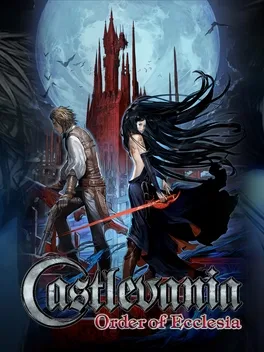
[Image from igdb.com]


Castlevania: Order of Ecclesia

Developer: Konami

Publisher: Konami

Genre(s): Metroidvania

Platforms: DS

Release Date: October 21, 2008


As I prepare to discuss Castlevania: Order of Ecclesia, that darned surge of sentimentality has struck me once again. Just as the traditional 2D platformers that birthed the series on the NES had evaporated from circulation after Symphony of the Night revolutionized the Metroidvania genre, its followers eventually followed suit and dissolved into the ether of gaming’s bygone yesteryears. It was all a matter of time, I suppose, and the cessation of Konami’s seminal series didn’t just stop with the successors to Symphony of the Night. In the early 2010s, Castlevania churned out another mediocre 3D title with Lords of Shadow and its equally underwhelming sequel, plus a multiplayer Xbox Live Arcade extravaganza in Harmony of Despair. Since then, the Castlevania franchise has fallen into an indefinite slumber, like how Bram Stoker’s chief of evil tends to undergo upon defeat. However, I don’t think the series will arise again to spread its wings and soar over the modern gaming landscape, or perhaps this potential new reign of Castlevania will take place a century after its initial dissolution, similar to Dracula’s resurrections. As of now, Order of Ecclesia, the third and final Castlevania title on the DS, is what I’d consider to be the last significant hurrah for this classic, storied series, leaving a bittersweet sense of finality to linger in my throat. So, is Order of Ecclesia a worthy entry to conclude one of gaming’s most celebrated series, or does it whiff the landing and crash spectacularly? Well, I suppose it’s all up to one’s perspective of what constitutes a solid Castlevania game. Personally, I enjoy a Castlevania game that crafts its own identity by solidifying its own distinctive mechanical feature, but with something practical and interesting in the vein of the twin protagonists of Portrait of Ruin and not the Klaatu barada nikto seal casting bullshit in Dawn of Sorrow. I also tend to prefer the Metroidvania titles that don’t nestle into the comfort zone of banking off the success of a more prestigious peer, which I realize is another slight at Dawn of Sorrow. Order of Ecclesia verges more on the side of my idealized Castlevania experience on paper, but as if it were orchestrated by Hell’s “Ironic Punishment Division.”

Certainly, the “noun of noun” title sequence of this game should raise some eyebrows, considering that “ecclesia” is an obscure term not often uttered in modern society outside of ultra-specific academic circles. Order of Ecclesia is not using “ecclesia” to reference the gathering of people in an ancient city-state as per the traditional definition, but it does pertain to a fictional coalition of people forming with the common goal of destroying Dracula. In this era of the wonky Castlevania timeline, the lineage of Belmonts that have dutifully served as the anti-Dracula task force for centuries has evidently gone missing or has given up. Either or, this consortium of people has taken the mantle of oppressing Dracula’s ascendancy to ensure peace and prosperity for humankind. One particular person in this organization, our protagonist Shanoa, is chosen by her peers to wield Dracula’s power, which has been concentrated into three glyphs referred to as the “Dominus.” Alas, as the aphorism that “power corrupts” dictates, Shanoa’s colleague and dear friend, Albus, swipes the three Dominus glyphs during a vital imbuing ritual for Shanoa. Because Albus cannot be trusted with such a volatile essence of pure dark energy, Shanoa must make haste to her blood brother before he does anything rash with the precious glyphs and causes cataclysmic damage to either himself or the world at large–all while recovering from the amnesia that the ordeal inflicted on her. Overall, the focal point of this plot premise that people seem to commend is the fact that a female protagonist is finally at the forefront of a Dracula destruction mission, or at least one that isn’t as mechanically suppressed as original Game Boy title Castlevania Legends or one where the heroine isn’t sharing the spotlight with the typical masculine narrative vehicle like in Portrait of Ruin. But who is to say that Charlotte wasn’t the one driving the Johnathan tank to blow open the towering ivory doors of Dracula’s chambers? Semantics aside, it’s still marvelous that this pretty young witch with the long, black, silky hair has been propped up among the generations of Belmonts as the main crusader against The Count, and it has very little to do with her smoother skin and higher estrogen levels. On a system whose Castlevania output has been using the conceptual foundation of a previous entry to craft a sequel and a spiritual successor, respectively, receiving a title that totally abandons any hint of narrative familiarity and plops itself onto an uncharted area of the Castlevania chronology is as fresh as a spring breeze. Perhaps erecting a new narrative completely removed from any Belmont relevance is the only way in which a woman could trespass into Dracula’s domain, which begs the question of whether the vampire-killing family only produces male offspring.

If you thought that Order of Ecclesia breaking the series’ stained-glass ceiling and granting a woman the job of conquering Dracula or one of his disciples was outrageous, get a load of how the game approaches the series’ Metroidvania utility-gated progression. There isn’t a solidified rule in the Metroidvania design book dictating that the setting should be a monolithic, barricaded construction or a series of distinctive areas with branching pathways that connect to establish a cohesive fluidity between them. The reason why Dracula’s Castle worked wonders in demonstrating a template for every subsequent Metroidvania game in the genre’s relative infancy is because the majority of the areas in the pre-Metroidvania titles existed within the confines of Dracula’s distinguished domicile, which subtly illustrated that there was already a sense of interconnectivity that was just being segmented as par for the linear, traditional 2D platformer course. Portrait of Ruin played with the idea of fracturing the narrative's harmony through the castle’s various corridors with the painting portals, teleporting players to areas that were totally detached from the central castle with unique geographical and aesthetic distinctions in their isolated parameters. Still, the player would continually revert to the castle motherland once they reached the dead end of a boss room, so the maverick potential of this idea was ultimately squandered. Well, Order of Ecclesia boldly continues what Portrait of Ruin hinted at by cutting out the castle middleman entirely, offering up a slew of completely uncoupled levels on a world map screen that are presented as matter-of-factly as picking a planet in a Ratchet & Clank game. Some Metroidvania purists might get huffy at the developer’s unflinching decision to divide Order of Ecclesia’s world in this manner, and they’ll likely furiously debate whether or not the game can classify itself as another entry in this elaborate category of 2D platformer when it hardly upholds this crucial design element of the genre. I’m siding with the more optimistic opinions regarding Order of Ecclesia’s design direction, for I’ll argue that the utility-gated, revisitation aspect is equally as integral to the Metroidvania definition as the sprawling, interconnected world where locking the entryways takes place. Admittedly, however, instances of this rarely occur throughout Shanoa’s adventure. Shanoa can explore the sea floor of the stormy Kaldius Channel once she tacks on density, and she won’t be able to warp through a select few walls scattered about the land until she is almost face-to-face with Dracula. Other than these few instances, progressing through each locale is a fairly straightforward trek from the entrance to the boss with a few deviations sprinkled about. Flattening the course of these Castlevania areas may spurn the Metroidvania enthusiast crowd that Konami has been appealing to since Symphony of the Night skyrocketed off, but I believe that the linear level design on display here will generate a sense of intrigue from the deferred fans of “classic Castlevania,” provided the RPG gameplay components aren’t too incongruous to ruin their nostalgia trip. As someone who is a fan of both sides of the 2D Castlevania coin, I’ve been jonesing to experience environments that the series used to showcase outside of the manmade architectural confines of a castle interior–and including more organic, outdoor areas such as caves, forests, reefs, swamps, etc, satiates my cravings. Come to think of it, the series hasn’t allowed the player to explore environments like these with such liberal progression parameters since Simon’s Quest. Holy shit, has castle fatigue really seeped in that deeply that I’m pining for the forgone practices of THAT game?

Continuing the ways in which Order of Ecclesia gives Simon’s Quest more credibility than it probably deserves, selecting a particular area icon depicted on the game’s world map will lead Shanoa to a level that is considerably less hectic than the others. The Wygol Village is discovered once Shanoa glances at a map that Albus carelessly leaves behind during an encounter with him at a monastery. She journeys towards where X marks the spot on Albus’s little reference page to find a quaint little burg that greatly evokes the rustic nature of a remote European settlement from the century in which Order of Ecclesia is set. Still, Shanoa finds this unadorned village to be so tranquil that it verges on suspicion, and those uneasy feelings are affirmed when she learns that all of its inhabitants have been afflicted with a catatonic curse caused by Albus. Wizened Wygol elder statesman, Father Nikolai, is the only citizen of this burg to be left in stasis here, while all of the other residents of this rural civilization were unfortunately ensnared by Albus while out and about. Freeing the remaining townsfolk from their cursed captivity becomes the game’s overarching secondary task, like a collectible. Some can be found paralyzed along the intended trajectory, while others require a slight digression to rescue on account of being frozen off the beaten path. A couple of these poor saps have even managed to get themselves stuck behind inconspicuous crevices where I’m not sure if Shanoa could hear their cries for help, even if their vocal cords weren’t rendered kaput. The callous, less conscientious Castlevania fans might ask why Shanoa should care if Albus immobilizes a dozen rubes, but other than receiving the ethical satisfaction of aiding those in need, Wygol’s denizens will show their gratitude towards Shanoa’s efforts by offering their wares once they hurry back home. In any functioning community, there are services established to ideally keep its economy flowing everlastingly like the Amazon River. Shanoa can potentially save all of society’s staple vocational VIPs to, in turn, receive more effective healing items from thief-turned-healer Abram, nutritious home cooking from the fatherly and motherly Aeon and Irina, rare jewels from the beautiful, buxom Laura, etc. Taking photographs of specific creatures for Marcel will earn Shanoa an ample surplus of cash for her troubles, which will likely finance the prices for their commodities that are sold by shopkeeper Jacob. A more meticulous foraging throughout each level for these nice, honest folk is not inherently the issue regarding this overarching side quest, for any piece of uninvestigated land I can detect on the map in a Metroidvania game will be trekked towards out of natural curiosity, regardless of whether or not I suspect that something notable is located there. Rather, I can smell a ruse behind this ongoing sidequest, unveiling some nonoptional conditions behind this perceivably optional exploit, considering that so many Castlevania essentials like a shop and its products are locked behind these stipulations. I’m not enthralled with all of the busywork the game has assigned to earn what should be readily available to the player, or at least be unlocked all at once at some point.

As much as I wanted to testily tell George the musician to find his own fucking eagle feather or inform Abrahm that he can take his precious mandragora root and shove it up his ass, my recalcitrance would’ve conflicted with my desire to continue making progress in this game. My status in the game’s narrative was at the mercy of the villagers’ various requests because Order of Ecclesia is harder than a porcelain toilet situated outside for days in a freezing tundra. Not since Circle of the Moon has a Castlevania game bombarded the player with a consistently blistering challenge curve, and one could argue that it’s another instance of Order of Ecclesia paying tribute to the classic Castlevania titles. In fact, the severity of the environments is the main factor that makes these linear levels substantive, as was often the case for the earliest ones in the series. Single-screen spaces are congested with an army of enemies, all bringing their best efforts to slaughter Shanoa like a pig. I especially became overwhelmed by the rate of enemy onslaught on “Minera Prison Island” because I kept inadvertently summoning the disturbing-looking “Evil Force” devil heads and the melee-impervious “Tin Men” that butchered me in seconds as a penalty for stepping into the rotating spotlights while trying to fight the winged demons overhead. The space between a safe room and its nearest boss are again a relevant discussion topic as they were in Circle of the Moon, for Order of Ecclesia has distanced its manual checkpoints further away from the spacious boss arena at what I’d call a “festival bathroom” distance when every game after Nathan Graves’ adventure kindly placed them right outside the mighty milestone foe for their convenience. That is, until the adversity between the two destinations becomes so ruthless and distressing that the developers start placing them as neighbors once again anyway. Above all other demanding elements in Order of Ecclesia’s spicy difficulty brew is the fact that Shanoa has little to no defensive constitution to speak of, as every bit of damage received from any enemy shredded her life bar down to its slightest sliver, like she’s being crammed through a wood chipper. Are we one-hundred percent certain that she isn’t the daughterly descendent of Richter Belmont? They both share that clear distinction of lacking an invincibility frame, which pisses me off as royally here as it did in Rondo of Blood. Combine this handicap with the costly price of healing items, along with their insufficiencies, and every outing outside of Wygol Village is like walking on hot coals. Needless to say, the harshness surrounding the trek towards a boss is equally applicable once inside the intended destination. Scaling the lighthouse while that gigantic crab stabs at Shanoa with its massive claws was particularly hair-raising due to the vertical construction hardly having any solid footing to support oneself on, and I’m fairly certain that she can’t prevent herself from getting trampled by the boss in “Giant’s Dwelling” when he stomps from one side of the screen to the other. I’m no stranger to a Castlevania game that makes the player suffer, nor do I inherently dislike the titles that tend to do this. However, in this case, it’s another instance of the game suspiciously stripping away at the accessible evolution the series had reached so long ago at this point.

In my struggle to survive Order of Ecclesia, I had seemingly forgotten the golden, mathematical rule in Castlevania that “woman=magic user/sorceress.” The game’s rigorousness compelled me to cast more spells than I probably did throughout my entire time playing as Charlotte in Portrait of Ruin, and a certain system that Order of Ecclesia implements makes summoning magic second nature. Castlevania combat in Order of Ecclesia is arranged via “glyphs,” which are obtained on the field when Shanoa absorbs them through her mythical tramp stamp back tattoo. These arcane curiosities enable all measures of Shanoa’s abilities, including the usage of melee weapons, magic, and circumstantial traversal perks. They’re mostly found radiating off of specific statues, but they can also be sucked from enemies either upon their defeat or whenever they start attempting to attack Shanoa with their respective magic blasts. I know what question is about to escape your lips, and it’s “isn’t this a more complicated reworking of the shard system from the two Sorrow titles?” Believe me, I came to the same conjecture, but the glyphs manage to prove themselves as something more than another instance of Order of Ecclesia taking something familiar and smooth from a previous game and making it a pain in the ass, as it is often guilty of doing. Because all combat is coordinated through one system, each of the components is intended to be used in equal measure. Swiping at enemies with swords, axes, and rapiers will chew through a bit of the green mana meter below Shanoa’s health bar just as conjuring up fireballs and ice clusters as it normally would, which I began to interpret as Shanoa’s stamina to prevent myself from pessimistically griping that performing any amount of offense comes with a cost. Also, because both forms of offense are intertwined here, they can be fused as a “union glyph,” a super-effective attack that combines the elemental properties of the equipped magic with the equipped weapon whose usage coincides with the heart counter. Due to the frantic atmosphere that each area upholds with its torrent of enemy activity, I ended up using the union glyphs more than the halves they consist of, consuming more hearts than the Aztecs in the process. I appreciate that the developers have discovered a method of placing both melee and magic in proportionate standing, but the way that it is organized is far too irregular to foster the streamlining that the developers likely had in mind.

Considering that the main progression pathway in Order of Ecclesia is brimming with chaotic danger around every corner, it’s enough for the player to gloss over the villagers and pray that their suspension spell will just wear off like being turned into a newt. However, in addition to their essential, albeit expensive, services, saving every last one of Wygol’s citizens is the primary condition that Shanoa needs to fulfill to unlock the second half of the game and the “true ending” by proxy. After finally fighting Albus and defeating him, Shanoa will spend the remainder of her quest in the gothic enclosure of a certain vampiric lord’s manor. Before you make any outstanding assumptions that the game has compromised on its integrity with its return to familiar territory, I must inform you that the trip through Dracula’s Castle in Order of Ecclesia’s climax is conducted much differently than in previous iterations. Firstly, because the entirety of the castle is designated to the latter portion of the game, progression snags are seldom an issue in traversal. The straightforward level design seen across each area prior greatly complements the pacing for a true ending route, and the wonderful aspect of it is that the length is the truncated part here, not the expanse. Dracula’s Castle retains all of its notable set pieces, usually found when it's the pillar of a Castlevania title with the same architectural breadth. Medusa heads still fly in their synchronized flight pattern in the vertical clock towers, the library is still swamped with stacks of books, and the bridge at the castle’s peak leading to Dracula’s chamber is still collapsed. Still, revisiting the most essential estate in the gaming medium bears a bigger mission than to capitalize on a last-minute journey down memory lane. Three keys representing the trio of Cerberus heads are needed to unlock the passageway into the core of the castle, and the keepers of these keys are easily three of the most punishing protectors of Dracula’s quarters. The cybernetic centaur, Eligor, requires several steps that must be proceeded with utmost caution, and Death is prone to shredding Shanoa’s health bar down to nothing in seconds thanks to his storm of scythes and swift slashing. Above them all, the one that earns the crown for the king of pain and suffering is Blackmore and his shadow demon persona he casts over the walls. The meteors he spews have an avoidable pattern that is learnable, but whether or not Shanoa will survive his fight when he stretches his arms back and forth is up to the divine decisions of RNGesus. Still, the hidden beauty in all of these duels is that the player can pick their poison and approach any of them in the order they see fit. Walking through the ornate halls of the series’ standard stomping grounds with the circumstances at hand is actually quite delightful, and is probably my favorite form of elongating the game that the developers have conjured up across the entire series.

When the secret second section of a Castlevania game elicits joy, certainly it will culminate in an equally cheerful ending, right? Well, another maverick move that Order of Ecclesia makes is ending on a note that is so sour that I thought I hadn’t met the specifications for the truest ending the game offered. Alas, the brightest road still leads down the path of Albus’s demise, which becomes rather grim when more context is revealed. The traitor and major thorn in the side of the Order did not steal the Dominus glyphs to harness the magical might of Dracula for himself, but as a preventative measure to keep Shanoa from succumbing to the lethal power of the glyphs and dying as a result. We begin to trust Albus’ intentions once Barlowe unmasks himself as another devotee of Dracula who was planning to kill Shanoa with the Dominus during the ritual as a sacrifice for his lordship. Unfortunately, Barlowe’s efforts have awakened The Count, as he’s sitting pretty on his throne, smirking with contempt at humankind’s naivety. Humbling him with another ass whoopin’ will require the player’s blood, sweat, and tears as always (especially since some of his attacks will pulverize Shanoa to a pulp). Still, after Shanoa must use each piece of the Dominus to deliver the final blow, Albus steps in and insists on being the soul that the pernicious ultrablast takes as its fee instead of hers. Shanoa simultaneously cries for her friend and smiles at his heroism in quite the emotional closing. As the castle crumbles behind Shanoa while she’s outside, I didn’t feel the same sense of triumph that this ending scene usually exudes, but a pang of atypical melancholy. We could all rest easy because Dracula was dead once again, but the state of affairs surrounding this victory made it remarkably bittersweet.

Castlevania: Order of Ecclesia is indeed a unique experience, but I could state the same diplomatic statement about a colonoscopy. The intended connotations behind this crude comparison imply that Order of Ecclesia violated me, put me through the wringer of pain and suffering to get its sick kicks. Thrashing the player about is not something the series is unseasoned in, but the way in which Order of Ecclesia deliberately debilitates itself in order to ensure a hefty challenge came across as more artificial now that the series had reached a point of accessibility. Other than the constant beatings I had endured, the game’s peculiar progression habits, unorthodox world and hub, weapon system, plus the poignant story keep Order of Ecclesia in my good graces. It’s fitting that Order of Ecclesia’s legacy is associated with its hybrid of the series’ two distinct eras, symbolically sending off with a combination before they both bit the dust. Some may lament that the series's prosperity ended on an entry that lacked polish, but I prefer stamping a period on something bold and blue-sky rather than plodding along with the same ol' shit. That approach would generate less sadness when the series is being sent to the gallows, right?

Mega Man 8 Review

 (Originally published to Glitchwave on 9/1/2025) [Image from glitchwave.com ] Mega Man 8 Developer: Capcom Publisher: Capcom Genre(s): 2D P...